Building stronger arms quickly is absolutely possible when you focus on the right combination of training variables, technique, and recovery strategies. While there are no shortcuts that skip the laws of physiology, there are evidence-backed methods that accelerate strength gains and help you build muscle more efficiently.
This article combines the latest research in strength training, hypertrophy, and performance science into five clear, actionable tips you can start using today.


Whether you’re new to training or looking to break through a plateau, these strategies will help you train smarter and see results faster—all without confusing jargon or unnecessary fluff.
Why Arm Strength Matters
Arm strength isn’t only about aesthetics. Strong arms contribute to better athletic performance, improved grip strength, and greater overall functional capability in daily life. Research shows that upper-body strength, including elbow flexion and extension strength, is linked to better mobility, reduced injury risk, and improved aging outcomes. Studies also show a direct relationship between grip strength—a measure heavily influenced by forearm and arm strength—and health markers such as cardiovascular endurance, metabolic function, and even longevity (Cooper et al., 2010; Bohannon, 2019).
The takeaway: building stronger arms isn’t just about looking good—it’s a meaningful investment in your health and physical capability.
Below are five evidence-based strategies to strengthen your arms as efficiently as possible.
Tip 1: Use Progressive Overload Every Week
Progressive overload is the single most important factor in building stronger arms fast. Without it, even the best exercises won’t deliver results.

What Progressive Overload Really Means
Progressive overload simply means increasing training stress over time. You can do this by adding weight, adding reps, increasing sets, slowing down tempo, or reducing rest periods. Research consistently shows that incremental increases in loading are essential for stimulating muscle growth and strength adaptations (Schoenfeld, 2010).
Your muscles adapt quickly, and if your training doesn’t challenge them with a gradually increasing workload, they have no reason to grow stronger.
Why Progressive Overload Works So Well
Strength gains happen because resistance training stimulates muscle protein synthesis and neural adaptations. Studies demonstrate that gradually increasing resistance recruits more muscle fibers, strengthens neuromuscular connections, and enhances motor unit firing rates—all crucial for increased arm strength (Aagaard et al., 2002).
How to Apply It
Use one of these weekly progressions:
- Increase weight by 2.5–5 lb per week on curls, presses, and triceps extensions.
- Add 1–2 reps to each working set.
- Add an additional set to one primary movement every 1–2 weeks.
- Increase time under tension by adding a 1–2 second pause at the hardest part of the lift.
A simple rule: if you hit the top of your rep range for all sets with good form, it’s time to increase weight.
Tip 2: Prioritize Compound Movements for Faster Gains
Isolation exercises matter—but compound exercises build arm strength far more efficiently. Research has repeatedly shown that multi-joint movements stimulate greater overall muscle recruitment and produce faster strength gains due to higher loading and more motor unit activation (Gentil et al., 2015).

Why Compound Movements Are Superior for Strength
Compound exercises such as pull-ups, chin-ups, rows, dips, and bench presses recruit the biceps, triceps, and forearms simultaneously. These multi-muscle demands produce:
- Higher mechanical tension
- Greater hormonal response
- More efficient motor learning
- Higher loading potential
Mechanical tension is the most important driver of hypertrophy and strength increases, and compound movements allow significantly more tension than isolation lifts (Schoenfeld, 2012).
Best Compound Lifts for Arm Strength
To build stronger arms quickly, include movements that load the elbow flexors and extensors heavily:
For Biceps:
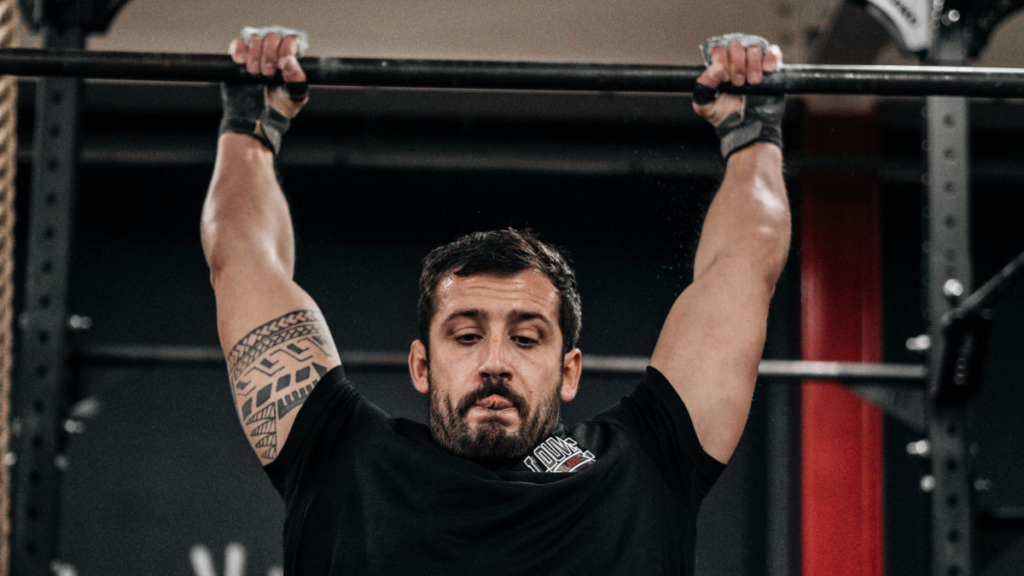
- Chin-ups (supinated grip)
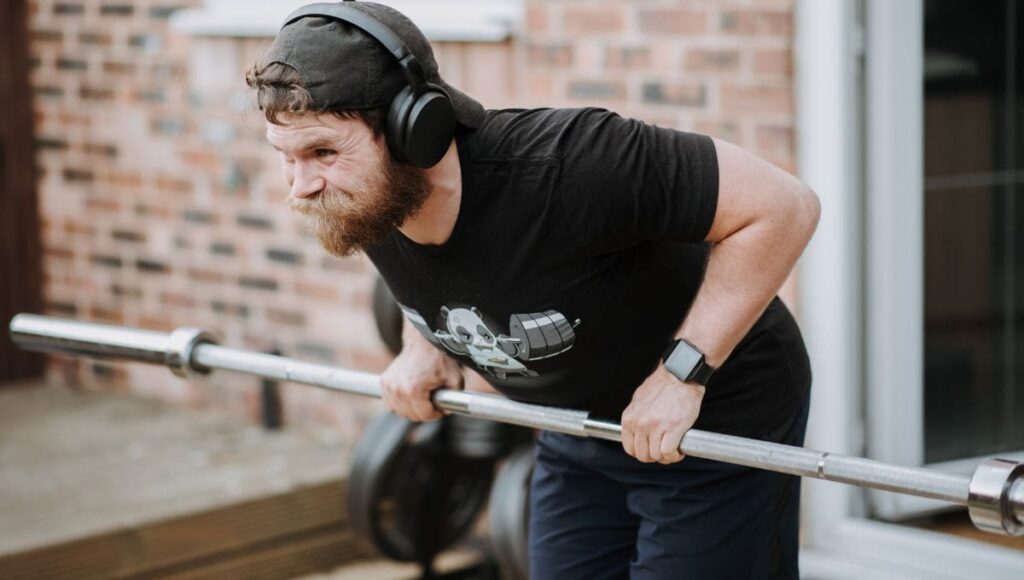
- Barbell rows
- Underhand lat pulldowns
For Triceps:
- Dips
- Close-grip bench press
- Push-ups (weighted if possible)
How to Program Compound Movements
Aim for:
- 2–3 compound pushing movements per week
- 2–3 compound pulling movements per week
- 3–5 sets per exercise
- 5–12 reps per set (the scientifically supported hypertrophy range)
Research shows that training each muscle group at least twice per week leads to superior strength and hypertrophy results (Schoenfeld et al., 2016).
Tip 3: Use Isolation Work to Target Weak Points and Maximize Growth
While compound lifts do most of the heavy lifting, strategic isolation training helps round out weak points and ensures full development of the arm musculature. Studies show that isolation exercises effectively increase hypertrophy in muscles that may not receive full stimulation during compound training (Gentil et al., 2013).

Why Isolation Lifts Matter
Compound exercises rely on multiple muscles, and the body naturally favors stronger muscles during heavy movements. Isolation lifts let you precisely target the biceps, triceps, and forearms to ensure balanced strength development and faster results.
Best Isolation Exercises for Fast Arm Strength
For Biceps:
- Dumbbell curls
- Hammer curls (also effective for forearms)
- Preacher curls
- Cable curls
For Triceps:
- Triceps rope pushdowns
- Overhead triceps extensions
- Skull crushers
- Cable kickbacks
Each exercise emphasizes different heads of the muscle. This matters because research shows that varied angles and loading patterns create fuller hypertrophy across the muscle (Wakahara et al., 2012).
Recommended Training Volumes
Evidence indicates that 10–20 weekly sets per muscle group is optimal for growth (Schoenfeld et al., 2019). A good weekly arm plan:
- 6–10 compound pushing sets
- 6–10 compound pulling sets
- 6–8 arm isolation sets total for biceps and triceps
This balanced approach accelerates strength progress without overtraining.
Tip 4: Train to (or Close to) Failure for Maximum Strength Gains
Training close to muscular failure—where the muscle cannot complete another rep with good form—is one of the strongest predictors of strength and hypertrophy. Studies show that stopping too far from failure dramatically reduces mechanical tension on the muscle and reduces strength adaptations (Lasevicius et al., 2018).
Why Training Near Failure Works
When you push a set close to failure:
- You recruit more high-threshold motor units (the strongest muscle fibers).
- You maximize muscle fiber fatigue.
- You increase metabolic stress.
- You stimulate greater hypertrophy and strength gains.
Research shows that both heavy and light loads can build strength effectively if sets are taken close enough to failure (Morton et al., 2016).
How Close You Should Train to Failure
Most of your arm training should finish within:
- 0–3 reps in reserve (RIR)
This means you should feel like you had no more than 3 reps left in the tank.
For heavy compounds:
- Use 2–3 RIR for safety.
For isolation lifts:
- Going to 0–1 RIR is safe and effective.
What Not to Do
Avoid training beyond failure (forced reps) regularly. Research shows that excessive beyond-failure training increases fatigue and injury risk without offering additional benefit (Fisher et al., 2016).
Tip 5: Optimize Recovery, Nutrition, and Frequency for Faster Results
Many people train intensely but see slow results because they overlook recovery and nutrition. Strength training causes controlled micro-damage to muscle fibers. Recovery is when your muscles actually grow stronger—so optimizing it accelerates your gains.

Protein Intake: The Foundation of Muscle Growth
Multiple studies show that consuming adequate protein significantly increases strength and muscle mass compared to lower protein intake (Morton et al., 2018).
The optimal intake for building stronger arms fast is:
- 1.6–2.2 g of protein per kilogram of body weight per day.
Distribute protein across 3–5 meals to maximize muscle protein synthesis.
Sleep and Muscle Growth
Sleep is often underrated, but research shows that insufficient sleep reduces strength, impairs recovery, and decreases anabolic hormones such as testosterone (Dattilo et al., 2011).
Aim for:
- 7–9 hours of sleep per night.
Training Frequency: Twice Per Week Is Best
Research repeatedly shows that training each muscle group at least twice weekly leads to greater hypertrophy and strength than once-a-week programs (Schoenfeld et al., 2016).
For strong arms fast:
- Train biceps and triceps directly twice per week.
- Train pushing and pulling movements 2–3 times per week.
Manage Stress and Fatigue
High stress increases cortisol levels, which hinders recovery and slows muscle growth. Studies show that chronic stress reduces strength gains and impairs muscular adaptations (Stults-Kolehmainen & Bartholomew, 2012).
Use recovery tools:
- Hydration
- Walking
- Light stretching
- Controlled breathing exercises
Bonus Tip: Use Tempo and Form to Increase Muscle Tension
Research shows that controlling lifting tempo—especially during the lowering phase—creates higher mechanical tension and increases hypertrophy (Wilk et al., 2018). Momentum reduces tension, while controlled reps increase it.
The Science Behind Slower Tempos
Mechanical tension is highest when:
- The muscle is loaded through a full range of motion.
- The movement speed is controlled.
- Stretch-mediated tension is maximized.
Slower eccentric phases (2–4 seconds) produce more muscle damage and growth stimulation.
How to Apply Tempo Training
Use a simple tempo like:
- 2 seconds up
- 3 seconds down
Do this on curls and triceps extensions to intensify each rep.
Putting It All Together: A Sample Weekly Arm Plan
Day 1 – Push + Arms
- Close-grip bench press: 4×6–8
- Dips: 3×8–12
- Skull crushers: 3×10–12
- Rope triceps extensions: 3×12–15
Day 2 – Pull + Arms
- Chin-ups: 4×5–8
- Barbell rows: 3×6–8
- Dumbbell curls: 3×10–12
- Hammer curls: 3×10–12
Day 4 – Arm Isolation Focus
- Preacher curls: 4×8–10
- Cable curls: 3×12–15
- Overhead triceps extensions: 4×8–10
- Triceps pushdowns: 3×12–15
This plan includes high mechanical tension, enough weekly volume, and proper frequency—all aligned with the strongest scientific evidence available.
Final Thoughts
Getting stronger arms fast isn’t about doing endless curls or chasing pump-based workouts. It’s about applying proven scientific principles: progressive overload, smart exercise selection, training intensity, proper recovery, and consistency.
When you structure your arm training around these principles, you create the conditions for rapid, sustainable strength increases. Use these five tips as your guide, and you’ll not only build stronger arms—you’ll build them faster and more efficiently than ever.
References
- Aagaard,P., Simonsen,E., Andersen,J., Magnusson,S. & Dyhre-Poulsen,P. (2002). Increased rate of force development and neural drive of human skeletal muscle following resistance training. Journal of Applied Physiology, 93(4), 1318–1326.
- Bohannon,R. (2019). Grip Strength: An Indispensable Biomarker For Older Adults. Clinical Interventions in Aging, 14, 1681–1691.
- Cooper,R., Kuh,D. & Hardy,R. (2010). Objectively measured physical capability levels and mortality. British Medical Journal, 341, c4467.
- Dattilo,M., Antunes,H., Medeiros,A. et al. (2011). Sleep and muscle recovery: Endocrinological and molecular basis for a new and promising hypothesis. Medical Hypotheses, 77(2), 220–222.
- Fisher,J., Steele,J. & Smith,D. (2016). High- and low-load resistance training: Interpretation and practical application of current research findings. Sports Medicine, 47(3), 393–400.
- Gentil,P., Soares,S. & Bottaro,M. (2015). Single vs. multi-joint resistance exercises: Effects on muscle strength and hypertrophy. Asian Journal of Sports Medicine, 6(2), e24057.
- Gentil,P., Oliveira,E. & Bottaro,M. (2013). Time course of upper-body strength and muscle thickness changes following resistance training. Journal of Strength and Conditioning Research, 31(7), 1943–1948.
- Lasevicius,T., Schoenfeld,B., Grgic,J. et al. (2018). Effects of different intensities of resistance training on muscle strength and hypertrophy. Journal of Strength and Conditioning Research, 33(1), 1–9.
- Morton,R., Oikawa,S. et al. (2016). Neither load nor systemic hormones determine resistance training-mediated hypertrophy or strength gains. Journal of Applied Physiology, 121(1), 129–138.
- Morton,R., Murphy,K. et al. (2018). Protein supplementation and resistance training: A meta-analysis. British Journal of Sports Medicine, 52(6), 376–384.
- Schoenfeld,B. (2010). The mechanisms of muscle hypertrophy and their application to resistance training. Journal of Strength and Conditioning Research, 24(10), 2857–2872.
- Schoenfeld,B. (2012). Does exercise-induced muscle damage play a role in muscle hypertrophy? Journal of Strength and Conditioning Research, 26(5), 1441–1453.
- Schoenfeld,B., Ogborn,D. & Krieger,J. (2016). Effects of resistance training frequency on hypertrophy and strength. Sports Medicine, 46(11), 1689–1697.
- Schoenfeld,B., Grgic,J. & Krieger,J. (2019). How much volume is needed for muscle growth? Journal of Sports Sciences, 37(7), 742–746.
- Stults-Kolehmainen,M. & Bartholomew,J. (2012). Psychological stress impairs short-term muscular recovery from resistance exercise. Journal of Strength and Conditioning Research, 26(7), 1845–1853.
- Wakahara,T., Fukutani,A. et al. (2012). Relationship between muscle hypertrophy and activation in resistance training. European Journal of Applied Physiology, 112(1), 30–39.
- Wilk,M., Krzysztofik,M. et al. (2018). The influence of movement tempo on neuromuscular, metabolic and hormonal responses to resistance training. Journal of Strength and Conditioning Research, 32(11), 3011–3020.
Key Takeaways
| Tip | What to Do | Why It Works |
|---|---|---|
| 1 | Increase weight, reps, or sets weekly | Progressive overload drives muscle and strength gains |
| 2 | Prioritize compound lifts like chin-ups and dips | They create higher mechanical tension and recruit more muscle fibers |
| 3 | Add targeted isolation work | Ensures full stimulation of biceps, triceps, and forearms |
| 4 | Train close to muscular failure | Maximizes motor unit recruitment and hypertrophy |
| 5 | Optimize protein, sleep, and recovery | Strength gains occur during recovery, not training |