Handstand push ups are one of the most effective upper-body calisthenics exercises, challenging the shoulders, triceps, upper back, core, and even cardiovascular system. While the classic handstand push up is already a test of strength and control, progressing through different Handstand Push Up Variations can dramatically improve muscle recruitment, balance, and neuromuscular efficiency.
These variations don’t just add diversity to your training—they challenge your body in new ways that drive long-term performance gains.


Before exploring the variations, it’s worth understanding why handstand push-ups are such a powerful upper-body strengthening tool.
Why Train Handstand Push Up Variations?
Handstand push ups combine vertical pressing strength, scapular control, core stability, and proprioceptive balance. Unlike traditional pushing exercises such as overhead presses or dips, they place your body in a fully inverted position. This inversion shifts blood distribution, changes muscle recruitment patterns, and forces the neuromuscular system to work harder to maintain alignment.
Research shows that closed-chain upper-body movements—where the hands remain fixed on the ground—activate stabilizers in the shoulder girdle to a much higher degree compared to open-chain variations like dumbbell presses. Studies on closed kinetic chain exercises demonstrate improved scapular muscle activation, which increases joint stability and reduces the risk of shoulder injury (Uhl et al., 2003; Lear and Gross, 1998).
Inversion itself provides a unique training stimulus. Studies on inverted resistance exercise show increased upper-body muscle activation due to altered blood pressure gradients and changes in proprioception (Sands et al., 2006). This means your body works harder to stabilize, even if the movement itself appears similar to a standard overhead press.
Furthermore, handstand push-ups demand significant core engagement. Research on hand balancing shows increased activation of deep stabilizers and spinal erectors as the body maintains a rigid vertical line (Bergmark, 1989). This makes Hand Stand Push Up Variations not just an upper-body skill, but a full-body strength challenge.
All of this scientific evidence supports the value of progressing beyond the standard movement. When you explore strategic variations, you challenge different planes of motion, strengthen underused stabilizers, and continue progressing long after you’ve mastered the basic skill.
Handstand Push Up Variations 1: The Wall-Assisted Handstand Push-Up (Strict or Deficit)
The first variation is a staple for developing strength, technique, and proprioception. While many athletes begin with wall support, the movement remains highly effective even for advanced trainees, especially when performed with strict mechanics or with an added deficit.

Why This Variation Matters
The wall-assisted version allows you to focus on vertical pressing strength without worrying about balance. This makes it ideal for strength development, particularly because it allows for strict, controlled reps. Research on overhead pressing mechanics shows that pressing with a vertical torso increases activation in the anterior deltoid, triceps brachii, and upper trapezius compared to angled pressing patterns (Saeterbakken and Fimland, 2013). Because strict wall handstand push-ups mimic a perfectly vertical barbell press, they strongly emphasize these muscle groups.
Adding a deficit—using parallettes or plates to increase the range of motion—amplifies muscle activation. Scientific studies have repeatedly demonstrated that exercises performed through a greater range of motion lead to increased hypertrophy and strength adaptations due to higher mechanical tension (Pinto et al., 2012; Bloomquist et al., 2013).
How to Perform It
- Kick into a handstand facing away from the wall (or toward it for a higher balance demand).
- Maintain a rigid body line with ribs tucked and glutes engaged.
- Lower under control until your head touches the floor or the bottom of your deficit.
- Press strongly back to full lockout.
- Keep elbows roughly 45 degrees from your torso for optimal shoulder mechanics.
Common Mistakes
- Allowing the ribs to flare, which increases lumbar stress.
- Flaring elbows excessively, placing undue strain on the shoulder capsule.
- Losing scapular elevation at the top, reducing shoulder stability.
Scientific Benefits
This variation strengthens the deltoids through the full range of motion, reinforces scapular upward rotation, and conditions the triceps for vertical pressing—benefits all supported by electromyography studies on overhead pressing and closed-chain shoulder exercises (Saeterbakken and Fimland, 2013; Uhl et al., 2003).
Handstand Push Up Variations 2: The Freestanding Handstand Push-Up
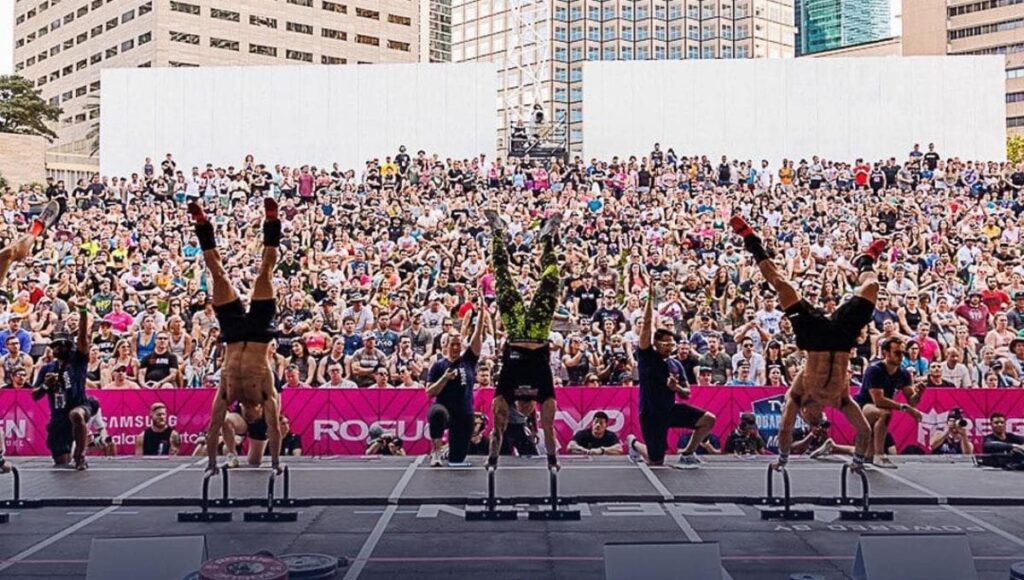
The freestanding handstand push-up is one of the most technically demanding Hand Stand Push Up Variations. Not only does it require significant pressing strength, but it also demands exceptional balance, proprioception, and neuromuscular coordination.
Why This Variation Matters
Freestanding handstand training heavily recruits stabilizing muscles. Research on balance and motor control demonstrates that performing strength movements without external support increases neuromuscular activation due to the need for continuous micro-adjustments (Hodges and Richardson, 1997). This is especially true in inverted positions, where the vestibular system and proprioceptive system must work together to maintain orientation.
The freestanding version also increases shoulder stability demands. Studies on closed-chain stability exercises show significantly greater activation of the serratus anterior, lower trapezius, and rotator cuff muscles when the body is required to balance during pressing (Sahrmann, 2002). These muscles are essential for maintaining healthy shoulder mechanics and preventing impingement.
How to Perform It
- Begin in a freestanding handstand with a tight body line and hands shoulder-width apart.
- Pull the elbows backward slightly as you lower—this maintains your center of gravity.
- Descend slowly until your head approaches the ground.
- Press back to the starting position while maintaining full-body tension.
- Keep gaze fixed between your hands to stabilize your vestibular response.
Common Mistakes
- Letting the back arch excessively, which shifts balance and increases spinal load.
- Rushing through the descent, losing control.
- Allowing elbows to flare, which destabilizes the shoulder joint.
Scientific Benefits
Freestanding handstand push-ups improve:
- Shoulder joint stability through greater rotator cuff and scapular activation.
- Balance through enhanced proprioceptive and vestibular system engagement.
- Core strength via increased activation of spinal stabilizers (Bergmark, 1989).
In simple terms, this movement trains your body to produce force while maintaining equilibrium—an ability that enhances athletic performance across many sports.
Variation 3: The Deficit, Pike, and Elevated Pike Handstand Push-Up
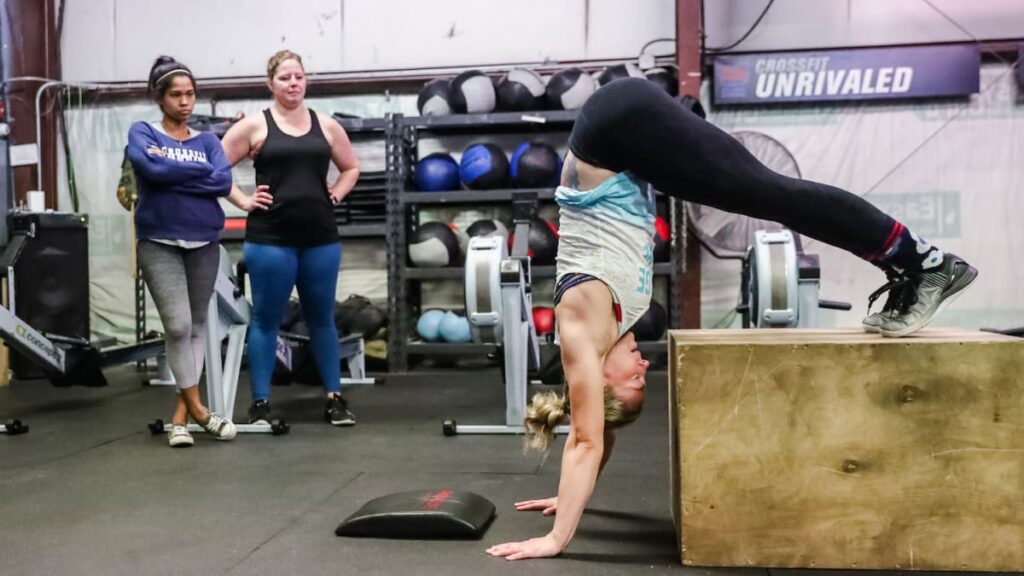
While often used as progressions, pike variations deserve full recognition as standalone strength builders. For many athletes, they offer the perfect blend of accessibility and challenge. They also allow for increased training volume without the risk of over-fatigue that can occur with strict handstand push-ups.
Why This Variation Matters
Pike variations mimic the pressing angle of a handstand push-up while allowing you to keep your feet on the ground or a platform. Studies comparing partial-inversion exercises to full inversions show that pike variations still create high deltoid activation, especially when hips are elevated or when deficits are added (Sands et al., 2006). They effectively combine closed-chain stability with scalable intensity.
Another advantage is that pike push-ups reduce spinal load relative to full inversions. Research on inverted positions shows increased cardiovascular and intracranial pressure. While safe for most trainees, reducing time spent fully inverted can be beneficial during high-volume strength training sessions (Sands et al., 2006).
How to Perform the Pike Variation
- Begin in a pike position with hips high and hands shoulder-width apart.
- Walk feet forward until your torso mimics a vertical press angle.
- Lower your head between your hands with elbows at a natural angle.
- Press back to lockout, maintaining hip height.
Elevated Pike Variation
To increase difficulty, elevate your feet on a box:
- Place feet on a sturdy platform and hands on the floor.
- Position hips high, reducing the angle between torso and floor.
- Lower under control and press back to full extension.
Deficit Pike Variation
To further increase range of motion:
- Place hands on parallettes or plates.
- Keep feet elevated or on the floor.
- Lower deeper than your hands for increased tension.
Scientific Benefits
Pike-based Hand Stand Push Up Variations offer:
- Increased deltoid and triceps recruitment due to improved pressing angle.
- Higher mechanical tension when deficits are added, promoting hypertrophy (Pinto et al., 2012).
- Less cardiovascular load than full handstands, allowing higher volume training.
- Improved scapular control due to closed-chain mechanics (Lear and Gross, 1998).
These variations also reinforce the strength curve necessary for more advanced movements, making them ideal for athletes seeking progressive overload without sacrificing quality.
How to Integrate These Variations into Training
Training progression is essential for developing pressing strength and stability. To incorporate these variations effectively, consider the following science-backed guidelines.
1. Prioritize Range of Motion and Quality
Studies consistently show that full or near-full range of motion produces superior hypertrophy and strength gains compared to partial reps (Bloomquist et al., 2013). This means deficit variations can significantly enhance progress—provided they’re performed with control.
2. Use a Balanced Volume Strategy
Overtraining the shoulders is a common issue in bodyweight strength training. Research on recovery suggests that large muscle groups like the deltoids require at least 48 hours of rest between heavy sessions to recover fully (McLester et al., 1999). Plan your training to avoid excessive fatigue, especially when practicing freestanding handstand push-ups.
3. Develop Scapular Strength
Healthy shoulder mechanics are critical. Scientific evidence emphasizes the importance of scapular stabilizers—particularly the serratus anterior and lower trapezius—during overhead movements (Sahrmann, 2002). Include accessory work like scapular push-ups or wall slides to maintain joint integrity.
4. Build Volume with Pike Variations
Because pike push-ups place less overall load on the neuromuscular system, they are ideal for high-volume training days. This aligns with sports science recommendations showing that moderate-load, high-volume training can support hypertrophy and motor pattern refinement (Schoenfeld, 2010).
5. Maintain Core Engagement
Research on spinal stability shows that maintaining a rigid torso enhances force transfer through the kinetic chain (Hodges and Richardson, 1997). Whether you’re balancing freestanding or pressing against a wall, keep ribs down, glutes tight, and midline fully engaged.
Final Thoughts
Hand Stand Push Up Variations offer far more than novelty—they provide measurable strength improvements, deepen your control over complex movement patterns, and enhance shoulder health when trained correctly. Whether you’re a beginner building foundational strength with pike push-ups or an advanced athlete mastering freestanding reps, these variations can elevate your training and unlock new levels of performance.
Bibliography
- Bergmark, A. (1989). Stability of the lumbar spine. A study in mechanical engineering. Acta Orthopaedica Scandinavica, 60(sup230), pp.1–54.
- Bloomquist, K., et al. (2013). Effect of range of motion in heavy load squatting on muscle and tendon adaptations. European Journal of Applied Physiology, 113(8), pp.2133–2142.
- Hodges, P. and Richardson, C. (1997). Contraction of the abdominal muscles associated with movement of the lower limb. Physical Therapy, 77(2), pp.132–142.
- Lear, L.J. and Gross, M.T. (1998). An electromyographical analysis of the scapular stabilizing synergists during a push-up progression. Journal of Orthopaedic and Sports Physical Therapy, 28(3), pp.146–157.
- McLester, J.R., Bishop, P. and Guilliams, M.E. (1999). Comparison of 1 day and 3 days per week of equal-volume resistance training in experienced subjects. Journal of Strength and Conditioning Research, 13(3), pp.273–281.