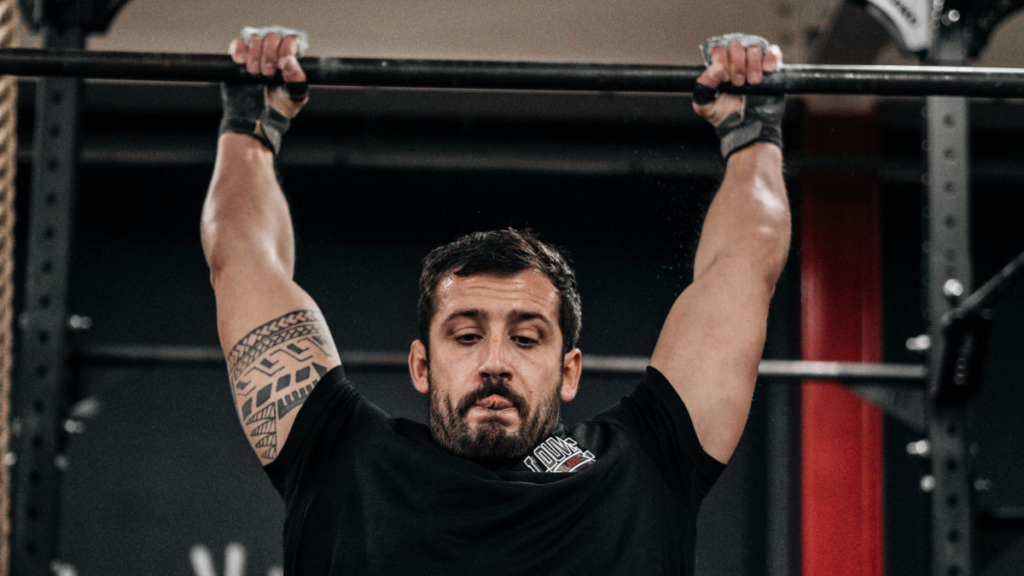
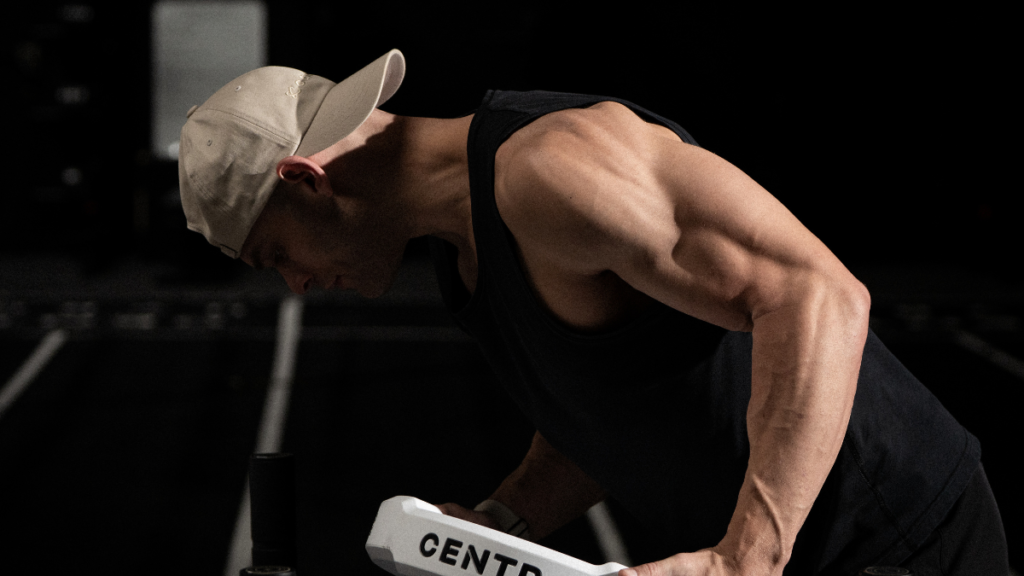
Handstand push ups (HSPUs) are one of the most impressive and demanding bodyweight exercises you can perform. They require strength, balance, coordination, and full-body stability — all while supporting your entire weight upside down. Although they often appear in gymnastics, functional fitness, and calisthenics training, you do not need elite athletic ability to begin working toward them. What you do need is a clear understanding of what makes them so beneficial.
This article breaks down the five key science-backed benefits of handstand push ups, explaining not just what they improve, but why those improvements matter. Each benefit is supported by exercise science, biomechanics, and research related to vertical pressing, shoulder stability, balance, and neuromuscular coordination.


Whether your goal is strength, mobility, performance, or functional fitness, HSPUs offer unique advantages worth adding to your training.
Benefit 1: Exceptional Shoulder, Triceps, and Upper-Body Strength
Why handstand push ups build serious upper-body strength
Handstand push ups turn your bodyweight into a vertical pressing load. Instead of pushing horizontally like a standard push-up, you push vertically — similar to a strict overhead press. This shift in angle dramatically increases shoulder and triceps recruitment.
Research on pressing biomechanics consistently shows that vertical pushing exercises place significantly greater demand on the deltoids and triceps than horizontal pushing alone. Studies examining overhead pressing movements indicate that vertical loading increases deltoid activation and overall mechanical tension, which are key elements for strength development.
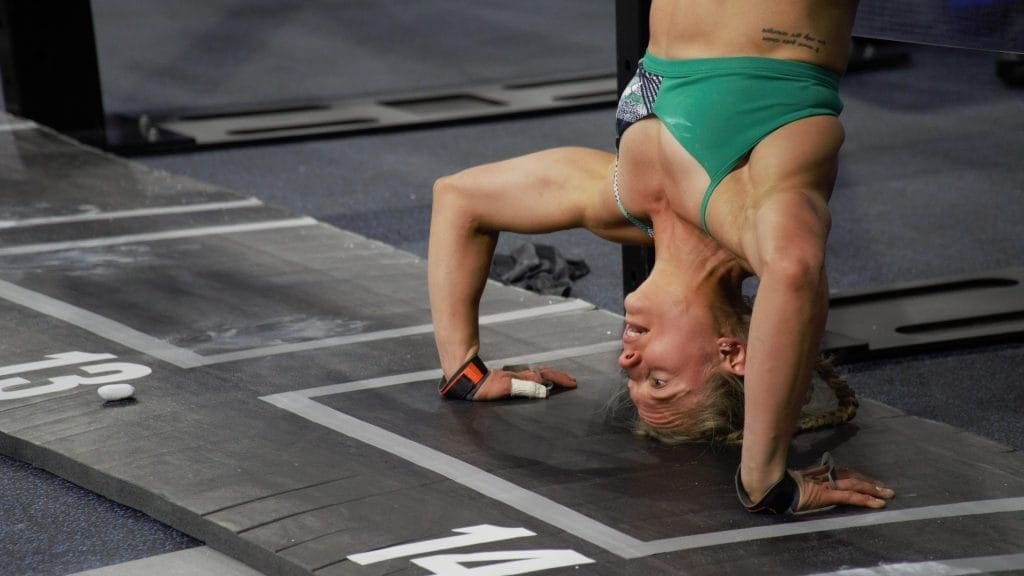
Because HSPUs require you to lift nearly your entire bodyweight, they impose a high level of mechanical stress. This encourages adaptation in the form of muscular strength and hypertrophy, just as heavy free-weight overhead pressing does.
Functional strength without equipment
Unlike barbell or dumbbell overhead presses, HSPUs require no equipment at all. For athletes who train at home, outdoors, or while traveling, this makes them an incredibly practical way to build upper-body strength.
Overhead pressing strength is essential for daily tasks such as lifting objects overhead, carrying loads, and stabilizing weight above the head. In functional fitness environments, this strength transfers directly to movements like wall balls, handstand walking, overhead squats, and Olympic lifts.
Long-term strength and performance carryover
Strength gained from handstand push ups carries over to other athletic skills because of the movement’s joint angle, loading pattern, and stabilization demand. Research on neuromuscular adaptation shows that training in similar joint angles and force directions improves performance in related movements. For example, stronger overhead pressing mechanics frequently translate into better performance in weightlifting, gymnastics, and sports involving pushing or bracing overhead.
For individuals who enjoy bodyweight training, the handstand push up is one of the most effective exercises available for building high-level upper-body strength without any equipment.
Benefit 2: Improved Core Strength and Body Stability
Why HSPUs demand more core activation than ordinary push ups
When performing a handstand push up, every muscle between your wrists and your toes contributes to maintaining body alignment. Your core — including the rectus abdominis, obliques, transverse abdominis, and spinal stabilizers — must work continuously to keep your body in a rigid vertical line.
Biomechanical studies on inverted positions show increased activation of the core musculature due to the need to stabilize the torso and pelvis against gravitational pull. Even holding a static handstand significantly activates the trunk muscles; adding a dynamic pressing motion increases these demands further.
Real-world stability benefits
Unlike exercises performed on a bench or machine, handstand push ups require you to stabilize without external support. This improves the functionality of your core strength — meaning you can apply it to movement, balance, lifting, and athletic demands.
Strong core stabilizers help:
- Protect the spine under load
- Improve posture
- Support overhead tasks
- Reduce compensation patterns in upper-body training
- Enhance athletic movement patterns such as sprinting, jumping, bracing, and rotational tasks
Building a stronger kinetic chain
Researchers often refer to the body as a kinetic chain — a system in which different joints and muscles work together to produce coordinated movement. Because HSPUs engage the shoulders, core, hips, and even legs in a coordinated action, they enhance your ability to stabilize the entire chain.
This is one reason why gymnasts, who often perform handstand variations, demonstrate exceptional control, core strength, and body awareness.
Benefit 3: Enhanced Balance, Coordination, and Proprioception
Training the body’s internal “navigation system”
Proprioception is your body’s ability to sense its position in space. Studies in neuromuscular science show that proprioceptive training improves coordination, agility, and movement control.
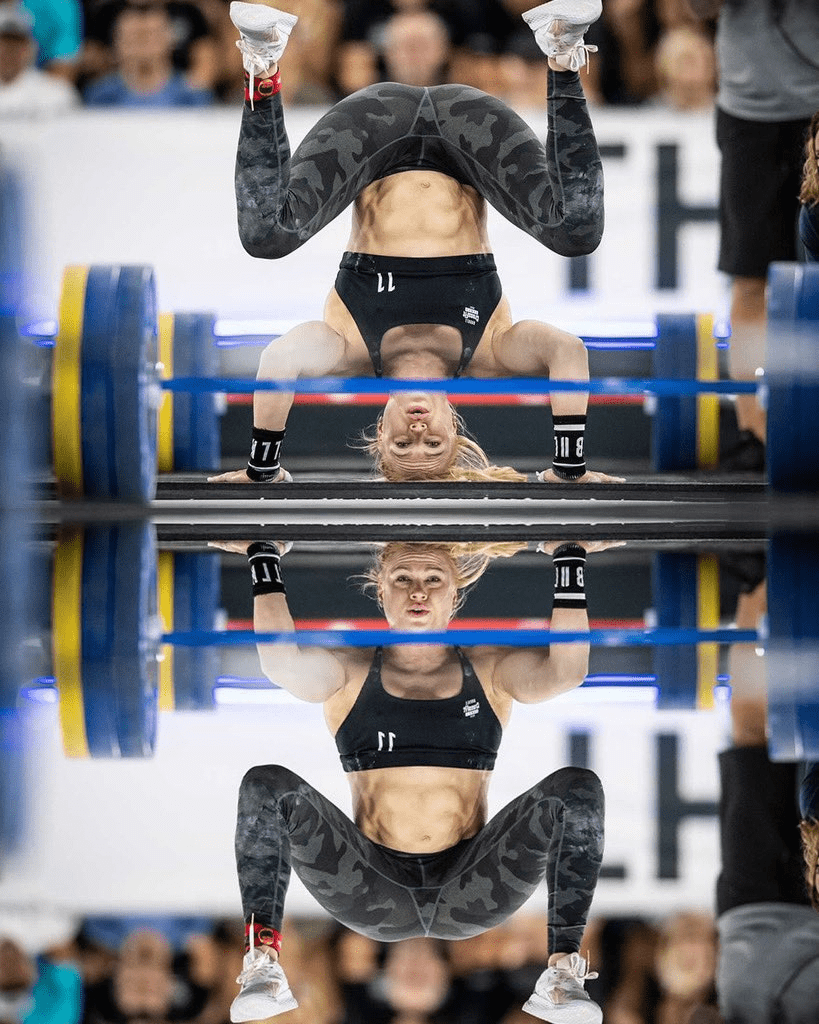
Inversion — being upside down — heightens proprioceptive demand because your usual visual cues and balance mechanisms are challenged. Performing a handstand push up requires:
- Sensing subtle shifts in body position
- Making micro-adjustments through the shoulders, wrists, and core
- Coordinating force production while maintaining balance
These demands activate sensory receptors in the muscles and joints, sharpening neuromuscular communication.
Why this improves athletic performance
Better proprioception and coordination can improve performance in nearly every sport. Athletes with superior proprioceptive ability often show improved agility, balance, and injury resilience.
Handstand work also improves vestibular system function — the system in the inner ear responsible for balance. Training in an inverted position challenges this system in new ways, which strengthens its ability to maintain equilibrium under diverse conditions.
A skill-based movement with long-term cognitive benefits
Skill-based exercises like handstand push ups engage the motor cortex, cerebellum, and neural pathways associated with precision and control. Studies on skill acquisition suggest that complex motor tasks not only enhance physical performance but also improve neural efficiency and cognitive function.
In short, HSPUs strengthen both the body and the brain’s ability to control movement.
Benefit 4: Superior Shoulder Stability and Joint Health
Strengthening the stabilizers that protect the shoulder joint
The shoulder is the most mobile joint in the human body, and because of that mobility, it relies heavily on stabilizing muscles to maintain joint integrity. Research shows that inadequate stabilizer strength can increase the risk of shoulder impingement, rotator cuff injury, and instability.
Handstand push ups recruit:
- Rotator cuff muscles
- Serratus anterior
- Trapezius (upper, mid, lower)
- Rhomboids
- Scapular stabilizers
Together, these muscles help maintain healthy shoulder mechanics. Studies examining overhead athletes show that well-developed scapular musculature and rotator cuff strength are key predictors of reduced injury risk and improved performance.
Improving overhead stability and movement quality
HSPUs strengthen the same neuromuscular patterns needed for overhead lifting with barbells or dumbbells. Research on movement specificity demonstrates that practicing strength movements in similar positions improves technique, stability, and coordination for related exercises.
This means handstand push ups can improve your performance in:
- Overhead press
- Handstand walking
- Snatches, jerks, and overhead squats
- Push jerks and push presses
- Gymnastics rings work
- Stability-intensive bodyweight movements
Joint resilience from controlled loading
Supporting your full bodyweight in an inverted position places significant compressive force through the shoulder joint. When performed with correct technique and proper progression, this type of loading can enhance connective tissue resilience. Studies on controlled mechanical loading show positive effects on tendon strength, collagen synthesis, and joint stability.
As long as the movement is progressed safely, HSPUs help build durable, injury-resistant shoulders.
Benefit 5: High Functional Fitness with Zero Equipment Required
A complete upper-body strength tool anytime, anywhere
One of the most practical benefits of handstand push ups is their accessibility. You need no equipment, no gym membership, and no additional tools. This makes them ideal for:
- Home workouts
- Travel routines
- Outdoor training
- Minimalist fitness programs
- Calisthenics and bodyweight progressions
Studies on adherence to exercise programs show that accessibility and convenience strongly influence long-term consistency. Because handstand push ups require nothing but a wall and some space, they support a sustainable training habit.
Progressions for every fitness level

Although HSPUs are advanced, you do not need to perform a full rep to begin benefiting from the training. There are progressions that match every level of strength and mobility:
- Wall-supported handstand holds
- Pike push ups
- Elevated pike push ups
- Negative handstand push ups
- Partial-range handstand push ups
- Wall-assisted full HSPUs
Progressions build strength, technique, flexibility, and confidence — important factors for minimizing injury risk.
A psychological milestone and confidence booster
Research in exercise psychology shows that achieving skill-based milestones increases intrinsic motivation, training consistency, and self-efficacy. Because handstand push ups are a visually impressive, challenging movement, mastering them often boosts confidence and increases enthusiasm for training.
This psychological reinforcement is especially powerful in long-term fitness progress.
Challenges, Risks, and How to Mitigate Them
High skill and mobility requirements
Handstand push ups require good shoulder mobility, wrist flexibility, core stability, and balance. Attempting full HSPUs without preparation may place unnecessary stress on the neck, wrists, elbows, or shoulders.
Joint stress considerations
Supporting your bodyweight on your hands can strain the wrists and elbows, especially if your joints are not accustomed to bearing heavy loads. Shoulder overuse is also possible if technique or strength levels are insufficient.
Evidence-based safety strategies
Research on progressive overload and motor learning supports the following safety strategies:
- Begin with regressions and gradually increase difficulty
- Strengthen stabilizers before attempting full HSPUs
- Warm up the shoulder girdle and wrists thoroughly
- Use controlled descent (eccentric training) to build strength safely
- Maintain proper alignment to avoid excessive neck or lumbar compression
By respecting progression and form, most risks can be minimized while keeping the exercise highly beneficial.
How to Add Handstand Push Ups to Your Training
Here is a simple, science-backed progression model:
- Phase 1: Mobility and stability preparation
- Wrist mobility, shoulder opening drills, scapular activation
- Hollow-body holds and planks for trunk stability
- Wall-supported handstand holds to build balance and blood-flow tolerance
- Phase 2: Foundational strength building
- Pike push ups
- Dips and overhead pressing (if available)
- Scapular push ups and rotator cuff strengthening
- Phase 3: Introduce inverted pressing
- Wall-assisted HSPU negatives
- Partial-range reps
- Increased time under tension
- Phase 4: Full handstand push ups
- Focus on smooth, controlled reps
- Limit volume initially
- Prioritize recovery and shoulder mobility
- Phase 5: Variation and long-term development
- Parallettes
- Tempo reps
- Freestanding HSPUs (only for advanced athletes)
This systematic approach aligns with the principles of progressive overload and controlled skill acquisition.
Conclusion
Handstand push ups offer a combination of strength, stability, balance, and skill that few other exercises can match. They dramatically strengthen the shoulders and triceps, challenge and develop the core, sharpen balance and proprioception, enhance shoulder health, and provide a convenient equipment-free way to train.
For lifters, athletes, gymnasts, calisthenics practitioners, and anyone who loves challenging their body in new ways, the benefits of handstand push ups are both significant and scientifically supported. When learned safely and progressively, they become a long-term tool for building strength, control, and confidence.
Key Takeaways Table
| Key Takeaway | Why It Matters |
|---|---|
| Handstand push ups build exceptional shoulder and triceps strength | Creates overhead-press strength without equipment |
| They heavily activate the core and stabilizers | Improves overall stability, posture, and spinal support |
| They enhance balance, coordination, and proprioception | Supports athletic performance and neuromuscular control |
| They strengthen shoulder stabilizers and joint structures | Improves overhead mechanics and reduces injury risk |
| They are versatile, equipment-free, and progression-friendly | Easy to integrate into any fitness routine |
Bibliography
Behm, D.G. & Anderson, K. (2006). The role of instability with resistance training. Journal of Strength and Conditioning Research, 20(3), pp.716-722.
Delgado, D.A. et al. (2018). Core stability and its relationship to functional movement quality. International Journal of Sports Physical Therapy, 13(4), pp.667-675.
Fess, E.E. & Moran, C. (1981). Grip and wrist strength in relation to upper-extremity function. Physical Therapy, 61(7), pp.1049-1056.
Hibberd, E. & Myers, J. (2015). Scapular dysfunction in overhead athletes. Sports Health, 7(1), pp.98-104.