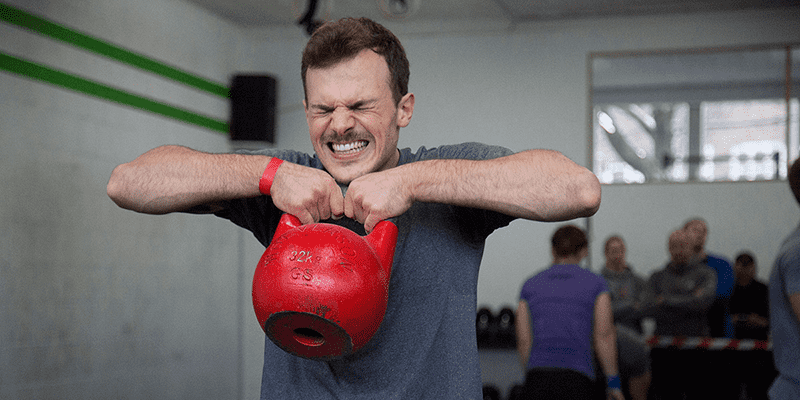
Walking into a gym for the first time can feel overwhelming. Barbells are loaded with more weight than you can imagine lifting. People seem confident, strong, and completely at home in their bodies. For beginners, it is almost automatic to compare themselves to others and conclude they are behind, weak, or not “built for this.”
That reaction is understandable, but it is also one of the biggest psychological barriers to long-term training success.


Scientific research from psychology, neuroscience, and exercise science consistently shows that social comparison can undermine motivation, distort self-perception, increase anxiety, and even slow physical progress—especially in beginners. At the same time, research also shows that focusing on individual progress, skill acquisition, and internal motivation leads to better adherence, stronger habits, and greater long-term results.
This article explains, using science rather than slogans, why beginners should not compare themselves to others at the gym, how comparison affects the brain and body, and what evidence-based strategies help new trainees stay consistent, confident, and progressing.
The Human Brain Is Wired to Compare—But the Gym Exposes Its Weaknesses

Why Social Comparison Happens Automatically
Social comparison is not a character flaw. It is a basic human tendency. According to social comparison theory, people evaluate their own abilities and worth by comparing themselves to others, particularly when objective standards are unclear (Festinger, 1954).
A gym is the perfect environment for comparison because:
- Performance is visible
- Strength and physique differences are obvious
- Many beginners lack internal benchmarks for progress
Research shows that people engage in comparison most strongly when they feel uncertain about their abilities (Buunk and Gibbons, 2007). Beginners, by definition, are uncertain. That makes comparison almost unavoidable.
Why the Gym Magnifies Negative Comparisons
In most gyms, beginners are surrounded by people who are not beginners. These individuals may have trained for years, optimized their technique, and adapted neurologically and structurally to resistance training.
Studies show that upward comparison—comparing oneself to more advanced individuals—often leads to reduced self-evaluation and negative emotions when the gap feels unbridgeable (Smith, 2000). For beginners, the gap often feels enormous.
The brain does not automatically account for training age, genetics, or history. It simply registers, “I am worse than them,” which can trigger stress and self-doubt.
Comparison Increases Stress, and Stress Interferes With Learning and Adaptation
The Stress Response and Exercise Learning
When beginners compare themselves unfavorably to others, stress levels increase. Psychological stress activates the hypothalamic–pituitary–adrenal (HPA) axis, increasing cortisol levels (McEwen, 2007).
Elevated cortisol has several negative effects relevant to beginners:
- Impaired motor learning
- Reduced working memory
- Decreased motivation
- Slower recovery
Motor learning is especially important in early training. Resistance training initially produces most strength gains through neural adaptations, not muscle growth (Moritani and deVries, 1979). Stress interferes with the brain’s ability to efficiently learn new movement patterns.
Anxiety Reduces Performance Independent of Strength
Studies on performance anxiety show that anxious individuals often underperform relative to their physical capacity, especially during skill-based tasks (Beilock and Carr, 2001).
For beginners, lifts like squats, deadlifts, and Olympic movements require coordination, timing, and confidence. Comparison-driven anxiety can cause:
- Excessive muscle tension
- Poor breathing patterns
- Hesitation or rushed movement
This creates a feedback loop where beginners feel weaker than they are, reinforcing negative self-comparisons.
Everyone Adapts at Different Rates—and Science Explains Why
Genetic Differences in Strength and Hypertrophy
One of the strongest arguments against comparison is biological variability. Research shows enormous inter-individual differences in how people respond to resistance training.
A landmark study found that after the same training program, some individuals gained significant muscle mass while others gained little or none (Hubal et al., 2005). These differences were linked to genetics, muscle fiber composition, and neural efficiency.
Comparing early progress without accounting for genetic variability is scientifically meaningless.
Training Age Matters More Than Effort Alone
Training age—the amount of time someone has been consistently training—is one of the strongest predictors of strength and physique.
Beginners experience rapid early gains due to neural adaptations, but advanced trainees may lift much heavier weights because they have accumulated years of structural adaptations such as:
- Increased muscle cross-sectional area
- Stronger connective tissue
- Improved intermuscular coordination
Research shows that strength gains plateau over time and require exponentially more effort to improve (Peterson et al., 2005). Comparing a beginner’s performance to someone with years of adaptation ignores this reality.
Sex, Hormones, and Body Structure Influence Outcomes
Men and women, on average, differ in absolute strength due to hormonal and structural differences, particularly testosterone levels (Miller et al., 1993). Limb length, joint structure, and tendon insertion points also influence leverage and performance.
These factors do not reflect effort or discipline. They reflect biology. Comparing across these variables leads to false conclusions about ability or potential.
Comparison Undermines Motivation and Long-Term Adherence
Extrinsic vs Intrinsic Motivation
Self-determination theory distinguishes between intrinsic motivation (driven by enjoyment, mastery, and personal growth) and extrinsic motivation (driven by comparison, approval, or external rewards) (Deci and Ryan, 2000).

Research consistently shows that intrinsic motivation predicts better long-term exercise adherence (Teixeira et al., 2012).
When beginners focus on outperforming others or “catching up,” motivation becomes extrinsic. This makes training fragile. When progress slows—as it inevitably does—motivation collapses.
Comparison Increases Dropout Rates
Studies on exercise adherence show that negative self-evaluation and low perceived competence are strong predictors of dropout (Dishman et al., 1985).
When beginners constantly compare themselves to others, they are more likely to feel incompetent, even when objectively improving. This perception increases the likelihood of quitting before meaningful progress occurs.
Social Media Makes the Problem Worse
Curated Fitness Images Distort Reality
Social media platforms amplify comparison by presenting highly curated, often enhanced images of fitness success. Research shows that exposure to idealized fitness images is associated with body dissatisfaction and negative mood, particularly in beginners (Tiggemann and Zaccardo, 2015).
Many of these images represent:
- Years of training
- Genetic outliers
- Professional athletes
- Use of performance-enhancing drugs
Comparing oneself to these images is not only unhelpful—it is scientifically invalid.
Comparison Shifts Focus Away From Health Outcomes
Studies show that appearance-focused motivation is associated with poorer mental health outcomes and less sustainable exercise habits than health- or performance-focused motivation (Homan and Tylka, 2014).
Beginners who compare physiques rather than focusing on strength, skill, or health markers are more likely to experience dissatisfaction even as their fitness improves.
Early Progress Is Unique—and Should Not Be Compared
Beginner Gains Are Not Linear or Predictable
Early training progress is highly variable. Some beginners gain strength rapidly, while others progress more slowly despite equal effort. Research shows that early responsiveness does not reliably predict long-term outcomes (Churchward-Venne et al., 2015).
Comparing early progress creates false expectations about future potential.
Skill Acquisition Comes Before Load
Many beginners focus on the amount of weight lifted rather than movement quality. Research shows that technique improvements can dramatically increase performance independent of muscle growth (Enoka, 1988).
Comparing load numbers ignores this learning curve and devalues critical skill development.
The Gym Is Not a Meritocracy of Effort
Effort Does Not Equal Outcome in the Short Term
While effort matters, short-term outcomes are influenced by many uncontrollable factors:
- Sleep quality
- Nutrition history
- Stress levels
- Injury history
Studies show that recovery capacity and lifestyle factors strongly influence training adaptations (Kellmann et al., 2018). Comparing outcomes without accounting for these variables leads to inaccurate self-assessment.
Long-Term Consistency Beats Short-Term Comparison
Research consistently shows that consistency over years, not intensity over weeks, predicts meaningful changes in strength and health (Garber et al., 2011).
Comparison encourages short-term thinking. Personal progress encourages consistency.
Evidence-Based Strategies to Replace Comparison With Productive Focus
Track Personal Metrics, Not External Benchmarks
Self-monitoring has been shown to improve adherence and motivation (Michie et al., 2009). Useful beginner metrics include:
- Repetitions completed with good form
- Technique improvements
- Consistency of attendance
- Subjective effort ratings
These metrics align with controllable behaviors rather than comparisons.
Set Mastery-Oriented Goals
Mastery goals focus on skill and personal improvement rather than outperforming others. Research shows mastery goals are associated with higher persistence and enjoyment (Ames, 1992).
Examples include:
- Learning proper squat depth
- Improving bar path
- Increasing range of motion
Normalize the Beginner Phase
Understanding that feeling weak or uncoordinated is normal reduces anxiety. Studies show that perceived competence increases when individuals understand the learning process involved in skill acquisition (Bandura, 1997).
Education itself is a psychological intervention.
Limit Comparison Triggers
Reducing exposure to comparison-heavy environments improves mental health outcomes. This may include:
- Limiting social media consumption
- Training during less crowded gym hours
- Following evidence-based educational content instead of highlight reels
Research supports reducing exposure to idealized images to improve body image and motivation (Fardouly et al., 2015).
Why Comparison Never Ends—Unless You Stop It
Even advanced athletes can fall into comparison traps. There will always be someone stronger, leaner, or faster. Research shows that external comparison rarely leads to lasting satisfaction, regardless of performance level (Lyubomirsky and Ross, 1997).

Beginners who learn early to focus on self-referenced progress develop a healthier and more sustainable relationship with training.
Conclusion: Progress Is Personal, and Science Supports It
Scientific evidence from psychology, physiology, and behavioral science converges on a clear conclusion: beginners should not compare themselves to others in the gym.
Comparison increases stress, reduces motivation, distorts perception, and undermines learning. Biological variability, training age, and context make such comparisons meaningless. In contrast, focusing on personal progress, skill development, and consistency leads to better adherence, better mental health, and superior long-term results.
The gym is not a test of worth. It is a learning environment. Beginners who treat it as such give themselves the best possible chance to succeed.
Bibliography
- Ames, C. (1992) ‘Achievement goals, motivational climate, and motivational processes’, Journal of Educational Psychology, 84(3), pp. 261–271.
- Bandura, A. (1997) Self-efficacy: The exercise of control. New York: Freeman.
- Beilock, S.L. and Carr, T.H. (2001) ‘On the fragility of skilled performance: What governs choking under pressure?’, Journal of Experimental Psychology: General, 130(4), pp. 701–725.
- Buunk, B.P. and Gibbons, F.X. (2007) ‘Social comparison: The end of a theory and the emergence of a field’, Organizational Behavior and Human Decision Processes, 102(1), pp. 3–21.
- Churchward-Venne, T.A. et al. (2015) ‘Muscle protein synthesis and resistance training’, Journal of Applied Physiology, 118(7), pp. 825–838.