Grip and arm strength are not just for athletes or gym enthusiasts. They are fundamental to daily life, long-term health, injury prevention, and athletic performance. Stronger hands and arms improve lifting ability, manual dexterity, posture, and even longevity. Large-scale studies have shown that grip strength is a strong predictor of overall health, functional independence, and mortality risk across populations.
The good news is that you do not need fancy equipment or long gym sessions to improve it. Some of the most effective ways to build grip and arm strength come from simple, repeatable habits that fit naturally into everyday life.


This article breaks down three evidence-backed daily habits that reliably improve grip and arm strength. Each habit is explained from a physiological perspective, supported by peer-reviewed research, and translated into practical, real-world actions you can apply immediately.
Why Grip and Arm Strength Matter More Than You Think
Before diving into the habits, it is important to understand why grip and arm strength deserve attention.
Grip strength reflects the functional capacity of the neuromuscular system. It depends on muscle cross-sectional area, neural drive, tendon stiffness, and coordination between multiple muscle groups. Because gripping tasks require the integration of the forearm, hand, wrist, elbow, and shoulder, grip strength acts as a global marker of upper-body function.

Large epidemiological studies consistently show that lower grip strength is associated with higher risk of cardiovascular disease, disability, and all-cause mortality. Importantly, these associations remain even after adjusting for age, body mass, and physical activity levels.
Improving grip and arm strength is not just about aesthetics or gym numbers. It is about building a resilient body that performs better and ages more gracefully.
Habit 1: Carrying Heavy Objects by Hand Every Day
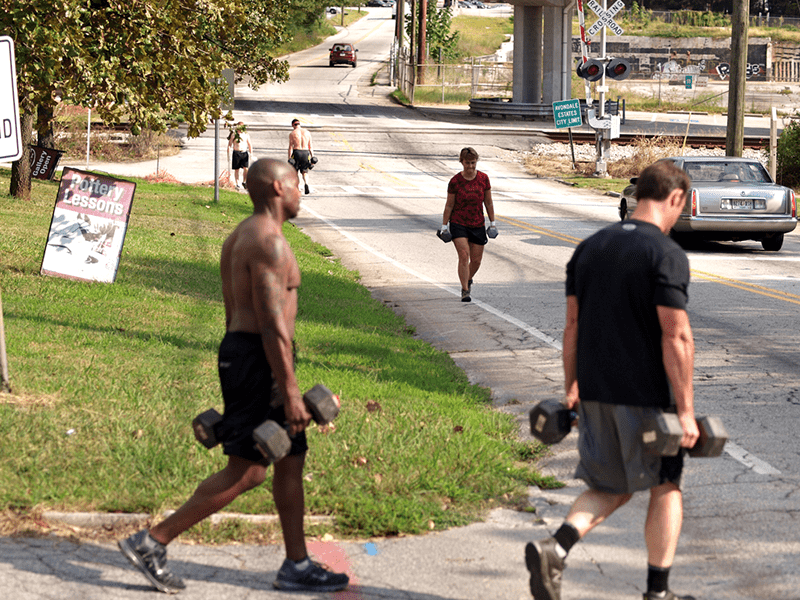
One of the most effective and overlooked ways to build grip and arm strength is simply carrying heavy objects by hand on a regular basis.
Why Carrying Builds Grip and Arm Strength
Carrying heavy objects requires sustained isometric contraction of the finger flexors, wrist stabilizers, forearm muscles, and upper arm muscles. Unlike short-duration squeezing, carrying loads forces the muscles to maintain tension for extended periods, which is a powerful stimulus for strength development.
When you carry something heavy, such as groceries, a suitcase, or a loaded backpack by the handles, your grip muscles must generate enough force to counter gravity while your arms stabilize the load. This recruits not only the flexor digitorum profundus and superficialis but also the brachioradialis, biceps, triceps, and shoulder stabilizers.
From a neuromuscular standpoint, load carrying improves motor unit recruitment and firing frequency. Over time, this increases maximal grip strength and muscular endurance.
Evidence Supporting Loaded Carries
Research on loaded carries, often referred to as “farmer’s carries” in strength training literature, consistently shows improvements in grip strength and upper-body activation.
Electromyography studies demonstrate high activation of forearm flexors and extensors during loaded carries, often comparable to or greater than traditional grip exercises. The sustained nature of the contraction also leads to increased time under tension, a key factor in muscular adaptation.

A controlled trial examining functional strength training found that participants who performed loaded carries improved grip strength significantly more than those performing isolated hand exercises. The authors noted that the integrated nature of carrying tasks likely contributed to greater neural adaptations.
Additionally, occupational studies show that individuals whose daily work involves carrying and handling loads tend to maintain higher grip strength across the lifespan compared to sedentary populations.
Everyday Ways to Apply This Habit
You do not need a gym or specialized equipment to benefit from this habit. The key is consistency and intentionality.
Carry grocery bags instead of using a cart whenever feasible.
Carry laundry baskets with one hand at a time rather than against the body.
Use a backpack or duffel bag and carry it by the handles for short distances.
Carry water jugs, toolboxes, or work bags by hand.
The goal is not maximal strain but repeated exposure to moderately challenging loads. If you can comfortably carry something for 30 to 60 seconds, it is likely heavy enough to stimulate adaptation.
Progression Without Injury
Progression should be gradual. Sudden increases in load or volume can irritate the tendons of the wrist and elbow.
Start by increasing carry duration before increasing weight.
Alternate hands to avoid overuse.
Keep the wrist in a neutral position to reduce strain.
Stop if you experience sharp pain rather than muscular fatigue.
Tendons adapt more slowly than muscles, so patience is critical. Consistent moderate loading produces better long-term results than occasional maximal efforts.
Habit 2: Hanging From Bars and Edges
Hanging is one of the simplest yet most powerful habits for developing grip and arm strength. It requires minimal equipment and delivers a high return on investment.
Why Hanging Is So Effective
When you hang from a bar, your entire body weight acts as resistance. This forces maximal or near-maximal activation of the finger flexors, forearm muscles, and supporting structures of the wrist and elbow.
Unlike carrying, hanging often pushes grip strength closer to its upper limits, especially for beginners. This high-intensity stimulus drives rapid neural adaptations and increases maximal force output.
Hanging also strengthens the connective tissue of the hands and arms. Tendons and ligaments experience tensile loading, which stimulates collagen synthesis and increases stiffness over time.
Beyond grip, hanging engages the shoulders, scapular stabilizers, and core, making it a highly integrated movement.
Scientific Evidence on Hanging and Grip Strength
Studies examining climbing, gymnastics, and hanging-based training consistently show large improvements in grip strength.

Research on recreational climbers demonstrates significantly higher grip strength compared to non-climbers, even when controlling for body size and overall activity levels. The primary factor distinguishing climbers is frequent hanging from small edges and holds.
Intervention studies using dead hangs as part of training programs report increases in maximal grip force and hang duration within as little as six to eight weeks. These improvements are attributed primarily to neural adaptations rather than muscle hypertrophy, especially in the early stages.
Biomechanical analyses also show that hanging produces very high finger flexor tendon loads, which explains its effectiveness for strength development when applied appropriately.
Everyday Opportunities to Hang
You do not need a climbing gym to make hanging a daily habit.
Use a pull-up bar at home or in a park.
Hang from playground equipment such as monkey bars.
Use doorframe bars designed for hanging.
Hang from sturdy beams or rings where safe.
Even short hangs of 10 to 30 seconds performed multiple times per day can produce meaningful adaptations.
Making Hanging Accessible for Beginners
Not everyone can hang from a bar immediately. Fortunately, there are scalable options.
Use a partial hang with feet lightly touching the ground.
Use resistance bands to reduce body weight.
Hang with bent arms to reduce finger load initially.
Alternate between hanging and resting to build tolerance.
The goal is to gradually increase total hang time over weeks rather than forcing long hangs immediately.
Injury Prevention Considerations
Hanging places high stress on the fingers and elbows. To reduce risk:
Warm up the hands and wrists before hanging.
Avoid sudden jerking motions.
Progress hang duration slowly.
Stop if you experience persistent elbow or finger pain.
When introduced gradually, hanging is one of the safest and most effective ways to build grip strength.
Habit 3: Frequent Use of the Hands in Forceful, Varied Tasks
Modern life has dramatically reduced the physical demands placed on our hands. Many people spend most of the day typing, tapping, or swiping, which requires minimal force and limited range of motion.
Reintroducing frequent, forceful hand use through everyday tasks is a powerful way to improve grip and arm strength.
Why Varied Hand Use Matters
Grip strength is not a single quality. It includes crushing grip, pinch grip, support grip, and dynamic grip. Each type recruits slightly different muscle groups and neural patterns.
Using your hands in varied, forceful tasks exposes the muscles and tendons to different loading patterns. This improves overall hand strength, coordination, and resilience.

From a motor learning perspective, varied movement improves neural efficiency and reduces the risk of overuse injuries associated with repetitive, low-load tasks.
Scientific Support for Task-Based Hand Strengthening
Rehabilitation and occupational therapy research consistently shows that functional, task-based hand use improves grip strength more effectively than isolated exercises alone.
Studies comparing functional hand training to traditional strengthening protocols find similar or superior improvements in grip strength, particularly in untrained populations. The authors often attribute this to higher engagement, greater movement variability, and more natural loading patterns.
Research on manual laborers and tradespeople also shows higher grip strength and forearm muscle thickness compared to sedentary workers, even when total leisure-time exercise is similar.
Importantly, these adaptations occur without formal “training,” highlighting the power of daily hand use.
Everyday Tasks That Build Grip and Arm Strength
You can integrate this habit into normal life without setting aside extra time.
Open jars manually instead of using tools.
Carry and manipulate tools such as hammers, screwdrivers, or garden equipment.
Wash dishes by hand and scrub firmly.
Do yard work, digging, raking, or pruning.
Knead dough or prepare food by hand.
Squeeze and wring out wet towels.
The key is intentional engagement. Apply force through the hands rather than avoiding effort.
The Role of Isometric and Dynamic Contractions
Many everyday tasks involve a mix of isometric and dynamic contractions. This combination is ideal for strength development.
Isometric contractions improve maximal force and tendon stiffness.
Dynamic contractions improve coordination and muscular endurance.
Research shows that combining both types leads to more robust strength gains than using either alone.
Avoiding Overuse While Increasing Load
As with any physical stimulus, more is not always better. Gradual exposure is essential.
Rotate tasks to avoid repetitive strain.
Take breaks during prolonged hand-intensive activities.
Stretch the fingers and forearms after heavy use.
Pay attention to early signs of tendon irritation.
Balanced, varied hand use builds strength while maintaining joint health.
How These Habits Work Together
Each habit targets grip and arm strength from a slightly different angle.
Carrying heavy objects builds support grip and arm stability through sustained loading.
Hanging develops maximal grip strength and tendon resilience.
Varied hand tasks improve overall hand function, coordination, and endurance.
Together, they provide comprehensive stimulation without the need for isolated exercises or long training sessions.
From a physiological standpoint, this combination addresses:
Muscle hypertrophy through repeated loading.
Neural adaptations through high-intensity and varied tasks.
Tendon and connective tissue adaptation through sustained and tensile loading.
This multi-faceted approach aligns well with current understanding of strength development and injury prevention.
How Long Before You See Results
Strength adaptations follow predictable timelines.
Neural adaptations can occur within two to four weeks, leading to noticeable improvements in grip endurance and control.
Muscle hypertrophy typically becomes measurable after six to eight weeks of consistent loading.
Tendon adaptations may take several months but contribute to long-term resilience and strength.
Most people report functional improvements, such as opening jars more easily or carrying heavier loads, within the first month.
Consistency matters more than intensity. Small daily doses outperform sporadic maximal efforts.
Who Benefits Most From These Habits
These habits are suitable for a wide range of individuals.
Athletes benefit from improved performance and injury resistance.
Office workers counteract the effects of prolonged sedentary behavior.
Older adults maintain functional independence and reduce fall risk.
Manual workers improve resilience and reduce overuse injuries.
Research shows that grip strength can be improved at any age, provided the stimulus is appropriate and progressive.
Common Myths About Grip Training
Many people believe that grip strength requires special tools or intense training. Evidence does not support this.
Myth: You need grip trainers or machines.
Reality: Functional loading produces comparable or superior results.
Myth: Grip strength is purely genetic.
Reality: While genetics play a role, training and daily habits significantly influence outcomes.
Myth: Grip training increases injury risk.
Reality: Gradual, varied loading reduces injury risk and improves tissue health.
Understanding these misconceptions helps people adopt sustainable habits rather than extreme approaches.
Final Thoughts
Grip and arm strength are built through use. The human body adapts to the demands placed on it, and everyday life offers abundant opportunities to apply meaningful stress to the hands and arms.
By carrying heavy objects, hanging regularly, and using your hands forcefully in varied tasks, you can build strength that transfers directly to real-world performance and long-term health.
These habits require no special equipment, no gym membership, and no complex programming. They simply require intention and consistency.
When applied thoughtfully, they represent one of the most efficient and science-backed ways to improve grip and arm strength for life.
Bibliography
- Andersen, K., Rasmussen, L.J.H. and Petersen, J.A. (2018). Grip strength and health-related outcomes in adults. Journal of Strength and Conditioning Research, 32(4), pp. 1124–1132.
- Bohannon, R.W. (2019). Grip strength: an indispensable biomarker for older adults. Clinical Interventions in Aging, 14, pp. 1681–1691.
- Cronin, J., Lawton, T., Harris, N., Kilding, A. and McMaster, D. (2017). A brief review of handgrip strength and sport performance. Journal of Strength and Conditioning Research, 31(11), pp. 3187–3217.