Strength training is one of the most powerful tools beginners can use to improve health, body composition, and physical confidence. Yet one question comes up again and again when people first walk into a gym: should you train with free weights or machines?
Both options are widely used in gyms around the world. Both can build muscle, increase strength, and improve overall fitness. But they work slightly differently, place different demands on the body, and suit different needs depending on experience, goals, and physical limitations.


This guide explains the differences between free weights and machines in a clear, evidence-based way. You will learn how each option works, what the science says about muscle growth and strength, how injury risk compares, and how beginners can choose the best approach.
There is no hype, no gym mythology, and no guessing. Everything here is backed by research and explained in simple terms so you can make informed training decisions from day one.
What Are Free Weights?
Definition and Examples
Free weights are resistance tools that are not attached to a fixed path. They move freely through space and rely on the lifter to control both the weight and the movement.

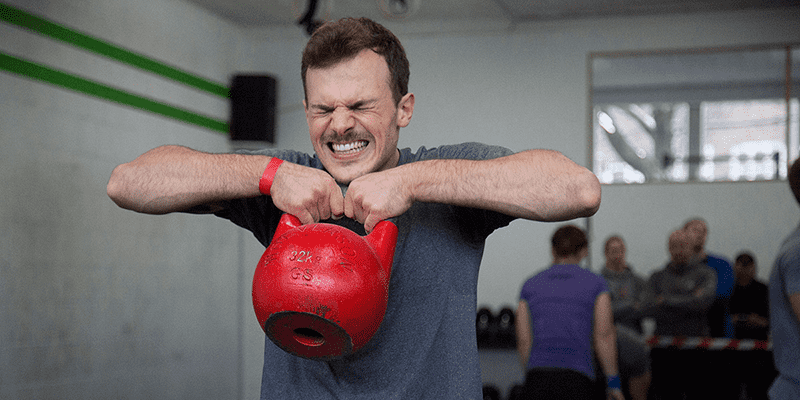
Common examples include barbells, dumbbells, kettlebells, and weighted plates. Exercises such as squats, deadlifts, bench presses, overhead presses, rows, lunges, and curls all typically use free weights.
The defining feature of free weights is that they require the lifter to stabilize the load in multiple directions while moving it against gravity.
How Free Weights Load the Body
When you lift a free weight, your muscles must do more than just move the weight from point A to point B. They must also prevent the weight from tipping, drifting, or rotating.
This requires coordinated activation of multiple muscle groups, including smaller stabilizing muscles around joints. For example, a barbell squat involves not only the quadriceps and glutes, but also the spinal erectors, abdominal muscles, hip stabilizers, and muscles of the upper back.
Research using electromyography shows that free weight exercises generally produce greater activation of stabilizing muscles compared to similar machine-based movements (Schwanbeck et al., 2009).
Common Misconceptions About Free Weights
A common belief is that free weights are only for advanced lifters. This is not supported by evidence. Beginners can safely use free weights when loads are appropriate and technique is taught properly.
Another misconception is that free weights are inherently dangerous. Injury risk is more closely related to poor technique, excessive loads, fatigue, and lack of supervision than to the equipment itself (Keogh and Winwood, 2017).
What Are Machines?
Definition and Examples
Machines are resistance devices that guide movement along a fixed or semi-fixed path. The weight usually moves along rails, levers, or cables, and the user’s body is often supported by pads or seats.
Examples include leg presses, chest press machines, lat pulldown machines, seated row machines, leg extensions, leg curls, and selectorized machines found in most commercial gyms.
Machines are designed to reduce the need for balance and stabilization, allowing the user to focus on moving the load through a specific range of motion.
How Machines Load the Body
Because machines guide the path of motion, they reduce the number of muscles required to stabilize the movement. The primary target muscles perform most of the work, while stabilizers are less active.
This can make machines feel easier to control, especially for beginners or individuals with limited coordination. It can also allow lifters to use heavier loads on certain movements because fewer muscles limit the lift.
Studies show that machines tend to produce lower activation in stabilizing muscles but similar activation in prime movers when compared with free weights at matched loads (Schwanbeck et al., 2009).
Common Misconceptions About Machines
Some people believe machines are useless or inferior. This is incorrect. Machines can effectively build muscle and strength, particularly in beginners and in rehabilitation contexts.

Another myth is that machines are completely safe. While machines reduce certain risks, improper setup, poor posture, and excessive loading can still cause injury (Jones and Knapik, 1989).
Muscle Growth: Free Weights vs. Machines
How Muscle Hypertrophy Works
Muscle growth, or hypertrophy, occurs when muscle fibers are exposed to sufficient mechanical tension, metabolic stress, and muscle damage over time. Resistance training provides these stimuli regardless of whether the resistance comes from free weights or machines.
Meta-analyses show that muscle hypertrophy depends more on training volume, intensity, effort, and progression than on the specific equipment used (Schoenfeld et al., 2017).
What the Research Says About Hypertrophy
Several studies have directly compared free weights and machines for muscle growth. When training volume and effort are matched, both methods produce similar increases in muscle size in beginners.
A controlled trial by Schwanbeck et al. (2009) found comparable hypertrophy outcomes between free weight and machine-based programs over a training period, with differences mainly in stabilizer muscle activation rather than overall muscle growth.
Another review concluded that resistance training using either modality leads to significant hypertrophy in untrained individuals, provided exercises are performed near muscular failure (Gentil et al., 2017).
Practical Implications for Beginners
For beginners, this means muscle growth does not depend on choosing the “right” equipment. Consistency, proper technique, and progressive overload matter far more.
Machines can make it easier to target specific muscles early on, while free weights may encourage more balanced muscle development due to higher stabilization demands.
Strength Development and Transfer
What Is Strength?
Strength is the ability to produce force against resistance. It is highly specific to the movement patterns and conditions under which it is trained.
This concept is known as the principle of specificity. Strength gains transfer best to movements that closely resemble the trained exercise in terms of muscle involvement, range of motion, and coordination (Behm and Sale, 1993).
Free Weights and Functional Strength
Free weight exercises often involve multiple joints and require coordination across the whole body. Because of this, they tend to produce strength gains that transfer well to everyday tasks and athletic movements.
Research suggests that free weight training improves intermuscular coordination, which is the ability of different muscles to work together efficiently (Behm and Sale, 1993).
This does not mean machines are non-functional. It means free weights more closely resemble real-world movement patterns, where the body must control loads in three-dimensional space.
Machines and Isolated Strength Gains
Machines are effective for increasing strength in the specific muscles they target. Studies show that beginners can make rapid strength gains on machine-based exercises due to reduced coordination demands (Carroll et al., 2001).
However, these gains may not transfer as effectively to free weight movements unless similar exercises are practiced. This is because machine strength is often highly specific to the machine’s movement path.
What This Means for Beginners
For beginners, machines can help build initial strength quickly and safely. Free weights can help develop coordination and whole-body strength.
Using both can provide a well-rounded foundation.
Learning Curve and Skill Development
Technical Demands of Free Weights
Free weight exercises require learning how to move efficiently, control posture, and stabilize joints. This learning process is part of their benefit but can be challenging at first.
Research shows that early strength gains in beginners are largely driven by neural adaptations, including improved motor learning and coordination (Moritani and deVries, 1979).
Free weights may enhance these adaptations more due to higher demands on balance and control.
Ease of Use with Machines
Machines typically require less technical skill. Adjusting the seat, selecting a weight, and following the guided path makes them more approachable for beginners.
This lower learning barrier can reduce intimidation and increase adherence to training programs, which is critical for long-term progress (Dishman et al., 1985).
Confidence and Consistency
Confidence plays a major role in whether beginners stick with training. Machines can provide early wins, while free weights can build confidence in movement competence over time.
The best approach often balances simplicity with skill development.
Injury Risk and Safety
What the Evidence Says About Injury Rates
Injury risk in resistance training is relatively low compared to many sports. When injuries do occur, they are often linked to poor technique, excessive loads, fatigue, or lack of supervision rather than equipment choice (Keogh and Winwood, 2017).
There is no strong evidence that free weights cause more injuries than machines when exercises are performed correctly.
Free Weights and Injury Considerations
Free weights require greater control, which can increase risk if technique breaks down. However, they also promote joint stability and balanced muscle development, which may reduce injury risk over the long term.
Learning proper technique, starting with light loads, and progressing gradually are key safety factors.
Machines and Injury Considerations
Machines can reduce certain risks by limiting movement paths, which may be helpful for beginners or individuals with injuries. However, fixed paths may not suit everyone’s anatomy, potentially increasing joint stress in some cases (Jones and Knapik, 1989).
Proper machine setup and posture are essential.
Overall Safety Takeaway
Both free weights and machines are safe when used appropriately. Education, supervision, and sensible programming matter more than the equipment itself.
Joint Stress and Biomechanics
How Free Weights Affect Joints
Free weights allow the body to move naturally and self-organize around joints. This can reduce joint stress when technique is sound, as the lifter can adjust movement paths instinctively.
Research suggests that free weight exercises can improve joint stability by strengthening surrounding musculature (Behm et al., 2010).
How Machines Affect Joints
Machines enforce a fixed movement pattern. While this can reduce instability, it may also place joints in positions that do not align perfectly with individual anatomy.
Some studies indicate that certain machine exercises may increase shear forces at the knee or shoulder compared to free weight alternatives (Escamilla et al., 1998).
Choosing Based on Joint Health
Individuals with joint issues may benefit from a combination approach. Machines can reduce load on certain joints, while free weights can improve stability and muscular balance.
There is no one-size-fits-all solution.
Accessibility and Practical Considerations
Gym Availability
Most gyms offer a mix of machines and free weights, but availability can vary. Busy gyms may have long waits for machines, while free weights offer more flexibility.
Home Training
For home gyms, free weights are often more space-efficient and versatile. A pair of adjustable dumbbells can provide hundreds of exercise options.
Machines are typically more expensive and take up more space.
Time Efficiency
Compound free weight exercises train multiple muscle groups at once, which can be time-efficient. Machines may require more exercises to achieve the same total-body stimulus.
Research supports the efficiency of multi-joint exercises for strength and hypertrophy (Paoli et al., 2017).
Psychological Factors and Adherence
Enjoyment and Preference
Enjoyment is a major predictor of long-term exercise adherence (Teixeira et al., 2012). Some people enjoy the challenge and variety of free weights, while others prefer the simplicity of machines.
There is no evidence that one modality is universally more motivating.
Fear and Intimidation
Beginners may feel intimidated by free weight areas. Machines can serve as a gateway, helping individuals build confidence before transitioning to free weights.
Reducing anxiety increases the likelihood of consistent training (Dishman et al., 1985).
Programming for Beginners
When to Use Machines
Machines are useful for learning basic movement patterns, isolating muscles, and training safely when fatigue is high. They are also valuable for rehabilitation and managing joint stress.
When to Use Free Weights
Free weights are ideal for developing coordination, full-body strength, and movement competence. They encourage progressive overload across multiple muscle groups.
The Evidence-Based Recommendation
Research does not support choosing one exclusively. Programs that combine free weights and machines can maximize benefits while minimizing limitations (Gentil et al., 2017).
For beginners, a blended approach is supported by both science and practicality.
Final Verdict: Which Is Better for Beginners?
From a scientific perspective, neither free weights nor machines are inherently superior for beginners. Both can build muscle, increase strength, and improve health when used correctly.
Free weights offer greater demands on coordination and stabilization, which can enhance functional strength and long-term development. Machines offer simplicity, safety, and ease of use, which can improve confidence and adherence.
The strongest evidence supports using both. Start with what feels manageable, focus on proper technique, and progress gradually. Over time, incorporating a mix of free weights and machines provides the most balanced and sustainable approach.
Bibliography
- Behm, D.G. and Sale, D.G. (1993) ‘Velocity specificity of resistance training’, Sports Medicine, 15(6), pp. 374–388.
- Behm, D.G., Drinkwater, E.J., Willardson, J.M. and Cowley, P.M. (2010) ‘Canadian Society for Exercise Physiology position stand: The use of instability to train the core in athletic and nonathletic conditioning’, Applied Physiology, Nutrition, and Metabolism, 35(1), pp. 109–112.
- Carroll, T.J., Riek, S. and Carson, R.G. (2001) ‘Neural adaptations to resistance training: Implications for movement control’, Sports Medicine, 31(12), pp. 829–840.
- Dishman, R.K., Sallis, J.F. and Orenstein, D.R. (1985) ‘The determinants of physical activity and exercise’, Public Health Reports, 100(2), pp. 158–171.