The squat is not trendy. It is not new. It is not flashy. And yet, as we move into 2026, it may be more important than ever.
Modern life is quietly dismantling human movement. More sitting. More screen time. Less loading through full ranges of motion. Lower bone density. Declining muscle mass. Rising rates of metabolic disease and chronic pain. Against this backdrop, the squat stands out as one of the most time-efficient, research-backed movements we have.


This article is not about hype or tradition. It is about evidence. Below are five science-supported reasons why squatting should be a non-negotiable part of your training in 2026, whether your goal is health, longevity, athletic performance, or resilience.
1. Squats Are One of the Most Effective Tools for Preserving Muscle and Strength With Age
Age-Related Muscle Loss Is Accelerating
From around the age of 30, adults begin to lose skeletal muscle mass at a rate of approximately 3–8 percent per decade. This process, known as sarcopenia, accelerates after the age of 60 and is strongly associated with frailty, falls, metabolic dysfunction, and loss of independence.

Lower-body muscle loss is particularly problematic. The quadriceps, glutes, and adductors are essential for standing up, climbing stairs, carrying loads, and stabilizing the body during gait. When these muscles weaken, quality of life declines rapidly.
Squats Load the Largest Muscle Groups in the Body
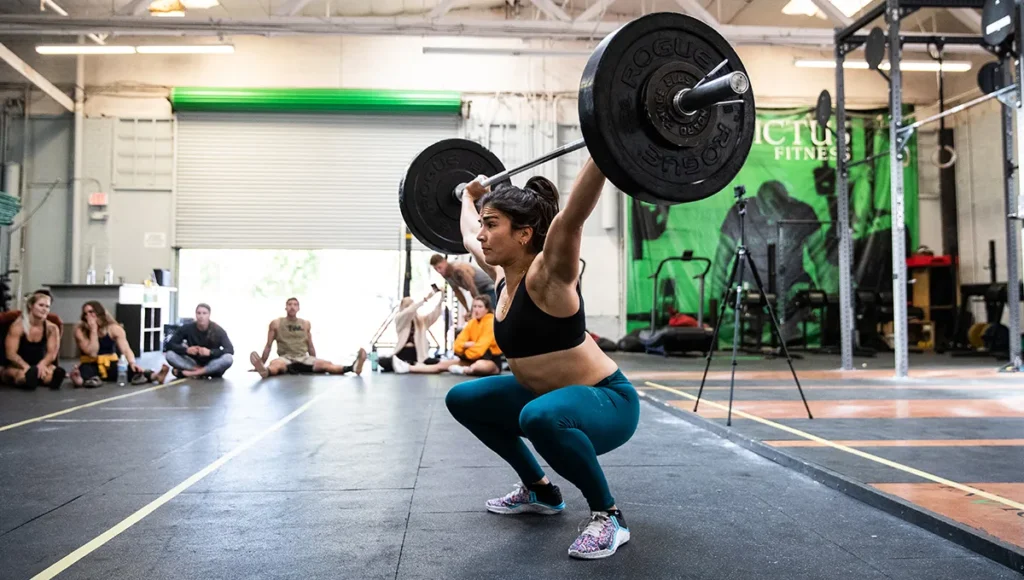
The squat places significant mechanical tension on the quadriceps, gluteus maximus, adductors, hamstrings (as stabilizers), and spinal erectors. Mechanical tension is the primary driver of muscle hypertrophy, according to decades of resistance training research.
Because squats allow heavy external loading while maintaining relatively low joint stress when performed correctly, they are uniquely suited for preserving and building muscle mass over time.
Research consistently shows that multi-joint lower-body exercises lead to greater overall strength gains than isolation movements. Squats outperform leg extensions and leg presses in terms of muscle activation, neuromuscular coordination, and functional transfer.
Strength Training With Squats Slows Functional Decline
Longitudinal studies demonstrate that individuals who maintain lower-body strength live longer and remain independent for longer. One large cohort study found that higher levels of leg strength were associated with a significantly lower risk of all-cause mortality, even when controlling for age, cardiovascular fitness, and lifestyle factors.
Squats directly target the muscle groups most predictive of functional longevity. In 2026, when populations are aging faster than healthcare systems can adapt, this matters.
Why This Matters Now
Sedentary behavior has increased globally, and remote work has reduced daily mechanical loading even further. Squats provide a simple, scalable intervention that counters the biological consequences of inactivity.
You do not need maximal weights to benefit. Bodyweight squats, goblet squats, and barbell squats all produce meaningful adaptations when programmed appropriately.
2. Squats Improve Bone Density and Reduce Fracture Risk
Bone Loss Is a Silent Epidemic
Osteopenia and osteoporosis affect hundreds of millions of people worldwide. Bone mineral density declines with age, particularly in postmenopausal women, but also significantly in men.
Fractures, especially hip fractures, are associated with dramatic increases in mortality risk and long-term disability. Preventing bone loss is therefore not cosmetic or optional. It is foundational to long-term health.
Bones Adapt to Mechanical Loading
Bone tissue responds to mechanical stress through a process known as mechanotransduction. When bones experience high strain rates and compressive forces, osteoblast activity increases, leading to greater bone mineral density.
Squats create precisely the type of axial loading shown to stimulate bone growth in the femur, pelvis, and lumbar spine. These are the most clinically relevant fracture sites in aging populations.
Squats Are Superior to Low-Impact Exercise for Bone Health
Walking, swimming, and cycling are beneficial for cardiovascular health, but they do little to preserve or increase bone density. Multiple randomized controlled trials have shown that resistance training, particularly with compound lifts like squats, is far more effective.
High-intensity resistance training protocols that include squats have been shown to increase or maintain bone mineral density even in older adults with low baseline bone mass, without increasing injury risk when properly supervised.
Spine and Hip Protection
Loaded squats strengthen not only the bones but also the surrounding musculature that stabilizes the spine and hips. Strong muscles reduce fall risk and improve balance, creating a compounding protective effect against fractures.
Why This Matters in 2026
Life expectancy continues to increase, but healthspan is lagging behind. Squats address one of the most devastating consequences of aging directly: skeletal fragility.
In a future where fractures place increasing strain on healthcare systems, squats are a low-cost, high-impact preventive tool.
3. Squats Dramatically Improve Metabolic Health and Insulin Sensitivity
Skeletal Muscle Is a Metabolic Organ
Skeletal muscle is the primary site for glucose disposal in the human body. When muscle mass and muscle quality decline, insulin sensitivity worsens, increasing the risk of type 2 diabetes and metabolic syndrome.
Lower-body muscles make up a large proportion of total muscle mass. Training them effectively has outsized metabolic benefits.
Squats Improve Glucose Uptake
Resistance training increases GLUT-4 transporter expression in muscle cells, improving the ability of muscles to take up glucose independently of insulin. This effect is particularly pronounced in large muscle groups trained with compound movements.
Studies comparing resistance training protocols consistently show that exercises like squats produce significant improvements in insulin sensitivity, fasting glucose levels, and HbA1c in both healthy individuals and those with metabolic disease.
Squats Increase Energy Expenditure and Resting Metabolic Rate
Because squats recruit a large amount of muscle mass, they have a higher acute energy cost than isolation exercises. More importantly, they stimulate muscle hypertrophy, which increases resting metabolic rate over time.
This combination makes squats a powerful tool for body composition management without relying on excessive cardiovascular training.
Hormonal Effects
Heavy compound lifts like squats are associated with transient increases in anabolic hormones such as testosterone and growth hormone. While the long-term hypertrophic effects are driven primarily by mechanical tension rather than hormones, these responses may still contribute to favorable metabolic adaptations.
Why This Matters Now
Rates of insulin resistance and type 2 diabetes continue to rise globally, including in younger populations. Sedentary lifestyles and ultra-processed diets are major contributors.
Squats offer a time-efficient intervention that directly improves the metabolic function of the tissue most responsible for glucose control.
4. Squats Enhance Athletic Performance and Injury Resilience
Strength Underpins All Athletic Movement
Running, jumping, changing direction, and decelerating all depend on lower-body strength and power. The squat develops force production in movement patterns that closely resemble athletic tasks.

Biomechanical studies show strong correlations between squat strength and sprint speed, vertical jump height, and change-of-direction performance.
Improved Rate of Force Development
Training squats, particularly with intent to move explosively (even under heavy loads), improves rate of force development. This quality is critical in sport, where rapid force application often determines success or failure.
Joint Stability and Injury Reduction
Squats strengthen the muscles surrounding the knee and hip joints, including the quadriceps, hamstrings, glutes, and adductors. Balanced strength in these muscle groups improves joint stability and reduces injury risk.
Evidence suggests that resistance training programs including squats reduce the incidence of knee injuries, including anterior cruciate ligament injuries, by improving neuromuscular control and load tolerance.
Transfer to Daily Life, Not Just Sport
Even for non-athletes, the ability to produce and absorb force safely matters. Picking up a child, lifting groceries, slipping on ice, or standing up from the floor all require coordinated lower-body strength.
Squats train these capacities in a controlled, progressive manner.
Why This Matters in 2026
Recreational sports participation remains high, but many adults train inconsistently and lack foundational strength. This mismatch increases injury risk.
Squats provide structural resilience. They prepare the body not just to perform, but to tolerate stress.
5. Squats Are a Foundational Human Movement That Protects Long-Term Mobility
Squatting Is a Natural Resting Position
In many cultures, deep squatting is a common resting posture. It requires adequate ankle dorsiflexion, hip flexion, knee flexion, and spinal control.
In industrialized societies, prolonged sitting has eroded the ability to squat comfortably. Loss of this movement pattern is associated with stiffness, pain, and reduced mobility.
Loaded Squats Preserve Range of Motion Under Load
When performed through an appropriate range of motion, squats maintain and improve joint mobility while simultaneously strengthening tissues. This combination is superior to mobility work performed in isolation.
Contrary to outdated beliefs, deep squats do not damage the knees in healthy individuals. On the contrary, research shows that squatting to depth distributes forces more evenly across the joint and may reduce shear stress when technique is sound.
Spine Health and Postural Strength
Squats train the spinal erectors isometrically, improving trunk stiffness and load tolerance. This contributes to better posture and may reduce the risk of low back pain when squats are programmed and coached correctly.
Multiple studies indicate that resistance training, including squats, is safe and beneficial for individuals with a history of back pain when appropriately modified.
Why This Matters Now
Mobility loss is often treated as inevitable. It is not. Movement patterns degrade when they are not practiced under load.
In 2026, when many people spend the majority of their waking hours seated, squats serve as a direct countermeasure.
How to Squat for the Next Decade
Squatting does not require maximal loading or competitive lifting goals. What matters is consistency, progressive overload, and technical competence.
Key principles supported by the research include:
- Using a full, comfortable range of motion.
- Progressively increasing load or volume over time.
- Training squats one to three times per week.
- Selecting squat variations appropriate to individual anatomy and injury history.
Barbell back squats, front squats, goblet squats, and split squats all provide benefits. The best squat is the one you can perform safely and consistently.
Conclusion
Squats are not just an exercise. They are a biological signal.
They tell your muscles to stay strong, your bones to stay dense, your metabolism to stay efficient, and your joints to stay capable.
As we move further into a world defined by convenience, automation, and physical inactivity, the squat remains one of the most powerful tools we have to protect human function.
In 2026, squatting is not optional. It is essential.
Bibliography
- American Journal of Clinical Nutrition – Mitchell, W.K., Williams, J., Atherton, P., Larvin, M., Lund, J. and Narici, M. (2012) Sarcopenia, dynapenia, and the impact of advancing age on human skeletal muscle size and strength. American Journal of Clinical Nutrition, 95(4), pp. 824–828.
- British Journal of Sports Medicine – Grgic, J., Schoenfeld, B.J., Davies, T.B., Lazinica, B., Krieger, J.W. and Pedisic, Z. (2018) Effect of resistance training frequency on gains in muscular strength. British Journal of Sports Medicine, 52(11), pp. 684–694.
- Journal of Bone and Mineral Research – Turner, F. (1998) The mechanostat: a proposed mechanism of the local adaptation of bone. Journal of Bone and Mineral Research, 13(4), pp. 579–590.
- Osteoporosis International – Watson, S.L., Weeks, B.K., Weis, L.J. and Beck, B.R. (2015) High-intensity resistance and impact training improves bone mineral density and physical function in postmenopausal women with osteopenia and osteoporosis. Osteoporosis International, 26(11), pp. 2743–2754.