Strong glutes are no longer just about aesthetics. By 2026, the conversation around glute training is firmly rooted in performance, longevity, injury prevention, and metabolic health. The gluteal muscles — gluteus maximus, medius, and minimus — play a central role in sprinting, jumping, lifting, posture, and protecting the knees and lower back.
Despite this, many people still train their glutes inefficiently. They squat, deadlift, and lunge without truly maximizing glute stimulus. The result is slow progress, plateaus, and unnecessary joint stress.


This article breaks down three science-backed hacks that reflect the most up-to-date understanding of hypertrophy, biomechanics, and motor control. These are not trendy tricks. Each hack is grounded in peer-reviewed research and practical application, making them relevant for athletes, CrossFitters, and everyday lifters alike.
By the end, you will understand exactly how to train your glutes more effectively in 2026 — with less wasted effort and better long-term results.
Hack 1: Prioritize Glute Training at Long Muscle Lengths
Why Muscle Length Matters for Growth
One of the most important advances in hypertrophy research over the past decade is the understanding that muscles grow more when trained at longer lengths. This means loading the muscle when it is stretched rather than when it is fully shortened.

At the cellular level, training at long muscle lengths increases mechanical tension across the muscle fibers. This tension stimulates greater activation of mechanosensitive pathways such as mTOR, which are critical for muscle protein synthesis. Longer muscle lengths also appear to increase regional hypertrophy, particularly in the distal portions of muscles.
Multiple controlled studies show that exercises emphasizing stretch under load produce more hypertrophy than those emphasizing peak contraction alone.
For the glutes, this insight is especially powerful because many traditional “glute exercises” actually load the muscle most when it is already shortened.
The Glutes Are a Hip Extension Muscle — But Position Matters
The gluteus maximus is the primary hip extensor, but its contribution changes depending on hip angle. When the hip is deeply flexed, the glutes are placed under stretch and are capable of producing high force. As the hip extends toward lockout, glute moment arms decrease and other muscles such as the hamstrings take over more of the load.
This means exercises that challenge hip extension from deep flexion place greater tension on the glutes at long lengths — precisely where hypertrophy stimulus is highest.
Examples include:
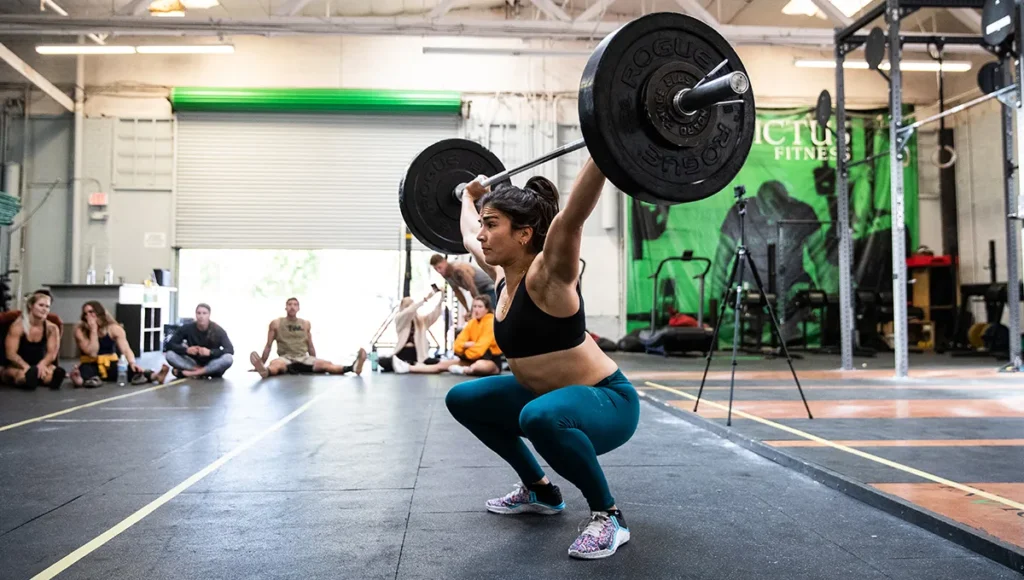
- Deep squats taken below parallel
- Romanian deadlifts with controlled depth
- Bulgarian split squats with a long stride
- Deficit reverse lunges
In contrast, exercises like hip thrusts and cable kickbacks primarily load the glutes near lockout, where the muscle is already shortened.

What the Research Says
Several studies support the superiority of long-length training for hypertrophy.
Research comparing partial reps at long versus short muscle lengths consistently shows greater muscle growth in the long-length condition. This has been demonstrated across multiple muscle groups, including the quadriceps and hamstrings, which share similar architecture and function to the glutes.
Biomechanical analyses also show that gluteus maximus activation increases significantly as squat depth increases. Deeper hip flexion leads to higher glute torque demands, especially during the ascent phase.
Importantly, this does not mean short-range exercises are useless. Instead, it means they should not dominate your training.
How to Apply This Hack in Real Training
To implement this hack effectively in 2026, structure most of your glute volume around exercises that challenge the muscle in deep hip flexion.
Practical guidelines:
- Use full range of motion whenever joint mobility allows
- Control the eccentric portion of lifts to increase time under tension
- Prioritize depth over load when glute growth is the goal
- Use heels-elevated or counterbalanced squats if ankle mobility limits depth
A simple rule works well: if you do 10 sets per week for glutes, at least 6–7 of those sets should involve deep hip flexion under load.
Common Mistakes to Avoid
One common mistake is chasing load at the expense of range of motion. Partial squats and stiff-legged deadlifts may allow heavier weights, but they significantly reduce glute stretch.
Another mistake is relying exclusively on hip thrusts and bridges. While these exercises can be useful, they should complement — not replace — deep compound movements.
Hack 2: Use Hip Thrusts Strategically, Not Blindly
Why Hip Thrusts Became So Popular
Hip thrusts earned their reputation because they produce high levels of glute activation and allow heavy loading with relatively low spinal stress. Electromyography studies consistently show strong gluteus maximus activity during hip thrusts, particularly near full hip extension.
They are also accessible. Many people feel their glutes working immediately, which reinforces their perceived effectiveness.
However, sensation does not equal stimulus, and high EMG does not automatically translate to superior hypertrophy.
Understanding the Limitations of Hip Thrusts
Hip thrusts primarily load the glutes at short muscle lengths. The highest torque occurs near lockout, where the glutes are already contracted. While this can improve strength and neural drive in that range, it may not provide the most robust hypertrophy stimulus across the full muscle.
Studies comparing hip thrusts to squats show that both exercises increase glute size, but squats often produce more balanced lower-body hypertrophy due to their longer muscle length demands.
Additionally, hip thrusts have limited carryover to athletic tasks that require force production from deep hip flexion, such as sprint starts and jumps.
What Science Suggests About Their Best Use
Rather than discarding hip thrusts, the research suggests they are best used as a secondary or accessory exercise.
Hip thrusts excel at:
- Improving peak hip extension strength
- Enhancing mind–muscle connection
- Adding volume without excessive systemic fatigue
- Providing a low-back-friendly option for extra glute work
They are particularly useful after primary lifts that already tax the glutes at long lengths.
How to Program Hip Thrusts in 2026
The most effective approach is sequencing.
Start your session with long-length glute exercises such as squats or split squats. Once fatigue sets in, switch to hip thrusts to continue stimulating the glutes without compromising technique or spinal loading.
Effective programming parameters:
- Moderate to high reps (8–15)
- Controlled tempo with a brief pause near lockout
- Progressive overload via reps or load over time
Avoid the temptation to treat hip thrusts as a maximal strength lift year-round. Heavy singles and triples provide little additional hypertrophy benefit and increase joint stress.
Who Benefits Most from Hip Thrust Emphasis
Certain populations may benefit more from hip thrusts:
- Lifters with limited squat depth due to anatomy or injury
- Athletes in deload phases
- Beginners learning to activate their glutes
For advanced lifters, hip thrusts should support — not replace — deep compound work.
Hack 3: Train the Glute Medius Like a Prime Mover, Not a Warm-Up
The Forgotten Role of the Glute Medius
Most glute training focuses almost exclusively on the gluteus maximus. However, the gluteus medius plays a critical role in pelvic stability, frontal plane control, and force transfer during single-leg tasks.
Weakness in the glute medius is strongly associated with knee valgus, hip drop, and increased risk of lower-limb injuries. From a performance standpoint, a stronger glute medius improves efficiency in running, cutting, and lifting.
Despite this, it is often trained with light bands at the end of workouts — if at all.
Why Isolation Band Work Is Not Enough
While banded walks and clamshells activate the glute medius, activation alone does not drive hypertrophy or meaningful strength gains. Muscle growth and strength require progressive overload and sufficient mechanical tension.
Studies show that while low-load activation drills increase EMG activity, they do not significantly increase muscle size or force output over time.
To truly strengthen the glute medius, it must be trained under load and through functional ranges of motion.
The Best Exercises for Glute Medius Growth
The glute medius functions primarily as a hip abductor and stabilizer during single-leg stance. Exercises that challenge these roles under load are most effective.
Examples include:
- Bulgarian split squats
- Lateral step-downs
- Single-leg Romanian deadlifts
- Curtsy lunges (performed carefully)
These movements place high demands on frontal plane stability while also loading the muscle dynamically.
Biomechanical studies show significantly higher glute medius activation during single-leg exercises compared to bilateral lifts, especially when balance and lateral stability are challenged.
Programming the Glute Medius in 2026
Instead of treating glute medius work as a warm-up, include it as a primary training stimulus at least once per week.
Guidelines:
- Use unilateral exercises as main lifts
- Progress load gradually, not just reps
- Train through controlled ranges with strict form
- Keep volume moderate to avoid excessive fatigue
A practical approach is to replace some bilateral lower-body volume with unilateral work rather than adding more total sets.
Long-Term Benefits Beyond Aesthetics
Strengthening the glute medius has benefits that extend far beyond muscle growth.
Research links improved hip abductor strength to reduced knee pain, improved running economy, and better force transfer during compound lifts. Over time, this can mean fewer injuries and more consistent training — a key factor in long-term progress.
Bringing the Three Hacks Together

The most effective glute training in 2026 is not about novelty. It is about applying well-established principles more intelligently.
To summarize the integrated approach:
- Train glutes primarily at long muscle lengths
- Use hip thrusts as targeted accessories, not foundations
- Load the glute medius with intent and progression
This combination maximizes mechanical tension, distributes stress more evenly across tissues, and supports both performance and longevity.
Final Thoughts
Stronger glutes are built through intelligent programming, not endless variety or extreme fatigue. The science is clear: range of motion, muscle length, and exercise selection matter more than chasing burn or pump.
By applying these three hacks consistently, you can expect better glute development, improved athletic performance, and healthier hips and knees well into the future.
References
- Barbalho, M., Coswig, V., Steele, J., Fisher, J., Paoli, A. and Gentil, P. (2020) ‘Evidence for an upper threshold for resistance training volume in trained women’, Journal of Sports Sciences, 38(5), pp. 515–522.
- Bloomquist, K., Langberg, H., Karlsen, S., Madsgaard, S., Boesen, M. and Raastad, T. (2013) ‘Effect of range of motion in heavy load squatting on muscle and tendon adaptations’, European Journal of Applied Physiology, 113(8), pp. 2133–2142.
- Contreras, B., Vigotsky, A., Schoenfeld, B., Beardsley, C. and Cronin, J. (2015) ‘A comparison of gluteus maximus, biceps femoris, and vastus lateralis EMG amplitude in the back squat and barbell hip thrust’, Journal of Applied Biomechanics, 31(6), pp. 452–458.
- Kubo, K., Ikebukuro, T., Yata, H., Tsunoda, N. and Kanehisa, H. (2019) ‘Time course of changes in muscle and tendon properties during strength training and detraining’, Journal of Strength and Conditioning Research, 33(3), pp. 632–641.
- Maeo, S., Ando, R., Takahashi, T., et al. (2021) ‘Muscle hypertrophy and architectural changes in response to high- and low-load resistance training at long muscle lengths’, European Journal of Applied Physiology, 121(9), pp. 2739–2750.