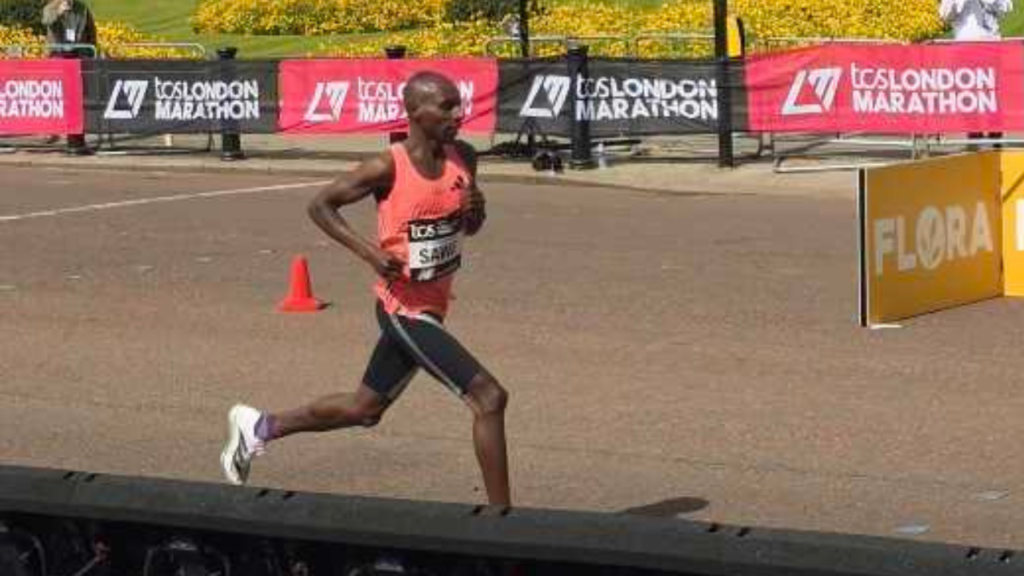
Explosive sprinting power is one of the most valuable physical qualities in running. Whether you are a sprinter trying to shave hundredths of a second off your 100-meter time, a team sport athlete accelerating past an opponent, or a distance runner looking for a stronger kick at the end of a race, sprinting power matters.
Sprinting performance is not just about “running faster.” It is the outcome of how much force you can apply into the ground, how quickly you can apply it, and how efficiently your body coordinates that force through each stride. Research consistently shows that sprint speed is closely linked to neuromuscular qualities such as maximal strength, rate of force development, muscle–tendon stiffness, and intermuscular coordination.



This article breaks down three science-backed tips to develop explosive sprinting power. Each tip is grounded in peer-reviewed research and practical coaching evidence, with a focus on what actually improves sprint performance rather than generic conditioning advice.
The goal is clarity and usefulness. You will learn what to train, why it works, and how to apply it intelligently.
Understanding Explosive Sprinting Power
Before diving into the tips, it is important to define what “explosive sprinting power” actually means.
Sprinting speed is determined by two main variables: stride length and stride frequency. Both depend on the athlete’s ability to produce large ground reaction forces in very short ground contact times, especially during the acceleration and maximum velocity phases of sprinting.
Biomechanical research shows that faster sprinters do not necessarily move their legs faster than slower sprinters. Instead, they apply greater force to the ground in less time, particularly in the horizontal direction during acceleration and in the vertical direction at top speed. This requires a combination of maximal strength, explosive strength, elastic energy utilization, and refined motor control.
Explosive sprinting power is therefore not a single trait. It is the integration of strength, speed, and coordination across the entire kinetic chain.
Tip 1: Build Maximal Strength to Raise Your Power Ceiling
Why Maximal Strength Matters for Sprinting
Maximal strength is the foundation of explosive power. Power is defined as force multiplied by velocity. If force capacity is low, there is a hard limit on how much power you can produce, regardless of how fast you try to move.
Multiple studies have demonstrated strong correlations between lower-body maximal strength and sprint performance across short distances. Athletes with higher relative strength levels tend to accelerate faster and achieve higher maximal velocities.

One reason for this relationship is that sprinting requires extremely high forces. Ground reaction forces during maximal sprinting can reach four to five times body weight within ground contact times of less than 100 milliseconds. Without sufficient maximal strength, the neuromuscular system simply cannot generate or tolerate these forces effectively.
Strength Training and Acceleration Performance
Acceleration is particularly dependent on maximal strength. During the first steps of a sprint, athletes must overcome inertia and project their body mass forward. This requires high horizontal force production.
Research shows that stronger athletes are better able to orient force horizontally during acceleration, resulting in faster sprint starts and improved early-phase speed. This is why elite sprinters and field sport athletes consistently demonstrate high levels of relative strength in exercises such as squats, deadlifts, and split squats.
Importantly, it is not just absolute strength that matters, but strength relative to body mass. Increasing strength without unnecessary weight gain is crucial for sprinting performance.
Neural Adaptations and Rate of Force Development
Maximal strength training also improves neural factors that contribute to explosive sprinting power. These include increased motor unit recruitment, improved firing frequency, and better synchronization of motor units.
These neural adaptations help improve the rate of force development, which is the ability to produce force rapidly. Since sprint ground contact times are extremely short, the ability to express force quickly is more important than peak force alone.
Studies show that heavy resistance training can significantly improve rate of force development, especially when performed with high intent and proper technique.
How to Train Maximal Strength for Sprinting
To support sprint performance, maximal strength training should focus on compound lower-body movements that involve large muscle groups and allow for high force production.
Effective exercises include squats, trap bar deadlifts, Romanian deadlifts, hip thrusts, and unilateral movements such as Bulgarian split squats. These exercises target the glutes, hamstrings, quadriceps, and trunk muscles that play key roles in sprinting mechanics.
Training loads should typically range from 80 to 95 percent of one-repetition maximum, performed for low repetitions with full rest between sets. This approach maximizes neural adaptations while minimizing excessive fatigue.
It is also critical that strength training complements sprint training rather than interfering with it. Strength work should enhance force production without compromising sprint technique or recovery.
Tip 2: Use Plyometrics to Improve Elastic Power and Ground Contact Efficiency
The Role of the Stretch-Shortening Cycle
Sprinting relies heavily on the stretch-shortening cycle, which is the rapid transition from muscle lengthening to muscle shortening. During sprinting, muscles and tendons store elastic energy when they are loaded upon ground contact and release that energy during push-off.
Efficient use of the stretch-shortening cycle allows athletes to produce more force with less metabolic cost and shorter ground contact times. Plyometric training is specifically designed to enhance this capability.

Plyometrics improve muscle–tendon stiffness, neuromuscular coordination, and reflexive responses, all of which contribute to explosive sprinting power.
Scientific Evidence Supporting Plyometric Training
A large body of research shows that plyometric training improves sprint performance across various distances. Meta-analyses indicate that plyometrics can significantly reduce sprint times, particularly over distances of 10 to 40 meters.
These improvements are largely attributed to enhanced rate of force development and improved efficiency of force transfer through the lower limbs. Plyometric exercises train the neuromuscular system to tolerate high eccentric loads and rapidly reverse them into concentric force.
Studies also show that plyometric training increases tendon stiffness, which allows for more effective storage and release of elastic energy during sprinting. Stiffer tendons transmit force more efficiently, resulting in quicker and more powerful ground contacts.
Horizontal vs Vertical Plyometrics
Not all plyometrics are equally relevant for sprinting. Sprinting involves both horizontal and vertical force components, depending on the phase of the sprint.
Acceleration-focused plyometrics should emphasize horizontal force production. Exercises such as bounding, broad jumps, and resisted hops help improve the ability to project force forward.
Maximum velocity sprinting, on the other hand, relies more on vertical stiffness and rapid force application. Vertical plyometrics such as pogo jumps, drop jumps, and reactive hops are particularly effective for improving top-end speed.
Research supports the idea of direction-specific plyometrics, showing that adaptations are greatest when the training stimulus closely matches the biomechanical demands of the sport.
Programming Plyometrics Safely and Effectively
Plyometric training places high stress on the musculoskeletal system, especially the tendons and joints. Therefore, proper progression and load management are essential.
Athletes should first develop adequate strength before engaging in high-intensity plyometrics. This reduces injury risk and improves training effectiveness. A commonly recommended prerequisite is the ability to squat at least 1.5 times body weight with good technique.
Plyometric sessions should focus on quality over quantity. Low volumes of high-quality repetitions with full recovery are more effective than excessive jumping with poor mechanics.
Ground contact times, posture, and stiffness should be emphasized rather than jump height alone. The goal is to train the nervous system to apply force quickly and efficiently.
Tip 3: Sprint Fast, With Intent, and With Enough Recovery
Sprinting Is a Skill and a Stimulus
One of the most overlooked aspects of sprint training is sprinting itself. While strength and plyometrics support sprinting power, sprinting at high intensity is irreplaceable for developing maximal speed and explosiveness.
Sprinting is a highly specific neural skill. The coordination patterns, muscle activation sequences, and timing required for maximal sprinting cannot be fully replicated by other forms of training.

Research shows that exposure to high sprint velocities is necessary to develop and maintain maximal speed. Submaximal sprinting or conditioning-style running does not provide the same neuromuscular stimulus.
Maximal Intent and Neural Drive
Sprinting with maximal intent is critical for developing explosive power. The nervous system adapts specifically to the speed and intensity at which it is trained.
Studies on neural drive and motor learning indicate that high-intensity efforts lead to greater recruitment of fast-twitch muscle fibers and improved synchronization. These adaptations are essential for sprint performance.
Importantly, sprinting fast does not mean sprinting fatigued. Fatigue alters mechanics, reduces force output, and blunts neural adaptations. Quality sprint training requires freshness.
The Importance of Full Recovery
Sprint performance is highly sensitive to fatigue. Inadequate recovery between sprints leads to slower times, poorer mechanics, and reduced training effectiveness.
Research suggests that rest intervals of two to five minutes between short sprints are necessary to maintain maximal speed and power output. For longer sprints or repeated maximal efforts, even longer rest periods may be required.
Full recovery allows the phosphocreatine system to replenish and the nervous system to maintain high firing rates. Without sufficient recovery, sprint training becomes conditioning rather than speed development.
Sprint Distances and Training Focus
Different sprint distances emphasize different aspects of sprinting power. Short sprints of 10 to 30 meters primarily target acceleration and horizontal force production. Longer sprints of 30 to 60 meters expose athletes to higher velocities and challenge vertical stiffness and coordination.
A balanced sprint program should include both short accelerations and longer sprints, depending on the athlete’s goals and sport demands.
Research supports the use of sprint distances that allow athletes to reach near-maximal velocity, as this exposure is critical for developing top-end speed and maintaining neuromuscular qualities.
Technical Considerations
Sprinting power is also influenced by technique. While this article focuses on physical qualities, it is worth noting that strength and power must be expressed through efficient mechanics.
Studies show that better sprint technique is associated with greater force application and lower energy cost. Sprint drills, video feedback, and coaching cues can help refine technique, but these should not replace high-quality sprinting itself.
Integrating the Three Tips Into a Training Program
The most effective sprint training programs integrate maximal strength training, plyometrics, and high-quality sprinting in a complementary manner.
Strength training raises the ceiling of force production. Plyometrics improve the speed and efficiency of force application. Sprinting trains the nervous system to express these qualities in a highly specific context.
Research on concurrent training shows that strength and power adaptations are maximized when training is organized to minimize interference. This often means separating heavy strength work and high-speed sprinting by adequate recovery time or placing them on the same day with sprinting performed first.
Consistency and progression are key. Improvements in sprinting power occur over months and years, not weeks. Small, well-managed increases in training intensity and volume lead to sustainable performance gains.
Common Mistakes That Limit Sprinting Power
One common mistake is focusing too heavily on conditioning at the expense of speed. Long intervals, high-repetition circuits, and fatigued running may improve endurance but do little to enhance sprinting power.
Another mistake is neglecting strength training or using loads that are too light to stimulate meaningful adaptations. While light resistance can have a place, maximal strength requires heavy loads and intent.
Finally, many athletes under-recover. Sprinting and power training place high demands on the nervous system, and insufficient recovery can stall progress or increase injury risk.
Final Thoughts
Explosive sprinting power is not built through shortcuts or gimmicks. It is developed through intelligent training that respects the underlying physiology and biomechanics of sprinting.
By building maximal strength, using targeted plyometric training, and sprinting fast with adequate recovery, athletes can significantly improve their sprinting power in a science-backed and sustainable way.
These principles apply across sports and levels, from elite sprinters to recreational runners looking to become faster and more powerful.
Bibliography
• Aagaard, P., Simonsen, E.B., Andersen, J.L., Magnusson, P. and Dyhre-Poulsen, P. (2002) Increased rate of force development and neural drive of human skeletal muscle following resistance training. Journal of Applied Physiology, 93(4), pp.1318–1326.
• Brughelli, M., Cronin, J., Levin, G. and Chaouachi, A. (2008) Understanding change of direction ability in sport: A review of resistance training studies. Sports Medicine, 38(12), pp.1045–1063.
• Chelly, M.S., Denis, C., Leger, H. and Le Gallais, D. (2001) Influence of plyometric training on mechanical efficiency in jumping and running. European Journal of Applied Physiology, 86(4), pp.379–385.
• Cormie, P., McGuigan, M.R. and Newton, R.U. (2011) Developing maximal neuromuscular power: Part 1 – biological basis of maximal power production. Sports Medicine, 41(1), pp.17–38.