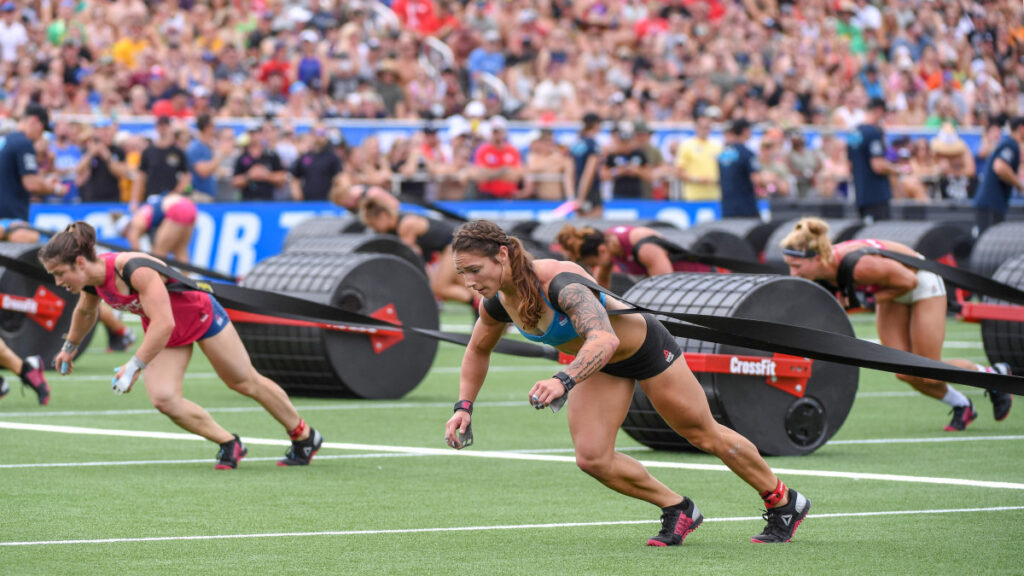
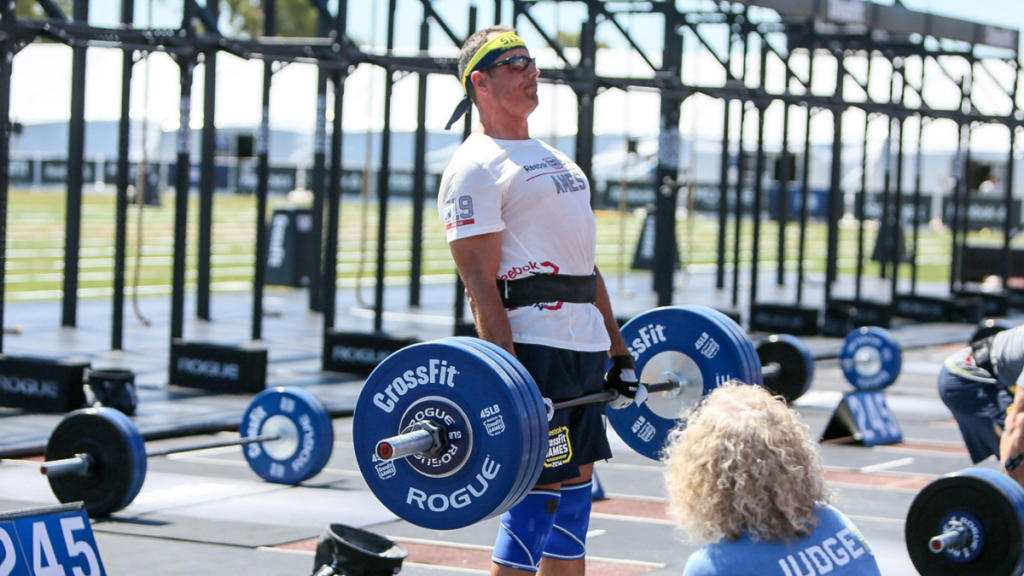
The deadlift is one of the oldest and most fundamental human movements: picking something heavy up from the ground. Long before barbells existed, humans relied on this pattern to survive. Today, the deadlift remains one of the most powerful tools for building strength, improving health, and enhancing performance.
Despite this, many people avoid the deadlift. Some think it is dangerous. Others believe it is only for powerlifters or elite athletes. Science tells a very different story.


This article explains, clearly and directly, why the deadlift deserves a permanent place in your training. Every claim is backed by research, and every benefit is grounded in physiology, biomechanics, and long-term health outcomes.
Reason 1: Deadlifts Build Total-Body Strength Like No Other Exercise
The Deadlift Trains More Muscle at Once Than Almost Any Other Lift
The deadlift is a compound exercise that involves coordinated movement across multiple joints. During a conventional deadlift, the hips, knees, and ankles extend simultaneously while the spine remains stable. This requires the activation of a large percentage of the body’s skeletal muscle mass.
Electromyography (EMG) studies consistently show high levels of muscle activation in the gluteus maximus, hamstrings, quadriceps, erector spinae, latissimus dorsi, trapezius, and forearm flexors during deadlifts. Few exercises demand this level of whole-body coordination and tension.

Research comparing compound lifts has shown that exercises involving large muscle mass and multiple joints produce greater overall strength adaptations than isolation movements. The deadlift stands out because it loads the posterior chain heavily while also requiring upper-body stabilization and grip strength.
Heavy Loads Drive Neural Strength Adaptations
Strength is not just about muscle size. It is also about how effectively your nervous system can recruit motor units. The deadlift allows for heavier absolute loads than almost any other exercise because the bar starts on the floor and the movement is mechanically efficient.
Studies on maximal strength training show that lifting heavy loads improves neural drive, motor unit synchronization, and firing frequency. These adaptations translate into increased force production, even without significant muscle hypertrophy.
Because deadlifts are typically performed with relatively low repetitions and high loads, they are particularly effective at stimulating these neural adaptations. This makes them valuable not just for bodybuilders, but for athletes and general trainees who want real-world strength.
Strength Gains Transfer to Daily Life and Sport
Deadlift strength has a high degree of transfer to everyday tasks. Standing up, lifting objects, carrying groceries, and moving furniture all rely on similar movement patterns.
In athletic contexts, deadlift strength correlates with sprint performance, jump height, and change-of-direction ability. This is because the hip extension power developed in the deadlift closely matches the force demands of running and jumping.

Research on resistance training specificity shows that exercises which closely resemble functional movement patterns lead to better transfer of strength. The deadlift’s resemblance to real-world lifting makes it uniquely effective.
Reason 2: Deadlifts Are One of the Best Exercises for Building Muscle
High Mechanical Tension Drives Hypertrophy
Muscle growth is primarily driven by mechanical tension. The deadlift places very high tension on large muscle groups, particularly the glutes, hamstrings, and spinal erectors.
Studies on hypertrophy show that exercises allowing heavy loading through long muscle lengths are especially effective for stimulating growth. The deadlift loads the posterior chain when these muscles are near their stretched positions, which enhances hypertrophic signaling.
While deadlifts are often performed with lower repetitions, research shows that hypertrophy can occur across a wide range of rep schemes as long as sets are taken close to muscular failure and sufficient tension is applied.
Posterior Chain Development Is Often Neglected
Many training programs overemphasize quadriceps and chest development while neglecting the posterior chain. This imbalance can limit performance and increase injury risk.
The deadlift directly targets the glutes and hamstrings, which are among the largest and most powerful muscles in the body. Stronger glutes contribute to better hip stability, improved posture, and increased athletic output.
Research comparing muscle activation patterns shows that deadlifts produce significantly higher glute and hamstring activation than leg presses or knee-dominant exercises. This makes them a critical tool for balanced muscular development.
Upper-Body Muscles Work Isometrically and Still Grow
Although the deadlift is often thought of as a lower-body lift, it places substantial demands on the upper body. The lats, traps, rhomboids, and spinal stabilizers must contract isometrically to maintain posture and bar path.

Isometric contractions under heavy load have been shown to contribute to hypertrophy, particularly when combined with high overall training stress. Grip strength improvements from deadlifting are also well documented, with forearm muscle growth occurring even without direct isolation work.
Reason 3: Deadlifts Improve Bone Density and Long-Term Health
Heavy Resistance Training Strengthens Bones
Bone tissue responds to mechanical loading by becoming denser and stronger. This principle, known as Wolff’s law, is well supported by decades of research.
Deadlifts apply high compressive and tensile forces to the spine, hips, and lower limbs. These forces stimulate osteoblast activity, leading to increased bone mineral density.
Long-term studies on resistance training show that heavy compound lifts are particularly effective at preventing age-related bone loss. This is especially important for reducing the risk of osteoporosis and fractures later in life.
Spinal Loading Is Not Inherently Dangerous
One of the most common myths about deadlifting is that loading the spine is harmful. In reality, appropriately dosed spinal loading strengthens the vertebrae, intervertebral discs, and surrounding connective tissue.
Research on occupational loading and resistance training shows that gradual exposure to spinal compression improves tissue tolerance. Avoiding spinal loading altogether can actually make the spine more vulnerable.
Studies examining disc health in resistance-trained individuals have found no increased risk of degeneration compared to non-lifters. Some evidence even suggests improved disc hydration in trained populations.
Deadlifts Support Metabolic and Cardiovascular Health
Large compound lifts have a high metabolic cost. Deadlifts elevate heart rate, oxygen consumption, and post-exercise energy expenditure more than smaller isolation exercises.
Resistance training has been shown to improve insulin sensitivity, lipid profiles, and blood pressure. Exercises that involve large muscle mass, such as the deadlift, produce greater systemic adaptations.
Long-term studies link regular resistance training with reduced all-cause mortality and improved quality of life. The deadlift, as a cornerstone lift, plays a meaningful role in these outcomes.
Reason 4: Deadlifts Reduce Injury Risk When Taught and Performed Correctly
Strong Muscles Protect Joints and Connective Tissue
Injury risk is often associated with weakness rather than strength. Stronger muscles absorb more force and reduce stress on passive structures such as ligaments and discs.
The deadlift strengthens the muscles responsible for hip extension and spinal stabilization. These muscles play a key role in protecting the lower back during both sport and daily activities.
Research on injury prevention shows that resistance training reduces the risk of musculoskeletal injuries across a wide range of populations, including athletes and older adults.
Proper Technique Minimizes Shear Forces
Biomechanical analyses of the deadlift show that maintaining a neutral spine significantly reduces shear forces on the lumbar vertebrae. When performed correctly, compressive forces dominate, which the spine is well adapted to handle.
Studies comparing lifting techniques demonstrate that coached lifters experience lower injury rates than untrained individuals. This highlights the importance of instruction rather than avoidance.
The idea that deadlifts are inherently dangerous is not supported by injury surveillance data. In fact, injury rates in powerlifting and weightlifting are lower than in many field sports.
Deadlifts Improve Motor Control and Body Awareness
Learning to deadlift teaches bracing, hip hinging, and coordinated movement. These skills transfer to other exercises and real-life tasks.
Improved motor control reduces the likelihood of sudden, uncontrolled movements that can cause injury. Research on neuromuscular training shows that improved movement quality is a key factor in injury reduction.
By reinforcing proper mechanics under load, deadlifts build resilience rather than fragility.
Reason 5: Deadlifts Enhance Athletic Performance and Longevity
Hip Extension Power Is Central to Sport
Most athletic movements rely on rapid and forceful hip extension. Sprinting, jumping, tackling, and throwing all depend on powerful posterior chain muscles.
Deadlift strength is strongly associated with performance metrics such as vertical jump height and sprint speed. Studies in athletes show that improvements in deadlift strength often coincide with improvements in these measures.
This is not because the deadlift is identical to sporting movements, but because it develops the raw force capacity that underpins them.
Deadlifts Support Healthy Aging
As people age, they lose muscle mass, strength, and bone density. This process, known as sarcopenia, is a major contributor to falls, fractures, and loss of independence.
Resistance training is the most effective intervention for slowing or reversing sarcopenia. Deadlifts, when scaled appropriately, are highly effective for older adults.
Research involving older populations shows that even individuals in their 70s and 80s can safely perform deadlift variations and experience significant improvements in strength and functional capacity.
Longevity Is Closely Linked to Strength
Large epidemiological studies have found strong associations between muscular strength and reduced mortality risk. Grip strength and lower-body strength, both developed through deadlifting, are particularly predictive.

Strength is not just about performance. It is a marker of overall health, resilience, and biological aging. Deadlifts train multiple strength qualities at once, making them an efficient tool for long-term health.
Final Thoughts: The Deadlift Is Not Optional
The deadlift is not just another exercise. It is a foundational movement that develops strength, muscle, bone density, and resilience in a way few other exercises can match.
When taught properly and progressed intelligently, deadlifts are safe, effective, and essential. Avoiding them out of fear means missing out on one of the most powerful tools for improving both performance and health.
If your goal is to be stronger, more capable, and more resilient for decades to come, the evidence is clear: you must deadlift.
References
- Aasa, U., Berglund, L., Michaelson, P. and Aasa, B., 2015. Individualized low-load deadlift training improves strength and pain in patients with mechanical low back pain. Journal of Strength and Conditioning Research, 29(7), pp.1800–1809.
- Behm, D.G. and Sale, D.G., 1993. Intended rather than actual movement velocity determines velocity-specific training response. Journal of Applied Physiology, 74(1), pp.359–368.
- Bird, S.P., Tarpenning, K.M. and Marino, F.E., 2005. Designing resistance training programmes to enhance muscular fitness. Sports Medicine, 35(10), pp.841–851.
- Frost, H.M., 2004. A 2003 update of bone physiology and Wolff’s Law for clinicians. Angle Orthodontist, 74(1), pp.3–15.
- Hamlyn, N., Behm, D.G. and Young, W.B., 2007. Trunk muscle activation during dynamic weight-training exercises and isometric instability activities. Journal of Strength and Conditioning Research, 21(4), pp.1108–1112.
- Haff, G.G. and Nimphius, S., 2012. Training principles for power. Strength and Conditioning Journal, 34(6), pp.2–12.