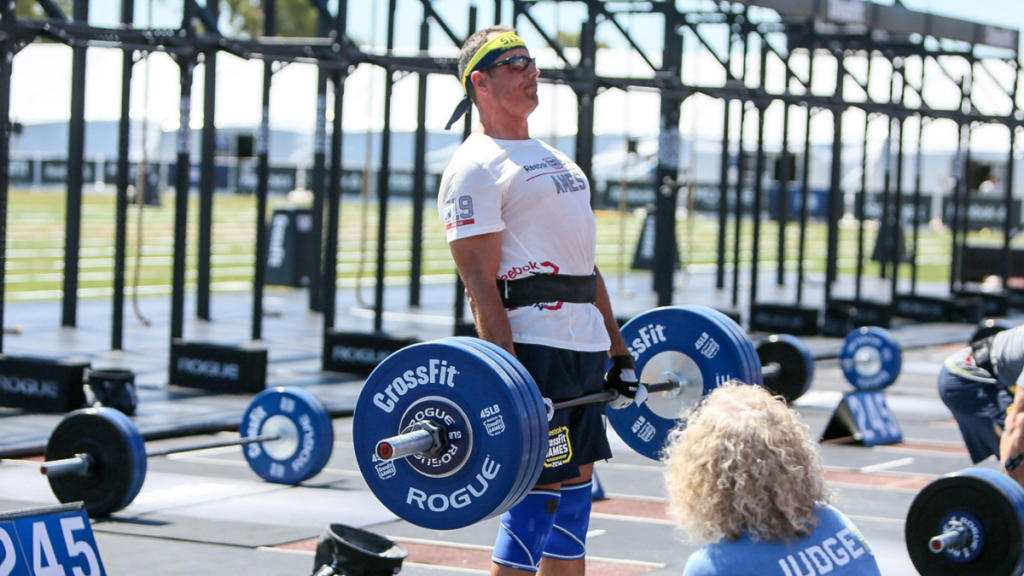
Pulling a personal record (PR) in the deadlift is one of the clearest markers of progress in strength training. It reflects improvements in neuromuscular coordination, muscle cross-sectional area, technique, and psychological readiness under load. In 2026, the tools for building a bigger deadlift are not mysterious or trendy.
They are grounded in decades of research on strength development, refined by more recent findings on volume, intensity, recovery, and motor learning.


This article lays out a complete, science-backed framework for increasing your deadlift PR. It is written for real lifters: people who train consistently, want results, and care about doing things the right way.
Every major recommendation is tied back to research, and every section connects directly to pulling more weight from the floor.

Understanding What Actually Drives a Deadlift PR
Before discussing sets, reps, or accessories, it is essential to understand what actually improves maximal strength.
Maximal Strength Is Mostly Neural and Structural
Maximal strength gains come from two primary sources: neural adaptations and muscular adaptations. Neural adaptations include increased motor unit recruitment, higher firing frequency, and improved synchronization. These changes occur early in a training program and are critical for heavy lifting performance (Sale, 1988).
Structural adaptations involve increases in muscle fiber size, changes in pennation angle, and connective tissue stiffness, which occur more slowly but underpin long-term strength development (Schoenfeld, 2010).
A deadlift PR reflects both systems working together. You must build muscle to raise your strength ceiling, and you must train your nervous system to express that strength under heavy loads.
Specificity Matters More Than Variety
The principle of specificity states that adaptations are specific to the imposed demands. Heavy deadlifts improve deadlift strength more effectively than any other exercise (Behm and Sale, 1993). While accessory movements have value, they cannot replace exposure to the competition lift or close variations if your goal is a PR.
This does not mean doing only heavy singles year-round. It means that your training must repeatedly expose you to the joint angles, bar path, and force demands of the deadlift.
Building the Muscle Needed to Lift More
Muscle mass is strongly associated with strength potential. While skill and neural factors matter, bigger muscles can generally produce more force.
Training Volume Drives Hypertrophy
Training volume, typically defined as the number of hard sets performed, is one of the strongest predictors of muscle growth (Schoenfeld et al., 2017). Studies consistently show a dose-response relationship between weekly sets per muscle group and hypertrophy, up to a point.

For the deadlift, key muscles include the gluteus maximus, hamstrings, erector spinae, adductors, and quadriceps. Research suggests that approximately 10–20 hard sets per week per muscle group is an effective range for hypertrophy in trained individuals (Schoenfeld et al., 2019).
This volume does not need to come exclusively from deadlifts. Romanian deadlifts, hip thrusts, rows, split squats, and leg curls all contribute to the muscular base needed for a bigger pull.
Moderate Loads Are Efficient for Muscle Growth
Muscle hypertrophy can be achieved across a wide range of loads, provided sets are taken close to failure (Schoenfeld et al., 2015). Loads between 60–80% of one-repetition maximum (1RM) are particularly efficient because they balance mechanical tension and fatigue.
For deadlift-specific hypertrophy, this typically translates to sets of 5–10 reps with controlled technique and sufficient proximity to failure. These sets should feel challenging but repeatable, allowing you to accumulate meaningful volume without excessive joint stress.
Long-Term Strength Requires Patience
Hypertrophy occurs gradually. Longitudinal studies show that meaningful increases in muscle cross-sectional area take weeks to months, not days (Wernbom et al., 2007). This means that chasing constant PRs in training is counterproductive. Instead, you should view hypertrophy-focused phases as investments that pay off later when you shift toward heavier loading.
Training Heavy to Express Strength
Once you have the muscle, you must teach your nervous system to use it.
Heavy Loads Improve Neural Efficiency
Training with loads above 85% of 1RM is particularly effective for improving maximal strength because it targets neural adaptations (Campos et al., 2002). Heavy sets increase motor unit recruitment and firing rates, both of which are essential for maximal force production.
For deadlift PRs, this means regularly training in the 1–5 rep range. These sets should be technically precise and performed with full focus. Sloppy heavy reps reinforce poor motor patterns and increase injury risk.
Singles Are Useful but Not Magic
Heavy singles at 90–95% of 1RM can improve confidence and technical consistency under near-maximal loads. Research shows that frequent exposure to heavy singles can improve strength without excessive fatigue if volume is carefully managed (Zourdos et al., 2016).
However, singles alone are insufficient for long-term progress. They do not provide enough volume for hypertrophy or repeated neural practice. The most effective programs combine singles with back-off sets or secondary sessions using moderate loads.
Bar Speed Matters
Intent to move the bar quickly, even when the bar speed is slow, enhances neural drive and strength adaptations (Behm and Sale, 1993). This is why cues like “push the floor away” or “explode from the start” are effective.
You do not need velocity trackers to benefit from this principle. Simply focusing on maximal effort during the concentric phase improves training quality and long-term strength outcomes.
Mastering Deadlift Technique for Bigger Pulls
Technique is not just about aesthetics. Efficient movement patterns reduce energy leaks and allow you to apply more force to the bar.
A Neutral Spine Is Strong and Safe
Research on spinal biomechanics shows that a neutral or near-neutral spine distributes load more evenly across vertebral structures (McGill, 2007). While slight spinal flexion can occur under maximal loads, deliberately rounding increases shear forces and injury risk without improving performance.
Maintaining a neutral spine improves force transfer from the hips and legs to the bar. This is especially important as loads approach your maximum.
Bar Path Efficiency Saves Strength
A vertical bar path over the midfoot minimizes the moment arm between the bar and the hips, reducing unnecessary torque demands (Hales, Johnson and Helms, 2009). Pulling the bar close to the shins and thighs is not just a coaching cue; it is a biomechanical advantage.
Video analysis studies of elite lifters consistently show minimal horizontal bar displacement compared to novices (Swinton et al., 2011).
Stance and Grip Are Individual but Trainable
There is no single “perfect” stance or grip width. Anthropometry influences optimal setup, including limb length and hip structure. However, once a stance is chosen, consistency matters. Repeated practice under load improves motor learning and force production efficiency (Schmidt and Lee, 2011).
Switching styles frequently slows technical mastery and limits strength expression.
Programming for a 2026 Deadlift PR
Effective programming balances volume, intensity, and recovery across time.

Periodization Still Works
Periodization refers to the planned variation of training variables over time. Meta-analyses show that periodized training produces greater strength gains than non-periodized approaches (Rhea and Alderman, 2004).
For deadlift PRs, a simple linear or block periodization model works well:
- Accumulation phase: higher volume, moderate loads, focus on hypertrophy.
- Intensification phase: reduced volume, heavier loads, focus on maximal strength.
- Peaking phase: low volume, very heavy loads, focus on performance.
This structure aligns with known principles of fatigue management and supercompensation.
Weekly Frequency Should Match Recovery
Training frequency influences volume distribution and recovery. Studies comparing different frequencies show that, when volume is equated, frequency has little effect on hypertrophy but can influence strength expression and technical consistency (Schoenfeld et al., 2016).
For most lifters, deadlifting 1–2 times per week is sufficient. One session can emphasize volume and technique, while the other focuses on heavier loading.
Fatigue Management Is Non-Negotiable
Excessive fatigue masks strength and increases injury risk. Monitoring subjective measures such as perceived exertion and bar speed can help regulate load. Autoregulation strategies, including rating of perceived exertion (RPE), are supported by research showing similar or superior outcomes compared to fixed loading models (Helms et al., 2018).
In practice, this means adjusting loads on days when performance is clearly reduced rather than forcing predetermined numbers.
Accessory Exercises That Actually Carry Over
Accessory work should address muscular weaknesses and support the main lift.
Posterior Chain Development Is Critical
The glutes and hamstrings are primary drivers of hip extension in the deadlift. Electromyography studies show high activation of these muscles during deadlift variations (Escamilla et al., 2002).
Exercises such as Romanian deadlifts, hip thrusts, and glute-ham raises directly target these muscles and have strong biomechanical similarity to the pull.
Upper Back Strength Improves Stability
A strong upper back helps maintain spinal position and bar proximity. Rows and pull-ups increase scapular and thoracic strength, contributing to better force transfer and posture during heavy pulls.
While these muscles do not directly extend the hips, they play a stabilizing role that becomes increasingly important as loads increase.
Unilateral Work Reduces Asymmetries
Unilateral exercises such as split squats and single-leg Romanian deadlifts can reduce strength imbalances between limbs. Asymmetries have been associated with altered loading patterns and injury risk (Bishop et al., 2018).
Reducing these imbalances can improve consistency and confidence under maximal loads.
Recovery: The Hidden Driver of Progress
Strength gains occur during recovery, not during training.
Sleep Is a Performance Multiplier
Sleep deprivation impairs maximal strength, reaction time, and motor learning (Reilly and Edwards, 2007). Chronic sleep restriction also alters hormonal profiles, reducing testosterone and increasing cortisol, which negatively affects muscle growth and recovery (Leproult and Van Cauter, 2011).
Consistently sleeping 7–9 hours per night is one of the most effective ways to support deadlift performance.
Nutrition Supports Training Adaptations
Adequate protein intake is essential for muscle repair and growth. Meta-analyses suggest that approximately 1.6–2.2 grams of protein per kilogram of body mass per day maximizes hypertrophy in resistance-trained individuals (Morton et al., 2018).
Carbohydrate availability also influences performance by replenishing glycogen and supporting training intensity (Kerksick et al., 2017). Strength athletes do not need extreme carbohydrate intake, but chronically low intake can impair training quality.
Deloads Preserve Long-Term Progress
Deload periods, characterized by reduced volume and intensity, help dissipate accumulated fatigue. While direct experimental evidence on deloading is limited, the concept aligns with established fatigue and recovery models in sports science (Issurin, 2010).
Strategic deloads every 6–12 weeks can restore performance and reduce injury risk, particularly during high-intensity phases.
Psychological Readiness and PR Performance
Pulling a PR is as much mental as physical.
Confidence Influences Force Output
Psychological factors such as confidence and arousal influence maximal strength performance. Studies show that increased motivation and self-efficacy can enhance force production during maximal efforts (McKay et al., 2012).
Practicing heavy lifts in training, using consistent routines, and building a history of successful lifts all contribute to confidence on PR attempts.
Arousal Needs to Be Controlled
Excessive arousal can impair coordination and technique, particularly in complex lifts (Yerkes and Dodson, 1908). While some lifters benefit from high arousal, others perform better with controlled focus.
Understanding your optimal arousal level and replicating it during heavy sessions improves consistency and PR success.
Putting It All Together for 2026
PRing your deadlift in 2026 is not about discovering new secrets. It is about applying established principles with discipline and consistency. Build muscle with sufficient volume, train heavy to develop neural efficiency, refine technique to reduce energy leaks, recover like it matters, and peak intelligently.
The science is clear: strength is trainable, predictable, and highly responsive to well-designed programs. If you respect the process, your deadlift will move forward.
Bibliography
- Behm, D.G. and Sale, D.G. (1993) ‘Intended rather than actual movement velocity determines velocity-specific training response’, Journal of Applied Physiology, 74(1), pp. 359–368.
- Bishop, C., Read, P., Lake, J., Chavda, S. and Turner, A. (2018) ‘Inter-limb asymmetries: Understanding how to calculate differences from bilateral and unilateral tests’, Strength and Conditioning Journal, 40(4), pp. 1–6.
- Campos, G.E.R., Luecke, T.J., Wendeln, H.K., et al. (2002) ‘Muscular adaptations in response to three different resistance-training regimens’, Journal of Applied Physiology, 88(1), pp. 50–60.
- Escamilla, R.F., Francisco, A.C., Kayes, A.V., Speer, K.P. and Moorman, C.T. (2002) ‘An electromyographic analysis of sumo and conventional style deadlifts’, Medicine and Science in Sports and Exercise, 34(4), pp. 682–688.
- Hales, M.E., Johnson, B.F. and Helms, E.R. (2009) ‘Kinematic analysis of the powerlifting style squat and deadlift’, Journal of Strength and Conditioning Research, 23(5), pp. 1596–1605.
- Helms, E.R., Storey, A., Cross, M.R., et al. (2018) ‘RPE and velocity-based training: A review’, Sports Medicine, 48(4), pp. 879–899.
- Issurin, V.B. (2010) ‘New horizons for the methodology and physiology of training periodization’, Sports Medicine, 40(3), pp. 189–206.
- Kerksick, C.M., Wilborn, C.D., Roberts, M.D., et al. (2017) ‘ISSN exercise and sports nutrition review update’, Journal of the International Society of Sports Nutrition, 14(38), pp. 1–57.