Hitting a new personal record (PR) in the clean is one of the most satisfying moments in strength training. It is also one of the most complex. The clean demands high levels of maximal strength, explosive power, coordination, mobility, and technical efficiency, all expressed in a fraction of a second.
In 2026, the path to a PR is clearer than ever because decades of sports science research now give us reliable principles for training, recovery, and skill acquisition.


This article breaks down exactly how to PR your clean using evidence-backed methods. There is no guesswork, no hype, and no shortcuts. Every claim is grounded in peer-reviewed research, and every recommendation is practical for real athletes.
Understanding What Limits Your Clean
Before you can improve your clean, you need to understand why it stalls. Most plateaus come from one or more of four limiting factors: maximal strength, rate of force development, technical efficiency, and recovery capacity.
Maximal Strength as the Foundation
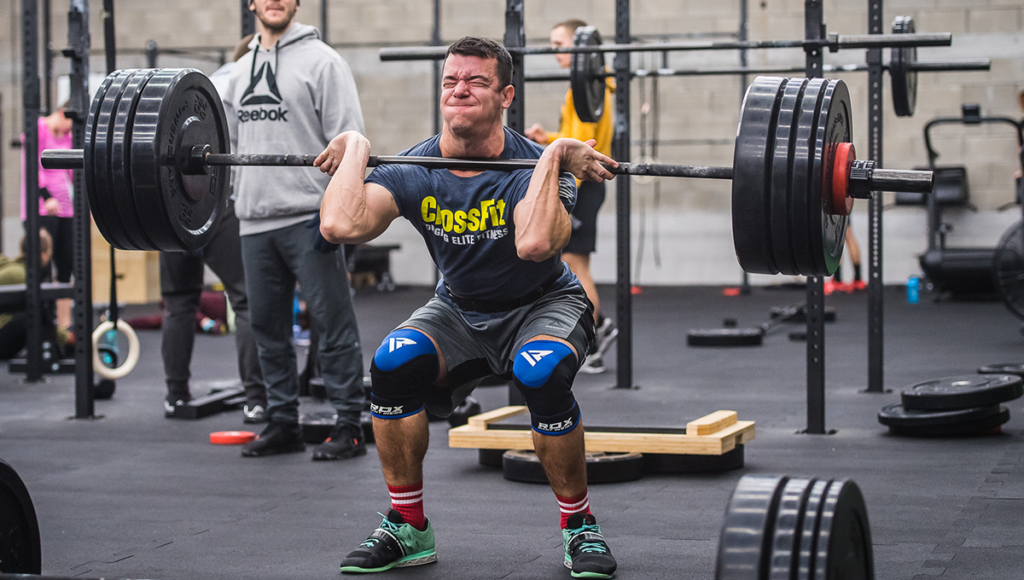
Maximal strength, particularly in the lower body and posterior chain, is the single strongest predictor of clean performance. Research consistently shows strong correlations between one-repetition maximum (1RM) back squat strength and clean 1RM, often exceeding r = 0.80 in trained athletes. This means athletes with stronger squats tend to clean more, even when technical skill is similar.
The reason is simple. The clean requires you to apply force against the ground to accelerate the barbell upward. According to Newton’s second law, greater force production leads to greater acceleration when mass is constant. If your maximal force output is low, your ceiling for the clean is also low.
However, maximal strength alone is not enough. Many athletes can squat far more than they can clean. This leads us to the next limiter.
Rate of Force Development and Power
The clean is a power-dominant lift. Power is defined as force multiplied by velocity. While maximal strength determines how much force you can produce, rate of force development (RFD) determines how quickly you can produce it.
Studies comparing Olympic weightlifters to powerlifters show that weightlifters produce force faster, even when absolute strength levels are similar. The second pull of the clean occurs in less than 250 milliseconds, far shorter than the time needed to express maximal force. Therefore, training must improve not just strength, but how fast that strength can be applied.
Technical Efficiency and Barbell Kinematics
Elite lifters do not lift more because they pull harder; they lift more because they waste less force. Motion analysis studies show that high-level weightlifters keep the bar closer to the body, minimize horizontal displacement, and time their triple extension precisely.
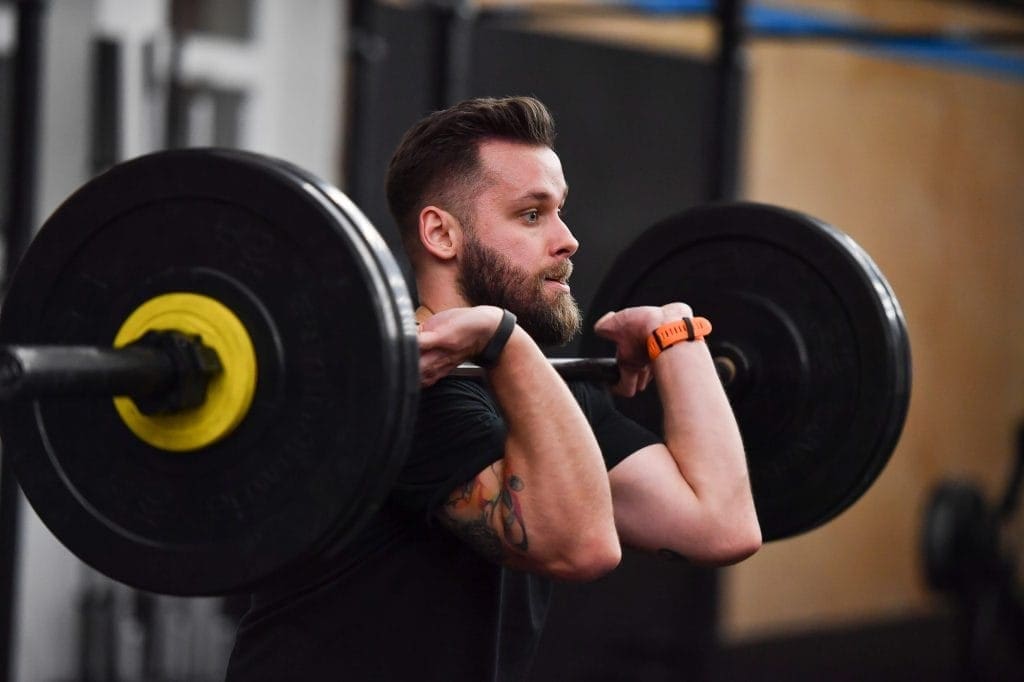
Small technical inefficiencies, such as early arm bend or poor bar path, can reduce effective power transfer and increase energy cost. Over time, these inefficiencies cap progress even if strength improves.
Recovery and Fatigue Management
Finally, recovery is often the hidden limiter. High-intensity lifting places significant stress on the nervous system, connective tissues, and muscles. Chronic fatigue reduces force production, impairs motor learning, and increases injury risk.
Research on overreaching shows that excessive training volume or intensity without adequate recovery leads to stagnation or regression, even in motivated athletes. To PR your clean, your training stress must be recoverable.
Building the Strength Base That Transfers to the Clean
A bigger clean starts with a stronger athlete, but only if that strength is built correctly.
Squat Strength and Clean Performance
Back squats and front squats both improve clean performance, but they do so in different ways. Back squats allow higher absolute loading, which drives overall lower-body strength. Front squats more closely replicate the clean receiving position and emphasize upright torso strength.
Electromyography studies show greater quadriceps activation in front squats, while back squats produce higher total force outputs. A combination of both produces the best results for clean performance.
For most athletes, a back squat of at least 1.5 to 1.7 times bodyweight is required for intermediate clean progress, while advanced lifters often exceed 2.0 times bodyweight.
Pulling Strength: Clean Pulls and Deadlifts
Clean pulls and deadlifts build the specific strength needed to apply force to the barbell. Clean pulls, when performed with proper posture and bar proximity, closely mimic the force-time characteristics of the clean.
Research comparing clean pulls at 90–110% of clean 1RM shows higher peak force and similar bar velocities to full cleans, making them ideal for overload without excessive technical fatigue.
Deadlifts increase absolute strength but have lower specificity. They are best used in early or off-season phases to raise general strength levels before transitioning to more specific pulling exercises.
Upper Back and Trunk Strength
Upper back and trunk strength stabilize the barbell and allow efficient force transfer. Studies show that insufficient trunk stiffness reduces power output in explosive lifts by allowing energy leakage through the spine.
Exercises such as paused front squats, heavy rows, and isometric trunk work improve spinal stability and support heavier cleans.
Training for Power and Speed
Strength sets the ceiling. Power determines how close you get to it.
The Role of Velocity-Based Training
Velocity-based training (VBT) has gained strong support in the literature. Measuring bar speed allows athletes to target specific adaptations, such as maximal power or speed-strength.
Research shows that peak power in Olympic lifts typically occurs at 70–85% of 1RM. Training consistently in this range improves RFD and bar speed, both of which are critical for clean PRs.
Even without technology, intent matters. Studies demonstrate that lifting with maximal intent to move the bar fast increases neural drive and power output, even when the load is heavy.
Plyometrics and Their Transfer to the Clean
Plyometric training improves RFD by enhancing the stretch-shortening cycle. Meta-analyses show significant improvements in jump height and power output when plyometrics are combined with strength training.
The clean shares similar neuromuscular demands with vertical jumping, particularly during triple extension. Exercises such as loaded jumps, jump squats, and bounds can improve explosive capacity when programmed correctly.
However, plyometrics are only effective when foundational strength is present. Without sufficient strength, the transfer to the clean is limited.
Complex and Contrast Training
Complex training pairs heavy strength exercises with explosive movements to take advantage of post-activation performance enhancement (PAPE). For example, a heavy front squat followed by a clean or jump.
Research shows that PAPE can increase power output for several minutes after heavy loading, provided fatigue is managed. This method is best used sparingly and with experienced athletes.
Technical Refinement: Making Every Kilo Count
Technique is not about aesthetics. It is about physics.
Bar Path and Force Efficiency
Biomechanical analyses consistently show that elite lifters keep the barbell close to the body throughout the pull. This minimizes rotational moments and maximizes vertical force application.
Excessive horizontal displacement increases the mechanical work required to lift the bar, effectively making the load “heavier” than it needs to be. Technical drills that reinforce close bar paths can immediately improve clean performance without increasing strength.
Timing of the Second Pull
The second pull is where the clean is won or lost. Studies show that peak power occurs just before full extension, not at the moment of maximal height.
Athletes who initiate arm pull too early reduce lower-body contribution and bar velocity. Proper sequencing allows the legs and hips to generate most of the upward momentum before the arms guide the bar into position.
Receiving Position and Front Rack Mobility
A secure receiving position allows you to fix heavier loads. Limited front rack mobility increases catch height requirements and reduces successful lifts.
Research on mobility interventions shows that targeted shoulder, wrist, and thoracic spine mobility work improves front rack positioning and reduces compensatory movement patterns.
Programming for a Clean PR
The best exercises mean nothing without intelligent programming.
Volume and Intensity Distribution
Studies on elite weightlifters show a polarized distribution of training intensity. Most volume occurs at moderate intensities, with a smaller proportion at very high intensities.
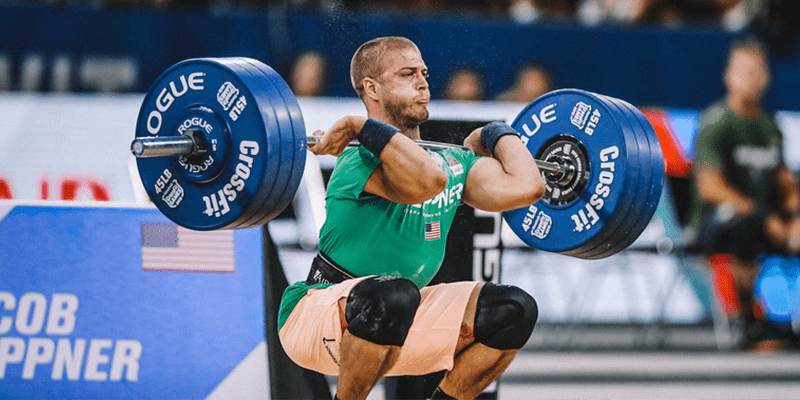
Constantly training near max leads to technical breakdown and neural fatigue. Instead, the majority of clean training should occur between 70–85%, with heavy singles introduced strategically.
Frequency and Skill Retention
Motor learning research shows that frequent exposure improves skill retention and technical consistency. Performing cleans two to four times per week leads to better outcomes than infrequent, high-volume sessions.
Lower-volume, higher-frequency approaches allow quality repetitions without excessive fatigue.
Peaking for a PR Attempt
Peaking requires reducing fatigue while maintaining neural readiness. Research on tapering shows that reducing volume by 30–50% over one to three weeks improves maximal strength and power performance.
Intensity should remain relatively high, while total lifts decrease. This allows full expression of adaptations on PR day.
Recovery, Nutrition, and Body Composition
Performance improvements only occur when training stress is followed by recovery.
Sleep and Neural Recovery
Sleep deprivation reduces maximal strength, power output, and reaction time. Studies show that even one night of reduced sleep impairs force production and increases perceived effort.
Consistently achieving seven to nine hours of sleep improves training adaptations and reduces injury risk.
Nutrition and Energy Availability
Adequate energy intake is essential for strength and power gains. Low energy availability impairs hormone production, reduces training quality, and slows recovery.
Protein intake of approximately 1.6–2.2 g per kilogram of bodyweight supports muscle repair and adaptation. Carbohydrates are particularly important for high-intensity lifting, as they replenish glycogen and support power output.
Bodyweight Changes and Relative Strength
Increasing body mass can increase absolute strength, but excessive fat gain reduces relative power. Research shows that strength-to-mass ratio is critical for explosive lifts like the clean.
Strategic bodyweight increases focused on lean mass are more likely to improve clean performance than uncontrolled bulking.
Injury Prevention and Longevity
A PR is meaningless if it costs you months of training.
Load Management and Tendon Health
Tendons adapt more slowly than muscles. Sudden increases in volume or intensity increase injury risk. Longitudinal studies show that gradual load progression reduces overuse injuries in strength athletes.
Including isometric and slow eccentric work improves tendon stiffness and resilience.
Technique as Injury Prevention
Poor technique increases joint stress, particularly at the lumbar spine, knees, and wrists. Technical consistency reduces injury risk by distributing forces more evenly.
Regular technique review, even for experienced lifters, supports both performance and longevity.
Putting It All Together
PRing your clean in 2026 is not about secret exercises or viral cues. It is about applying proven principles consistently. Build maximal strength, train power with intent, refine technique, manage fatigue, and recover like an athlete.
The science is clear. When these elements align, PRs follow.
Bibliography
- Baker, D. (2001) ‘A series of studies on the training of high-intensity muscle power in rugby league football players’, Journal of Strength and Conditioning Research, 15(2), pp. 198–209.
- Comfort, P., Allen, M. and Graham-Smith, P. (2011) ‘Kinematic analysis of the power clean’, Journal of Strength and Conditioning Research, 25(2), pp. 422–429.
- Cormie, P., McGuigan, M.R. and Newton, R.U. (2011) ‘Developing maximal neuromuscular power’, Sports Medicine, 41(1), pp. 17–38.
- DeWeese, B.H. et al. (2015) ‘The training process: planning for strength–power training in track and field’, Strength and Conditioning Journal, 37(6), pp. 1–14.
- Haff, G.G. and Nimphius, S. (2012) ‘Training principles for power’, Strength and Conditioning Journal, 34(6), pp. 2–12.
- Hornsby, W.G. et al. (2017) ‘Postactivation potentiation and the power clean’, Journal of Strength and Conditioning Research, 31(8), pp. 2123–2130.