Poor lifting form is one of the most common and most preventable problems in strength training. It affects beginners learning to squat for the first time and experienced athletes pushing heavy loads under fatigue.
Bad form does not just reduce performance. It increases injury risk, limits strength gains, and reinforces faulty movement patterns that become harder to correct over time.


Research consistently shows that technique quality plays a critical role in how forces are distributed across joints and tissues during resistance training. When form breaks down, stress is shifted away from large, load-tolerant muscles and onto passive structures such as ligaments, intervertebral discs, and tendons. Over time, this increases the likelihood of both acute injuries and chronic overuse issues.
The good news is that lifting with good form is a skill. Like any skill, it can be improved with the right approach. This article breaks down five evidence-based strategies to help you avoid lifting with bad form, regardless of your experience level. Each tip is grounded in biomechanics, motor learning research, and strength training science, and explained in a practical, easy-to-understand way.
Tip 1: Master Movement Patterns Before Adding Load

Why Load Exposes Weak Technique
One of the fastest ways to develop bad form is to load a movement before you can perform it well. External resistance magnifies every small error in posture, joint alignment, and timing. A slight loss of spinal control in a bodyweight hinge becomes a significant shear force when a barbell is added.
Biomechanical research shows that increasing load increases joint moments and spinal compression forces in a near-linear fashion. If the underlying movement pattern is flawed, heavier loads amplify stress in vulnerable areas such as the lumbar spine and knees. This is particularly relevant for compound lifts like squats, deadlifts, and presses, where multiple joints must coordinate effectively.
Motor Learning and Skill Acquisition
From a motor learning perspective, strength exercises are skills. Learning a skill under low load allows the nervous system to refine coordination patterns without excessive noise or threat. Studies on skill acquisition show that practicing movements with manageable difficulty improves long-term retention and transfer to more challenging conditions.
When load is added too early, the body prioritizes task completion over movement quality. This often results in compensations such as spinal flexion, knee valgus, or excessive shoulder internal rotation. These compensations can become ingrained habits.
Practical Application
Before increasing weight, you should be able to:
• Maintain a neutral spine throughout the entire range of motion
• Control joint alignment without collapsing or shifting
• Move smoothly without excessive tempo changes
• Repeat the movement consistently across multiple reps
This applies to all major lifts. For example, in the squat, you should demonstrate stable foot pressure, controlled knee tracking, and trunk stiffness with bodyweight and light loads before progressing. In the deadlift, you should be able to hinge at the hips without spinal rounding before touching heavier weights.
Research supports the use of technique-focused practice with lighter loads to reduce injury risk and improve performance outcomes in resistance training.
Tip 2: Use Range of Motion You Can Actually Control

The Relationship Between Range of Motion and Form
Full range of motion is often promoted as inherently superior, but only when it can be controlled. Forcing depth or joint angles you cannot actively stabilize is a common cause of bad form.
Studies show that excessive joint motion without adequate muscular control increases strain on passive tissues. For example, collapsing into the bottom of a squat due to poor hip or ankle mobility increases knee valgus and spinal flexion, both of which are associated with higher injury risk.
Similarly, in pressing movements, lowering the bar beyond shoulder control can increase anterior shoulder stress and reduce joint stability.
Mobility vs. Stability
Good form requires both mobility and stability. Mobility allows you to access positions. Stability allows you to control them. Problems arise when athletes chase range of motion without developing the strength and motor control to support it.
Electromyography research demonstrates that muscles are most effective at stabilizing joints within ranges where they can produce adequate force. When joints move beyond these ranges under load, reliance on ligaments and joint capsules increases.
Practical Application
You should only use a range of motion where you can:
• Maintain joint alignment
• Control the descent and ascent
• Stop at any point without bouncing or collapsing
For example:
• Squat to the deepest depth where your spine remains neutral
• Deadlift from a height that allows proper hip hinge mechanics
• Press only as low as your shoulder control allows
Over time, controlled strength work through partial ranges can safely expand usable range of motion. Research shows that progressive exposure to deeper ranges under control improves mobility and strength simultaneously.
Tip 3: Slow Down and Control the Eccentric Phase
Why Speed Masks Technical Errors
Fast, uncontrolled repetitions are one of the most common sources of bad form. Momentum can hide poor positioning and reduce muscular contribution. While explosive lifting has its place, it should be built on a foundation of controlled movement.
Biomechanical studies show that rapid eccentric phases increase peak forces on joints and connective tissues. Slowing down the eccentric phase increases time under tension and improves proprioceptive feedback, allowing better position awareness.
Eccentric Control and Injury Prevention
Eccentric muscle actions play a key role in decelerating joints and absorbing force. Research consistently links poor eccentric strength and control with higher injury rates, particularly in the knees, hamstrings, and shoulders.
When the eccentric phase is rushed, stabilizing muscles often fail to engage in time, leading to joint collapse or compensatory movement patterns.
Practical Application
A controlled eccentric typically lasts two to four seconds. This tempo:
• Improves motor control
• Enhances muscle activation
• Reduces reliance on passive structures
• Makes form breakdown more obvious
For example:
• Lower into a squat under control rather than dropping into the bottom
• Lower the bar to the chest slowly during bench press
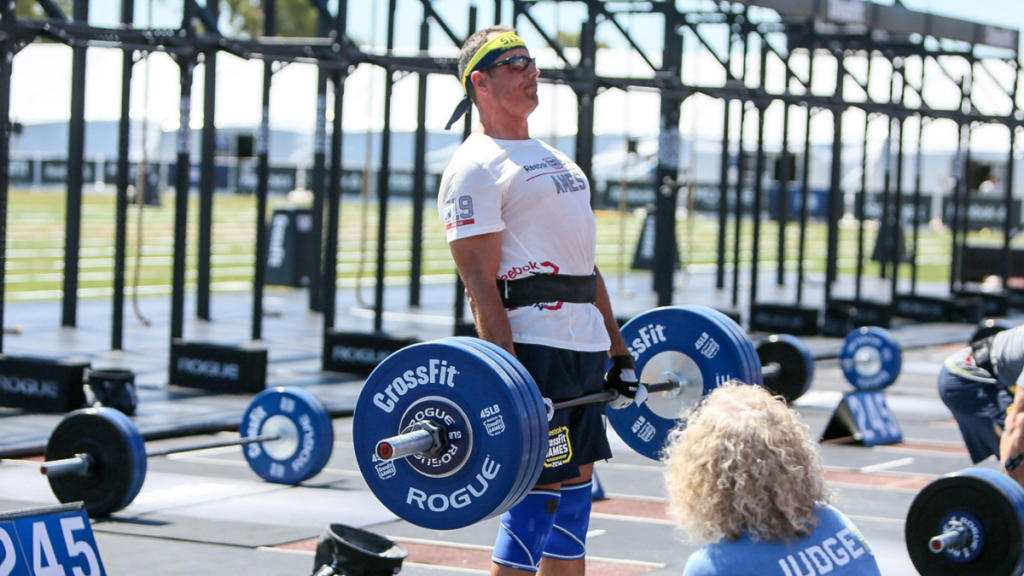
• Control the descent of the bar during deadlifts instead of letting gravity take over
Research indicates that slower eccentrics improve technique retention and may reduce injury risk without compromising strength gains when used appropriately.
Tip 4: Use Feedback to Identify and Correct Errors

Why You Cannot Feel All Form Errors
One of the biggest challenges in lifting is that perception does not always match reality. Studies in motor control show that people are often poor judges of their own joint positions, especially under load and fatigue.
This means you can believe your form is solid while consistently reinforcing faulty mechanics.
Types of Effective Feedback
Research distinguishes between intrinsic feedback (what you feel) and extrinsic feedback (information from an external source). Extrinsic feedback has been shown to significantly improve technique learning in resistance training.
Effective forms of feedback include:
• Video analysis
• Coaching cues
• Mirrors (used carefully)
Video feedback is particularly well-supported in the literature. Studies show that reviewing movement footage improves technique correction and long-term skill retention.
Practical Application
To use feedback effectively:
• Record lifts from the side and front when learning or increasing load
• Focus on one or two technical points at a time
• Compare reps under fatigue to fresh reps
Mirrors can help with posture awareness but should not replace proprioception. Overreliance on mirrors may disrupt natural movement patterns, especially in compound lifts.
Working with a qualified coach, even periodically, is also supported by evidence as a way to improve technique quality and reduce injury risk.
Tip 5: Respect Fatigue and Auto-Regulate Your Training
Fatigue and Form Breakdown
Fatigue is one of the strongest predictors of bad form. As muscles tire, force production decreases and coordination suffers. Research shows that neuromuscular fatigue alters movement patterns, often increasing joint stress.

In studies on resistance training under fatigue, lifters demonstrate increased spinal flexion, reduced knee stability, and altered bar paths. These changes occur even when athletes consciously attempt to maintain technique.
The Myth of Perfect Form Under Maximal Effort
Perfect form does not exist under maximal loads. However, there is a difference between acceptable technical deviation and dangerous breakdown.
Research supports the concept of technical failure rather than muscular failure. Technical failure occurs when form degrades beyond a safe threshold, even if the muscles could produce another repetition.
Practical Application
To manage fatigue:
• Stop sets when form noticeably degrades
• Use rate of perceived exertion (RPE) or reps in reserve (RIR)
• Reduce load or volume when technique slips
Auto-regulated training models are well-supported in the literature. They allow lifters to adjust intensity based on daily readiness, reducing injury risk while maintaining performance.
Deload weeks and variation in intensity are also supported strategies for managing cumulative fatigue and preserving movement quality over time.
Why Avoiding Bad Form Matters Long Term
Poor form is not just a short-term problem. Repeated exposure to faulty mechanics can lead to tissue adaptation in undesirable ways. Tendons, ligaments, and joint surfaces respond to load, but they adapt more slowly than muscle. When subjected to excessive or poorly distributed forces, injury risk increases.
Longitudinal studies in strength athletes show that technique quality is a key factor in longevity and performance sustainability. Athletes who prioritize movement quality tend to experience fewer injuries and longer training careers.
Good form is not about perfection. It is about consistency, control, and respect for how the body handles load.
References
• Behm, D.G. and Sale, D.G., 1993. Velocity specificity of resistance training. Sports Medicine, 15(6), pp.374–388.
• Escamilla, R.F., 2001. Knee biomechanics of the dynamic squat exercise. Medicine and Science in Sports and Exercise, 33(1), pp.127–141.
• Glass, S.C. and Armstrong, T., 1997. Electromyographical activity of the muscles of the trunk during stabilization exercises. Archives of Physical Medicine and Rehabilitation, 78(8), pp.878–885.
• McGill, S.M., 2007. Low back disorders: evidence-based prevention and rehabilitation. Human Kinetics.
• Schoenfeld, B.J., 2010. Squatting kinematics and kinetics and their application to exercise performance. Journal of Strength and Conditioning Research, 24(12), pp.3497–3506.