Rowing CrossFit Workouts are a great way to build your conditioning and test your mental toughness.
As a skill rowing is essential for CrossFit, as it is featured in so many WODs. These workouts will help you to test out your skill over a variety of different intensities, heart rate levels and distances.


It is also important to spend time working with your coach in order to improve your general technique because once this is more efficient, then everything else will improve as well.
Technique
Run-Row Workout
2 Rounds:
- 1,5 mile Run
- 1500 m Row
TIP: Don’t Grip Too Hard
Don’t hold on so hard to the handle. Keep enough grip to not lose the handle, but also not so much that you wear out your hands, have achy forearms, and tear up your palms.
Rowing CrossFit Workouts – 20 min Fat Burner
10 rounds
- 1 minute rowing
- 1 minute rest.
Make sure there is intensity in your rowing, keep it around 85% effort for the whole minute.
TIP: Drive With Your Legs
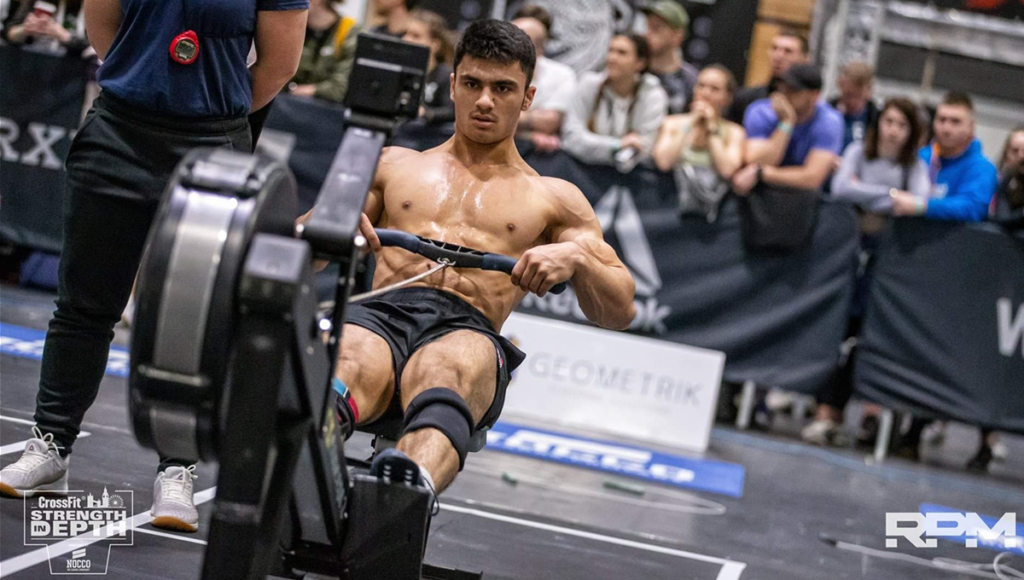
Rowing is mostly about your legs. Despite your natural instincts, your legs are far stronger than your arms and should be doing the vast majority of the work. Your quads and booty should be toasted after a hard rowing workout.
TIP: Sit Up Tall at All Times
Hinge at the hips and keep good posture, like a good morning or a deadlift. Lift your chest up. Don’t let your lower back or shoulders collapse. Be relaxed, but with good posture.
Row/Push up Workout
- Row 1,000 meters
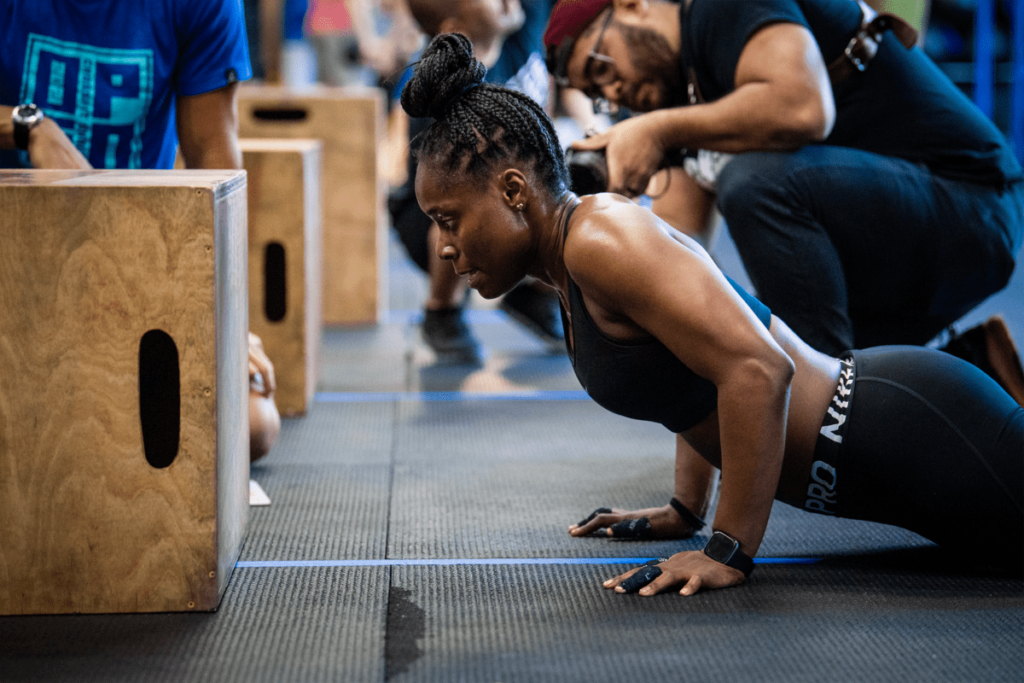
- 20 hand-release pushups
- Row 750 meters
- 30 hand-release pushups
- Row 500 meters
- 40 hand-release pushups
- Row 250 meters
- 50 hand-release pushups
Do the push ups immediately after the row. Rest as needed between rowing sessions.
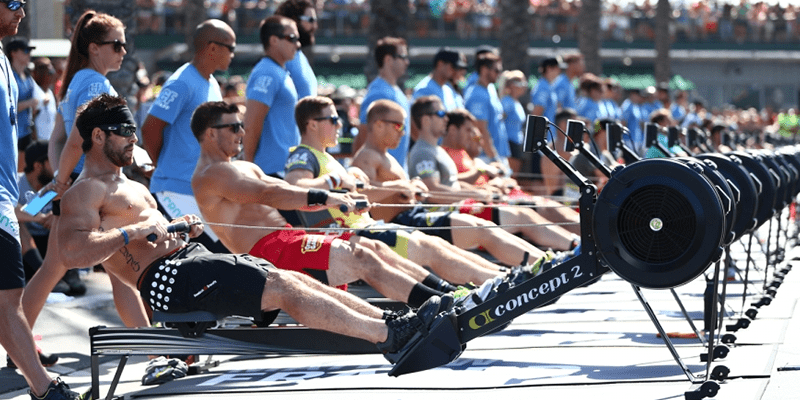
TIP: Legs, Hips, Arms, Arms, Hips, Legs
This is the sequence of rowing. If you reorganize this list, it doesn’t work.
Rowing CrossFit Workouts TIP: Feel the Connection Through Your Feet
The whole way through the drive you should feel a solid connection between the balls of your feet and the footplates. Your heels will lift up at different points during a rowing stroke, but you should always be transmitting power and connection through the balls of your feet.
Rowing CrossFit Workouts – “Jackie”
For time:
- 1000 m Row
- 50 Thrusters 45
- 30 Pull-ups
TIP: Drive Straight Back
If you feel yourself lift off the seat, or tragically, you pop off the seat and land on the rail, it is because you are pushing up instead of back. Push straight back.
Rowing CrossFit Workouts TIP: Don’t Slam the Seat Into Your Heels
As you continue to move forward and return to the start of the stroke, you should stop when your shins are perpendicular to the ground and your heels are curled up off the footplates, but your seat should never run into your feet.
Chipper Rowing Workout
- 50 air squats
- 25-calorie row
- 40 Russian kettlebell swings
- 20-calorie row
- 30 situps
- 15-calorie row
- 20 pushups
- 10-calorie row
- 10 burpees
TIP: Don’t Pull With Your Arms
Keep your elbows straight as you drive your legs. Remember, it’s about your legs, not your arms. As soon as your arms bend, you’ve lost the ability to translate power from your legs.
Timed Row Interval Workout
- Row 10 x 2 min
- 30 sec rest between each piece
TIP: Don’t Shrug Your Shoulders Up
Don’t pull your shoulders up into your ears as you drive back in the stroke. Instead, imagine you are pulling your shoulder blades together behind you.
Rowing Workout from Samantha Briggs
For time:
- 150 Air squats
- 2000 m Row
- 150 Air squats
TIP: Pull the Handle to the Bottom of Your Ribs
For the ladies, you want to pull the handle to the bottom of your sports bra. For the men, pretend you’re wearing a sports bra.
TIP: Imagine Your Upper Body Like a Pendulum
Okay, maybe an upside-down pendulum. More like a needle ticking back and forth between 11:00 and 1:00 on a clock face. At the catch, or beginning of the stroke, right before you drive back, you should be leaned forward at the 1:00 position. At the finish, or far end of the stroke, when your legs are fully extended, you should lean back to the 11:00 position.
Check out this article if you want to work on your rowing technique:
How to Improve Your Rowing Technique for Crossfit
Why is rowing an essential skill for CrossFit?
Rowing is featured in many CrossFit WODs (Workouts of the Day) and is a great way to build conditioning and test mental toughness. It challenges different intensities, heart rate levels, and distances, making it a versatile and effective exercise.
How can I improve my rowing technique?
Improving your rowing technique can significantly enhance your performance. It’s important to work with a coach to refine your technique. Key tips include:
Not gripping too hard: Hold the handle firmly enough to maintain control but avoid excessive grip to prevent hand fatigue and injury.
Driving with your legs: Your legs should do most of the work, as they are stronger than your arms.
Maintaining good posture: Sit up tall, hinge at the hips, and keep your chest lifted without collapsing your lower back or shoulders.
Following the sequence: Remember the sequence: Legs, hips, arms, and then arms, hips, legs.
Is rowing good for weight loss?
Yes, rowing is an excellent exercise for weight loss as it burns a significant number of calories, engages multiple muscle groups, and can be performed at varying intensities to maximize fat burning.
What is a basic rowing workout for fat loss?
A basic rowing workout for fat loss involves intense intervals:
Rowing for 1 minute
Resting for 1 minute
Repeat this for 10 rounds, maintaining around 85% effort during the rowing intervals.
What are some tips for avoiding common rowing mistakes?
Here are several tips to improve your rowing form:
Don’t grip too hard: Maintain a firm but relaxed grip.
Drive with your legs: Focus on using your leg strength.
Sit up tall: Keep good posture throughout the stroke.
Follow the correct sequence: Legs, hips, arms; then reverse.
Feel the connection through your feet: Maintain a solid connection with the footplates.
Drive straight back: Avoid pushing up and off the seat.
Avoid slamming the seat into your heels: Stop when your shins are perpendicular to the ground.
Don’t pull with your arms: Keep your elbows straight until the legs have driven back.
Don’t shrug your shoulders up: Keep your shoulders relaxed and pull your shoulder blades together.
How often should I include rowing in my workout routine?
Incorporating rowing 2-3 times a week can provide significant cardiovascular and muscular benefits. However, the frequency can vary based on your fitness goals and overall workout regimen.
Is rowing suitable for beginners?
Yes, rowing is suitable for beginners as it is a low-impact exercise that can be easily scaled to different fitness levels. Beginners should focus on learning proper technique and gradually increasing their workout intensity.
How can I increase the intensity of my rowing workouts?
You can increase the intensity by:
Rowing at a faster pace
Increasing the resistance on the rowing machine
Incorporating interval training
Adding additional exercises like push-ups or squats between rowing intervals