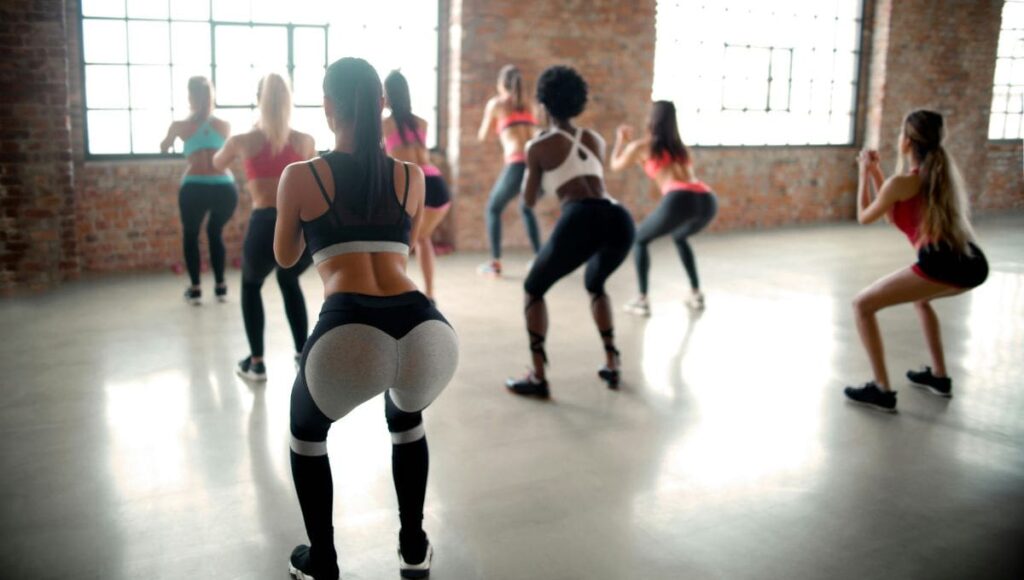
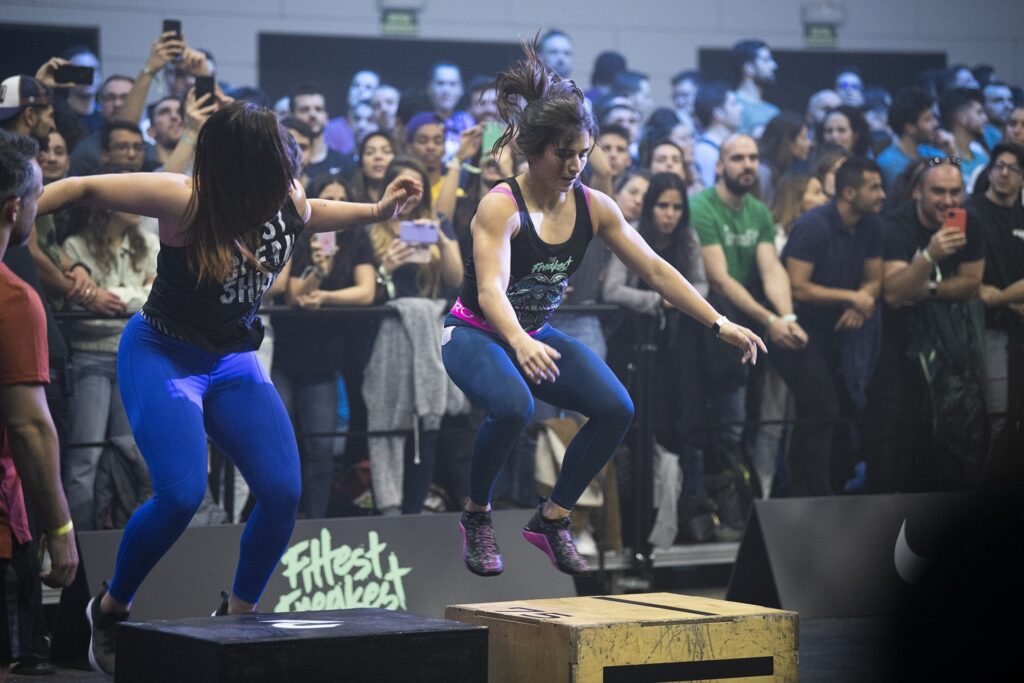
When it comes to building lower body strength, the debate between the barbell squat and leg press is persistent. Both exercises offer unique advantages and can be highly effective, but the choice depends on specific training goals and individual physical conditions.
This article will examine the mechanics, muscle activation, strength benefits, and injury risk associated with each exercise, drawing on scientific research to provide a definitive comparison of which is better for building leg strength.
Understanding the Barbell Squat and Leg Press
What is a Barbell Squat?
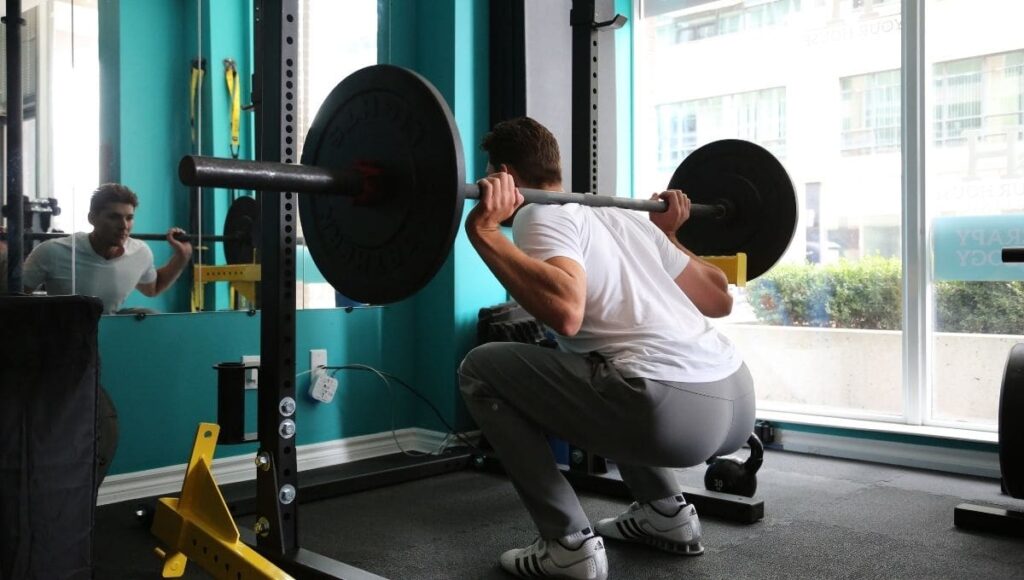
The barbell squat is a compound, multi-joint exercise that targets the quadriceps, hamstrings, glutes, lower back, and core. It requires lifters to stabilise their body while lowering themselves into a squat position, with the barbell placed on their upper back or shoulders. This exercise engages several stabilising muscles, which means it requires substantial balance, coordination, and control.
What is the Leg Press?
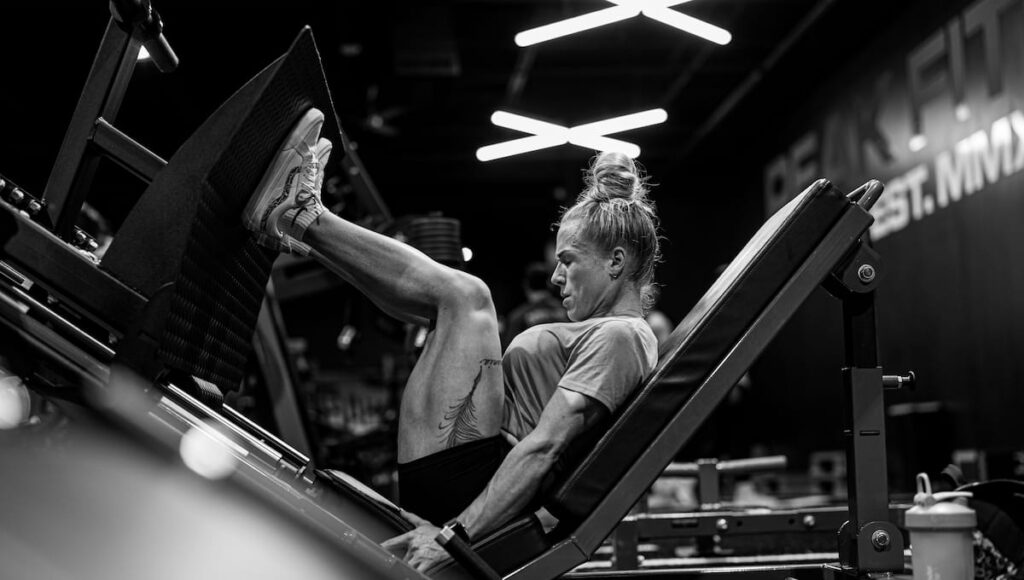
The leg press is a machine-based exercise in which the user pushes a weighted platform away from their body using their legs. In contrast to the barbell squat, the leg press removes the need for stabilising muscles, as the lifter is seated and secured. This exercise focuses on the quadriceps, with less engagement of the hamstrings, glutes, and lower back muscles. The machine-guided movement can make it easier for lifters to control the exercise and handle more weight compared to free weights.
Muscle Activation: Which Exercise Engages More Muscles?
Muscle Activation in the Barbell Squat
Research shows that the barbell squat requires significant activation of the quadriceps, hamstrings, gluteus maximus, and erector spinae muscles (Schoenfeld, 2010). During the squat, the lifter’s body engages multiple muscles simultaneously, promoting a greater neuromuscular response.
A study in the Journal of Strength and Conditioning Research demonstrated that squats activate more muscle groups compared to the leg press, especially in the posterior chain, including the glutes and hamstrings (Escamilla, 2001).
Muscle Activation in the Leg Press
The leg press primarily targets the quadriceps, with secondary involvement from the glutes and hamstrings. Since the user is seated and stabilised, the leg press isolates the quadriceps more effectively, as stabiliser muscles are minimally engaged.
A study published in Muscle & Nerve found that quadriceps activation in the leg press was comparable to that in squats, but overall lower body activation was significantly reduced (Signorile et al., 1995). This reduced need for stabilisation means that leg press users can often lift more weight than with squats, but without the broader muscle activation that squats provide.
Strength Gains: Which Exercise Builds More Strength?

Strength Gains with the Barbell Squat
Studies indicate that barbell squats promote functional strength by involving multiple joints and muscles. The compound nature of the squat means that it stimulates a greater hormonal response, leading to potential increases in testosterone and growth hormone—both critical for muscle growth (Ahtiainen et al., 2003). The inclusion of stabilising muscles in squats also leads to improved core strength, balance, and proprioception, which can be valuable for athletic performance.
A longitudinal study published in the Journal of Applied Physiology found that subjects who performed squats consistently over 12 weeks showed a greater increase in lower body strength than those who focused on isolated leg exercises, such as the leg press (McBride et al., 2002).
Strength Gains with the Leg Press
Leg presses allow users to lift heavier weights due to the guided, stabilised movement, which can contribute to quadriceps hypertrophy (Kraemer et al., 2002). For individuals with joint issues or lower back pain, the leg press offers a lower-impact alternative to squats while still allowing for strength gains.
However, these gains may not translate into the functional strength that squats provide. Research published in the European Journal of Applied Physiology demonstrated that athletes who primarily used the leg press showed strength improvements in isolated movements but had limited improvement in multi-joint tasks (Morrissey et al., 1995). This suggests that the leg press may be more suitable for bodybuilding goals, where muscle size is prioritised over functional strength.
Injury Risk and Safety
Injury Risk in the Barbell Squat
The barbell squat is a technical movement that requires proper form and positioning to avoid injury. Common injuries associated with squats include lower back strain, knee injuries, and shoulder discomfort due to the barbell’s position (Hartmann et al., 2013). A study in the American Journal of Sports Medicine found that improper squat form was a significant predictor of knee pain in strength athletes (Escamilla et al., 1998). However, when performed correctly, squats strengthen joint stabilisers, leading to greater resilience in the knees and lower back.
Injury Risk in the Leg Press
The leg press reduces injury risk related to balancing a free weight by stabilising the lifter. However, the leg press also has risks, particularly with excessive weight and improper foot placement. Research published in Sports Biomechanics highlighted that the leg press, when done with very heavy loads, can increase compression forces on the knees, potentially leading to joint issues over time (Schoenfeld, 2010). It is generally recommended to avoid “locking out” the knees at the top of the movement, as this places unnecessary strain on the knee joint.
Flexibility and Mobility Considerations
Flexibility Demands in the Barbell Squat
Squats demand significant hip, ankle, and thoracic spine mobility. According to a study published in the Journal of Sports Sciences, squat depth and the ability to maintain proper form are directly influenced by hip and ankle flexibility (Molina & Denadai, 2012). Poor flexibility can hinder squat performance, leading to potential compensatory movements that increase injury risk. However, with regular practice, squats can improve flexibility and mobility, making it easier to maintain a healthy range of motion in daily life and athletic activities.
Flexibility Demands in the Leg Press
The leg press requires less mobility, making it more accessible for beginners or individuals with flexibility limitations. A study in Physiotherapy Research International found that leg presses can improve lower body strength without significantly challenging or improving flexibility (Conceição et al., 2015). While this can be beneficial for those who struggle with mobility, the lack of flexibility training in the leg press may not contribute to long-term functional mobility or flexibility.
Practical Application and Suitability
Who Should Choose the Barbell Squat?
The barbell squat is ideal for athletes or fitness enthusiasts focused on developing functional strength, core stability, and total lower body muscle activation. Due to its complex nature, it requires greater time and focus on technique, but the rewards in terms of strength, stability, and mobility are significant. A study in Strength and Conditioning Journal showed that squats are more effective for individuals training for sports that require dynamic lower body strength (Baechle & Earle, 2008). Individuals with a history of knee or lower back injuries, however, should approach squats with caution and ensure they have the necessary mobility and form to prevent strain.
Who Should Choose the Leg Press?
The leg press is suitable for those focused on isolating the quadriceps, such as bodybuilders or those recovering from injuries that limit mobility. Since the exercise does not require balance or core stability, it is easier to perform for beginners. For people with joint issues or discomfort in free-weight exercises, the leg press offers a safer alternative. However, research suggests that those solely relying on the leg press may lack some of the functional benefits derived from squats (Paoli et al., 2010). For balanced development, individuals may benefit from combining leg presses with other functional exercises.
Conclusion: Which Exercise Builds More Leg Strength?
The barbell squat generally provides greater functional strength benefits by engaging multiple muscle groups and promoting core stability. The leg press, while effective for quadriceps strength and hypertrophy, lacks the functional and stabilising benefits that the squat offers. Squats are a more holistic approach to lower body training, suited for athletes and fitness enthusiasts aiming to develop comprehensive strength and mobility. In contrast, the leg press can be an excellent addition for those focused on hypertrophy or as a complement to other exercises, especially if mobility or injury issues limit squat performance.
| Key Takeaways |
|---|
| The barbell squat activates more muscle groups, promoting greater functional strength and overall lower body muscle development. |
| Leg press primarily targets the quadriceps, allowing lifters to lift heavier weights but without engaging core stabilisers. |
| Barbell squats offer more significant hormonal response, aiding muscle growth and strength due to their compound nature. |
| Leg press may be safer for beginners or those with joint issues, but it lacks the functional benefits of squats. |
| Squats improve flexibility and mobility, which translates into better functional movement for daily activities and athletic tasks. |
References
- Ahtiainen, J.P., Pakarinen, A., Alen, M., Kraemer, W.J. and Häkkinen, K., 2003. Muscle hypertrophy, hormonal adaptations and strength development during strength training in strength-trained and untrained men. European Journal of Applied Physiology, 89(6), pp.555-563.
- Baechle, T.R. and Earle, R.W., 2008. Essentials of Strength Training and Conditioning. Human Kinetics.
- Conceição, M., Pivato, M., Fontana, M. and Villar, R., 2015. Biomechanical analysis of knee joint during leg press exercise: an evaluation of novice and elite athletes. Physiotherapy Research International, 20(4), pp.290-296.
- Escamilla, R.F., Fleisig, G.S., Zheng, N., Barrentine, S.W., Wilk, K.E. and Andrews, J.R., 2001. Biomechanics of the knee during closed kinetic chain and open kinetic chain exercises. Medicine and Science in Sports and Exercise, 33(10), pp.1759-1773.
- Hartmann, H., Wirth, K. and Klusemann, M., 2013. Analysis of the load on the knee joint and vertebral column with changes in squatting depth and weight load. Sports Medicine, 43(10), pp.993-1008.
- Kraemer, W.J., Keuning, M., Ratamess, N.A., Volek, J.S., McCormick, M., Bush, J.A., Nindl, B.C., Gordon, S.E., Mazzetti, S.A., Newton, R.U. and Häkkinen, K., 2002. Resistance training combined with bench-step aerobics enhances women’s health profile. Medicine and Science in Sports and Exercise, 34(12), pp.1952-1958.
- McBride, J.M., Triplett-McBride, T., Davie, A. and Newton, R.U., 2002. The effect of heavy- vs. light-load jump squats on the development of strength, power, and speed. Journal of Strength and Conditioning Research, 16(1), pp.75-82.
- Molina, R. and Denadai, B.S., 2012. Effects of the squat exercise on sprint and jump performance in sprinters. Journal of Sports Sciences, 30(6), pp.525-532.
- Morrissey, M.C., Harman, E.A. and Johnson, M.J., 1995. Resistance training modes: specificity and effectiveness. Medicine and Science in Sports and Exercise, 27(5), pp.648-660.
- Paoli, A., Marcolin, G. and Petrone, N., 2010. The effect of stance width on the electromyographical activity of eight superficial thigh muscles during back squat with different bar loads. Journal of Strength and Conditioning Research, 24(3), pp.610-614.
- Schoenfeld, B.J., 2010. Squatting kinematics and kinetics and their application to exercise performance. Journal of Strength and Conditioning Research, 24(12), pp.3497-3506.
- Signorile, J.F., Carmel, M.P., Lai, S. and Roos, B.A., 1995. Physiological and perceptual responses to exercise with various resistances on a weight stack machine. Muscle & Nerve, 18(2), pp.203-209.