Quadriceps development is a central goal for athletes, bodybuilders, and fitness enthusiasts alike. Among the most discussed exercises for quad hypertrophy are the barbell back squat and the hack squat.
While both movements target the quadriceps, they differ significantly in biomechanics, muscle recruitment, and practical application.
This article dissects the evidence, comparing barbell squats and hack squats through the lens of scientific research to determine which is best for quad development.
Barbell Squats vs Hack Squats: Anatomy of the Quadriceps
The quadriceps femoris is a four-headed muscle group located on the anterior thigh, comprising:
- Rectus femoris: crosses both the hip and knee, contributing to hip flexion and knee extension.
- Vastus lateralis: the largest quad muscle, located on the lateral side.
- Vastus medialis: positioned medially, important for knee stabilization.
- Vastus intermedius: deep to rectus femoris, contributes to knee extension.
Effective quadriceps training requires knee-dominant movements with high knee flexion, allowing for mechanical tension and progressive overload.

Barbell Squat: Biomechanics and Muscle Recruitment
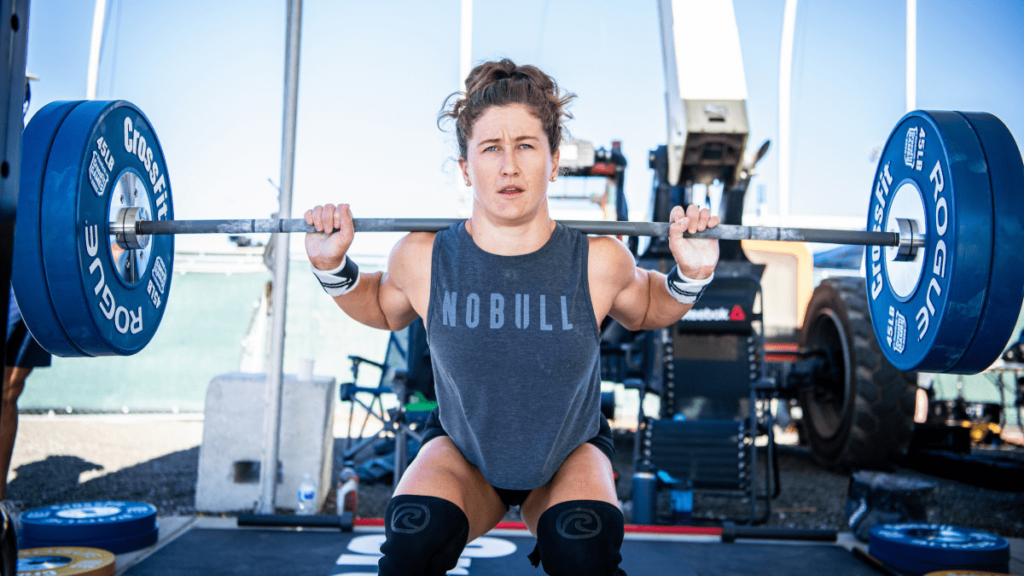
The barbell squat, particularly the back squat, is considered the “king of exercises.” It involves a closed kinetic chain movement requiring coordination between hips, knees, and ankles.
Joint Mechanics
During the barbell squat:
- Greater hip flexion occurs compared to hack squats.
- The torso inclination shifts loading between the quadriceps and posterior chain (glutes, hamstrings, spinal erectors).
- Knee extension demands vary with stance width and bar placement (high-bar vs low-bar).
EMG Evidence
Electromyographic (EMG) studies show high quadriceps activation in squats. Caterisano et al. (2002) found that deeper squat depths increased vastus lateralis and rectus femoris recruitment. Escamilla (2001) also reported significant quad involvement, particularly when squatting to parallel or below.

Benefits
- Functional transfer to athletic movements due to similarity with jumping and sprinting.
- Higher systemic load stimulates hormonal responses favorable for hypertrophy and strength.
- Greater posterior chain involvement adds balance to overall leg development.
Hack Squat: Biomechanics and Muscle Recruitment
The hack squat is a machine-based exercise designed to mimic squat mechanics with increased stability.
Barbell Squats vs Hack Squats: Joint Mechanics
- Hack squats typically involve a more upright torso.
- The machine stabilizes balance, isolating quadriceps involvement.
- Greater knee flexion is possible without the same hip extensor demands.
Barbell Squats vs Hack Squats: EMG Evidence
Research comparing machine-based squats with free-weight squats demonstrates higher quadriceps emphasis in hack squats. Schwanbeck et al. (2009) found free-weight squats elicited greater overall muscle activation, but machines allowed for targeted quad overload due to stability. Hack squats reduce spinal loading, making them safer for those with lower back limitations.
[wpcode id=”229888″]Barbell Squats vs Hack Squats: Benefits
- Superior isolation of the quadriceps with reduced spinal and hip involvement.
- Easier to push to muscular failure due to safety features.
- Beneficial for hypertrophy-focused training where stability is less of a priority.
Squat Depth and Quad Recruitment
The depth of squatting critically influences quadriceps recruitment. Hartmann et al. (2013) demonstrated that full squats increased quadriceps hypertrophy more than partial squats, independent of load. Both barbell and hack squats allow for full range of motion, though hack squats often encourage deeper knee flexion due to support from the machine.
Load Management and Progressive Overload
Progressive overload is key to muscle growth. Barbell squats allow for heavier absolute loads, engaging more muscle mass. Hack squats, by contrast, allow higher relative quad loading due to reduced stabilizer demands. This makes hack squats advantageous for targeted hypertrophy programs where volume and intensity are manipulated for muscle growth.
Injury Risk and Joint Stress

Barbell squats place greater stress on the lumbar spine due to axial loading. Hack squats reduce spinal involvement but increase compressive forces at the knee joint due to upright positioning. Escamilla et al. (2001) suggested that joint angles in hack squats produce greater anterior shear on the knee, which may aggravate pre-existing knee conditions.
Practical Application for Different Goals
Barbell Squats vs Hack Squats: Strength Athletes
For powerlifters and weightlifters, barbell squats are indispensable for sport specificity and overall lower body strength. Hack squats may serve as accessory work.
Barbell Squats vs Hack Squats: Bodybuilders
For hypertrophy, hack squats offer quad-dominant loading without systemic fatigue, making them a staple in bodybuilding programs. Barbell squats still provide hypertrophic stimulus but also engage other muscle groups significantly.
Barbell Squats vs Hack Squats: General Fitness and Rehabilitation
For general population and rehab contexts, hack squats may offer a safer option due to machine support, especially for those with balance or spinal issues.
Combined Approach
Both exercises have unique advantages. A combined approach may provide the best results:
- Use barbell squats for foundational strength, athletic carryover, and systemic overload.
- Use hack squats for quad isolation, hypertrophy, and reduced spinal stress.
Barbell Squats vs Hack Squats: Conclusion
Barbell squats and hack squats are not mutually exclusive; rather, they complement one another. The barbell squat is superior for overall athletic development, systemic strength, and functional transfer, while the hack squat excels in isolating the quadriceps with reduced systemic fatigue.
For maximum quadriceps development, integrating both exercises into a structured training program provides the most comprehensive approach.
Barbell Squats vs Hack Squats: Key Takeaways
| Factor | Barbell Squat | Hack Squat |
|---|---|---|
| Quad Activation | High, especially with depth | Very high, more isolated |
| Posterior Chain Involvement | Significant | Minimal |
| Load Capacity | Higher absolute loads | Moderate, more quad-focused |
| Injury Risk | Higher spinal loading | Higher knee stress |
| Athletic Transfer | Excellent | Limited |
| Hypertrophy Potential | Strong but shared with other muscles | Excellent for quad isolation |
| Best For | Strength athletes, overall development | Bodybuilders, hypertrophy, rehab |
Bibliography
- Caterisano, A., Moss, R.F., Pellinger, T.K., Woodruff, K., Lewis, V.C., Booth, W. and Khadra, T., 2002. The effect of back squat depth on the EMG activity of 4 superficial hip and thigh muscles. Journal of Strength and Conditioning Research, 16(3), pp.428-432.
- Escamilla, R.F., 2001. Knee biomechanics of the dynamic squat exercise. Medicine and Science in Sports and Exercise, 33(1), pp.127-141.
- Hartmann, H., Wirth, K., Klusemann, M., Dalic, J., Matuschek, C. and Schmidtbleicher, D., 2013. Influence of squatting depth on jumping performance. Journal of Strength and Conditioning Research, 27(12), pp.3240-3248.
- Schwanbeck, S., Chilibeck, P.D. and Binsted, G., 2009. A comparison of free weight squat to Smith machine squat using electromyography. Journal of Strength and Conditioning Research, 23(9), pp.2588-2591.
- Escamilla, R.F., Fleisig, G.S., Zheng, N., Barrentine, S.W., Wilk, K.E. and Andrews, J.R., 2001. Biomechanics of the knee during closed kinetic chain and open kinetic chain exercises. Medicine and Science in Sports and Exercise, 33(7), pp.1188-1195.