Achieving a well-defined and robust chest is a fitness goal that resonates with many enthusiasts, whether they are beginners or seasoned gym-goers.
A sculpted chest not only enhances physical appearance but also contributes to overall strength and functional fitness. While there are various exercises that target the chest muscles, barbell exercises remain a cornerstone for anyone looking to build a bigger, stronger, and better-looking chest.
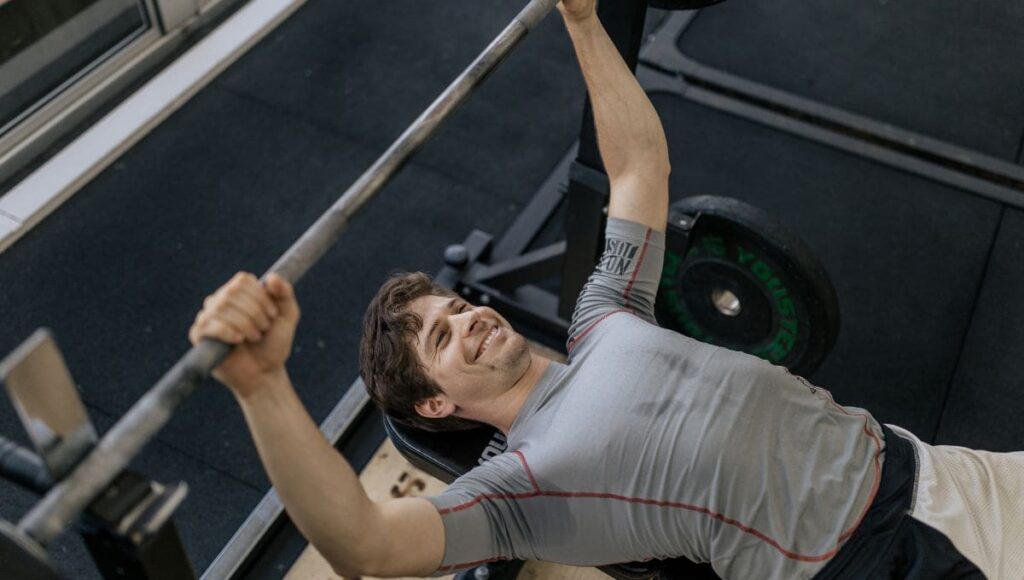
In this article, we will explore the best three barbell chest exercises that can take your chest development to the next level.
These exercises have stood the test of time and are renowned for their effectiveness in promoting muscle growth and strength. Whether you’re aiming to increase your bench press, enhance upper chest definition, or develop a more rounded lower chest, incorporating these barbell exercises into your workout routine can be a game-changer.
New Year New You: How to Choose the Perfect Protein Powder for Your Fitness Goals
Before diving into the specifics of each exercise, it’s essential to understand the significance of incorporating barbell chest exercises into your training regimen.
We’ll also discuss the criteria used to determine the effectiveness of these exercises, setting the stage for a comprehensive exploration of the best practices and variations for a chest workout that delivers optimal results.
So, buckle up as we embark on a journey to unlock the secrets of the best barbell chest exercises for a physique that commands attention.
Criteria for Selecting the Best Barbell Chest Exercises
Not all barbell chest exercises are created equal, and selecting the best ones requires a thoughtful evaluation based on specific criteria. Understanding these criteria is crucial for maximizing the efficiency of your workout routine and ensuring that you target all aspects of chest development. Here are the key factors to consider when choosing the best barbell chest exercises:
Muscle Activation and Recruitment:

Effective chest exercises should engage and activate the major muscle groups of the chest, including the pectoralis major and minor. The exercise should promote a full range of motion, ensuring that both the concentric and eccentric phases of the movement actively involve the chest muscles.
Compound Movement:
The best barbell chest exercises are often compound movements, involving multiple joints and muscle groups. Compound exercises not only stimulate the chest but also recruit stabilizing muscles, promoting overall strength and functional fitness.
Progressive Overload Potential:
To stimulate muscle growth and strength, an exercise should allow for progressive overload. This means the ability to gradually increase the resistance over time, challenging the muscles and promoting adaptation. Barbell chest exercises that offer room for progressive overload contribute to long-term development.
Safety and Joint Health:
Safety is paramount in any workout routine. The selected barbell exercises should prioritize joint health and minimize the risk of injury. Proper form, controlled movements, and appropriate equipment are essential considerations.
Versatility and Adaptability:
The best barbell chest exercises can be adapted to accommodate different fitness levels and goals. Whether you’re a beginner focusing on form or an advanced lifter aiming for intensity, versatility allows for customization to meet individual needs.
Balanced Development:
A comprehensive chest workout should address different areas of the chest, including the upper, middle, and lower regions. The selected barbell exercises should contribute to a balanced development, avoiding muscle imbalances and promoting a symmetrical chest appearance.
Efficacy and Scientific Backing:
Scientific research and empirical evidence supporting the efficacy of barbell chest exercises contribute to their selection as the best. Exercises with a solid foundation in exercise science are more likely to deliver desired results.
By considering these criteria, you can identify barbell chest exercises that align with your fitness goals and overall workout strategy. The following sections will delve into specific barbell exercises that meet these criteria, providing a roadmap for a chest workout that enhances both strength and aesthetics.
Barbell Bench Press: The King of Chest Exercises
When it comes to building a formidable chest, the barbell bench press stands tall as the undisputed king of chest exercises.
This classic compound movement has been a staple in strength training and bodybuilding for decades, and for good reason. The barbell bench press effectively targets the entire chest, engaging the pectoralis major, anterior deltoids, and triceps, making it a powerhouse exercise for both strength and size.
Muscle Activation and Recruitment:
The barbell bench press excels at activating the pectoral muscles, particularly the larger pectoralis major. As you lower the barbell towards your chest and press it back up, the chest muscles undergo a full range of motion, stimulating muscle fibers and promoting growth.
Compound Movement:
As a compound movement, the bench press involves multiple joints and muscle groups. This not only leads to significant chest activation but also engages supporting muscle groups such as the shoulders and triceps. The synergistic effort required for the bench press contributes to overall upper body strength and stability.
Progressive Overload Potential:
One of the key advantages of the barbell bench press is its scalability. Whether you’re a beginner using lighter weights or an advanced lifter pushing heavier loads, the bench press allows for progressive overload. This adaptability is crucial for continued muscle growth and strength development over time.
Safety and Joint Health:
While the bench press is a powerful exercise, proper form is paramount for safety. Using a spotter, maintaining a controlled descent and ascent, and ensuring the barbell is securely racked contribute to a safe and effective bench press. Additionally, variations such as the incline and decline bench press can be incorporated to reduce stress on specific joints and promote joint health.
Versatility and Adaptability:
The versatility of the barbell bench press makes it suitable for various fitness levels and goals. Beginners can focus on mastering the movement pattern, while advanced lifters can explore different grips, hand placements, or incorporate techniques like pause reps and tempo variations to intensify the workout.
Balanced Development:
The barbell bench press targets the central portion of the chest, contributing to a well-rounded development. While it emphasizes the middle chest, variations like the incline bench press can be added to shift emphasis to the upper chest, providing a comprehensive approach to chest development.
Efficacy and Scientific Backing:
Backed by extensive research and embraced by fitness professionals worldwide, the barbell bench press has proven its efficacy in promoting chest strength and hypertrophy. Studies consistently highlight its effectiveness in recruiting chest muscles and stimulating growth, making it a cornerstone exercise in any chest-focused training program.
Incorporating the barbell bench press into your workout routine not only builds a foundation of chest strength but also sets the stage for further specialization and refinement. As we explore additional barbell chest exercises, remember that the bench press serves as the anchor for a comprehensive and effective chest workout.
Incline Barbell Press: Targeting the Upper Chest
While the barbell bench press is unparalleled in developing overall chest strength and size, the incline barbell press takes center stage when it comes to targeting the upper chest.
This variation offers a unique angle that places greater emphasis on the clavicular head of the pectoralis major, contributing to a well-rounded and sculpted chest.
Muscle Activation and Recruitment:
The incline barbell press places the bench at an inclined angle, typically between 15 to 45 degrees. This adjustment shifts the focus to the upper chest muscles, activating the clavicular fibers of the pectoralis major.
By challenging the chest from a different angle, the incline press promotes balanced muscle development.
Compound Movement:
Similar to the flat bench press, the incline barbell press is a compound movement, engaging multiple muscle groups. It not only targets the upper chest but also involves the anterior deltoids and triceps. This compound nature ensures efficient use of energy and stimulates a broader range of upper body muscles.
Progressive Overload Potential:
Just like its flat counterpart, the incline barbell press allows for progressive overload. Lifters can incrementally increase the weight over time, ensuring ongoing muscle adaptation and growth. The versatility of adjusting the incline angle also provides room for variation and progression in training intensity.
Safety and Joint Health:
Maintaining proper form is crucial for the safety of any pressing movement, including the incline barbell press. It’s essential to control the barbell’s descent and ascent, and having a spotter can provide an added layer of safety. Additionally, the incline angle can be customized to suit individual comfort levels and joint health considerations.
Versatility and Adaptability:
The incline barbell press offers versatility in terms of hand placement and grip width, allowing lifters to target different areas of the upper chest. Experimenting with variations such as wide grip or reverse grip can further tailor the exercise to individual preferences and goals. This adaptability makes the incline press suitable for lifters at various experience levels.
Balanced Development:
Incorporating the incline barbell press into your routine ensures a more balanced chest development by placing specific emphasis on the upper chest. When combined with the flat bench press, it creates a synergistic effect, contributing to a chest that exhibits both size and definition. A balanced chest not only enhances aesthetics but also supports functional strength.
Efficacy and Scientific Backing:
Scientific literature consistently supports the efficacy of incline pressing movements in targeting the upper chest. Studies have shown that incline bench press variations activate the clavicular head of the pectoralis major to a greater extent compared to flat presses, underscoring the exercise’s role in upper chest development.
Integrating the incline barbell press into your chest workout routine provides a strategic approach to achieving a well-proportioned and sculpted upper chest. As we explore additional barbell chest exercises, remember that a comprehensive routine combines various movements to ensure overall chest development.
Decline Barbell Press: Emphasizing the Lower Chest
In the realm of barbell chest exercises, the decline barbell press takes the spotlight as a targeted approach to emphasizing the lower chest. By adjusting the bench to a declined position, this exercise challenges the sternal fibers of the pectoralis major, contributing to a comprehensive chest development that includes both upper and lower regions.
Muscle Activation and Recruitment:
The decline barbell press places the lifter on a bench set at a downward slope, typically at a decline of 15 to 30 degrees. This positioning shifts the focus to the lower chest muscles, specifically activating the sternal fibers of the pectoralis major. The unique angle of the decline press promotes a more pronounced contraction in the lower chest region.
Compound Movement:
Similar to the flat and incline bench presses, the decline barbell press is a compound movement that engages multiple muscle groups. While primarily targeting the lower chest, it also involves the anterior deltoids and triceps. This compound nature ensures a holistic approach to chest development.
Progressive Overload Potential:
Like other barbell chest exercises, the decline press allows for progressive overload. Lifters can incrementally increase the weight, ensuring continual muscle adaptation and growth. This adaptability, combined with the specific emphasis on the lower chest, makes the decline press a valuable addition to a well-rounded chest workout routine.
Safety and Joint Health:
Maintaining proper form is paramount in any pressing movement, including the decline barbell press. It’s crucial to control the barbell’s descent and ascent, and having a spotter is recommended for added safety. Additionally, ensuring that the decline bench is securely positioned and stable contributes to a safe and effective decline press.
Versatility and Adaptability:
The decline barbell press offers versatility in terms of grip and hand placement, allowing lifters to customize the exercise to their preferences and goals.
Exploring different grip widths and angles can provide variation and target specific areas of the lower chest. This adaptability makes the decline press suitable for lifters at various experience levels.
Balanced Development:
Incorporating the decline barbell press into your chest workout routine ensures a more balanced and proportionate chest development.
When combined with flat and incline presses, the decline press contributes to a comprehensive chest training approach that addresses the upper, middle, and lower chest. A well-rounded chest not only enhances aesthetics but also supports functional strength.
Efficacy and Scientific Backing:
Scientific research supports the efficacy of decline pressing movements in targeting the lower chest. Studies have shown increased activation of the sternal fibers of the pectoralis major during decline presses, validating its role in emphasizing the lower chest region.
Adding the decline barbell press to your repertoire provides a nuanced and targeted approach to lower chest development. As part of a diverse chest workout routine, it contributes to a symmetrical and well-defined chest that showcases both upper and lower regions.
Incorporating Variation for Optimal Chest Development
While foundational exercises like the barbell bench press, incline press, and decline press form the core of an effective chest workout, optimal chest development requires more than a one-dimensional approach.
The key to a well-rounded and sculpted chest lies in incorporating variations that challenge the muscles from different angles, intensities, and movement patterns. Here’s why and how to add variation to your chest training for optimal results.
Overcoming Plateaus:
Repeating the same exercises consistently may lead to plateaus, where the muscles adapt to the stress and stop growing. Introducing variations shakes up the routine, preventing the body from reaching a stagnant state and promoting continual muscle adaptation.
Targeting Different Muscle Fibers:
The chest is a complex muscle group with different fibers running in various directions. Incorporating different exercises and angles ensures that you target all parts of the chest, including the upper, middle, and lower regions, as well as the inner and outer chest. This approach contributes to a more symmetrical and well-defined chest.
Enhancing Muscle Confusion:
Muscle confusion is a principle that involves changing workout variables to keep the muscles guessing and adapting. By incorporating varied chest exercises, you keep the chest muscles engaged and responsive to new stimuli, promoting growth and strength.
Preventing Imbalances:
Overemphasis on specific exercises without incorporating variation can lead to muscle imbalances. Imbalances may affect posture, increase the risk of injury, and hinder overall aesthetic development. Including a diverse range of exercises helps promote balanced muscle development.
Variations to Consider:
Dumbbell Exercises:
Dumbbell exercises, such as dumbbell flyes and dumbbell pullovers, provide a greater range of motion and engage stabilizing muscles. They also allow for unilateral training, addressing any strength imbalances between the left and right sides.
Cable Exercises:
Cable crossovers and cable flyes introduce constant tension throughout the movement, providing a different feel compared to free weights. The adjustable cable pulley allows for variations in angles and heights, targeting specific areas of the chest.
Bodyweight Exercises:
Push-ups and variations like wide grip or diamond push-ups are excellent for enhancing chest definition and can be effective for individuals at different fitness levels. They also engage stabilizing muscles and contribute to overall chest strength.
Machine Exercises:
Chest press machines and chest fly machines offer a controlled environment and are beneficial for isolating the chest muscles. These can be particularly useful for beginners or individuals recovering from injuries.
Hybrid Movements:
Combining movements, such as the dumbbell pullover with a bench press or incorporating instability with a Swiss ball, challenges the chest muscles in unique ways. These hybrid movements add complexity to the workout and engage stabilizing muscles.
Tips for Incorporating Variation:
Periodize Your Training:
Plan your chest workouts in phases, alternating between phases focused on strength, hypertrophy, and endurance. Adjust the exercises and rep ranges accordingly.
Listen to Your Body:
Pay attention to how your body responds to different exercises. If a particular variation feels more effective or if you experience discomfort, adjust your routine accordingly.

Maintain Proper Form:
Regardless of the variation, prioritize proper form to ensure the targeted muscles are engaged, and to minimize the risk of injury.
Gradual Progression:
Introduce new variations gradually, allowing your body to adapt. As you become proficient, gradually increase the intensity or complexity of the exercises.
By incorporating a variety of exercises and maintaining a strategic approach to chest training, you’ll not only break through plateaus but also ensure a comprehensive and well-developed chest. The key lies in balancing consistency with diversity, keeping your chest workouts challenging, engaging, and conducive to continual growth.
Conclusion: Building a Bigger, Stronger, and Better-Looking Chest
Achieving a chiseled and powerful chest is a pursuit that transcends aesthetics—it’s a testament to strength, discipline, and dedication.
In this exploration of the best barbell chest exercises and the importance of variation, we’ve uncovered the fundamental principles that underpin optimal chest development.
Whether you’re a seasoned lifter or just starting on your fitness journey, building a bigger, stronger, and better-looking chest requires a thoughtful and strategic approach.
The Barbell Foundation:
At the heart of an effective chest training regimen lies the barbell, and specifically, key exercises like the barbell bench press, incline barbell press, and decline barbell press.
These compound movements form the foundation of chest development, engaging multiple muscle groups and fostering overall strength.
Variation for Comprehensive Growth:
While the barbell exercises provide a solid base, the importance of incorporating variation cannot be overstated. Dumbbell exercises, cable movements, bodyweight exercises, and machine workouts each bring a unique dimension to your training.
This variety not only prevents plateaus but also ensures that all facets of the chest are targeted for a well-rounded and symmetrical physique.
Strategic Progression and Adaptation:
Successful chest development requires more than a random assortment of exercises. Strategic progression, periodization, and adaptation are critical elements. Gradually increasing the intensity, adjusting the workout variables, and listening to your body’s responses all contribute to sustained progress.
Balancing Strength and Aesthetics:
While strength gains are integral to chest development, aesthetic considerations also play a significant role.
A well-sculpted chest not only enhances physical appearance but also supports functional strength and overall athleticism. The interplay between muscle size, definition, and symmetry creates a chest that commands attention and reflects a commitment to both form and function.
Consistency and Patience:
Building a bigger, stronger, and better-looking chest is a journey that demands consistency and patience. Results take time, and the key is to remain dedicated to your training, nutrition, and recovery. Celebrate milestones along the way and understand that the cumulative effort will lead to lasting transformation.
As you embark on or continue your chest-building journey, remember that there is no one-size-fits-all approach.
Tailor your workouts to align with your fitness level, goals, and preferences. Whether your aim is to increase your bench press, sculpt a more defined upper chest, or achieve a proportional and symmetrical physique, the principles outlined in this article serve as a guide to help you navigate and optimize your chest training routine.
In closing, building a bigger, stronger, and better-looking chest is not just about the physical transformation—it’s a journey of self-discovery, discipline, and resilience. As you apply the knowledge and principles shared here, may your chest training become a reflection of your commitment to personal growth and excellence in both fitness and life.