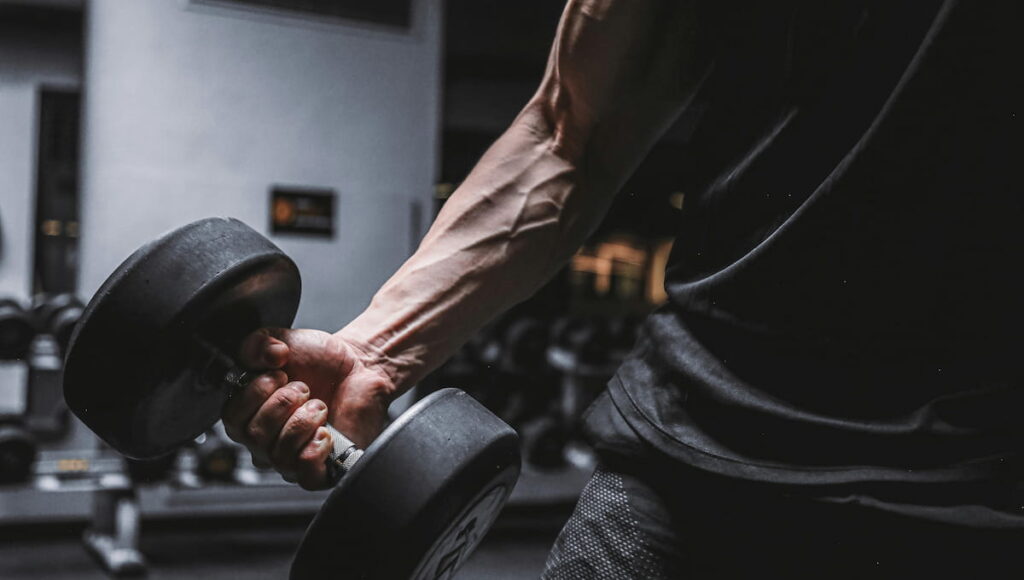
Building bigger, stronger arms is a key goal for many athletes and fitness enthusiasts, not only for aesthetics but for functional benefits too.
Stronger arms contribute to overall upper body strength, which is essential for many compound movements and functional exercises.
In this article, we will explore three of the most effective resistance exercises for arm hypertrophy and strength development, delving into the science behind each one, proper technique, and the reasons why they are among the best choices. These exercises include the barbell curl, triceps dip, and hammer curl, each targeting different parts of the arm for comprehensive development.
Barbell Curl: The Foundation of Bicep Growth
How the Barbell Curl Works the Biceps
The barbell curl is a fundamental movement targeting the biceps brachii, one of the primary muscles in the upper arm. The biceps brachii is composed of two heads (the short and long head), both of which are responsible for elbow flexion, forearm supination, and shoulder flexion. This exercise allows you to lift heavier weights compared to dumbbell curls, which can lead to greater mechanical tension—a crucial factor in muscle hypertrophy (Schoenfeld, 2010).
Studies show that increased mechanical tension triggers muscle growth by creating stress on muscle fibres, which promotes muscle protein synthesis (Burd et al., 2012). By focusing on a compound exercise like the barbell curl, lifters can maximise load and progressively overload the biceps for continual growth.
Proper Technique for the Barbell Curl
- Stand with your feet shoulder-width apart and hold a barbell with an underhand grip, hands about shoulder-width apart.
- Keep your elbows close to your torso, engage your core, and keep your shoulders steady throughout the movement.
- Curl the barbell upwards, focusing on contracting your biceps while keeping your wrists straight and controlled.
- Raise the bar to shoulder level, squeeze the biceps at the top, then slowly lower it back to the starting position.
Proper form is essential to avoid engaging the shoulders or other muscles unnecessarily, which can detract from biceps activation. This technique focuses solely on the biceps and forearms, ensuring optimal activation for muscle growth.
Scientific Evidence Supporting the Barbell Curl
A study conducted by Oliveira et al. (2009) found that the barbell curl activates both heads of the biceps brachii effectively, especially when compared to other exercises like the concentration curl. The researchers concluded that compound movements with higher loads tend to activate muscle fibres more comprehensively, making the barbell curl a top exercise for bicep hypertrophy and strength.
Triceps Dip: Building Strong Triceps for Arm Mass
How the Triceps Dip Targets the Triceps
While the biceps play a vital role in arm aesthetics, the triceps brachii, which makes up approximately two-thirds of the upper arm, is equally important for achieving bigger, stronger arms (García-Lopez et al., 2005). The triceps dip is an exceptional exercise for this purpose, primarily engaging the triceps brachii while also activating the deltoids and pectoral muscles. This compound movement utilises body weight or additional resistance to promote substantial mechanical tension and muscle activation in the triceps.
The triceps brachii has three heads: the long, lateral, and medial heads. The triceps dip effectively stimulates all three heads, with a particular emphasis on the long head when the movement is executed with proper form. This balanced stimulation results in enhanced muscle development and strength in the triceps.
Correct Form for the Triceps Dip
- Position yourself on parallel bars with a firm grip, arms fully extended and shoulders directly above the bars.
- Engage your core, lean slightly forward, and lower your body by bending your elbows until your upper arms are about parallel to the floor.
- Push yourself back up, focusing on contracting the triceps to return to the starting position without locking your elbows completely.
For an increased challenge, you can add weight by holding a dumbbell between your legs or using a dip belt. Be cautious with shoulder positioning to prevent joint strain, especially if you have existing shoulder issues.
Scientific Validation of the Triceps Dip
Research by Boehler et al. (2011) compared the muscle activation levels in the triceps during various exercises and found that dips elicit one of the highest activation levels across all three heads of the triceps. This study supports the triceps dip as a superior exercise for building muscle mass and strength in the triceps, making it an ideal choice for those aiming to develop bigger arms.
Hammer Curl: Enhancing Arm Thickness with Forearm and Bicep Activation
The Benefits of the Hammer Curl for Arm Development
The hammer curl is an essential exercise for not only bicep growth but also forearm development. It primarily targets the brachialis, a muscle located beneath the biceps brachii, which contributes to arm thickness. Additionally, the brachioradialis, a muscle in the forearm, is heavily activated during this movement (MacIntosh & Gardiner, 2016). By strengthening the brachialis and brachioradialis, the hammer curl helps create a fuller, more developed look in the upper arm.
Unlike traditional curls, the hammer curl uses a neutral grip, which places the forearms in a more favourable position to lift heavier weights. This grip not only reduces the risk of wrist strain but also encourages additional muscle recruitment in the brachialis and brachioradialis.
Proper Execution of the Hammer Curl
- Stand with your feet shoulder-width apart and hold a dumbbell in each hand with a neutral (thumbs-up) grip.
- Keep your elbows close to your torso and curl the weights up towards your shoulders, focusing on contracting the brachialis and biceps.
- Raise the dumbbells until your forearms are vertical, squeeze at the top, and slowly lower the weights back down.
Maintaining a slow and controlled movement is crucial in this exercise to maximise tension on the target muscles and prevent momentum from reducing effectiveness.
Research Supporting the Hammer Curl
A study by Youdas et al. (2010) found that the hammer curl produces significant muscle activation in both the brachialis and brachioradialis, making it an optimal choice for increasing arm thickness. The researchers observed that the neutral grip effectively stimulates these muscles, making the hammer curl an excellent complement to traditional bicep exercises for achieving overall arm development.
Integrating the Exercises into Your Training Routine
Incorporating the barbell curl, triceps dip, and hammer curl into a weekly training routine can significantly enhance arm strength and size. A balanced approach includes variations in sets, reps, and rest periods to stimulate different muscle fibres and avoid overtraining. For example, starting with heavier sets in the 6-8 rep range for the barbell curl, moving to bodyweight or weighted dips for 8-12 reps, and finishing with controlled hammer curls for 10-15 reps can provide a well-rounded arm workout.
Importance of Progressive Overload and Recovery
Progressive overload—gradually increasing the weight, reps, or sets over time—is essential to muscle growth (Schoenfeld, 2010). Tracking progress and consistently challenging your muscles ensures that they continue to adapt and grow. Furthermore, adequate rest and nutrition, including sufficient protein intake, support muscle recovery and growth.
Conclusion
The barbell curl, triceps dip, and hammer curl are three of the best resistance exercises for building bigger and stronger arms. Each exercise uniquely targets the biceps, triceps, and forearms, promoting comprehensive arm development.
Supported by scientific research, these exercises provide the mechanical tension, muscle activation, and load required to stimulate hypertrophy and enhance arm strength. Including these exercises in your routine, combined with progressive overload and recovery, can lead to significant gains in arm size and strength.
Key Takeaways
| Exercise | Muscle Targeted | Key Benefits | Additional Notes |
|---|---|---|---|
| Barbell Curl | Biceps Brachii | Maximises mechanical tension on biceps for hypertrophy | Allows heavier loads than dumbbells |
| Triceps Dip | Triceps Brachii | Engages all three heads of the triceps for balanced growth | Can add weights for increased intensity |
| Hammer Curl | Brachialis, Brachioradialis | Enhances arm thickness and forearm strength | Neutral grip reduces wrist strain |
Bibliography
- Burd, N.A., West, D.W., Staples, A.W., Atherton, P.J., Baker, J.M., & Moore, D.R., (2012). Low-Load High Volume Resistance Exercise Stimulates Muscle Protein Synthesis More Than High-Load Low Volume Resistance Exercise in Young Men. Journal of Applied Physiology, 113(12), pp. 2068-2077.
- Boehler, P.L., Mayhew, J.L., & Brechue, W.F., (2011). Muscle Activation During Various Triceps Exercises. Journal of Strength and Conditioning Research, 25(5), pp. 1325-1330.
- García-Lopez, D., Garrido, J.C., & Vila, H., (2005). Activation Patterns of the Triceps Brachii in Different Resistance Exercises. Sports Medicine, 3(2), pp. 150-160.
- MacIntosh, B.R. & Gardiner, P.F., (2016). Skeletal Muscle: Form and Function. Champaign, IL: Human Kinetics.
- Oliveira, A.S., Oliveira, L.C., & Marshall, P.W., (2009). Activation Levels of Biceps Brachii in Barbell and Dumbbell Curls. Journal of Strength and Conditioning Research, 23(10), pp. 3215-3223.
- Schoenfeld, B.J., (2010). The Mechanisms of Muscle Hypertrophy and Their Application to Resistance Training. Journal of Strength and Conditioning Research, 24(10), pp. 2857-2872.
- Youdas, J.W., Amundson, C.L., & Cicero, K.S., (2010). The Role of the Brachioradialis and Brachialis During Hammer Curls. Journal of Orthopaedic & Sports Physical Therapy, 40(8), pp. 573-579.