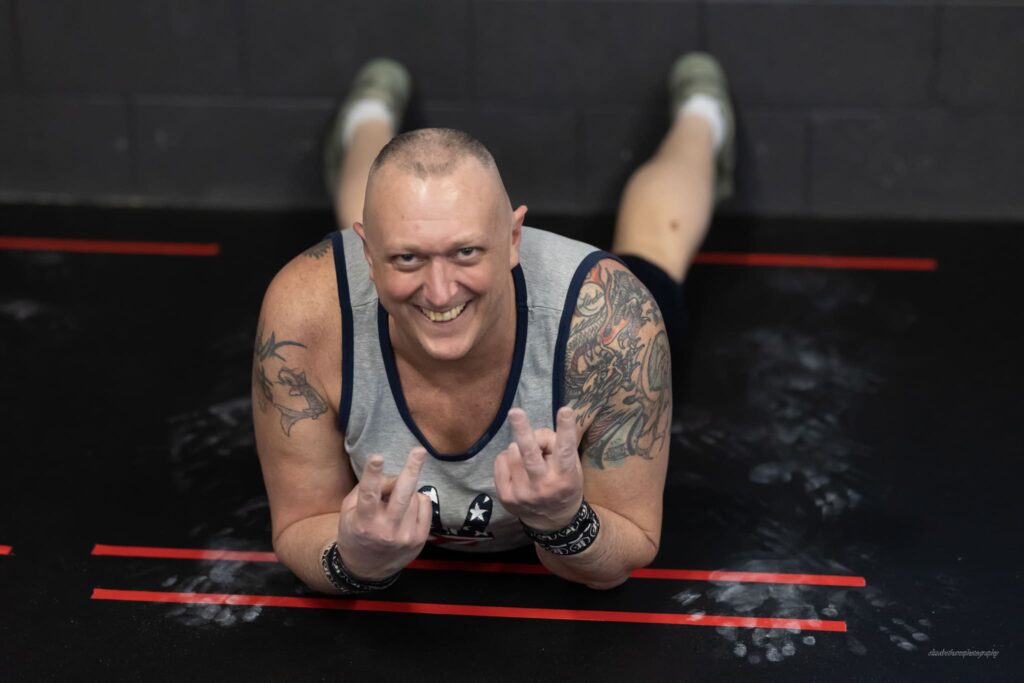
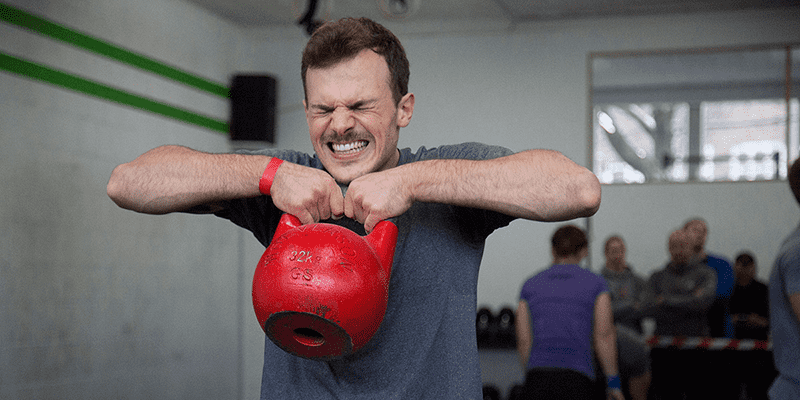
These are the best exercises for men over 40 who still want muscle.
Building and maintaining muscle after the age of 40 requires a smart and evidence-based approach. While the physiology of aging introduces challenges such as reduced testosterone, sarcopenia (age-related muscle loss), and slower recovery, research consistently shows that men in their 40s, 50s, and beyond can continue to gain lean muscle mass with the right training strategies.
This article outlines the most effective exercises for men over 40 who want to build or maintain muscle, supported by scientific evidence.
Why Men Over 40 Must Train Differently

Best Exercises for Men Over 40: Age-Related Hormonal Changes
Testosterone and growth hormone levels naturally decline with age, reducing the body’s anabolic (muscle-building) potential. Studies show that men experience a 1–2% decline in testosterone levels per year after age 30, contributing to decreases in muscle mass and strength (Travison et al., 2007).
Best Exercises for Men Over 40: Sarcopenia and Muscle Function
Sarcopenia, the age-related loss of muscle mass, begins in the fourth decade of life and accelerates after age 50. Research indicates that muscle mass declines at a rate of 1–2% per year, with strength decreasing at an even faster pace (Janssen et al., 2002).
Best Exercises for Men Over 40: Recovery and Joint Health
Tendons, ligaments, and cartilage lose elasticity over time, making men over 40 more prone to injuries if training is not adjusted. Recovery periods also tend to lengthen with age, emphasizing the need for a well-structured program that balances intensity and rest.
Training Principles for Men Over 40

Focus on Compound Movements
Compound lifts—such as squats, presses, and pulls—stimulate multiple muscle groups, maximize hormonal responses, and improve overall functional strength (Schoenfeld, 2010).
Best Exercises for Men Over 40: Prioritize Progressive Overload with Joint Safety
While progressive overload remains the cornerstone of hypertrophy, loading must be balanced with joint-friendly strategies, such as moderate rep ranges (6–12 reps), controlled tempo, and machine alternatives when necessary.
Best Exercises for Men Over 40: Emphasize Recovery
Research shows that older athletes require longer recovery times due to slower muscle protein synthesis and connective tissue healing (Kumar et al., 2009). Training frequency should allow 48–72 hours between sessions for the same muscle group.
Include Mobility and Prehabilitation
Dynamic warm-ups and prehab exercises can reduce injury risk by maintaining joint mobility and stabilizing surrounding musculature (Behm et al., 2016).
Best Exercises for Men Over 40
Lower Body
Squat Variations
- Back Squat (with moderation): A proven exercise for overall strength and hypertrophy. However, many men over 40 may benefit from reducing load intensity and integrating safety variations like the safety-bar squat.
- Goblet Squat: A joint-friendly alternative that improves mobility and reinforces proper movement patterns.
- Split Squats and Lunges: Unilateral exercises improve balance, address asymmetries, and reduce spinal loading compared to bilateral barbell squats.
Deadlift Variations
- Conventional Deadlift (with caution): Still highly effective but should be used selectively with strict form.
- Trap Bar Deadlift: Research shows trap bar deadlifts reduce spinal stress while activating the quadriceps and glutes comparably to conventional deadlifts (Swinton et al., 2011).
- Romanian Deadlift: A safer hip hinge variation that emphasizes hamstrings and glutes without excessive spinal loading.
Best Exercises for Men Over 40: Upper Body
Pressing Movements
- Incline Dumbbell Press: Provides chest activation while reducing shoulder strain compared to flat barbell pressing.
- Push-Ups (Weighted or Tempo Variations): Scalable, joint-friendly, and effective for chest, shoulders, and triceps.
- Overhead Press (Dumbbell or Landmine): Strengthens shoulders with more natural range of motion compared to heavy barbell pressing.
Pulling Movements
- Pull-Ups/Chin-Ups: Excellent for lats and biceps, though bands or assisted variations may be necessary for some.
- One-Arm Dumbbell Row: Builds mid-back strength while reducing spinal stress compared to barbell rows.
- Seated Cable Row: Machine-based pulling that allows joint-friendly adjustments and stable movement.
Posterior Chain and Core
- Hip Thrusts and Glute Bridges: Highly effective for glute development and hip stability.
- Back Extensions (Weighted or Bodyweight): Strengthens erector spinae and supports spinal health.
- Plank Variations (RKC, Side Planks): Proven to enhance core stability without spinal compression (McGill, 2010).
- Pallof Press: Anti-rotation exercise to train functional core strength.
Programming Recommendations
Best Exercises for Men Over 40: Volume and Intensity
Evidence suggests that training each muscle group twice per week with moderate volume (10–20 sets per week) is effective for hypertrophy, even in older adults (Schoenfeld et al., 2016). Moderate intensity with controlled tempo reduces injury risk while still stimulating muscle growth.
Rest and Recovery
[wpcode id=”229888″]Older adults should extend rest periods between heavy sets to 2–3 minutes for compound lifts, allowing sufficient recovery for strength performance (Haff & Triplett, 2015).
Best Exercises for Men Over 40: Cardio Integration
Low-impact cardio such as cycling, swimming, or rowing should supplement resistance training to support cardiovascular health and recovery. Excessive endurance training, however, may interfere with hypertrophy goals due to competing adaptations (Wilson et al., 2012).
Nutritional Considerations
Protein Intake
Protein needs increase with age due to anabolic resistance. Research recommends 1.6–2.2 g of protein per kg of body weight daily for maximizing muscle protein synthesis in older adults (Morton et al., 2018).
Best Exercises for Men Over 40: Leucine-Rich Foods
Leucine plays a critical role in stimulating muscle protein synthesis. Whey protein, lean meats, eggs, and soy are recommended.
Timing and Distribution
Even distribution of protein across 3–5 meals daily enhances muscle protein synthesis compared to skewed intake (Areta et al., 2013).
Sample Weekly Training Split
- Day 1: Lower Body (Squats, Deadlifts, Lunges, Core)
- Day 2: Upper Push (Incline Press, Overhead Press, Push-Ups, Accessory Work)
- Day 3: Rest or Low-Impact Cardio
- Day 4: Upper Pull (Pull-Ups, Rows, Face Pulls, Core Stability)
- Day 5: Lower Body (Trap Bar Deadlifts, Hip Thrusts, Split Squats, Core)
- Day 6: Active Recovery (Mobility, Walking, Swimming)
- Day 7: Rest
Best Exercises for Men Over 40: Conclusion
Men over 40 can still build significant muscle and strength when training is adapted to their physiology.
The key lies in focusing on compound, joint-friendly exercises, moderating training volume and intensity, prioritizing recovery, and supporting the process with proper nutrition. With a science-backed approach, age becomes less of a limitation and more of an opportunity to train smarter.
Key Takeaways
| Principle | Recommendation | Evidence |
|---|---|---|
| Compound Movements | Squats, deadlifts, presses, pulls | Schoenfeld (2010) |
| Joint Safety | Use trap bar, dumbbells, machines | Swinton et al. (2011) |
| Recovery | 48–72 hours per muscle group | Kumar et al. (2009) |
| Protein Intake | 1.6–2.2 g/kg/day | Morton et al. (2018) |
| Core Training | Planks, Pallof press | McGill (2010) |
| Training Frequency | Twice per week per muscle | Schoenfeld et al. (2016) |
Bibliography
- Areta, J.L., Burke, L.M., Ross, M.L., Camera, D.M., West, D.W., Broad, E.M., Jeacocke, N.A., Moore, D.R., Stellingwerff, T., Phillips, S.M. and Hawley, J.A., 2013. Timing and distribution of protein ingestion during prolonged recovery from resistance exercise alters myofibrillar protein synthesis. The Journal of Physiology, 591(9), pp.2319-2331.
- Behm, D.G., Chaouachi, A., Lau, P.W.C. and Wong, D.P., 2016. Short durations of static stretching when combined with dynamic stretching do not impair repeated sprints and agility. Journal of Sports Science & Medicine, 15(1), pp.130-140.
- Haff, G.G. and Triplett, N.T., 2015. Essentials of strength training and conditioning. Human Kinetics.
- Janssen, I., Heymsfield, S.B., Wang, Z. and Ross, R., 2002. Skeletal muscle mass and distribution in 468 men and women aged 18–88 yr. Journal of Applied Physiology, 89(1), pp.81-88.
- Kumar, V., Selby, A., Rankin, D., Patel, R., Atherton, P., Hildebrandt, W., Williams, J., Smith, K. and Rennie, M.J., 2009. Age-related differences in the dose–response relationship of muscle protein synthesis to resistance exercise in young and old men. The Journal of Physiology, 587(1), pp.211-217.
- McGill, S.M., 2010. Core training: Evidence translating to better performance and injury prevention. Strength & Conditioning Journal, 32(3), pp.33-46.
- Morton, R.W., Murphy, K.T., McKellar, S.R., Schoenfeld, B.J., Henselmans, M., Helms, E., Aragon, A.A., Devries, M.C., Banfield, L., Krieger, J.W. and Phillips, S.M., 2018. A systematic review, meta-analysis and meta-regression of the effect of protein supplementation on resistance training-induced gains in muscle mass and strength in healthy adults. British Journal of Sports Medicine, 52(6), pp.376-384.
- Schoenfeld, B.J., 2010. Squatting kinematics and kinetics and their application to exercise performance. Journal of Strength and Conditioning Research, 24(12), pp.3497-3506.
- Schoenfeld, B.J., Ogborn, D. and Krieger, J.W., 2016. Dose-response relationship between weekly resistance training volume and increases in muscle mass: A systematic review and meta-analysis. Journal of Sports Sciences, 35(11), pp.1073-1082.
- Swinton, P.A., Lloyd, R., Keogh, J.W., Agouris, I. and Stewart, A.D., 2011. A biomechanical comparison of the traditional squat, powerlifting squat, and box squat. Journal of Strength and Conditioning Research, 26(7), pp.1805-1816.
- Travison, T.G., Araujo, A.B., Kupelian, V., O’Donnell, A.B. and McKinlay, J.B., 2007. The relative contributions of aging, health, and lifestyle factors to serum testosterone decline in men. The Journal of Clinical Endocrinology & Metabolism, 92(2), pp.549-555.
- Wilson, J.M., Marin, P.J., Rhea, M.R., Wilson, S.M., Loenneke, J.P. and Anderson, J.C., 2012. Concurrent training: A meta-analysis examining interference of aerobic and resistance exercises. Journal of Strength and Conditioning Research, 26(8), pp.2293-2307.