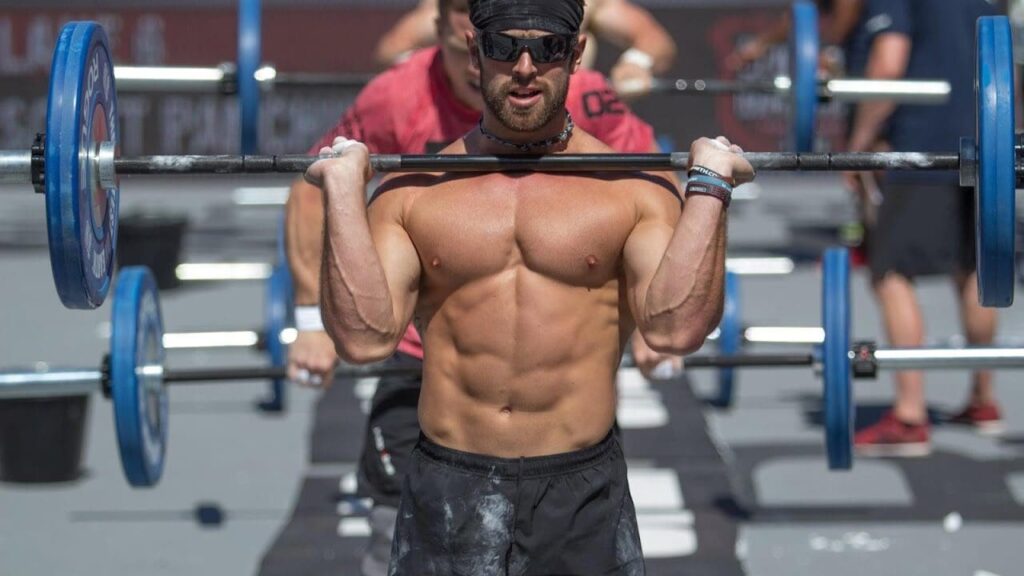
Developing strong arms requires more than pressing and curling. Grip strength is often overlooked, yet it underpins nearly every pulling and pressing movement in training. Without a strong grip, your performance in deadlifts, rows, pull-ups, and even pressing variations is compromised. Moreover, grip training carries over into sports performance, occupational demands, and even long-term health.
This article presents five science-backed grip strength exercises that not only increase grip capacity but also enhance arm training as a whole. Each exercise is supported with evidence from peer-reviewed studies, and the practical applications for athletes, strength enthusiasts, and general fitness practitioners are outlined.
Why Grip Strength Matters
Grip strength is more than a measure of hand endurance—it is a predictor of overall strength, performance, and health. Research consistently links grip strength with mortality, cardiovascular disease, and musculoskeletal function. A systematic review by Bohannon (2019) found grip strength to be a reliable biomarker of aging, predicting disability and all-cause mortality.

For athletes and lifters, grip capacity directly impacts training volume and progression. If grip fails before the target muscles fatigue, training effectiveness drops. For example, studies show that grip fatigue reduces pulling exercise performance, preventing sufficient overload of back and arm musculature (Halperin et al., 2014).
By prioritizing grip strength exercises, lifters improve training quality, increase load capacity, and reinforce muscular development in the forearms, biceps, triceps, and shoulders.
The Science of Grip Strength
Grip strength is multifactorial, relying on muscle force from the forearm flexors, extensors, and intrinsic hand muscles, as well as neuromuscular coordination. There are three primary types:
- Crushing grip – the ability to close the hand against resistance (e.g., grippers).
- Supporting grip – holding onto an object for time (e.g., deadlifts, pull-ups).
- Pinching grip – pressing the thumb against fingers to hold an object (e.g., plates).
Each type contributes to overall performance. Comprehensive grip strength exercises should address multiple modes of grip to ensure balanced development.
1. Farmer’s Carries
Execution
Pick up a heavy pair of dumbbells, kettlebells, or trap bars, stand tall with shoulders back, and walk for distance or time. Maintain a neutral spine, braced core, and steady gait.
Muscles Targeted
Farmer’s carries train the forearm flexors and extensors, upper traps, deltoids, and core stabilizers. They simulate the supporting grip most used in pulling exercises.
Evidence
Farmer’s carries improve grip endurance and total-body strength. Jakobsen et al. (2012) demonstrated that loaded carries activate multiple upper limb and trunk muscles, enhancing stability and strength transfer to compound lifts. They are especially effective for athletes who require prolonged grip engagement, such as wrestlers and climbers.
Application
Use heavy weights for 20–40 meters per set, or timed holds of 30–60 seconds. Integrating 2–3 sets once or twice weekly significantly increases grip endurance and overall arm robustness.
2. Dead Hangs
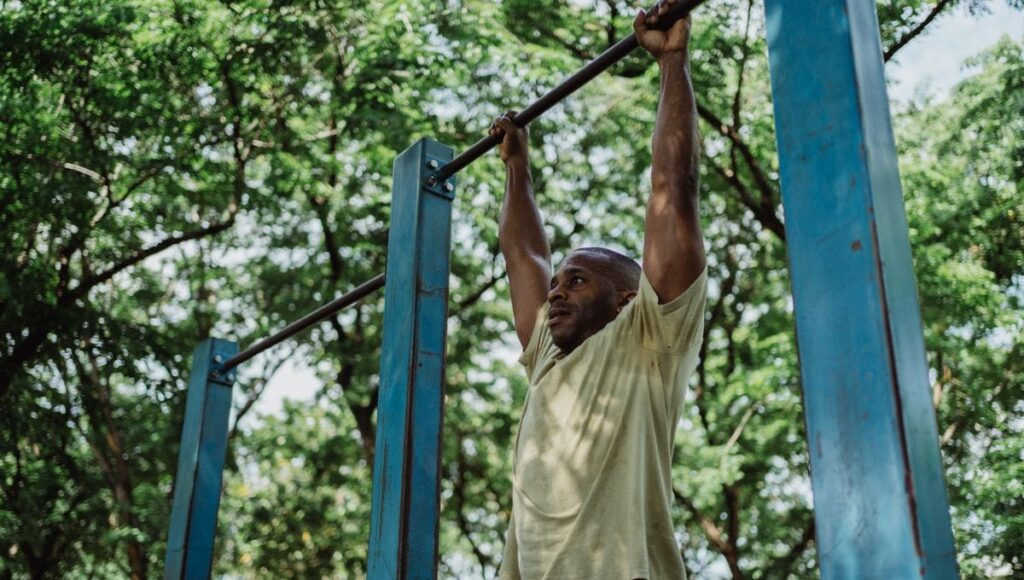
Execution
Hang from a pull-up bar with arms extended and grip tight. Variations include overhand, underhand, mixed, or towel grips.
Muscles Targeted
Dead hangs strengthen the supporting grip, stretch the lats, and decompress the spine. They build forearm and biceps endurance while conditioning the shoulders.
Evidence
Research supports dead hangs for shoulder health and grip performance. A study by McGill (2015) highlighted hanging as an effective strategy for shoulder decompression and joint centration. Additionally, Schöffl et al. (2009) noted significant grip endurance improvements in climbers using sustained hanging protocols.
Application
Start with 20–30 seconds per set, gradually building to 60+ seconds. For added intensity, use towels, fat grips, or one-arm variations.
3. Plate Pinches
Execution
Hold two smooth-sided weight plates together between thumb and fingers and lift them off the ground. Variations include single-hand pinches, two-hand holds, or walking pinches.
Muscles Targeted
Plate pinches focus on thumb adduction and finger flexor strength, crucial for improving pinch grip—a commonly neglected aspect of grip development.
Evidence
Pinch grip strength directly contributes to overall grip performance. Vigouroux and Quaine (2006) demonstrated that thumb-finger coordination is critical for object manipulation and load stabilization. Training the pinch grip strengthens hand intrinsics and prevents imbalances common in lifters.
Application
Perform 3–5 sets of 10–30 second holds. To progress, increase plate thickness or duration. Advanced athletes can use hex dumbbells or thick blocks for greater challenge.
4. Thick Bar Training
Execution
Use fat grips, thick-handled barbells, or specialized equipment for pressing, rowing, or curling. The increased diameter reduces leverage, forcing greater forearm and grip activation.
Muscles Targeted
Thick bar training recruits the finger flexors, extensors, and forearm stabilizers. It also increases neural drive to the arms, making standard barbell work easier after adaptation.
Evidence
Thick bar training has a documented effect on forearm muscle activation. A study by Oliver et al. (2010) found that larger handle diameters increased forearm flexor and extensor activity during pulling tasks. Moreover, grip fatigue was reached faster, reinforcing adaptation.
Application
Incorporate thick bar rows, curls, or deadlifts once weekly. Even 2–3 sets with reduced load can substantially increase grip recruitment and forearm hypertrophy.
5. Wrist Roller
Execution
Hold a wrist roller (a dowel with a rope and weight attached) at shoulder height. Roll the weight up by flexing and extending the wrists, then control the lowering phase.
Muscles Targeted
The wrist roller isolates wrist flexors, extensors, and brachioradialis. It builds direct grip capacity while increasing muscular endurance in the forearms.
[wpcode id=”229888″]Evidence
Wrist flexion and extension training enhance grip performance. A study by Hägg (1991) linked wrist extensor endurance with improved grip function in repetitive tasks. The wrist roller provides a balanced approach, targeting both agonist and antagonist muscles to prevent overuse injuries.
Application
Perform 2–3 sets at the end of arm or pull workouts. Vary grip (pronated/supinated) for balanced development. Use progressive overload by gradually increasing the suspended load.
Programming Grip Strength Into Arm Training
Grip strength exercises should complement—not replace—primary arm lifts. They can be added at the end of sessions or integrated into supersets. Practical guidelines include:
- Frequency: 2–3 times per week.
- Volume: 2–5 sets per exercise.
- Progression: Gradually increase duration, load, or implement complexity (e.g., towel grips).
- Balance: Combine crushing, supporting, and pinching variations.
Beyond Arm Training: Wider Benefits of Grip Strength
Sports Performance
Grip strength is critical in grappling sports, baseball, climbing, and racket sports. Stronger grip translates to improved control, endurance, and resilience under fatigue.
Occupational Demands
Manual laborers, firefighters, and military personnel rely on grip strength for carrying, pulling, and manipulating equipment. Targeted grip work reduces injury risk and improves performance longevity.
Health Outcomes
Grip strength correlates with longevity, cardiovascular health, and metabolic function. Celis-Morales et al. (2018) found that higher grip strength reduced cardiovascular mortality risk independent of physical activity. Thus, grip strength training is both performance-enhancing and health-promoting.
Conclusion
Grip strength exercises are indispensable for maximizing arm training. Farmer’s carries, dead hangs, plate pinches, thick bar training, and wrist rollers target all dimensions of grip capacity. Incorporating these movements improves muscular development, lifts performance, and promotes long-term health. The evidence shows that building grip is not just about stronger hands—it is about better arms, better performance, and better health outcomes.
Key Takeaways
| Exercise | Grip Type Trained | Primary Benefits | Application |
|---|---|---|---|
| Farmer’s Carries | Supporting grip | Increases grip endurance and arm stability | Walk 20–40 m with heavy weights |
| Dead Hangs | Supporting grip | Builds forearm endurance and shoulder health | 20–60 second hangs, progress over time |
| Plate Pinches | Pinch grip | Strengthens thumb and finger coordination | 3–5 sets of 10–30 second holds |
| Thick Bar Work | Crushing/supporting | Enhances forearm recruitment in arm exercises | Use fat grips in curls, rows, deadlifts |
| Wrist Roller | Crushing/extending | Trains flexors and extensors, improves endurance | 2–3 sets post workout |
Bibliography
- Bohannon, R. W. (2019). Grip strength: An indispensable biomarker for older adults. Clinical Interventions in Aging, 14, pp.1681–1691.
- Celis-Morales, C. A., Welsh, P., Lyall, D. M., Steell, L., Petermann, F., Anderson, J., Iliodromiti, S., Sillars, A., Graham, N., Mackay, D. F., Pell, J. P., Gill, J. M. R. and Sattar, N. (2018). Associations of grip strength with cardiovascular, respiratory, and cancer outcomes and all cause mortality: Prospective cohort study of half a million UK Biobank participants. BMJ, 361, k1651.
- Halperin, I., Chapman, D. W. and Behm, D. G. (2014). Non-local muscle fatigue: Effects and possible mechanisms. European Journal of Applied Physiology, 114(3), pp.469–482.
- Hägg, G. M. (1991). Static work loads and occupational myalgia—A new explanation model. Electromyography and Clinical Neurophysiology, 31(1), pp.3–10.
- Jakobsen, M. D., Sundstrup, E., Andersen, C. H., Aagaard, P., and Andersen, L. L. (2012). Muscle activity during knee-extension strengthening exercise performed with elastic tubing and isotonic resistance. International Journal of Sports Physical Therapy, 7(6), pp.606–616.
- McGill, S. M. (2015). Back Mechanic. Waterloo: Backfitpro.
- Schöffl, V., Morrison, A., Schwarz, U., Schöffl, I., Küpper, T. (2009). Evaluation of injury and fatality risk in rock and ice climbing. Sports Medicine, 39(9), pp.657–681.
- Vigouroux, L. and Quaine, F. (2006). Fingertip force-sharing strategies during a pinch task. Motor Control, 10(2), pp.142–159.
- Oliver, G. D., Stone, A. J., Plummer, H. A. (2010). Effect of hand-grip position on muscle activity during a pull-up. Journal of Strength and Conditioning Research, 24(11), pp.3093–3100.