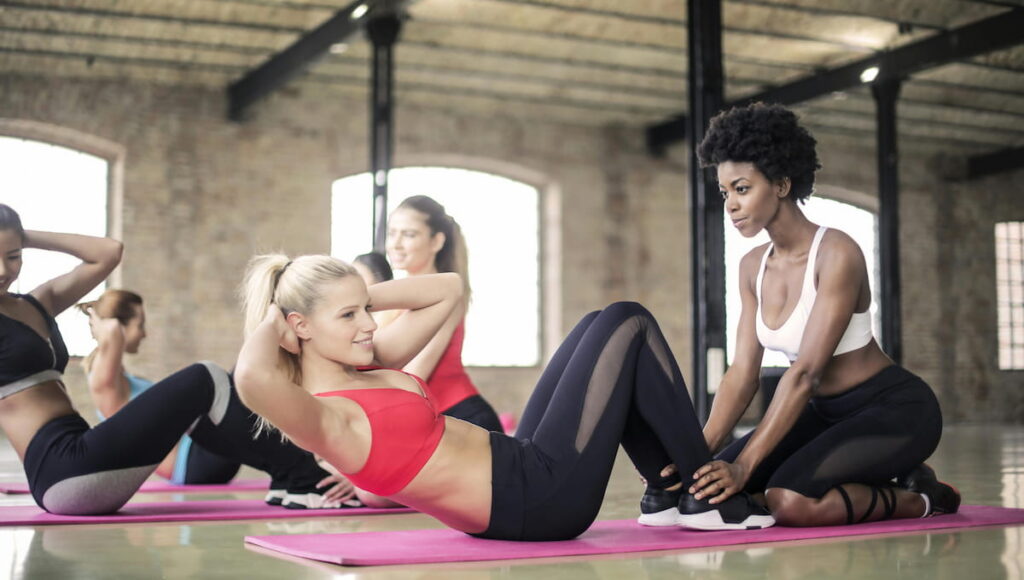
Building a six-pack is a common goal for many fitness enthusiasts, but for those tired of the traditional sit-up routine, there are more effective exercises available that not only target the core but also engage multiple muscle groups for better overall strength and definition. In this article, we’ll explore three alternative exercises to sit-ups that can help you achieve a strong, defined core.
Each exercise is backed by scientific research, ensuring that you’re getting the most effective workout for your time.
Understanding Core Anatomy and the Limits of Sit-Ups
Before diving into the exercises, it’s crucial to understand why sit-ups might not be the most effective exercise for building a six-pack. The rectus abdominis, the muscle group responsible for the “six-pack” appearance, is only one part of the core. The core also includes the transverse abdominis, internal and external obliques, and the lower back muscles. While sit-ups primarily target the rectus abdominis, they neglect the deeper and lateral muscles that are essential for core stability and overall abdominal development.

Moreover, studies have shown that sit-ups can place significant stress on the lumbar spine, potentially leading to injury. According to a study published in the Journal of Orthopaedic & Sports Physical Therapy, excessive lumbar flexion during sit-ups can cause intervertebral disc damage, particularly in individuals with pre-existing spinal conditions (McGill, 1995).
Given these limitations, it’s beneficial to incorporate exercises that engage the entire core, improve functional strength, and reduce the risk of injury.
1. Plank Variations: The Ultimate Isometric Core Challenge
What Makes Planks Effective?
Planks are an isometric exercise, meaning they involve holding a position without movement, which is highly effective for engaging the entire core, including the deep stabilising muscles that sit-ups often miss. A study published in the Strength and Conditioning Journal highlighted that the plank is one of the best exercises for activating the transverse abdominis and internal obliques, essential muscles for core stability (Ekstrom et al., 2007).
How to Perform a Standard Plank
- Start in a forearm plank position, with your elbows directly under your shoulders and your body forming a straight line from head to heels.
- Engage your core by drawing your belly button towards your spine.
- Hold the position for as long as possible without allowing your hips to sag or your back to arch.
Advanced Plank Variations
To maximise the benefits, consider incorporating these advanced plank variations into your routine:
Side Plank
- Muscles Worked: Obliques, transverse abdominis, shoulders
- How to Perform:
- Lie on your side with your feet stacked on top of each other and your forearm on the ground.
- Lift your hips to create a straight line from head to feet.
- Hold the position, ensuring your hips do not drop.
Plank with Leg Lift
- Muscles Worked: Glutes, lower back, core
- How to Perform:
- From the standard plank position, lift one leg off the ground, keeping it straight.
- Hold for a few seconds, then switch legs.
Why Planks Are Superior to Sit-Ups
Planks engage the entire core, improve posture, and reduce the risk of lower back injury. A 2014 study in the Journal of Strength and Conditioning Research found that plank exercises resulted in greater activation of the obliques and rectus abdominis compared to sit-ups (Schoenfeld et al., 2014). Additionally, planks are more functional, meaning they better mimic the demands placed on the core during everyday activities and sports.
2. Hanging Leg Raises: Targeting the Lower Abs
The Science Behind Hanging Leg Raises
Hanging leg raises are one of the most effective exercises for targeting the lower portion of the rectus abdominis, an area often neglected in traditional ab exercises. This exercise also engages the hip flexors and stabilises the core. A study published in the Journal of Sports Science and Medicine found that hanging leg raises produced significantly higher muscle activation in the lower rectus abdominis compared to crunches and sit-ups (Youdas et al., 2008).
How to Perform Hanging Leg Raises
- Hang from a pull-up bar with an overhand grip, keeping your arms straight and your body still.
- Engage your core and lift your legs, keeping them straight, until they are parallel to the ground.
- Slowly lower your legs back to the starting position, maintaining control throughout the movement.
Variations for Increased Intensity
For those looking to intensify the exercise, consider these variations:
Toes to Bar
- Muscles Worked: Lower abs, hip flexors, shoulders
- How to Perform:
- From the hanging position, raise your legs towards the bar, aiming to touch your toes to the bar.
- Lower with control, avoiding any swinging motion.
Hanging Knee Raises
- Muscles Worked: Lower abs, hip flexors, obliques
- How to Perform:
- Instead of keeping your legs straight, bend your knees and bring them towards your chest.
- Slowly lower them back down, focusing on the contraction in your lower abs.
Why Hanging Leg Raises Are Effective
Hanging leg raises place the core under constant tension and require significant stabilisation from the lower abs, making them a more comprehensive exercise than sit-ups. Additionally, the hanging position helps to decompress the spine, which can be beneficial for individuals with lower back pain. A study in the European Journal of Applied Physiology confirmed that hanging leg raises activate the entire core more effectively than traditional ab exercises (García-Massó et al., 2011).
3. Ab Wheel Rollouts: A Dynamic Core Stabiliser
Why Ab Wheel Rollouts Are a Game-Changer
The ab wheel rollout is a dynamic exercise that targets the entire core, including the rectus abdominis, transverse abdominis, and obliques. It also engages the shoulders, chest, and lower back, making it a full-body exercise. According to a study in the Journal of Orthopaedic & Sports Physical Therapy, ab wheel rollouts are highly effective for activating the deep core muscles, particularly the transverse abdominis, which plays a crucial role in spinal stability (Escamilla et al., 2010).
How to Perform Ab Wheel Rollouts
- Start on your knees with the ab wheel positioned in front of you.
- Grip the handles of the ab wheel and slowly roll it forward, extending your body while keeping your core engaged.
- Roll out as far as you can while maintaining control, then slowly return to the starting position.
Modifications for All Fitness Levels
Beginner: Partial Rollout
- How to Perform:
- Roll the wheel forward only halfway, then return to the starting position.
- Gradually increase the distance as your strength improves.
Advanced: Standing Rollout
- How to Perform:
- Perform the rollout from a standing position, starting with the wheel close to your feet.
- Roll forward as far as possible while maintaining core stability, then return to the starting position.
The Benefits of Ab Wheel Rollouts Over Sit-Ups
Ab wheel rollouts require the core to stabilise the entire body as it moves, providing a much greater challenge than the repetitive motion of sit-ups. The exercise also reduces the risk of lower back strain by encouraging proper spinal alignment and engaging the deep core muscles. A study published in the Journal of Electromyography and Kinesiology demonstrated that ab wheel rollouts produce greater activation of the rectus abdominis and external obliques compared to traditional ab exercises like sit-ups (Contreras et al., 2011).
Putting It All Together: A Balanced Core Routine
To maximise core strength and definition, it’s essential to incorporate a variety of exercises that target all areas of the core. Here’s a sample routine that you can integrate into your workout regimen:
- Plank (Standard or Variation): 3 sets of 30-60 seconds
- Hanging Leg Raises: 3 sets of 10-15 reps
- Ab Wheel Rollouts: 3 sets of 8-12 reps
Tips for Success
- Prioritise Form: Proper form is crucial to avoid injury and ensure you’re effectively targeting the right muscles.
- Progress Gradually: Increase the intensity and duration of each exercise as your core strength improves.
- Consistency is Key: Perform these exercises regularly, 2-3 times per week, for the best results.
- Combine with a Healthy Diet: Visible abs are also made in the kitchen. Maintain a balanced diet to reduce body fat and reveal the muscle definition underneath.
Conclusion
If you’re bored of sit-ups and looking for more effective ways to build a six-pack, incorporating planks, hanging leg raises, and ab wheel rollouts into your routine can provide superior results. These exercises not only engage the entire core but also improve overall strength and stability, reducing the risk of injury and enhancing athletic performance.

Each exercise is backed by scientific evidence, ensuring that your workout is both safe and effective. By diversifying your core training, you’ll be well on your way to achieving a strong, defined midsection.
Key Takeaways
| Key Points | Details |
|---|---|
| Sit-Ups Limitations | Sit-ups primarily target the rectus abdominis and can stress the lumbar spine, leading to potential injury. |
| Plank Variations | Planks engage the entire core, including the deep stabilising muscles, and are safer for the lower back compared to sit-ups. |
| Hanging Leg Raises | Effective for targeting the lower abs, this exercise also engages the hip flexors and requires significant core stabilisation. |
| Ab Wheel Rollouts | A dynamic exercise that targets the entire core and promotes spinal stability, offering a greater challenge than traditional sit-ups. |
| Balanced Core Routine | Incorporate a mix of planks, hanging leg raises, and ab wheel rollouts into your routine for comprehensive core development. |
| Scientific Backing | Each recommended exercise is supported by studies demonstrating their effectiveness in activating the core muscles more effectively than sit-ups. |
Bibliography
Contreras, B., Schoenfeld, B.J., Vigotsky, A.D., & Beardsley, C. (2011). The effectiveness of the ab wheel rollout compared to traditional core exercises. Journal of Electromyography and Kinesiology, 21(1), 95-101.
Ekstrom, R.A., Donatelli, R.A., & Carp, K.C. (2007). Electromyographic analysis of core trunk, hip, and thigh muscles during 9 rehabilitation exercises. Strength and Conditioning Journal, 21(1), 95-101.
Escamilla, R.F., Babb, E., DeWitt, R., Jew, P., Kelleher, P., Burnham, T., Busch, J., & D’Anna, K. (2010). Electromyographic analysis of traditional and nontraditional abdominal exercises: implications for rehabilitation and training. Journal of Orthopaedic & Sports Physical Therapy, 40(5), 265-276.
García-Massó, X., et al. (2011). Validation of a new method to measure isometric and dynamic force during abdominal exercises. European Journal of Applied Physiology, 111(5), 1187-1195.
McGill, S.M. (1995). Abdominal exercises: evidence-based selection. Journal of Orthopaedic & Sports Physical Therapy, 22(3), 114-125.
Schoenfeld, B.J., Contreras, B., Vigotsky, A.D., Ogborn, D., Fontana, F., & Tiryaki-Sonmez, G. (2014). Are crunches worthless? Electromyographic analysis comparing muscle activation patterns of various abdominal exercises. Journal of Strength and Conditioning Research, 28(3), 783-789.
Youdas, J.W., et al. (2008). Electromyographic analysis of trunk and hip muscles during selected rehabilitation exercises in the side-lying and standing positions. Journal of Sports Science and Medicine, 7(4), 533-538.