One of the most common goals among weight lifters is building a defined inner chest. The tried and true exercises vary and the debate remains on cable flys vs. pec deck and which is the best inner chest activator.
The inner chest is the spot between the pec muscles that is responsible for establishing a defined line. This line is important for guys to show off (so to say) all of the hard work in the gym, as it can truly help to make the upper body look cut and ripped. While building a bigger chest is vital in helping to make this area look bigger, exercises that establish overall strength and cutting are vital to the look.
Let’s take a look ahead at which is the best inner chest activator and how the cable flys vs. pec deck are crucial to your overall goals. 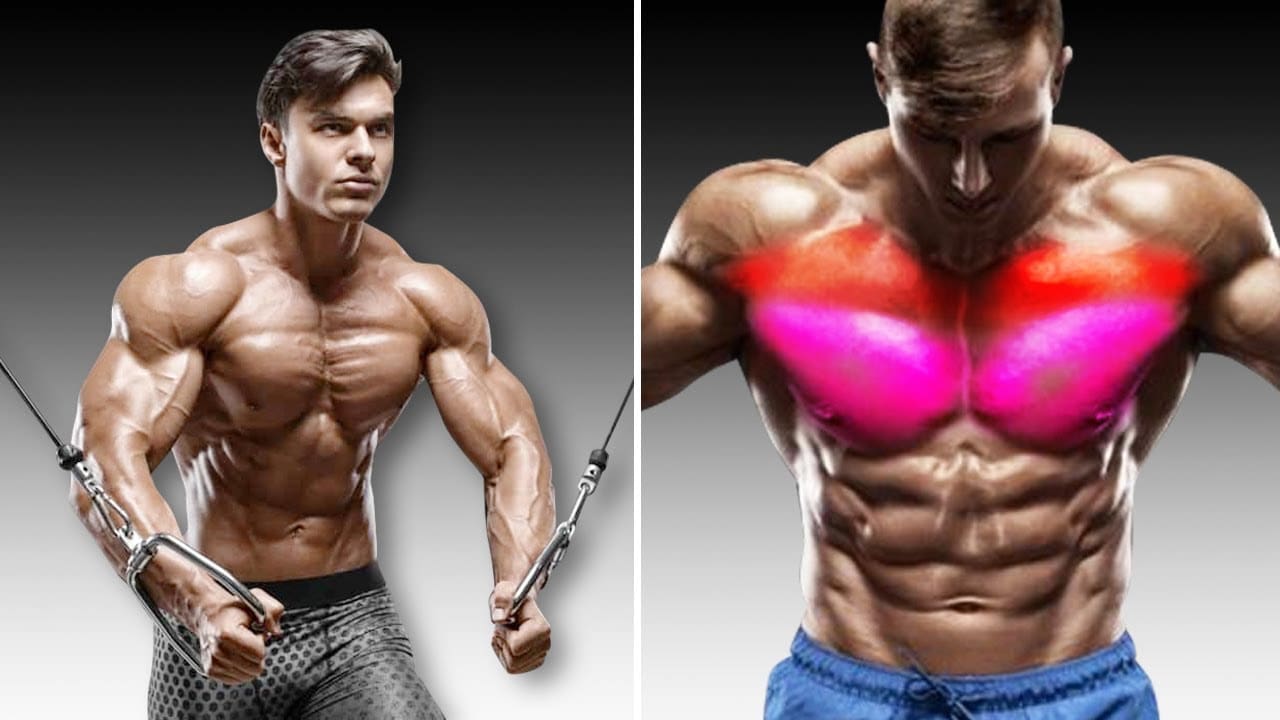
The Anatomy of the Pec Muscles
The chest is composed of the pectoralis major and minor muscles and help to create a vast amount of stability for the shoulder joint. The pectoralis major is a large muscle that contains two attachment sites (heads). These attachment sites are vital to understanding how the pecs affect arm movements. Let’s examine the pec muscle heads in further detail ahead.
- Clavicular Head. This ligament starts from the clavicle and makes its way to the upper humerus (upper arm). This attachment creates adduction of the humerus and medial rotation, which is noticeable in fly and pec deck exercises.
- Sternal Head. The sternal head of the pectoralis major starts from the anterior portion of sternum and attaches also on the upper portion of the humerus. Similar to the clavicular head, the sternal head helps to medially rotate the upper arm and horizontal adduction across the chest.
How to Target the Inner Chest?
While targeting the chest to cut and sculpt an athletic look is a common goal for many lifters, the inner chest line is just a result of developing a strength with definition. As a result, lifters should target the pectoralis major with flys or the pec deck to help encourage hypertrophy and a solid inner chest.
Everything to Know About the Chest Fly
The chest fly is an original exercise that is known for its ability to work the pec muscles while being stretched. This resistance with the stretch works both muscle fiber heads at a greater range of motion and can target the sternal head during the contraction phase.
Benefits of the Chest Fly
- Great for hypertrophy. The traditional dumbbell chest fly is a standard for weight lifters. This exercise provides a full lengthening of the pectoralis major muscle during the concentric phase. This may help to build more muscle over a full range of motion for powerful results.
- Angles. The joy of the dumbbell chest fly is that you have a full range of freedom to complete them however you desire. You can complete a chest fly on an incline, decline, or a stability ball.
- Isolation. Perhaps the most important aspect of the dumbbell chest fly is that you have the opportunity to isolate the left from the right. This helps to not only build a mind-muscle connection, but it can help to keep your pecs balanced as a result.
Drawbacks of the Dumbbell Chest Fly
- Risk of injury. The chest fly is highly effective for working the pec muscles under a wide range of motion, but it can be a factor among injuries. The overstretching and heavy resistance create a combination of risk that can certainly contribute towards injuries while performing dumbbell chest flys.
- Spotter assistance. While you can perform the dumbbell chest fly on your own, it is always best to have a spotter for help. Spotters can help to push you with heavier weights and can help to ensure that your form is safe during all phases. The drawback to this is that you always need somebody to help you with this exercise so if you like to work out alone this could be a problem.

Everything to Know About the Pec Deck
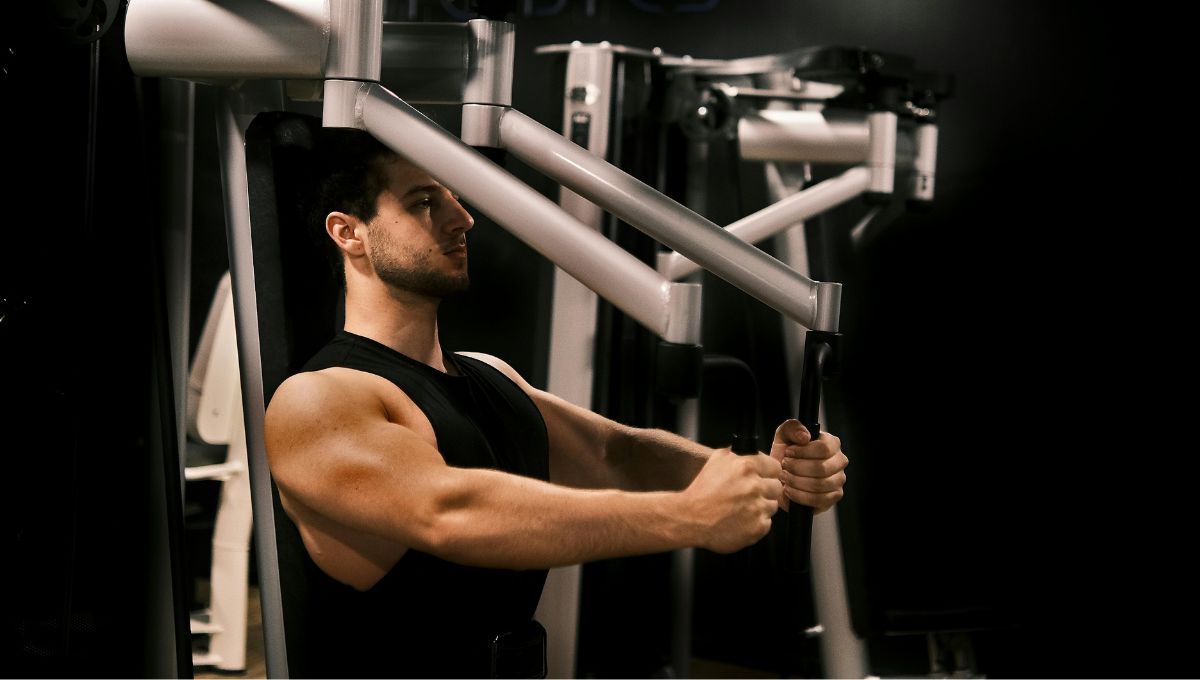
The pec deck, which is also known as the machine chest fly, is a versatile option for many adults. Generally this exercise is performed while you’re sitting, with selectorized weights, and arm pads to allow you to perform the concentric squeezing face.
Benefits of the Pec Deck
- Guides you through a full range of motion. The pec deck is great for beginners and advanced lifters as it helps to guide you through a full range of motion. Since it helps to guide you through a full range of motion, you are able to push your body a little more and potentially build muscle faster than other options.
- Solo lifters are welcome. This fly machine allows solo lifters to enjoy without feeling overwhelmed by trying to add too much weight. The great part of a pec deck is that it is a spotter, so feel free to push it more.
- Eccentric work. The machine chest fly is great for allowing a strong concentric phase, but it encourages an eccentric phase that can really give a great pectoralis major workout. While dumbbells can do the same, the pec deck makes the process streamlined with its guidance.
Drawbacks of the Pec Deck
- Selectorized motion. Since the pec deck is performed in a seated position, the selectorized machine only allows for a limited motion. While you can adjust how high or low you sit, the concentric phase really is limited to one range of motion.
- Isolation is limited. Performing the fly on the machine means if your left arm is stronger and does more work, it might aid the right arm’s work. This is common with many selectorized machines and is just the nature of the process, but isolating one arm at a time can be tedious.
Conclusion
While both the dumbbell fly and pec deck offer similar benefits for the pectoralis major muscle, it seems the pec deck has the upper hand. Not only does the pec deck allow for a controlled range of motion, but some of these machines double up as a reverse fly for super sets.
The pec deck is great for eccentric work without the use of a spotter and can be a great addition as a finishing exercise. Consider swapping or adding both exercises to your routine to gain benefits of both, so long as a spotter can help with the dumbbell version.