Check out this challenging no-equipment at home workout plan that is designed for you to build muscle from the comfort of your home.
The myth that you can’t get a quality workout without gym equipment is pervasive, yet entirely unfounded. Many believe that without the heavy weights and machines found in a gym, their exercise routine is ineffective. This misconception stems from a lack of understanding about how to make a no-equipment workout genuinely challenging. Often, individuals discard the principle of progressive overload, a cornerstone of fitness progression, believing a few push-ups will suffice. This oversight leads to workouts that feel unproductive and uninspiring. However, the truth is, with the right approach, you can achieve significant fitness gains using just your body weight.
The information is based on insights from Winny and a video he shared. But the list of ranked forearm exercises is not ours at BOXROX. With over ten years of experience in bodybuilding and the creation of Bodybuilding Simplified, he presents the fastest-growing channel on YouTube, sharing all the tips, tricks, and workouts to get healthier and fitter.
This article will debunk the myth and guide you through crafting a challenging and effective no-equipment workout plan, focusing on progressive overload and exercise variation.
Challenging No-Equipment At Home Workout Plan
Progressive overload is the gradual increase of stress placed on the body during exercise. When gym equipment isn’t an option, we must employ alternative methods to increase workout intensity. Two primary strategies are:
- Increasing Repetitions: Without the ability to add weights, increasing the number of repetitions for each exercise is a straightforward method to enhance intensity.
- Elevating Exercise Difficulty: Modifying exercises to make them more challenging ensures continuous progress and keeps the workouts stimulating.
9 Most Effective Abs Exercises You Have Never Done
Structuring Your No-Equipment Training Plan
Creating a structured no-equipment training plan is pivotal to ensure you’re not merely going through the motions but are on a path to real progress. The essence of structuring lies in crafting a regimen that not only aligns with your current fitness level but also sets the stage for advancement.
“A well-structured workout plan is your roadmap to success,” trainer Winny says. “Without it, you’re just wandering aimlessly in your fitness journey. By systematically increasing the challenge, you ensure continuous improvement and sustained interest in your workouts.”
Here’s how to build a comprehensive and scalable workout plan:
- Exercise Selection: Begin by selecting exercises that target all major muscle groups. Ensuring a balanced approach prevents muscle imbalances and promotes overall fitness. For each muscle group, identify exercises that can be modified to increase difficulty as you progress.
- Levels of Difficulty: Categorise exercises into three levels – beginner, intermediate, and advanced. This tiered approach accommodates varying fitness levels, allowing you to start with exercises that match your current capabilities.
- Variety and Creativity: Incorporate a mix of exercises to keep the routine engaging and to challenge your muscles in different ways. Use imaginative methods to modify exercises, like filling a backpack with books for added weight.
- Balanced Routine: Ensure your routine includes a mix of strength, endurance, and flexibility workouts. Balancing these elements contributes to a well-rounded fitness profile.
- Consistency and Progress Tracking: Establish a regular workout schedule and maintain a log to track your progress. Noting improvements in repetitions, exercise difficulty, or overall performance can provide motivation and insight into when it’s time to advance to the next level.
Also Try This: 15-Minute Hardcore Bodyweight Workout for Weight Loss
Transitioning Between Levels
Advancing through levels in your no-equipment workout plan is a testament to your hard work and dedication. Here’s how to navigate the transition effectively:
- Mastery Before Progression: Ensure you’ve mastered the current level before moving to the next. Mastery means performing exercises with proper form, achieving the target number of repetitions, and feeling confident in your ability to take on more.
- Incremental Challenges: Gradual progression is key. Increase the difficulty in small increments to avoid injury and ensure the body has time to adapt to new stresses.
- Listening to Your Body: Pay attention to how your body responds to increased challenges. If you experience discomfort beyond normal muscle fatigue, reconsider if you’re ready to advance.
- Setting New Goals: Each new level should come with a set of goals, whether it’s mastering a new exercise variation or increasing repetitions. Clear goals keep you focused and motivated.
- Seeking Feedback: If possible, get feedback on your form and technique, especially when trying more advanced exercises. This can be through self-assessment, peer review, or guidance from a fitness professional.
Trainer Winny advises on progression: “Progression in a no-equipment workout isn’t just about moving from easy to hard exercises; it’s about mastering control, enhancing endurance, and pushing your limits. When you achieve 20 repetitions effortlessly, it’s a clear signal your body is ready for a new challenge. Embrace it, but do so with mindfulness and respect for your body’s cues.”
Related: The Most Effective Full Body Workout You Can Do Without A Gym
The No-Equipment Training Plan
Chest Exercises
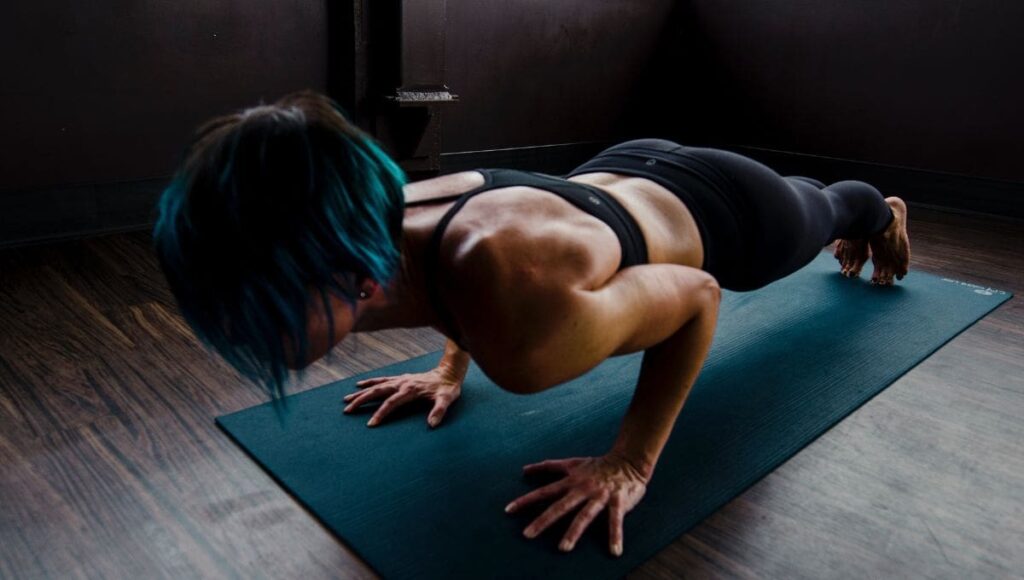
- Level 1: Kneeling Push-Up
- Level 2: Standard Push-Up
- Level 3: Weighted Push-Up or Chest Dips
For progression, consider adding weight or reducing rest times.
Back Exercises
The absence of a pull-up bar limits vertical pulling exercises. However, table rows offer a robust alternative.
- Level 1: Knees-Bent Table Row
- Level 2: Legs-Straight Table Row
- Level 3: Elevated-Legs Table Row
If available, incorporate pull-ups or alternate between the two exercises.
Shoulder Exercises
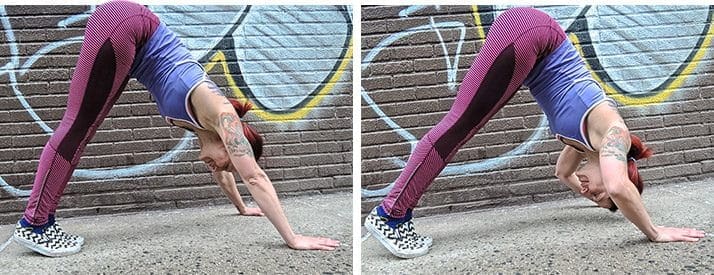
- Level 1: Pike Push-Up
- Level 2: Elevated Pike Push-Up
- Level 3: Wall-Supported Handstand Push-Up
To increase challenge, add blocks to extend the range of motion.
Biceps and Triceps
For biceps, utilise water bottles or a backpack for curls. Triceps exercises include bench dips, diamond push-ups, and overhead extensions, where a backpack can add resistance.
Shoulder Isolation and Leg Workouts
Utilise household items or unique bodyweight exercises like the sliding towel door exercise or the sheet face pull for shoulders. For legs, progress from bodyweight squats to more challenging variations like pistol squats or lunges with added weight.
Core Exercises
Evolve from basic sit-ups or planks to more advanced exercises like weighted sit-ups or dragon flags.
8 Excellent Core Workouts You Can Do at Home

Frequency and Progression
Determining the optimal frequency and managing the progression of your no-equipment workouts are critical components to achieving and sustaining fitness gains. Here’s how to fine-tune these aspects for maximal benefit:
- Establishing a Routine: Start with 3-4 workout sessions per week. This frequency provides a balanced approach, allowing sufficient time for muscle recovery while maintaining a consistent exercise habit. As your fitness level improves, you may find that your body can handle additional sessions or increased intensity.
- Listening to Your Body: Pay close attention to how your body responds to your workout routine. Recovery is just as important as the workouts themselves. If you’re feeling overly fatigued or notice a decrease in performance, it might be time to scale back and allow more recovery time.
- Gradual Increase: As you progress, gradually increase the intensity or volume of your workouts. This could mean adding more sessions, extending the duration of each workout, or incorporating more advanced exercises.
- Variety is Key: To avoid plateaus, mix up your routine every few weeks. This could involve changing exercises, adjusting the order of your routine, or incorporating new workout styles. Keeping your body guessing helps prevent adaptation and continues to drive progress.
- Setting and Revisiting Goals: Regularly set new fitness goals and revisit existing ones. This practice keeps you motivated and ensures your workout routine aligns with your evolving fitness aspirations.
- Consistent Assessment: Periodically assess your progress towards your goals. This can involve testing your strength, endurance, or flexibility in various exercises, ensuring you’re on track and making necessary adjustments to your routine.
Trainer Winny shares his perspective on maintaining an effective workout frequency: “Consistency is the golden rule of fitness. Whether you’re working out three times a week or every day, what matters most is showing up and giving your all. However, it’s crucial to balance consistency with adequate rest; your body needs time to recover and grow stronger. Progression isn’t just about doing more; it’s about doing what’s optimal for your body.”
Deciding to go on a no-equipment workout journey is not just about saving on gym fees or working out from the comfort of your home. It’s a testament to the versatility and adaptability of fitness training.
By understanding and applying the principles of progressive overload and adapting exercises to your strength levels, you can achieve remarkable results. So, dispel the myth that equipment is essential for a good workout and embrace the freedom and simplicity of using just your body weight to achieve your fitness goals.
Watch the video below for more information.