These chest exercise alternatives to the barbell bench press will keep you jacked and strong, even when you don’t have access to a bench.
Chest exercises are a cornerstone of a well-rounded fitness routine, offering not just aesthetic benefits but also significant functional gains.
A strong chest supports a variety of everyday activities, from lifting objects to pushing doors, enhancing overall upper body strength, and improving posture.

Traditionally, the barbell bench press has stood as the quintessential move for chest development. Revered for its effectiveness, this compound exercise targets the pectoral muscles, shoulders, and triceps, making it a staple in strength training programs.
However, access to a bench press setup is not always guaranteed. Whether it’s due to a crowded gym environment, limited equipment at home, or simply the desire for variety, many individuals find themselves searching for alternatives.
Recognizing this need broadens your workout horizons and ensures that your chest workout doesn’t hit a standstill due to equipment constraints.
This is where the value of alternative exercises shines through. There are numerous effective exercises for targeting the chest that don’t require a bench. These alternatives can be equally beneficial, offering variety, addressing muscle imbalances, and keeping your workouts engaging and progressive.
By exploring these options, you ensure that your chest development continues unabated, regardless of your access to traditional gym equipment. Let’s dive into three handy chest exercise alternatives that keep your fitness journey moving forward, even when a bench isn’t within reach.
Chest Exercise Alternatives to The Barbell Bench Press: Why Look for Alternatives?
In the realm of fitness, adaptability is not just a virtue; it’s a necessity. One common hurdle many face is limited access to specific pieces of equipment, such as the bench press. This limitation can arise in various scenarios, each presenting its unique challenges.
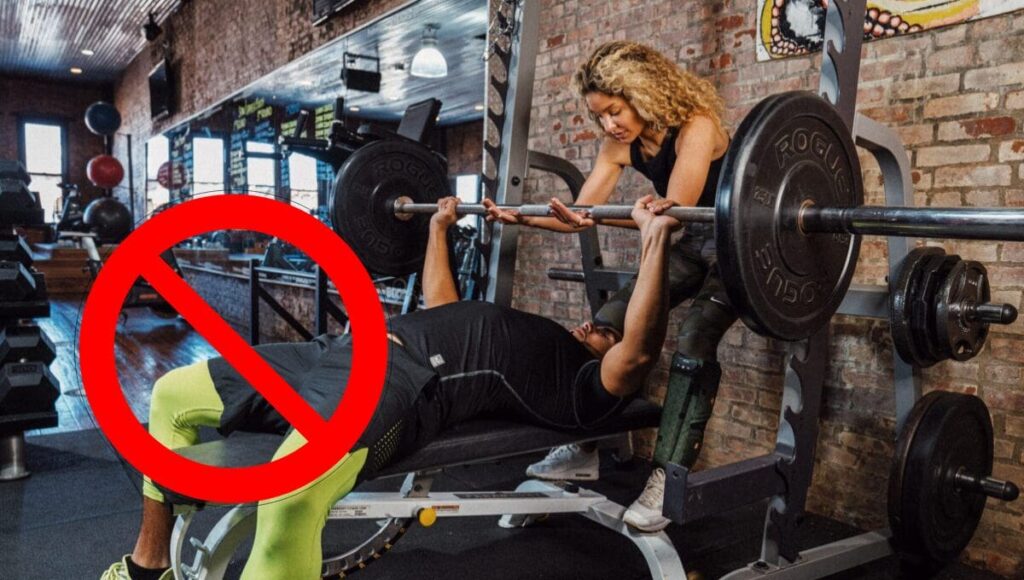
Crowded Gyms: The bench press stations at gyms can become hotspots, especially during peak hours. Waiting for your turn can disrupt your workout flow and reduce the efficiency of your gym time. This congestion often leads many to seek out less crowded areas of the gym, where bench press alternatives can be performed without delay.
Home Workouts: The surge in home workouts has highlighted the need for flexibility in exercise selection. Not everyone has the space or the budget for a full home gym setup with a bench. Thus, finding effective chest exercises that can be done with minimal equipment becomes paramount to maintaining progress.
Traveling: For those who often find themselves on the road, relying on hotel gyms or makeshift workout spaces, the availability of a bench press is far from guaranteed. Being equipped with alternative exercises means that your chest workouts can continue uninterrupted, regardless of your location.
Beyond the practicalities of equipment availability, there’s a strong case to be made for diversifying your chest workouts. Here are key benefits of incorporating alternatives:
Balanced Muscle Development: Exclusively performing bench presses can lead to uneven muscle development. Alternatives often require more stabilization and engage the chest muscles differently, promoting more balanced growth and strength.
Avoiding Plateaus: Your body adapts to repetitive stress over time, which can lead to a plateau in progress. Introducing new exercises challenges your muscles in new ways, reigniting muscle growth and strength gains.
Reduced Risk of Injury: Repeating the same movements can increase the risk of overuse injuries. Alternatives can lessen this risk by varying the stress placed on joints and muscles, allowing for safer, long-term progress.
Enhanced Motivation: Incorporating a variety of exercises keeps workouts exciting and engaging. This variety can rekindle motivation and commitment to your fitness goals, ensuring you remain consistent and enjoy the process.
In summary, seeking alternatives to the bench press is not just about circumventing equipment limitations; it’s about crafting a more effective, balanced, and sustainable approach to chest development. As we explore these alternatives, remember that each offers a unique set of benefits, capable of enhancing your overall fitness journey.
Alternative #1: Push-Ups
Push-ups stand as one of the most versatile and universally accessible exercises for chest development.
Requiring no equipment and minimal space, they can be performed virtually anywhere, making them a powerful alternative to the bench press. Here’s how to execute push-ups correctly to maximize chest engagement, along with variations to keep your workouts challenging and diverse.
Chest Exercise Alternatives to The Barbell Bench Press: Correct Push-Up Form
Starting Position: Begin in a plank position with your hands slightly wider than shoulder-width apart. Keep your feet together and toes grounded. Your body should form a straight line from your heels to your head.
Elbow Alignment: As you lower yourself, aim to keep your elbows at a 45-degree angle to your body. This positioning helps target the chest muscles effectively while reducing strain on the shoulders.
Depth: Lower yourself until your chest nearly touches the ground. A full range of motion ensures maximal muscle engagement.
Push Back Up: Exert pressure through your palms, pushing your body back up to the starting position. Ensure your body remains straight and rigid throughout the movement.
Chest Exercise Alternatives to The Barbell Bench Press: Push-Up Variations
To continue challenging your chest muscles and prevent workout monotony, incorporating variations into your routine is essential. Here are a few to consider:
Wide-Grip Push-Ups: By placing your hands wider than your shoulder width, you can increase the emphasis on the outer portions of your chest muscles. This variation challenges your chest in a unique way compared to the standard push-up.
Diamond Push-Ups: Bring your hands together under your chest, forming a diamond shape with your thumbs and index fingers. This variation not only targets the inner chest but also significantly engages the triceps.
Incline Push-Ups: Utilize a raised surface such as a bench, chair, or stairs to place your hands on. Performing push-ups at an incline shifts the focus towards the lower chest, mimicking the angle of an incline bench press.
Decline Push-Ups: Elevate your feet on a raised surface while keeping your hands on the ground. This variation increases the difficulty and targets the upper chest, offering a counterbalance to incline push-ups.
Each of these variations can adjust the focus and intensity of the workout, allowing for comprehensive chest development. By mixing these into your routine, you can ensure continued progress and maintain a high level of engagement with your workouts. Remember, the key to effective push-ups lies in proper form, full range of motion, and consistent variation.
Chest Exercise Alternatives to The Barbell Bench Press #2: Dumbbell Floor Press
The dumbbell floor press is an effective chest exercise that serves as an excellent alternative to the bench press, especially when equipment or space is limited.
This exercise focuses on the upper portion of the chest muscles and triceps, offering unique benefits due to its range of motion and the stability required.
Benefits of the Dumbbell Floor Press:
Limited Range of Motion: The floor limits the downward movement, reducing stress on the shoulders and making it a safer option for those with shoulder issues.
Increased Stability: Performing the press on the floor forces your body to stabilize itself, engaging more muscle fibers in the chest, arms, and core.
Convenience: It can be done anywhere there’s enough space to lie down, making it perfect for home workouts.
Step-by-Step Guide:
Starting Position: Begin by lying flat on your back on the floor, knees bent and feet flat. Hold a dumbbell in each hand with your arms extended above your chest, palms facing forward.
Lower the Dumbbells: Slowly lower the dumbbells to the side of your chest. Your upper arms should gently touch the floor, ensuring a controlled motion without any sudden impact.
Press Up: Push the dumbbells back up to the starting position by extending your arms fully. Keep the movement smooth and controlled, focusing on engaging your chest muscles.
Repeat: Perform the desired number of repetitions, maintaining proper form throughout the set.
Tips to Maximize Effectiveness:
Controlled Movements: Ensure each phase of the lift, both the lowering and the pressing, is performed with control. This maximizes muscle tension and engagement.
Squeeze at the Top: At the top of the movement, squeeze your chest muscles forcefully for a moment before lowering the dumbbells again. This extra contraction enhances muscle activation.
Mind-Muscle Connection: Focus mentally on the chest muscles throughout the exercise. This conscious engagement helps to better activate the target muscle group.
Progressive Overload: Gradually increase the weight of the dumbbells as you become stronger. This principle ensures continuous improvement and development of the chest muscles.
Elbow Position: Keep your elbows slightly tucked in towards your body rather than flaring them out wide. This positioning helps reduce the strain on your shoulder joints while effectively targeting the chest and triceps.
Incorporating the dumbbell floor press into your routine provides a versatile, safe, and effective way to build your chest without the need for a bench. Its simplicity and the benefits it offers make it a valuable addition to anyone’s chest training arsenal.
Chest Exercise Alternatives to The Barbell Bench Press #3: Resistance Band Chest Press
The resistance band chest press introduces a dynamic way to engage the chest muscles, simulating the bench press movement without the need for heavy weights or a bench.
This exercise is particularly valuable for those seeking a portable workout option or for individuals working out in limited spaces. Resistance bands offer variable resistance, meaning the tension increases with the stretch, providing a unique challenge that promotes muscle growth and strength.
Benefits of Using Resistance Bands:
Adjustable Resistance: By changing the bands or adjusting your grip, you can easily modify the resistance level to match your fitness level and goals.
Versatility: Resistance bands can be anchored to various objects, allowing for a range of exercises and angles to target the chest from different perspectives.
Portable Workout: Lightweight and compact, resistance bands are ideal for travel, enabling you to maintain your chest workout routine anywhere.
Setting Up and Performing the Resistance Band Chest Press:
Anchor the Band: Secure the resistance band at chest height behind you. This can be done by closing it in a door with a door anchor, wrapping it around a sturdy post, or any fixed object at the right height.
Grip and Stance: With your back to the anchor point, grasp the ends of the band with both hands. Step forward to create tension in the band. Adopt a staggered stance for stability, with one foot in front of the other.
Pressing Movement: With your hands at chest level and elbows bent, press forward until your arms are fully extended, keeping them parallel to the ground. Ensure your movements are smooth and controlled.
Return: Slowly bring your hands back to the starting position, maintaining tension on the band throughout the motion.
Repeat: Complete the desired number of repetitions and sets.
Chest Exercise Alternatives to The Barbell Bench Press: Adjusting Resistance and Angle
To Increase Resistance: Step further away from the anchor point to stretch the band more, or use a band with a higher resistance level.
To Decrease Resistance: Step closer to the anchor point, or use a band with lower resistance.
To Target Different Parts of the Chest: Change the angle of the press by adjusting the height of the anchor point. Pressing upwards targets the upper chest, while pressing downwards focuses on the lower chest.
Additional Tips:
Keep Your Core Engaged: Tighten your abdominal muscles throughout the exercise to support your spine and enhance stability.
Focus on Form: Resist the urge to rush through the reps. Maintaining a controlled tempo maximizes muscle engagement and prevents injury.
Breath Control: Exhale as you press forward and inhale as you return to the starting position. Proper breathing supports exertion and rhythm.
Incorporating the resistance band chest press into your workout routine offers a flexible, effective way to build chest strength and muscle without traditional equipment. Whether you’re at home, traveling, or looking to diversify your workout, resistance bands provide a practical solution for continuous fitness progress.
Integrating These Alternatives into Your Routine
Incorporating the push-up, dumbbell floor press, and resistance band chest press into your workout routine can diversify your chest development strategy and ensure continuous progress.
Here’s how to effectively blend these exercises into your regimen, whether you’re a beginner or more advanced in your fitness journey.
Chest Exercise Alternatives to The Barbell Bench Press: Creating a Balanced Routine
Variety: Start by including at least one of these exercises in your chest workout routine. If you’re training your chest twice a week, try a different alternative in each session to keep your muscles challenged.
Supplemental Exercises: Besides these main exercises, consider adding supplemental movements that target the shoulders, triceps, and back to ensure a well-rounded upper body workout.
Frequency and Volume:
Beginners: If you’re new to chest workouts, aim for 2-3 chest-focused sessions per week, allowing ample rest between sessions. Begin with 2-3 sets of 8-12 repetitions for each exercise, focusing on mastering the technique before increasing intensity.
Intermediate to Advanced: For those with more experience, 3-4 sets of 6-12 repetitions can be more beneficial, depending on your goals (strength vs. hypertrophy). Advanced individuals can also incorporate more variations or increase resistance to further challenge their muscles.
Chest Exercise Alternatives to The Barbell Bench Press: Progression and Adaptation
Progressive Overload: Gradually increase the difficulty of the exercises by adding more repetitions, sets, or resistance. For push-ups, progress to more challenging variations. For the dumbbell floor press and resistance band chest press, increase the weight or resistance band tension.
Listen to Your Body: Pay close attention to how your body responds to the exercises. If you experience any discomfort or pain, adjust your technique, reduce the intensity, or take extra rest days as needed. Remember, recovery is just as crucial as the workouts themselves for muscle growth and strength development.
Chest Exercise Alternatives to The Barbell Bench Press: Sample Weekly Plan
- Day 1: Push-Ups (3 sets of 8-12 reps) + Shoulder Press + Tricep Dips
- Day 3: Dumbbell Floor Press (3 sets of 8-12 reps) + Lateral Raises + Bicep Curls
- Day 5: Resistance Band Chest Press (3 sets of 8-12 reps) + Bent-Over Rows + Planks
This sample plan integrates the alternatives discussed with exercises targeting complementary muscle groups, promoting balanced upper body strength and aesthetics.
Adapting your workout routine to include these bench press alternatives can not only prevent training plateaus but also enhance your overall fitness level and chest development.
Embrace the process of trying new exercises and variations, and always prioritize form and safety over ego or lifting heavier weights. By listening to your body and progressively challenging yourself, you’ll see continuous improvement and keep your workouts fresh and effective.
Chest Exercise Alternatives to The Barbell Bench Press: Conclusion
Chest exercises are a fundamental component of a comprehensive fitness regimen, pivotal not only for aesthetic appeal but also for functional strength that aids in daily activities. The barbell bench press, while highly effective, is just one of many tools available for chest development.
This exploration of alternatives underscores the rich variety of exercises at our disposal, capable of sculpting a strong and balanced chest without relying solely on traditional equipment.
Read More: How to Maintain Motivation as Your Performances Decline with Age
The push-up, dumbbell floor press, and resistance band chest press each offer unique benefits, from improving muscle balance and strength to enhancing workout convenience and safety. These alternatives ensure that your progress remains unhindered, regardless of your access to a gym or specific equipment.
They embody the principle that effective workouts can happen anywhere and that limitations in resources can foster creativity and resilience in your fitness journey.
Related: 8 Gym Hacks to Motivate Yourself
Adaptability in fitness is more than just a strategy; it’s a mindset. It encourages us to view challenges as opportunities for growth and innovation. Whether faced with crowded gyms, limited home equipment, or the need for workout variety, the ability to adapt ensures that our fitness goals remain within reach. These alternatives to the bench press are not just stopgap measures but valuable exercises in their own right, capable of enriching any workout routine.
As you move forward, embrace these alternatives with an open mind and a spirit of exploration. Experiment with different exercises, adjust as needed based on your body’s responses, and remember that progress is a journey filled with learning and adaptation. The road to fitness is vast and varied, and by remaining adaptable, you ensure that your path is both rewarding and boundless.
Let these alternatives inspire you to explore new possibilities in your workouts and beyond, proving that where there’s a will to grow, there’s more than one way to achieve strength and vitality.