Compound hamstring exercises are powerful movements that build strength in the back of your legs.
People often overlook hamstring training. They spend hours on squats and leg presses but end up with weak hamstrings. Weak hamstrings can cause injuries, limit your strength, and slow your progress in sports or daily activities.
Choosing the right exercises solves this problem. Compound exercises train multiple muscles together and save you time. But you need to know how to do them correctly.
In this article, you will learn:
- The best compound hamstring exercises to build strength
- Simple ways to include these exercises in your workouts
- Common mistakes to avoid for faster results
Here’s how to strengthen your hamstrings safely and effectively.
Why Compound Hamstring Exercises Matter
Strong hamstrings protect your knees, improve your speed, and reduce the chance of injuries. People who run, lift weights, or play sports need strong hamstrings. These muscles stabilize your hips and knees during movement. Weak hamstrings often lead to knee pain or hamstring pulls, limiting your performance.

To make hamstrings stronger, there are two exercise types: compound and isolation. Isolation exercises like leg curls target only one muscle group. Compound exercises involve multiple muscles and joints working together. Deadlifts and Romanian deadlifts are examples of compound movements. These exercises train your hamstrings along with your glutes, lower back, and core muscles.
In fact, to build truly powerful legs, athletes often rely on 7 key exercises for building powerful hamstrings that prioritize compound movements and functional strength. This approach ensures your body develops coordination and resilience, not just raw muscle.
Compound exercises have advantages. They let you lift heavier weights and save time because each movement trains several muscles at once. These exercises build strength quickly and help muscles grow bigger. Athletes prefer compound movements because they closely match real-life movements such as running, jumping, or lifting objects from the ground.
Doing compound movements also makes your body stronger as a unit. They train muscles to work together smoothly. This type of strength transfers well to everyday activities and sports.
Isolation exercises still have value. They can target specific weaknesses. But compound movements should form the core of your hamstring workouts. They deliver faster results in less time and build balanced strength that keeps you healthy.
To get the full benefits of compound exercises, it’s important to perform them correctly and include them in a smart training program. This will maximize your strength and lower the risk of injuries.
Top Compound Hamstring Exercises by Equipment
Compound hamstring exercises build strength and muscle size. Different equipment gives you plenty of options for training at the gym or at home. Here are the best compound hamstring exercises grouped by equipment type, along with tips for performing them safely and effectively.

Barbell Exercises
Here are the compound hamstring exercises that can be done with a barbell.
Conventional Deadlift
The conventional deadlift is one of the best exercises for overall hamstring strength. It works your entire backside, including your hamstrings, glutes, and lower back.
Form tips:
Stand with feet hip-width apart. Position the bar close to your shins. Grab the bar with your hands just outside your legs. Keep your chest up, back straight, and shoulders over the bar. Pull the bar up by driving your feet through the floor. Squeeze your glutes at the top. Lower the bar slowly, keeping it close to your body.
Common mistakes:
- Rounding your lower back, risking injury
- Jerking the bar up instead of lifting smoothly
- Letting the bar drift away from your legs during the lift
Romanian Deadlift (RDL)
Romanian deadlifts target your hamstrings more directly than regular deadlifts. They emphasize the hip hinge motion and deeply stretch your hamstrings, promoting muscle growth.
Form tips:
Start by standing straight with the barbell at thigh level. Feet should be hip-width apart. Push your hips back and lower the bar while keeping a slight bend in your knees. Maintain a straight spine throughout the movement. Lower the bar until you feel a strong stretch in your hamstrings. Then push your hips forward, returning to the standing position.
Common mistakes:
- Lowering the bar too far by rounding your back
- Locking your knees instead of maintaining a slight bend
- Allowing the barbell to move forward, away from your body
Good Morning
Good mornings strengthen your hamstrings, glutes, and lower back. They are excellent for improving deadlift and squat performance.
These exercises not only build strength, but they also contribute to overall balance and posture. In fact, developing your entire posterior chain can have broader benefits. Consider adding 7 posterior chain exercises for power and posture to round out your lower body training. This approach supports better lifting mechanics and reduces the risk of chronic injuries.
Form tips:
Place a barbell on your upper back, similar to a squat. Feet shoulder-width apart. Push your hips backward, bending forward at the waist while keeping your back straight. Keep knees slightly bent throughout. Lower your torso until it’s nearly parallel to the floor. Push hips forward to stand upright again.
Common mistakes:
- Using heavy weight and sacrificing form
- Rounding your back as you lower your torso
- Bending your knees too much, turning it into a squat
Dumbbell & Kettlebell Exercises
Here are the dumbbell and kettlebell exercises.
Single-Leg Romanian Deadlift
Single-leg Romanian deadlifts improve balance, strengthen each leg individually, and engage your core.
Form tips:
Stand on one leg, holding a dumbbell in the opposite hand. Push your hips back, allowing your non-working leg to extend straight behind you. Keep your back flat and shoulders squared. Lower the dumbbell toward your standing foot until your torso is nearly parallel to the floor. Return to standing by squeezing your glutes and hamstrings.
Common mistakes:
- Allowing your hips to twist or rotate
- Losing balance by rushing the movement
- Rounding your spine as you lower down
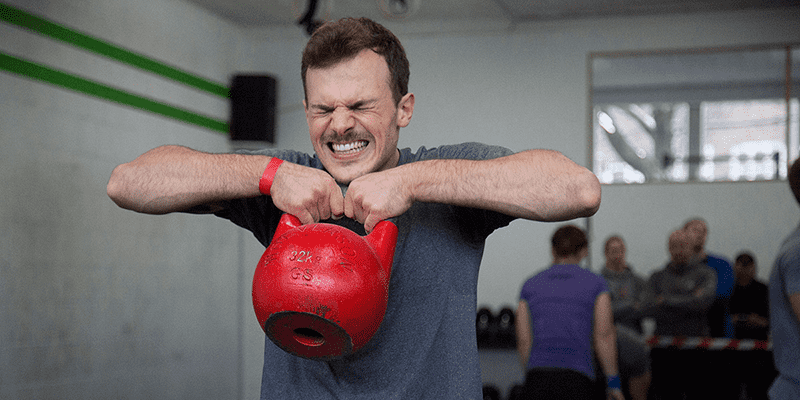
Kettlebell Swing
Kettlebell swings build explosive power and strengthen your hamstrings and glutes. They are also useful for conditioning.
Form tips:
Stand with feet shoulder-width apart, kettlebell on the floor in front of you. Hinge your hips back, grab the kettlebell with both hands, and swing it backward between your legs. Quickly thrust your hips forward, driving the kettlebell up to chest height. Let the kettlebell swing back down between your legs, and repeat the hip thrust.
Common mistakes:
- Squatting down instead of hinging your hips back
- Using your arms to lift the kettlebell instead of your hips
- Swinging the kettlebell higher than chest level
Bodyweight & Resistance Band Exercises
Here are the compound hamstring exercises that you can perform with your body weight or with resistance band exercises.
Nordic Hamstring Curl
Nordic curls build strong hamstrings and prevent injuries. They focus on the lowering portion of the exercise, improving strength and muscle control.
To take your training further, learn why you need to do Nordic curls for better hamstrings gain. These are especially powerful for athletes and runners looking to build injury-resistant hamstrings through eccentric strength.
Form tips:
Kneel on a soft surface. Anchor your ankles under a heavy object or have someone hold them. Slowly lean forward, keeping your body straight from knees to head. Lower as far as you can without bending at the hips. Catch yourself with your hands when you reach your limit. Push back up to start.
Common mistakes:
- Bending at the waist instead of keeping the body straight
- Rushing the movement and losing tension in the hamstrings
- Not controlling the lowering phase
Glute-Ham Raise (GHR)
GHR trains your hamstrings through a full range of motion, combining hip and knee movements. It strengthens your glutes and helps prevent hamstring injuries.
Form tips:
Position yourself on a glute-ham developer machine. Secure your ankles and thighs against the pads. Begin with your torso horizontal, then curl your hamstrings to raise your body upright. Maintain a straight line from your knees to your head. Lower slowly back down to the horizontal position.
Common mistakes:
- Arching your lower back excessively during the raise
- Using momentum instead of hamstring strength
- Not fully extending at the top position
Sliding Hamstring Curl
Sliding hamstring curls effectively target hamstrings and glutes using just your bodyweight. They are excellent for home workouts.
Form tips:
Lie on your back with your feet on sliders or a towel on a smooth floor. Lift your hips into a bridge position. Slowly extend your legs, sliding your feet out. Curl your heels back toward your body, maintaining elevated hips. Keep your hips high throughout.
Common mistakes:
- Allowing the hips to drop during the exercise
- Extending legs too quickly, losing tension
- Arching your lower back to compensate
Machine-based Exercises
Here are the machine-based exercises.
Leg Press (High-Foot Stance)
The leg press usually targets your quadriceps, but placing your feet higher shifts the focus to your hamstrings and glutes.
Form tips:
Sit on the leg press machine with your feet placed high on the platform. Press up to unlock the sled. Lower the platform slowly until your knees are near your chest. Press back up by pushing through your heels and squeezing your hamstrings and glutes.
Common mistakes:
- Placing feet too low, emphasizing quads instead of hamstrings
- Locking your knees completely at the top
- Allowing your hips to lift off the seat during the press
Cable Pull-throughs
Cable pull-throughs effectively train your hamstrings and glutes with continuous cable tension, improving hip hinge strength.
Form tips:
Face away from a cable machine with the rope attachment set low. Hold the rope between your legs. Hinge forward at the hips, letting the rope pull through. Drive your hips forward and squeeze your glutes to stand tall.
Common mistakes:
- Squatting instead of hinging at the hips
- Overextending your hips at the top of the movement
- Allowing your spine to round forward
Reverse Hyperextension
The reverse hyperextension strengthens your hamstrings and glutes while reducing stress on your lower back. It’s particularly helpful for recovery and rehabilitation.
Form tips:
Lie face down on a reverse hyperextension machine. Grip the handles firmly. Let your legs hang straight down. Lift your legs by squeezing your glutes and hamstrings until they reach parallel with your body. Lower your legs back slowly and repeat.
Common mistakes:
- Swinging legs too quickly, losing muscle control
- Hyperextending your back instead of keeping the spine neutral
- Allowing momentum to control the movement instead of the muscles
Common Form Mistakes & How to Fix Them
Proper form during compound hamstring exercises is crucial. Using the wrong form slows your progress and increases injury risk. Here are common mistakes people make, with simple ways to correct them.

Maintaining a Neutral Spine
A neutral spine means keeping your back flat during exercises like deadlifts or Romanian deadlifts. People often round their backs when lifting or lowering heavy weights. A rounded spine places strain on your lower back muscles and spine.
To fix this, focus on keeping your chest up and shoulders back.
Imagine holding a pencil between your shoulder blades. Maintain this position throughout the lift. Lower the weight only as far as your hips allow without bending your spine. Practicing with lighter weights helps develop better spine control before progressing to heavier lifts.
Proper Hinge Technique
Compound hamstring exercises rely on a hip hinge motion. Many people mistakenly squat down instead of pushing their hips back. Squatting emphasizes your quadriceps, not your hamstrings.
Correcting this involves focusing on your hips rather than your knees. Stand tall and push your hips back as if reaching behind you. Allow a slight knee bend, but don’t squat down. Feel your hamstrings stretch as you hinge at your hips. Your torso should lean forward, almost parallel to the floor, without rounding your spine. Practicing the hinge without weight at first helps you learn the proper pattern.
Controlling the Eccentric Movement
The eccentric portion is the lowering phase of an exercise.
People often lower weights too fast or drop the weight quickly, missing out on strength and muscle growth benefits. Fast lowering also risks injury.
To control the eccentric movement, count slowly to three as you lower the weight. This lets you keep tension on your hamstrings the entire time. You should feel your muscles working strongly, even while lowering the weight. Controlling the lowering phase builds more strength and muscle size. It also teaches your body better muscle control.
Correct Load Selection for Effective Results
Many people choose weights that are too heavy. They sacrifice good form and risk injury. Using weights that are too light won’t build strength efficiently.
Select a weight that lets you complete each repetition with good form. Your muscles should feel challenged, but you shouldn’t lose control.
Aim to leave one or two reps “in the tank” at the end of each set. Gradually increase the weight once you can easily perform your target reps with perfect form. This method provides consistent progress and reduces injury risk.
Programming Compound Hamstring Exercises
Getting the best results from compound hamstring exercises depends on how you program them into your weekly routine. Training too much or too little can limit your progress. Here’s how often to train your hamstrings, the best rep ranges, and how to include these exercises in your workouts.
Optimal Weekly Training Frequency
Training hamstrings twice per week works best for most people. Hamstrings respond well to regular, focused workouts. Twice-weekly training balances muscle growth and recovery, which prevents overuse injuries.
Leave at least two days between hamstring workouts for adequate recovery. For example, if you train hamstrings on Monday, wait until Thursday for your next hamstring session. This gives your muscles time to repair and grow stronger.
Training once per week might slow your progress. Training more than three times a week can lead to fatigue and injuries. Twice weekly hits the sweet spot for growth and recovery.
Recommended Sets and Reps
The number of sets and repetitions depends on your training goals:
- Strength: For building raw strength, focus on heavier weights and lower reps. Aim for about 3 to 5 sets of 4 to 6 reps. Rest for around 3 minutes between sets. Exercises like conventional deadlifts and good mornings work well for this goal.
- Hypertrophy (Muscle Growth): To build muscle size, perform about 3 to 4 sets of 5 to 35 reps (1). Rest as much as you need between sets. Romanian deadlifts and glute-ham raises fit perfectly here.
- General Fitness: For overall fitness, choose moderate-to-light weights. Complete 2 to 3 sets of 12 to 15 reps. Rest periods can be shorter, around 60 seconds. Kettlebell swings or sliding hamstring curls are ideal options.
Matching your sets and reps to your goals ensures steady, injury-free progress.
Integrating Exercises into Workout Routines
How you add compound hamstring exercises to your workouts matters. Start your leg day with compound hamstring exercises when your energy is highest. Perform exercises like deadlifts or Romanian deadlifts early to maintain good form and strength.
Balance hamstring work with quad-focused exercises like squats or leg presses. If you train legs twice weekly, emphasize hamstrings in one session and quadriceps in the other (2).
If your schedule allows, include isolation hamstring exercises such as leg curls at the end of your workout. Isolation movements target areas that compound movements might miss.
Proper programming balances your exercises and ensures you get the most out of your training. By planning carefully, you will strengthen your hamstrings safely and see consistent progress.
Scientific Insights & Research Highlights
Science supports using compound hamstring exercises to build strength and prevent injuries. Studies show that choosing the right movements significantly improves muscle growth and performance.
For example, when selecting movements, many coaches emphasize the top 4 exercises to train your hamstrings. These tried-and-true compound lifts are backed by research and commonly used in elite sports programs to improve performance.
Studies Supporting Compound Hamstring Exercises
Research confirms that compound exercises effectively build hamstring strength. One study found that exercises like Romanian deadlifts stimulate similar muscle growth compared to isolation moves such as leg curls (3). This means compound lifts save time and still give excellent results.
Another study compared stiff-legged deadlifts and Nordic hamstring curls (4). Researchers concluded that combining both hip-dominant (deadlifts) and knee-dominant exercises (Nordics) provides the best overall hamstring development. Including both types ensures complete muscle growth.
Stretch-Mediated Hypertrophy Explained
Stretch-mediated hypertrophy means muscle growth from stretching muscles under load (5). Exercises that stretch muscles deeply, like Romanian deadlifts or seated leg curls, trigger this growth effectively.
Research found that seated leg curls produced more hamstring growth than lying curls due to increased muscle stretch. Similarly, Romanian deadlifts deeply stretch your hamstrings and strongly promote muscle growth. Using compound movements that emphasize muscle stretching helps you build bigger, stronger hamstrings quickly.
Eccentric Training for Injury Prevention
Eccentric training involves controlling muscles as they lengthen. The lowering phase of exercises like Nordic hamstring curls and Romanian deadlifts emphasizes eccentric muscle control.
Studies show eccentric-focused exercises significantly reduce hamstring injuries, especially in sports. Athletes who regularly performed Nordic hamstring curls had fewer hamstring strains. Eccentric training strengthens the muscle fibers and connective tissues, protecting your hamstrings during running and quick movements.
For best results, perform compound hamstring exercises with controlled, slow lowering phases. This builds strong, injury-resistant hamstrings that can handle heavy loads and intense sports activities.
Sample Workout Routines
Here are three workout routines designed for specific goals. Each includes compound hamstring exercises to give you balanced strength, size, or general fitness.
Hypertrophy-Focused Routine
This workout targets muscle growth with moderate weights and reps.
- Romanian Deadlift: 4 sets of 8–10 reps (rest 2 minutes)
- Glute-Ham Raise: 3 sets of 10–12 reps (rest 90 seconds)
- Single-Leg Romanian Deadlift: 3 sets of 10 reps per leg (rest 1 minute)
- Sliding Hamstring Curl: 3 sets of 12–15 reps (rest 1 minute)
Do this routine twice weekly for consistent muscle growth.
Strength-Focused Routine
This routine emphasizes low reps and heavy loads to build maximal strength.
- Conventional Deadlift: 4 sets of 4–6 reps (rest 3 minutes)
- Good Morning: 3 sets of 6 reps (rest 2–3 minutes)
- Nordic Hamstring Curl (slow lowering): 3 sets of 5 reps (rest 2 minutes)
Perform this workout once weekly. Pair it with a lighter hamstring session on a separate day if desired.
Balanced Fitness Routine
This routine combines strength, muscle growth, and endurance for general fitness.
- Kettlebell Swing: 3 sets of 15 reps (rest 1 minute)
- Romanian Deadlift: 3 sets of 10 reps (rest 90 seconds)
- Cable Pull-throughs: 3 sets of 12 reps (rest 60 seconds)
- Leg Press (High-Foot Stance): 3 sets of 12–15 reps (rest 1 minute)
Include this routine in your weekly training for balanced hamstring development and overall leg health.
Conclusion
Compound hamstring exercises give you strong legs, prevent injuries, and improve your athletic ability.
You learned which exercises are most effective for building strength and muscle size, including deadlifts, Romanian deadlifts, and Nordic curls. You also discovered how to program these exercises effectively, balancing sets, reps, and frequency to achieve your goals. Finally, by understanding common form mistakes and how to correct them, you can now train your hamstrings safely and confidently.
The next step in your training journey is improving your posterior chain mobility. Better mobility helps you perform compound hamstring exercises with correct form, which will improve your results even more. Consider exploring stretches and mobility exercises that specifically target your hips, glutes, and hamstrings. This extra step will keep your lower body healthy, flexible, and strong for years to come.
References:
- Krzysztofik M, Wilk M, Wojdała G, Gołaś A. Maximizing Muscle Hypertrophy: A Systematic Review of Advanced Resistance Training Techniques and Methods. Int J Environ Res Public Health. 2019;16(24):4897. Published 2019 Dec 4. doi:10.3390/ijerph16244897
- Asouzu NC, Mong E, Agha M, et al. Relationship between hamstrings-quadriceps strength ratio and the performance of tasks in Berg’s Balance Scale among stroke survivors in Abakaliki, Nigeria. BMJ Open Sport Exerc Med. 2024;10(1):e001826. Published 2024 Feb 22. doi:10.1136/bmjsem-2023-001826
- McAllister MJ, Hammond KG, Schilling BK, Ferreria LC, Reed JP, Weiss LW. Muscle activation during various hamstring exercises. J Strength Cond Res. 2014;28(6):1573-1580. doi:10.1519/JSC.0000000000000302
- Boyer A, Hug F, Avrillon S, Lacourpaille L. Individual differences in the distribution of activation among the hamstring muscle heads during stiff-leg Deadlift and Nordic hamstring exercises. J Sports Sci. 2021;39(16):1830-1837. doi:10.1080/02640414.2021.1899405
- Warneke K, Lohmann LH, Lima CD, et al. Physiology of Stretch-Mediated Hypertrophy and Strength Increases: A Narrative Review. Sports Med. 2023;53(11):2055-2075. doi:10.1007/s40279-023-01898-x