Building strong legs starts with learning how to train them the right way. One of the best places to begin is with compound quad exercises.
These are the movements that work your thighs, hips, and core all at once. They’re the foundation of lower-body strength and one of the fastest ways to build serious muscle. I’ve seen people go from shaky bodyweight squats to lifting more than their body weight in a matter of months. The key is choosing the right exercises and knowing how to progress.
In this article, you will learn:
- The best quad-focused compound exercises for each experience level
- How to use bodyweight, free weights, and machines for growth
- Simple workouts to help you build strong, balanced legs
Let’s look at what compound quad exercises are and why they matter.
What Are Compound Quad Exercises?
Compound quad exercises are movements that work your quadriceps along with other major muscle groups. These include your glutes, hamstrings, hips, and core. When you squat, lunge, or step up, your body moves through more than one joint. That’s what makes it a compound movement.

Isolation exercises only work one muscle at a time. For the quads, that’s usually the leg extension machine. Those have a place, but they don’t match what compound movements offer. With compound exercises, you train your body to move in a way that matches how you use it in real life. You’re also able to lift more weight and build more muscle over time.
When I started leg training, I relied too much on machines. My legs looked fine, but I struggled with balance, joint strength, and endurance. Once I focused on compound exercises, especially squats and lunges, I noticed big changes in how I moved and felt. My knees felt more stable. My legs got stronger. And I stopped skipping leg day.
If you’re trying to build your quads, compound lifts give you more in return. They load the muscles through a full range of motion and allow you to increase intensity as you grow. They also push your body to work as a system. That means your legs won’t just look good. They’ll be strong and functional too.
For inspiration and exercise ideas, take a look at these 3 incredibly effective quad exercises for iron-strong legs. These include high-value movements perfect for building foundational strength and size.
Start with simple patterns. Squats and step-ups are a good place to begin. As your form improves, you can add weight and try more challenging versions. Over time, these compound moves will help you build size, strength, and joint control that machines alone can’t provide.
Anatomy of the Quadriceps
The quadriceps are a group of four muscles on the front of your thigh. They work together to straighten your knee and help you move through squats, lunges, and other compound leg exercises.

Here’s a quick look at each muscle:
- Vastus lateralis runs down the outside of your thigh. It’s often the most visible part of your quads and plays a big role in knee extension.
- Vastus medialis sits on the inner part of your thigh. It helps stabilize the knee, especially near the bottom of a squat.
- Vastus intermedius lies underneath the other quad muscles, right in the middle of your thigh. It’s a deep muscle that supports force during leg extensions.
- Rectus femoris runs straight down the center. Unlike the others, it crosses both the hip and knee joints. That means it helps lift your leg as well as straighten it.
These muscles don’t work in isolation. In a well-done squat, all four fire together. But the exact pattern depends on your stance, range of motion, and the type of exercise you’re doing.
For example, front squats tend to hit the rectus femoris and vastus medialis more because of the upright posture. Lunges place more stress on the vastus lateralis when you take shorter steps. If you want full quad development, you’ll need to hit each of these muscles from different angles.
That’s why variety in compound quad exercises matters. The right mix can help you build complete, balanced strength across all four parts of your quads.
You can explore how different movements compare in effectiveness with this list of 16 quad exercises ranked from worst to best. It’s a helpful reference if you’re trying to decide which movements to include at different stages of your training.
Beginner Compound Quad Exercises
If you’re new to strength training, start with basic movements that teach control and good form. These beginner compound quad exercises are simple, effective, and easy to scale. They’ll help you build strength in your thighs while also improving your balance, mobility, and coordination.
1. Bodyweight Squat
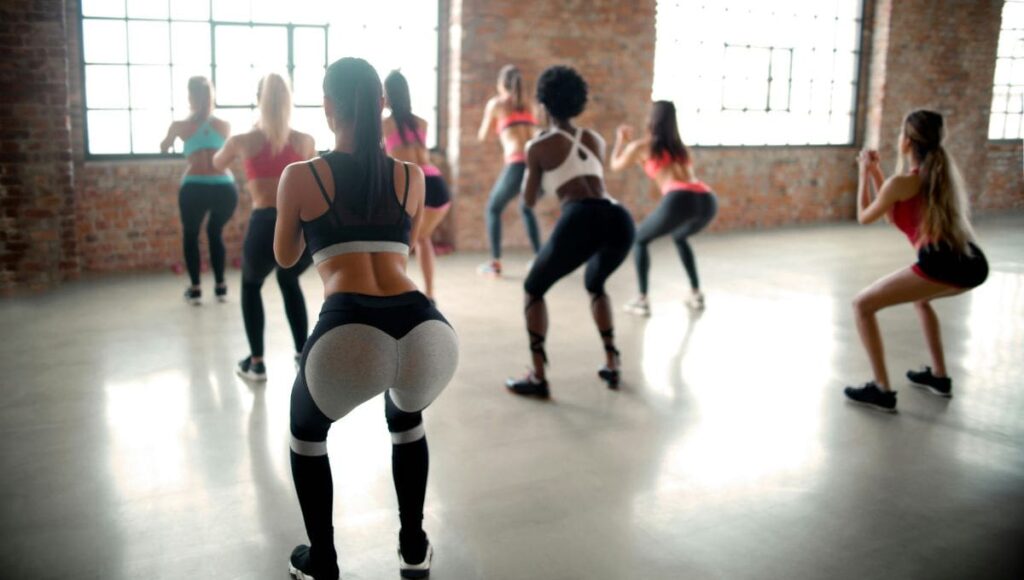
This is the foundation for all squat variations. Stand with your feet about shoulder-width apart. Keep your chest up and slowly lower your hips until your thighs are parallel to the floor, or as low as you can go without your heels lifting. Drive through your heels to return to standing.
Muscles worked: Primarily the quadriceps, with help from the glutes and core.
Progression: Once you can do 15–20 reps with control, move on to goblet squats or use a resistance band for added tension.
2. Goblet Squat
Hold a dumbbell or kettlebell at your chest and squat as you would with bodyweight. The front-loaded weight helps you stay upright, which makes this great for learning depth and form.
Muscles worked: Quads, core, glutes, upper back.
Progression: Increase the weight gradually. If you’re able to goblet squat half your bodyweight for 10+ reps, you’re ready for barbell squats.
3. Bodyweight or Dumbbell Lunge
Start by stepping forward into a lunge. Keep your front knee in line with your ankle and lower your back knee toward the floor. Push through your front heel to stand. Alternate legs each rep.
Muscles worked: Quads on the front leg, with help from the glutes and hamstrings.
Progression: Start with bodyweight. Add dumbbells as your balance and strength improve.
4. Step-Ups
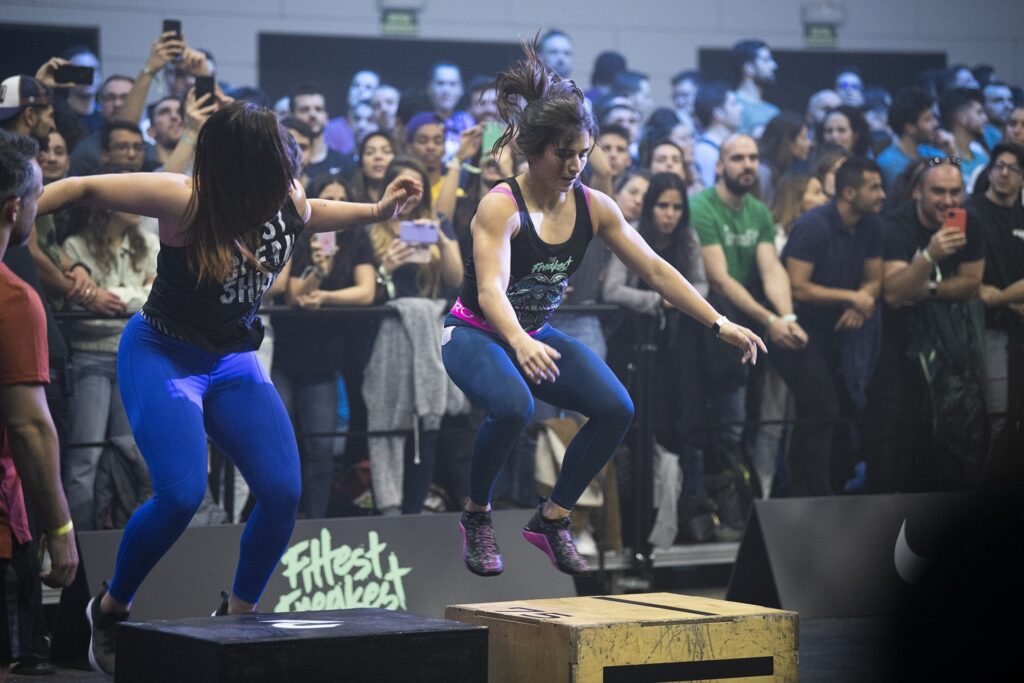
Step onto a bench or box with one foot. Push through that foot to stand fully on the platform. Lower with control and repeat. Use a height that lets you push without needing momentum.
Muscles worked: Quads and glutes, with added work from your calves and core.
Progression: Increase step height or add dumbbells. Step-ups are great for building single-leg strength and correcting imbalances.
5. 45-Degree Leg Press
Sit in the machine and place your feet shoulder-width on the platform. Lower the weight until your knees are bent around 90 degrees, then press it back up. Avoid locking your knees.
Muscles worked: Quads, with support from glutes and hamstrings.
Progression: Start light and focus on full range of motion. Slowly add weight as you build confidence.
Intermediate Compound Quad Exercises
Once you’ve built a solid base with beginner movements, it’s time to take things further. Intermediate compound quad exercises allow you to lift heavier weights, challenge your balance, and target your legs from new angles. These lifts are more demanding, but they’re also more rewarding when it comes to strength and muscle growth.
To ensure you’re making the most of your workouts, it’s worth checking out the best and worst quad exercises for muscle growth according to an expert. Expert guidance can help you identify high-return exercises and avoid ones that may not provide the stimulus you’re after.
1. Barbell Back Squat
This is one of the best overall leg builders. Place a barbell on your upper traps (high-bar) or rear delts (low-bar), brace your core, and squat down until your thighs are parallel or lower. Keep your knees tracking over your toes and drive up through your heels.
Form cues: Stay tall through your torso, don’t let your knees cave inward, and avoid shifting weight to your toes.
Common mistakes: Rounding the lower back, cutting the depth short, or letting the knees drift too far forward.
Programming tip: Start with 3–4 sets of 5–8 reps using a moderate weight. Rest 90–120 seconds between sets.
2. Barbell Front Squat
Hold the bar across the front of your shoulders with elbows high. This position shifts the load forward, increasing quad activation and forcing your torso to stay upright. It’s harder on your core and upper back than the back squat.
Form cues: Keep elbows up, chest lifted, and heels down. A narrow stance often helps target the quads more.
Common mistakes: Dropping the elbows, tipping forward, or losing balance at the bottom.
Programming tip: Use 3–4 sets of 6–10 reps. If your front rack position is uncomfortable, try crossing your arms or using straps.
3. Bulgarian Split Squat
Stand a few feet in front of a bench and place one foot behind you. Lower your back knee toward the floor while keeping most of your weight on the front leg. Push through your front heel to return to standing.
Form cues: Keep your chest upright, front knee tracking over your toes, and hips square.
Common mistakes: Leaning too far forward, bouncing off the back foot, or letting the front knee collapse inward.
Programming tip: Go for 3 sets of 8–10 reps per leg. Start with dumbbells. Switch to a barbell once your balance is solid.
4. Walking Lunges
Take a step forward and lower into a lunge, then push off and step directly into the next rep. This movement builds strength and endurance while challenging your stability.
Form cues: Keep your torso upright, step long enough to avoid knee strain, and stay controlled on each step.
Common mistakes: Rushing, letting your knee slam down, or losing balance on transitions.
Programming tip: Do 2–3 sets of 16–20 total steps. You can use dumbbells or a barbell for added load.
5. Hack Squat (Machine)
Step into the machine, set your shoulders against the pads, and place your feet shoulder-width on the platform. Lower yourself slowly, then drive the sled up by extending your knees.
Form cues: Go deep enough to engage your quads fully, keep your back flat on the pad, and avoid locking out at the top.
Common mistakes: Using too much weight, short range of motion, or allowing knees to shift inward.
Programming tip: Use this after free-weight squats. Aim for 3 sets of 10–12 reps, focusing on muscle burn and tension.
Advanced Compound Quad Exercises
If you’ve been training consistently for a while, your body is ready for more advanced challenges. These compound quad exercises push your limits and require greater focus on form, mobility, and recovery. At this level, small changes in technique and intensity make a big difference.
1. Heavy Back Squat
The movement is the same as the standard back squat, but the intensity is much higher. You’re now working with 80–90% of your max. That means fewer reps, longer rest, and strict attention to form.
Technique focus: Brace your core, keep your spine neutral, and maintain tightness throughout each rep. If your knees wobble or your chest collapses, reduce the weight.
Overload strategy: Follow a structured plan like 5×5 or 5-3-1. Use back-off sets to build volume after your heaviest reps. Rest for at least 2–3 minutes between sets to keep your strength up.
2. Pistol Squat
This is a single-leg squat where the non-working leg stays extended in front of you. It demands strong quads, good ankle mobility, and excellent balance.
Technique focus: Squat down slowly on one leg until your hamstring touches your calf. Push back up without letting your free foot touch the floor.
Overload strategy: Start by squatting to a box or holding onto support. Over time, try full reps with added weight in your hands for balance and resistance.
3. Weighted Jump Squats
These build explosive power and speed. Use a light dumbbell or just bodyweight. Squat down, then jump up forcefully, landing softly and under control.
Technique focus: Keep your landings quiet. Stay light on your feet and reset between jumps.
Overload strategy: Limit sets to 3–5 reps to keep power high. These aren’t for conditioning—they’re for speed and force. Do them early in a session or as part of athletic training.
4. Olympic Lifts (Clean, Snatch Variations)
Olympic lifts train power and full-body strength. They involve a rapid leg drive that begins with a deep squat and explosive extension.
Technique focus: Olympic lifts are complex. If you’re new to them, work with a coach or start with hang variations.
Overload strategy: Keep reps low (1–3 per set) and prioritize form. These lifts are best used in strength or performance-focused training blocks.
5. Trap Bar Deadlift
With a neutral grip and upright stance, the trap bar deadlift hits your quads harder than a conventional deadlift. It’s a hybrid movement that combines the benefits of squats and pulls.
Technique focus: Stand tall, push through your heels, and keep your chest up. Your knees will bend more than in a traditional deadlift, which brings your quads into play.
Overload strategy: Go heavy (3–5 reps per set works well). Use this as a main lift or as a variation for strength blocks.
Science & Expert Insights
Understanding the science behind compound quad exercises can help you train smarter and get better results. Research supports the idea that squats, lunges, and other compound lifts are not only effective, they’re essential for building strength and muscle across the legs.

Squat Depth and Muscle Activation
A study published in the Journal of Strength and Conditioning Research found that deeper squats lead to greater activation of the glutes and vastus medialis, one of the key quadriceps muscles (1). Deeper ranges also promote more complete hypertrophy across the thigh muscles, compared to partial squats, which mainly strengthen the top portion of the movement.
Unilateral vs Bilateral Training
A 2017 study compared the effects of Bulgarian split squats and traditional back squats (2). The results showed similar muscle activation in the quadriceps and glutes, despite using less weight in the split squat. That means unilateral movements can match the strength-building potential of bilateral ones while also improving balance and addressing leg imbalances.
Free Weights vs Machines
Another study examined back squats and leg presses and found that squats activated more stabilizing muscles, especially in the core and hips (3). While leg presses allowed more weight, squats improved real-world strength and athletic performance more effectively. This suggests that while both tools have value, free weights provide a more functional training stimulus.
Why Compound Exercises Work
Heavy compound lifts also trigger higher hormonal responses. A study on resistance training showed that multi-joint movements like squats create a greater spike in testosterone and growth hormone compared to isolation work (4). These hormonal shifts may support muscle growth and recovery over time.
Sample Workouts for All Levels
It’s not enough to know what exercises to use. You also need to put them together in a way that works. These sample workouts are designed to help you train your quads with compound movements, based on your experience level. Each template includes sets, reps, and progression strategies.
Beginner Quad Workout (2–3x per week)
Goal: Learn movement patterns, improve control, and build base strength.
- Bodyweight Squat – 3 sets of 12–15 reps. Focus on depth, control, and knee tracking. Rest 60 seconds.
- Goblet Squat – 3 sets of 10 reps. Use a light dumbbell (10–20 lbs). Keep the weight at chest height. Rest 90 seconds.
- Step-Ups (Low Box) – 3 sets of 10 reps per leg. Use a step or low bench. Control the movement up and down.
- Leg Press (Machine) – 3 sets of 12–15 reps. Start light and use the full range of motion. Rest 60–90 seconds.
- Bodyweight Split Squat (Rear foot on floor) – 2 sets of 10 reps per leg. Use this to build balance before progressing to Bulgarian style.
Progression Tip: When you can complete all sets with ease, increase dumbbell weight or add reps slowly. You can also raise the step height for step-ups or try holding light dumbbells for split squats.
Intermediate Quad Workout (1x per week, with a second lighter leg day optional)
Goal: Build strength, add muscle, improve unilateral control.
- Barbell Back Squat – 4 sets of 6–8 reps. Work up to a challenging but controlled weight. Rest 2 minutes.
- Bulgarian Split Squat (Dumbbells) – 3 sets of 8–10 reps per leg. Use a stable bench. Focus on depth and upright posture. Rest 90 seconds.
- Leg Press (Narrow Stance) – 3 sets of 10–12 reps. Narrow stance targets the quads more directly. Avoid locking out.
- Walking Lunges (Dumbbells) – 2 sets of 20 total steps. Keep your torso tall. Take shorter steps to emphasize quad activation.
- Optional: Seated Calf Raises or Hamstring Curl Machine – 2–3 sets. To balance the leg and improve joint support.
Progression Tip: Add 5–10 lbs every 1–2 weeks if your reps stay consistent. Focus on perfect form before chasing weight increases.
Advanced Quad Workout (1x per week or as part of a split)
Goal: Maximize strength, hypertrophy, and muscular fatigue using advanced methods.
- Barbell Back Squat (Heavy) – Work up to 1 top set of 3–5 reps. Follow with 2 back-off sets of 6–8 reps at ~80%. Rest 2–3 minutes.
- Front Squat – 3 sets of 6–8 reps. Use moderate weight and maintain elbow height throughout. Rest 2 minutes.
- Hack Squat (Machine) – 3 sets of 10–12 reps. Slow eccentric, constant tension. Try a drop set on the last round.
- Barbell Walking Lunges – 2 sets of 12 steps per leg. Bar across your back, short stride for more quad loading. Rest 90 seconds.
- Weighted Jump Squats (Optional) – 3 sets of 5 reps. Use light dumbbells or just bodyweight. Focus on vertical power.
Progression Tip: Track your top set weights and total volume over time. Use tools like tempo squats or pause reps to break through plateaus.
Conclusion
Compound quad exercises are key for building strong, balanced legs that perform well in and out of the gym. The best results come when you focus on:
- Training all four quadriceps muscles through full ranges of motion
- Progressing from beginner to advanced movements with control and purpose
- Using a mix of bilateral, unilateral, and machine-based exercises to target different angles
These exercises help you move better, lift more, and build long-term strength. If your goal is stronger legs and better performance, compound quad training should be the backbone of your plan.
From here, your next step is to build a full weekly training split that places the right focus on quad work, while leaving space for recovery and other muscle groups. If you’re looking to build your lower body effectively, consider these 5 key compound movements for lower body muscle gains. Incorporating these exercises can significantly enhance your leg day programming by offering additional stimulus beyond the basics.
References:
- Straub RK, Powers CM. A Biomechanical Review of the Squat Exercise: Implications for Clinical Practice. Int J Sports Phys Ther. 2024;19(4):490-501. Published 2024 Apr 1. doi:10.26603/001c.94600
- Mackey ER, Riemann BL. Biomechanical Differences Between the Bulgarian Split-Squat and Back Squat. Int J Exerc Sci. 2021;14(1):533-543. Published 2021 Apr 1. doi:10.70252/CIYT8956
- Myer GD, Kushner AM, Brent JL, et al. The back squat: A proposed assessment of functional deficits and technical factors that limit performance. Strength Cond J. 2014;36(6):4-27. doi:10.1519/SSC.0000000000000103
Riachy R, McKinney K, Tuvdendorj DR. Various Factors May Modulate the Effect of Exercise on Testosterone Levels in Men. J Funct Morphol Kinesiol. 2020;5(4):81. Published 2020 Nov 7. doi:10.3390/jfmk5040081