In the realm of strength training and bodybuilding, the quest for muscle growth is a perpetual pursuit.
Whether you’re aiming to enhance your physical performance or sculpt a more aesthetically pleasing physique, the importance of muscle hypertrophy cannot be overstated. In this article, we delve into the realm of upper body muscle hypertrophy, exploring a range of exercises designed to maximize growth and strength.
Cable exercises represent a cornerstone of modern resistance training, offering a dynamic and versatile approach to building muscle. Unlike traditional free weights, cable machines utilize adjustable pulleys and weight stacks to provide constant tension throughout the entire range of motion.
This unique feature not only maximizes muscle activation but also minimizes momentum, leading to more controlled and effective movements. From chest presses to tricep pushdowns, cable exercises offer a myriad of options to target specific muscle groups with precision and intensity.
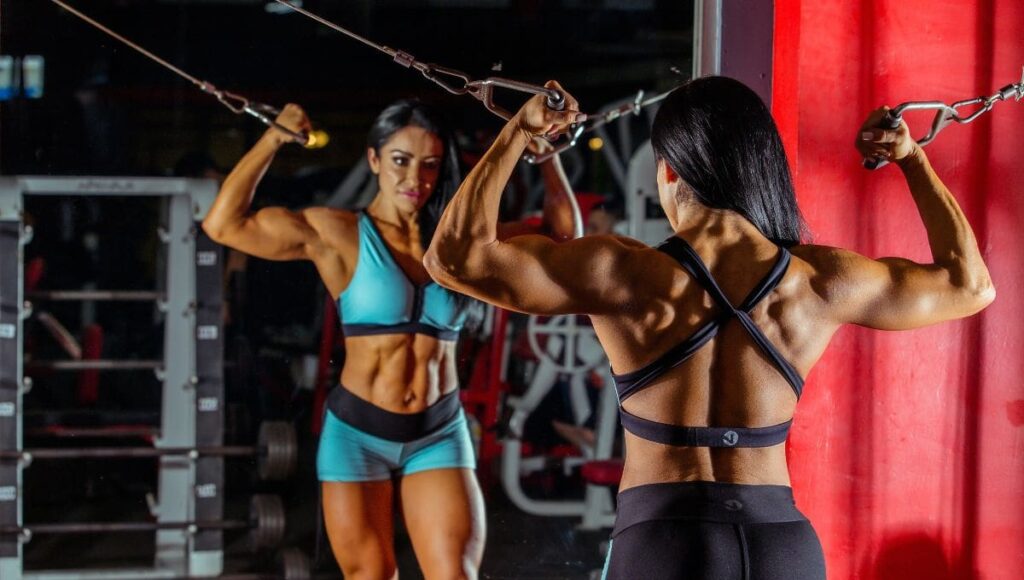
Muscle hypertrophy, the process of increasing the size of muscle fibers through resistance training, plays a pivotal role in both functional strength and aesthetic appeal, particularly in the upper body.
For athletes and fitness enthusiasts alike, greater muscle mass translates to improved performance in activities ranging from lifting heavy objects to excelling in sports. Moreover, a well-developed upper body is often synonymous with physical attractiveness, contributing to a more proportionate and defined physique.
Using Cables for Muscle Hypertrophy
While traditional strength training methods such as free weights and bodyweight exercises remain popular choices for muscle hypertrophy, the utilization of cable machines offers a unique approach to stimulating muscle growth.
By providing constant tension and resistance, cables create an environment conducive to hypertrophy, challenging muscles throughout the entire range of motion. This article will explore the concept of using cables specifically for upper body muscle growth, highlighting the benefits and effectiveness of incorporating cable exercises into your training regimen.
Whether you’re striving to increase strength, enhance muscle definition, or simply diversify your workout routine, cable exercises offer a versatile and efficient means of achieving your fitness goals.
Benefits of Cable Exercises for Muscle Growth
Cable exercises have garnered significant attention in the fitness community due to their unique advantages in promoting muscle hypertrophy and overall strength development. Below are some key benefits of incorporating cable exercises into your workout routine:
Constant tension and resistance throughout the range of motion
One of the primary advantages of cable exercises is the ability to maintain constant tension on the muscles throughout the entire range of motion. Unlike traditional free weights, which often experience peaks and valleys of tension, cable machines utilize adjustable pulleys and weight stacks to provide consistent resistance. This continuous tension places greater stress on the muscle fibers, leading to more significant microtrauma and subsequent muscle growth over time.

By keeping the muscles under tension from start to finish, cable exercises effectively stimulate muscle fibers across all phases of the movement. This enhanced muscle activation contributes to greater gains in strength, size, and muscular endurance, making cable exercises a valuable tool for promoting muscle hypertrophy.
Great range of motion
Another notable advantage of cable exercises is the ability to achieve a greater range of motion compared to traditional free weight exercises. Cable machines allow for fluid and unrestricted movement patterns, enabling muscles to stretch and contract through their full range of motion without limitation.
This increased range of motion not only enhances muscle flexibility and joint mobility but also promotes more effective muscle activation and recruitment. By fully engaging the target muscles through a complete range of motion, cable exercises facilitate optimal muscle growth and development, leading to greater gains in strength and functional performance.
Versatility in targeting specific muscle groups
Cable machines offer a wide range of attachment options and adjustable settings, allowing for precise targeting of specific muscle groups. Whether you’re looking to isolate individual muscles or engage multiple muscle groups simultaneously, cable exercises provide unparalleled versatility in exercise selection and customization.
From chest presses and rows to bicep curls and tricep extensions, cable machines offer countless variations to address the unique needs and goals of each individual. By adjusting the resistance, angle, and attachment point, you can effectively tailor your workout to target specific muscles and achieve optimal results.
Reduced risk of injury due to controlled movements
One often overlooked benefit of cable exercises is the reduced risk of injury compared to traditional free weight exercises. Cable machines provide a controlled and stable environment for performing resistance exercises, minimizing the risk of accidents or injuries associated with improper form or excessive momentum.
The adjustable resistance and smooth, guided movements of cable exercises allow for precise control over the intensity and speed of the exercise, reducing the likelihood of strain or overexertion. Additionally, the constant tension provided by cable machines helps to stabilize and support the joints, promoting proper alignment and reducing the risk of strain or injury during exercise.
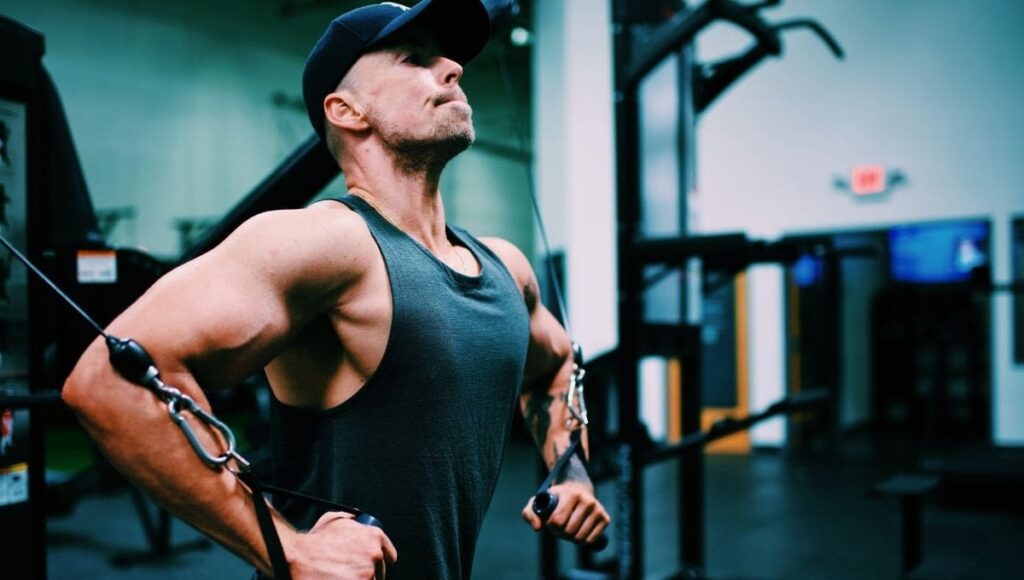
Overall, cable exercises offer a safe and effective means of promoting muscle growth and strength development, making them a valuable addition to any workout routine. Whether you’re a beginner or an experienced lifter, incorporating cable exercises into your training regimen can help you achieve your fitness goals more efficiently and effectively while minimizing the risk of injury.
1. Cable Chest Press
The cable chest press is a fundamental exercise for targeting the muscles of the chest, shoulders, and triceps. Follow these steps to perform the cable chest press with proper technique:
- Adjust the pulleys on a cable machine to the desired height, usually aligning them with your mid-chest.
- Attach a handle or grip to each pulley, ensuring they are at the same height and distance from the machine.
- Stand between the two pulleys, facing away from the machine, with your feet shoulder-width apart for stability.
- Grasp the handles or grips firmly with an overhand grip, palms facing forward.
- Position your hands slightly wider than shoulder-width apart, maintaining a firm and stable grip on the handles.
- Engage your core and maintain a slight bend in your knees to stabilize your lower body.
- Keep your chest up, shoulders back, and spine neutral throughout the exercise to ensure proper alignment and form.
- Press the handles forward and away from your body until your arms are fully extended but not locked out.
- Focus on squeezing your chest muscles as you push the handles away, maintaining tension throughout the movement.
- Slowly reverse the motion and bring the handles back towards your body in a controlled manner, stopping just short of your chest.
- Repeat for the desired number of repetitions, maintaining proper form and control throughout the set.
Muscle Groups Targeted
The cable chest press primarily targets the pectoralis major muscles of the chest, specifically the sternal (lower) and clavicular (upper) heads. Additionally, it engages the anterior deltoids (front shoulder muscles) and triceps brachii (back of the upper arm) as secondary movers to assist in the pressing movement.
Variations and Modifications
The cable chest press offers several variations and modifications to target different areas of the chest and accommodate individual preferences and abilities. Some common variations include:
High to Low Cable Chest Press:
Adjust the pulleys to a higher position, slightly above shoulder height.
Perform the chest press by pressing the handles downward and inward towards the midline of your body, focusing on the lower portion of the chest.
Single-Arm Cable Chest Press:
Perform the chest press with one arm at a time, alternating between left and right sides.
This variation helps to address muscle imbalances and asymmetries while providing a unilateral challenge to the chest muscles.
Incline Cable Chest Press:
Set up an adjustable bench at a slight incline (approximately 30-45 degrees).
Perform the chest press with the bench positioned between the cable pulleys, pressing the handles upward and inward towards the upper chest.
This variation targets the upper chest muscles (clavicular head) to a greater extent.
Experiment with these variations and modifications to add variety to your workout routine and effectively target different areas of the chest for balanced development. As always, focus on maintaining proper form and technique to maximize the effectiveness of the exercise and minimize the risk of injury.
2. Cable Rows
Cable rows are a compound exercise that primarily targets the muscles of the upper back, including the latissimus dorsi, rhomboids, and middle trapezius. Proper technique is essential for maximizing muscle activation and minimizing the risk of injury. Follow these steps to perform cable rows with correct form:
- Adjust the pulley of a cable machine to chest height and attach a straight or angled bar handle.
- Stand facing the machine with your feet shoulder-width apart and knees slightly bent for stability.
- Grasp the handle with an overhand grip, hands positioned slightly wider than shoulder-width apart.
- Maintain a neutral spine and engage your core muscles to stabilize your torso throughout the exercise.
- Keep your shoulders down and back, avoiding rounding or hunching forward.
- Position your hips back slightly as if sitting back into an imaginary chair, maintaining a slight forward lean from the hips.
- Initiate the movement by retracting your shoulder blades and pulling the handle towards your lower chest, driving your elbows back and down.
- Squeeze your shoulder blades together at the peak of the contraction to maximize muscle engagement in the upper back.
- Slowly return to the starting position, allowing your arms to fully extend while maintaining tension in the back muscles.
- Control the descent to avoid swinging or using momentum to complete the repetition.
- Repeat for the desired number of repetitions, focusing on maintaining proper form and controlled movement throughout the set.
Muscle Groups Targeted
Cable rows primarily target the muscles of the upper back, including the latissimus dorsi, rhomboids, and middle trapezius. Additionally, the exercise engages the rear deltoids (posterior shoulder muscles) and biceps brachii (front of the upper arm) as secondary movers to assist in the pulling movement.
Variations and Modifications
Cable rows offer several variations and modifications to target different areas of the back and accommodate individual preferences and abilities. Some common variations include:
Wide-Grip Cable Rows
Perform cable rows with a wider grip on the handle, emphasizing the engagement of the latissimus dorsi (outer back muscles).
This variation helps to broaden the back and enhance overall back width.
Close-Grip Cable Rows
Perform cable rows with a close grip on the handle, positioning your hands closer together.
This variation places greater emphasis on the muscles of the mid-back, including the rhomboids and middle trapezius.
Seated Cable Rows
Sit on a bench or platform with your feet secured on the footrests or ground.
Grasp the handle with an overhand grip and perform rows while seated, maintaining proper posture and form throughout the movement.
This variation isolates the back muscles and minimizes involvement of the lower body, allowing for a more focused and controlled movement.
Experiment with these variations and modifications to add variety to your back workout routine and effectively target different areas of the back for balanced development. As always, prioritize proper form and technique to maximize the effectiveness of the exercise and minimize the risk of injury.
3. Cable Flyes
Cable flyes are an isolation exercise primarily targeting the muscles of the chest (pectoralis major) while also engaging the anterior deltoids and triceps. Proper technique is crucial to effectively isolate the chest muscles and minimize strain on the shoulders. Follow these steps to perform cable flyes with correct form:
- Adjust the pulleys of a cable machine to the lowest position and attach D-handles or stirrup handles.
- Stand in the center of the cable machine, facing away from the weight stack, with one handle in each hand.
- Take a step forward with one foot to create tension in the cables, maintaining a slight bend in your elbows.
- Maintain a slight bend in your knees and a neutral spine throughout the exercise.
- Keep your chest up, shoulders down and back, and core engaged to stabilize your torso.
- Start with your arms extended straight out to the sides, palms facing forward.
- Slowly and with control, bring your arms together in front of your body, crossing them over at chest level.
- Focus on squeezing your chest muscles as you bring your hands together, keeping a slight bend in your elbows.
- Pause for a moment at the peak of the contraction, feeling the stretch in your chest muscles.
- Slowly return to the starting position, allowing your arms to open up to the sides while maintaining tension in the chest muscles.
- Repeat for the desired number of repetitions, focusing on maintaining a controlled and deliberate movement throughout the set.
Muscle Groups Targeted
Cable flyes primarily target the pectoralis major muscles of the chest, particularly the sternal (lower) portion. Additionally, the exercise engages the anterior deltoids (front shoulder muscles) and triceps brachii (back of the upper arm) to a lesser extent as stabilizers.
Variations and Modifications
Cable flyes offer several variations and modifications to target different areas of the chest and accommodate individual preferences and abilities. Some common variations include:
- High Cable Flyes
- Decline Cable Flyes
- Single-Arm Cable Flyes
Experiment with these variations and modifications to add variety to your chest workout routine and effectively target different areas of the chest for balanced development. As always, focus on maintaining proper form and technique to maximize the effectiveness of the exercise and minimize the risk of injury.
4. Cable Bicep Curls
Cable bicep curls are an effective isolation exercise for targeting the biceps brachii muscles, which are located on the front of the upper arm.
Proper technique is essential to effectively engage the biceps and minimize the involvement of other muscle groups. Follow these steps to perform cable bicep curls with correct form:
- Adjust the pulley of a cable machine to the lowest position and attach a straight bar or rope handle.
- Stand facing the cable machine with your feet shoulder-width apart and knees slightly bent for stability.
- Grasp the handle with an underhand grip (palms facing upward), hands positioned shoulder-width apart.
- Maintain a neutral spine and engage your core muscles to stabilize your torso throughout the exercise.
- Keep your chest up, shoulders down and back, and elbows close to your sides.
- Begin with your arms fully extended, elbows tucked into your sides, and palms facing upward.
- Keeping your upper arms stationary, exhale and bend your elbows to curl the handle towards your shoulders.
- Focus on contracting your biceps at the top of the movement, squeezing them for a brief moment.
- Inhale and slowly lower the handle back to the starting position, maintaining tension in the biceps.
- Repeat for the desired number of repetitions, maintaining controlled and deliberate movement throughout the set.
Muscle Groups Targeted
Cable bicep curls primarily target the biceps brachii muscles, which are responsible for flexing the elbow joint and bringing the forearm towards the upper arm. Additionally, the exercise engages the brachialis and brachioradialis muscles, which are synergists that assist in elbow flexion.
Variations and Modifications
Cable bicep curls offer several variations and modifications to target different aspects of the biceps and accommodate individual preferences and abilities. Some common variations include:
- Single-Arm Cable Bicep Curls
- Rope Cable Bicep Curls
- Preacher Cable Bicep Curls
Experiment with these variations and modifications to add variety to your bicep workout routine and effectively target different aspects of the biceps for balanced development. As always, prioritize proper form and technique to maximize the effectiveness of the exercise and minimize the risk of injury.
5. Tricep Pushdowns
Tricep pushdowns are an excellent isolation exercise for targeting the triceps brachii muscles, located on the back of the upper arm. Proper technique is crucial to effectively engage the triceps and minimize strain on other muscle groups. Follow these steps to perform tricep pushdowns with correct form:
- Adjust the pulley of a cable machine to the highest position and attach a straight or V-bar handle.
- Stand facing the cable machine with your feet shoulder-width apart and knees slightly bent for stability.
- Grasp the handle with an overhand grip (palms facing down), hands positioned shoulder-width apart.
- Maintain a neutral spine and engage your core muscles to stabilize your torso throughout the exercise.
- Keep your chest up, shoulders down and back, and elbows close to your sides.
- Begin with your arms fully extended, elbows tucked into your sides, and palms facing down.
- Keeping your upper arms stationary, exhale and press the handle downward by extending your elbows until your arms are fully straightened.
- Focus on contracting your triceps at the bottom of the movement, squeezing them for a brief moment.
- Inhale and slowly return the handle to the starting position, maintaining tension in the triceps.
- Repeat for the desired number of repetitions, maintaining controlled and deliberate movement throughout the set.
Muscle Groups Targeted
Tricep pushdowns primarily target the triceps brachii muscles, which are responsible for extending the elbow joint and straightening the forearm. Additionally, the exercise engages the anconeus muscle, which assists in elbow extension.
Variations and Modifications
Tricep pushdowns offer several variations and modifications to target different aspects of the triceps and accommodate individual preferences and abilities. Some common variations include:
- Rope Tricep Pushdowns
- Reverse Grip Tricep Pushdowns
- Single-Arm Tricep Pushdowns
Experiment with these variations and modifications to add variety to your tricep workout routine and effectively target different aspects of the triceps for balanced development.
As always, prioritize proper form and technique to maximize the effectiveness of the exercise and minimize the risk of injury.
6. Cable Shoulder Press
Cable shoulder press is a compound exercise that primarily targets the deltoid muscles of the shoulders, as well as engaging the triceps and upper chest to a lesser extent. Follow these steps to perform cable shoulder press with proper technique:
- Adjust the pulleys of a cable machine to shoulder height and attach D-handles or stirrup handles.
- Stand facing away from the cable machine, with your feet shoulder-width apart and knees slightly bent for stability.
- Grasp the handles with an overhand grip, hands positioned slightly wider than shoulder-width apart, and elbows bent at 90 degrees.
- Maintain a neutral spine and engage your core muscles to stabilize your torso throughout the exercise.
- Keep your chest up, shoulders down and back, and elbows in line with your shoulders.
- Exhale and press the handles upward and forward until your arms are fully extended overhead.
- Focus on squeezing your shoulder muscles at the top of the movement, maintaining tension throughout.
- Inhale and slowly lower the handles back to the starting position, maintaining control over the movement.
- Repeat for the desired number of repetitions, focusing on maintaining proper form and controlled movement throughout the set.
Muscle Groups Targeted
Cable shoulder press primarily targets the deltoid muscles of the shoulders, specifically the anterior (front) deltoids. Additionally, it engages the lateral (side) deltoids and the triceps brachii (back of the upper arm) as synergists to assist in the pressing movement.
Variations and Modifications
Cable shoulder press offers several variations and modifications to target different aspects of the shoulders and accommodate individual preferences and abilities. Some common variations include:
- Single-Arm Cable Shoulder Press
- High to Low Cable Shoulder Press
- Seated Cable Shoulder Press
Experiment with these variations and modifications to add variety to your shoulder workout routine and effectively target different aspects of the deltoid muscles for balanced development. As always, prioritize proper form and technique to maximize the effectiveness of the exercise and minimize the risk of injury.
7. Lateral Raises with Cables
Lateral raises with cables are an effective isolation exercise for targeting the lateral deltoid muscles, which are responsible for raising the arms to the sides. Proper technique is essential to effectively engage the lateral delts and minimize strain on other muscle groups. Follow these steps to perform lateral raises with cables with correct form:
Adjust the pulleys of a cable machine to the lowest position and attach D-handles or stirrup handles.
Stand facing the cable machine with your feet shoulder-width apart and knees slightly bent for stability.
Grasp the handles with an overhand grip (palms facing down), hands positioned slightly in front of your thighs.
Maintain a neutral spine and engage your core muscles to stabilize your torso throughout the exercise.
Keep your chest up, shoulders down and back, and elbows slightly bent.
Begin with your arms straight down by your sides, elbows slightly bent, and palms facing your thighs.
Exhale and raise the handles out to the sides until your arms are parallel to the floor, keeping a slight bend in your elbows.
Focus on contracting your lateral deltoids at the top of the movement, squeezing them for a brief moment.
Inhale and slowly lower the handles back to the starting position, maintaining control over the movement.
Repeat for the desired number of repetitions, focusing on maintaining proper form and controlled movement throughout the set.
Muscle Groups Targeted
Lateral raises with cables primarily target the lateral deltoid muscles, which are located on the sides of the shoulders. Additionally, the exercise engages the supraspinatus muscle and the trapezius muscles to a lesser extent.
Variations and Modifications
Lateral raises with cables offer several variations and modifications to target different aspects of the lateral deltoids and accommodate individual preferences and abilities. Some common variations include:
- Single-Arm Cable Lateral Raises
- Bent-Over Cable Lateral Raises
- Cable Front Raises
Experiment with these variations and modifications to add variety to your shoulder workout routine and effectively target different aspects of the deltoid muscles for balanced development. As always, prioritize proper form and technique to maximize the effectiveness of the exercise and minimize the risk of injury.
8. Cable Face Pulls
Cable face pulls are a fantastic exercise for targeting the rear deltoids, upper back, and rotator cuff muscles, while also engaging the traps and rhomboids.
Proper technique ensures optimal muscle activation and minimizes the risk of injury. Follow these steps to perform cable face pulls with correct form:
- Adjust the pulley of a cable machine to the highest position and attach a rope handle.
- Stand facing the cable machine with your feet shoulder-width apart and knees slightly bent for stability.
- Grasp the rope handle with an overhand grip, hands positioned slightly wider than shoulder-width apart.
- Maintain a neutral spine and engage your core muscles to stabilize your torso throughout the exercise.
- Keep your chest up, shoulders down and back, and elbows bent at approximately 90 degrees.
- Begin with your arms fully extended, hands positioned in front of your face, and palms facing each other.
- Exhale and pull the rope handle towards your face, leading with your elbows and squeezing your shoulder blades together at the end of the movement.
- Focus on contracting the rear deltoids and upper back muscles as you pull the rope towards your face.
- Inhale and slowly return the rope to the starting position, maintaining control over the movement.
- Repeat for the desired number of repetitions, focusing on maintaining proper form and controlled movement throughout the set.
Muscle Groups Targeted
Cable face pulls primarily target the rear deltoids, which are located on the back of the shoulders, as well as the upper back muscles, including the traps and rhomboids. Additionally, the exercise engages the rotator cuff muscles, which help stabilize the shoulder joint.
Variations and Modifications
Cable face pulls offer several variations and modifications to target different aspects of the upper back and accommodate individual preferences and abilities. Some common variations include:
- Rope Face Pulls with External Rotation
- Single-Arm Cable Face Pulls
- Wide-Grip Cable Face Pulls
Experiment with these variations and modifications to add variety to your upper back workout routine and effectively target different aspects of the shoulder and upper back muscles for balanced development.
As always, prioritize proper form and technique to maximize the effectiveness of the exercise and minimize the risk of injury.
Sample Cable Workout Routine for Upper Body Hypertrophy
Warm-up
Before beginning your main workout, it’s essential to warm up your muscles and joints to prepare them for the upcoming exercises. Spend 5-10 minutes performing dynamic movements such as arm circles, shoulder rolls, and trunk rotations to increase blood flow and loosen up your upper body. Additionally, incorporate light cardio activities like jogging or cycling to elevate your heart rate and further warm up your muscles.
Main Workout
Exercise Selection and Sequence
- Cable Chest Press
- Cable Rows
- Cable Shoulder Press
- Lateral Raises with Cables
- Tricep Pushdowns
- Cable Bicep Curls
- Cable Face Pulls
Sets, Reps, and Rest Periods
Perform each exercise for 3-4 sets, aiming for 8-12 repetitions per set to promote muscle hypertrophy. Use a weight that challenges you while maintaining proper form throughout each set. Rest for 60-90 seconds between sets to allow for adequate recovery and maintain intensity.
Cool-down and Stretching
After completing your main workout, take 5-10 minutes to cool down and stretch your muscles to promote flexibility and reduce muscle soreness. Focus on stretching the chest, back, shoulders, triceps, and biceps using static stretches, holding each stretch for 15-30 seconds. Incorporate stretches such as:
- Chest stretch: Stand in a doorway with your arms bent at 90 degrees and place your forearms on either side of the doorway, then gently lean forward.
- Upper back stretch: Sit or stand tall and clasp your hands together in front of you, then round your upper back and reach forward, feeling a stretch between your shoulder blades.
- Shoulder stretch: Bring one arm across your body and use the opposite hand to gently press the arm towards your chest, holding the stretch on each side.
- Tricep stretch: Reach one hand down your back with the elbow pointing towards the ceiling, and gently press on the elbow with the opposite hand.
- Bicep stretch: Extend one arm straight out in front of you at shoulder height, palm facing up, and use the opposite hand to gently pull the fingers back towards you.
Focus on deep breathing and relaxing into each stretch to enhance the effectiveness of your cool-down routine. Incorporating these stretches will help reduce muscle tension and improve overall flexibility, promoting recovery and injury prevention.
Conclusion
Cable exercises offer numerous advantages for promoting upper body muscle growth and hypertrophy.
They provide constant tension throughout the range of motion, offer greater versatility in targeting specific muscle groups, and reduce the risk of injury due to controlled movements. By incorporating cable exercises into your routine, you can effectively stimulate muscle growth and achieve faster results in your upper body strength and aesthetics.
While cable exercises can be highly effective for muscle hypertrophy, it’s crucial to prioritize proper form and progression to maximize their benefits and minimize the risk of injury.
Focus on maintaining proper alignment and technique throughout each exercise, and gradually increase the intensity and resistance over time as your strength and proficiency improve. By prioritizing form and progression, you can ensure consistent progress and long-term success in your fitness journey.
Incorporating cable exercises into your upper body workout routine can significantly enhance your muscle hypertrophy and overall strength development.
Whether you’re a beginner or an experienced lifter, cable exercises offer a versatile and effective means of targeting specific muscle groups and achieving your fitness goals.
By embracing the benefits of cable exercises and prioritizing proper form and progression, you can accelerate your upper body muscle growth and unlock your full potential in the gym.
So, don’t hesitate to incorporate cable exercises into your routine and experience the transformative power they can have on your physique and strength.
Learn More
Unbelievably Effective Science-Backed Arm Exercises You’ve Never Seen Before
The Diet that Will Transform Your Body in 100 Days
What Happens to Your Body When You Try the Anti-Ageing Diet for 90 Days?
The Ozempic Problem – The Literal Easiest Way to Lose Fat
Try This Effective 200 Reps Workout for Your Biceps
Studies
Study: “Effects of Resistance Training Frequency on Measures of Muscle Hypertrophy: A Systematic Review and Meta-Analysis”
Authors: Schoenfeld BJ, Ogborn D, Krieger JW
Published in: Sports Medicine (Auckland, N.Z.), 2016
Study: “The effects of periodized resistance training on hypertrophy: a systematic review and meta-analysis”
Authors: Grgic J, Schoenfeld BJ, Skrepnik M, Davies TB, Mikulic P
Published in: Journal of Sports Sciences, 2020
Study: “Dose-response relationship between weekly resistance training volume and increases in muscle mass: A systematic review and meta-analysis”
Authors: Schoenfeld BJ, Ratamess NA, Peterson MD, Contreras B, Sonmez GT, Alvar BA
Published in: Journal of Sports Sciences, 2017