All you need to know about high-intensity interval training: HIIT benefits, risks, and workouts for you to try it whenever you want.
High-Intensity Interval Training (HIIT) has emerged as a ubiquitous element within the fitness industry, attracting considerable attention for its purported efficiency and effectiveness. This spotlight on HIIT stems from the compelling benefits it offers, particularly in terms of time efficiency and potential health outcomes.
In this comprehensive exploration, we delve into the nuances of HIIT, examining its origins, varied forms, and its impact on enhancing cardiovascular fitness, notably VO2 max. Additionally, we emphasise the importance of incorporating a well-rounded exercise regimen to achieve holistic fitness benefits.
Most of the information in this article is taken from a conversation between Peter Attia. Peter Attia is a prominent figure in longevity, health optimization, and medicine. Through his medical practice and involvement in research initiatives, Attia focuses on extending lifespan and improving quality of life. A thought leader in health and wellness, he communicates complex medical concepts effectively, emphasizing the significance of nutrition, exercise, and lifestyle choices in optimizing health and longevity.
How to Lose Weight Fast and Transform Your Body
High-Intensity Interval Training: HIIT Benefits, Risks, Workouts
The evolution and essence of High-Intensity Interval Training (HIIT) provide a fascinating glimpse into how fitness methodologies adapt and evolve to meet the needs and understandings of different eras. This training paradigm, which intertwines periods of intense exertion with intervals of rest or lower intensity, has roots that stretch back over a century, reflecting the ongoing quest for optimal athletic performance and fitness efficiency.
The Historical Journey of HIIT
The documented history of HIIT-like training methods dates back to the 1800s, showcasing early recognition of the benefits derived from varying intensity within workout routines. However, it was in the early 20th century that these practices began to crystallise into more structured forms. Notably, Finnish Olympic runners pioneered these techniques, employing alternations between intense sprints and recovery walks or jogs, laying the groundwork for modern interval training.
The term “fartlek,” a Swedish word meaning “speed play,” emerged in the 1930s, further embedding the concept of variable-intensity training within the athletic and fitness communities. This approach allowed athletes to push their boundaries in bursts of speed, interspersed with periods of recovery, enhancing both speed and endurance.
In the mid-20th century, particularly during the 1950s and 60s, sports scientists and coaches began to explore and formalise these training methods. They recognised that by manipulating the intensity and duration of intervals, athletes could significantly improve their aerobic and anaerobic capacities. This era marked a transition from intuitive, playful training approaches to more scientifically grounded and structured protocols.
Why You’re Probably Doing HIIT Cardio Wrong (and How to Fix It)
Tabata Protocol: A Milestone in HIIT Evolution
A significant milestone in the evolution of HIIT was the introduction of the Tabata protocol in the 1990s. Developed by Japanese scientist Izumi Tabata, this method involves eight rounds of ultra-intense exercise for 20 seconds, followed by 10 seconds of rest. This protocol was groundbreaking, demonstrating that short bursts of extreme effort could yield substantial improvements in both aerobic and anaerobic fitness within a remarkably concise timeframe.
HIIT in the Contemporary Fitness Landscape
Today, HIIT is a cornerstone of the fitness industry, embraced by athletes, fitness enthusiasts, and casual exercisers alike. Its appeal lies in its adaptability and efficiency, offering significant fitness benefits within shorter durations compared to traditional steady-state cardio. Modern iterations of HIIT encompass a wide range of activities, from cycling and running to bodyweight exercises and beyond, all structured around the core principle of alternating high-intensity bursts with recovery periods.
The Essence of HIIT: A Fusion of Tradition and Innovation
At its core, HIIT embodies a dynamic fusion of historical training wisdom and contemporary exercise science. It capitalises on the body’s adaptive responses to varied intensity levels, leveraging the interplay between exertion and recovery to enhance fitness in a holistic manner. This training modality not only optimises physical outcomes but also embodies a broader philosophy of flexibility, efficiency, and personalisation in fitness.
How to Do HIIT Cardio to Get To 10% Body Fat
Distinguishing Between Different Intervals: HIIT and SIT

Distinguishing between different types of interval training, specifically High-Intensity Interval Training (HIIT) and Sprint Interval Training (SIT), is crucial for tailoring a fitness regimen that aligns with an individual’s goals, capabilities, and preferences. Understanding the nuances between HIIT and SIT can empower individuals to make informed decisions about their training, optimising the effectiveness of their workouts and mitigating the risk of overtraining or injury.
High-Intensity Interval Training (HIIT)
HIIT encompasses exercises that are performed at a submaximal level, usually between 80 to 95% of an individual’s maximum heart rate. As Peter Attia explains, “HIIT typically involves submaximal efforts, usually ranging from 80 to 95% of an individual’s maximum heart rate.” This range of intensity, while demanding, does not push the body to its absolute limits, allowing for sustained intervals of effort followed by periods of rest or lower intensity.
The submaximal nature of HIIT enables longer intervals of work compared to SIT, lasting anywhere from several seconds to a few minutes. These intervals are designed to elevate the heart rate and stimulate both aerobic and anaerobic energy systems, facilitating improvements in cardiovascular fitness and endurance. The versatility of HIIT allows it to be adapted across a variety of exercises, making it accessible to a broad audience.
Sprint Interval Training (SIT)
In contrast, SIT involves supra-maximal efforts, where exercises are performed at an intensity that exceeds one’s maximum aerobic capacity (VO2 max). “Sprint interval training…is done at an effort that exceeds the output of your V2 Max,” notes Peter Attia. This translates to short, explosive bursts of activity that are inherently more intense and demanding than the efforts seen in HIIT.
Due to its intense nature, SIT is characterised by shorter work intervals, typically less than 60 seconds, often just 10 to 30 seconds in duration. These all-out efforts demand a high level of exertion, tapping into the body’s anaerobic energy systems and triggering rapid adaptations in muscle strength, power, and endurance. “In other words, I think that’s correct and I think it would help to start off with just talking about like the word hit and high-intensity interval training where did that even originate from,” Attia elucidates, highlighting the importance of understanding the origins and principles underlying these training modalities.

Related: How to Combine HIIT and LISS to Lose Fat Faster
Tailoring Interval Training to Individual Needs
When choosing between HIIT and SIT, individuals should consider their fitness levels, goals, and the specific adaptations they seek to achieve. HIIT’s submaximal efforts are suited for those looking to improve cardiovascular fitness and endurance, offering a balanced challenge that can be sustained over longer intervals. Conversely, SIT’s supra-maximal bursts cater to individuals aiming to enhance power, speed, and anaerobic capacity, albeit within shorter, more intense intervals of exercise.
In summary, distinguishing between HIIT and SIT is not merely an academic exercise but a practical tool for designing effective and personalised fitness programs. By understanding the distinct characteristics and benefits of each, individuals can strategically incorporate the most suitable form of interval training into their routines, aligning their efforts with their fitness aspirations and lifestyle preferences. As Peter Attia aptly puts it, “it’s really getting specific that’s going to be relevant,” underscoring the importance of precision and personalisation in optimising one’s training and achieving meaningful fitness outcomes.
The Attraction of HIIT: Efficiency and Effectiveness
The allure of High-Intensity Interval Training (HIIT) largely stems from its touted efficiency and effectiveness, making it a popular choice for individuals seeking to maximise their fitness results in minimal time. This section delves deeper into why HIIT has captured the attention of the fitness world and how its unique structure contributes to its appeal.
10 HIIT Exercises to Lose Belly Fat and Love Handles Faster
Efficiency: Maximising Fitness Gains in Minimal Time
One of the most compelling attributes of HIIT is its time efficiency. The structure of HIIT—alternating periods of intense effort with recovery or lower-intensity intervals—enables individuals to achieve substantial metabolic and cardiovascular benefits within shorter workout durations compared to traditional, steady-state cardio exercises. As Peter Attia points out, “The purpose of hit is generally to put you in your maximum aerobic training zone,” which is instrumental in reaping the benefits of HIIT efficiently.
This efficiency is particularly appealing in today’s fast-paced world, where finding time for lengthy workouts can be challenging. HIIT offers a practical solution, providing a way to integrate impactful exercise into a busy schedule. The ability to condense intense physical activity into a brief, yet effective workout aligns with the modern demand for quick, tangible results, making HIIT an attractive option for time-conscious individuals.
Effectiveness: Comprehensive Health and Fitness Benefits

Beyond its efficiency, HIIT is renowned for its effectiveness in improving various aspects of health and fitness. HIIT workouts have been shown to enhance cardiovascular fitness, increase calorie burn, and improve metabolic health, including insulin sensitivity and body composition. These benefits are particularly significant, given the growing concerns around lifestyle-related health issues.
Peter Attia emphasizes the potential of HIIT to improve critical health markers, stating, “The majority of the literature is on what is called Hit…they have some sort of different pros and cons.” This acknowledgement underscores the robust body of research supporting the effectiveness of HIIT in enhancing physical health and function.
Moreover, HIIT’s adaptability across different exercises and its ability to be tailored to various fitness levels make it an inclusive and effective training method. Whether performed with running, cycling, bodyweight exercises, or gym equipment, HIIT can be modified to suit individual preferences and fitness goals, further contributing to its widespread appeal.
Do Diet Breaks Improve Fat Loss and Metabolism?
Incorporating a Balanced Approach to Fitness
Incorporating a balanced approach to fitness is fundamental for achieving comprehensive health benefits and sustaining physical well-being over the long term. While High-Intensity Interval Training (HIIT) offers substantial advantages in terms of efficiency and effectiveness, it is crucial to integrate it within a broader, multifaceted fitness strategy. This holistic approach should encompass various training modalities, including strength training, flexibility exercises, steady-state cardio, and adequate rest and recovery.
Diversifying Training to Enhance Overall Fitness

Diversification in training not only helps in mitigating the risks of overtraining and injury but also ensures that all aspects of physical fitness are addressed. Strength training builds muscular endurance and bone density, flexibility exercises enhance joint mobility and reduce the risk of injuries, and steady-state cardio improves cardiovascular health and aids in recovery.
Peter Attia underscores the importance of a comprehensive fitness regimen by highlighting the need for specificity and balance: “when someone is talking to you about hit ask them to stop using the language and just be specific,” suggesting that the nuances of each training method matter significantly in the broader context of an individual’s fitness journey.
The Role of Recovery and Nutrition
Recovery is another crucial element of a balanced fitness approach. Allowing the body to rest and rejuvenate is essential for muscle repair, strength building, and preventing burnout. Nutrition also plays a pivotal role, providing the necessary fuel and nutrients to support workout performance and recovery.
Mastering Dopamine: The Key to Daily Motivation and Focus

Tailoring Fitness to Individual Needs
A balanced fitness approach should be tailored to an individual’s unique needs, preferences, and goals. Personalisation ensures that the exercise regimen remains engaging, sustainable, and aligned with the desired outcomes. Peter Attia’s advice, “it’s really getting specific that’s going to be relevant,” resonates here, emphasizing that the specifics of one’s fitness plan—whether it’s the intensity of HIIT, the choice of strength exercises, or the duration of steady-state cardio—should be thoughtfully considered and aligned with personal fitness objectives.
In summary, while HIIT is a valuable component of a fitness regimen, it should be integrated into a well-rounded approach that includes various training modalities, adequate recovery, and proper nutrition. By doing so, individuals can achieve a holistic enhancement of their physical health, ensuring longevity and a high quality of life. A balanced approach not only maximises the benefits of each training type but also promotes a sustainable and enjoyable fitness journey.
HIIT stands as a powerful tool in the fitness arsenal, offering a time-efficient and effective way to enhance physical fitness. However, it is not a one-size-fits-all solution. Tailoring HIIT to individual fitness levels, goals, and preferences, while maintaining a balanced and varied exercise routine, is key to achieving sustainable health and fitness outcomes.
You can watch the video from Peter Attia below for more information.
HIIT Workouts vs Running for Fat Loss: Which is Better?
HIIT Workouts For You to Try
1. Cardio Blast
- Warm-Up (2 minutes): Begin with a light warm-up to prepare your body, including jogging on the spot and dynamic stretches such as arm circles and leg swings.
- Burpees (45 seconds): Start in a standing position, drop into a squat with your hands on the ground, then kick your feet back into a plank position. Perform a push-up, return to the squat position, and jump up with your hands reaching overhead. Rest for 15 seconds.
- High Knees (45 seconds): Run on the spot, bringing your knees up as high as possible with each step, pumping your arms to increase intensity. Keep your core engaged throughout. Rest for 15 seconds.
- Mountain Climbers (45 seconds): Start in a plank position. Quickly alternate driving your knees towards your chest, maintaining a strong core and a straight back. Rest for 15 seconds.
- Jumping Jacks (45 seconds): Stand with your feet together and your hands by your sides. Jump up, spreading your legs while simultaneously raising your arms above your head, then jump back to the starting position. Rest for 15 seconds.
Repeat the cycle 2 more times, ensuring you maintain high energy and proper form throughout.

2. Equipment-Enhanced Burn
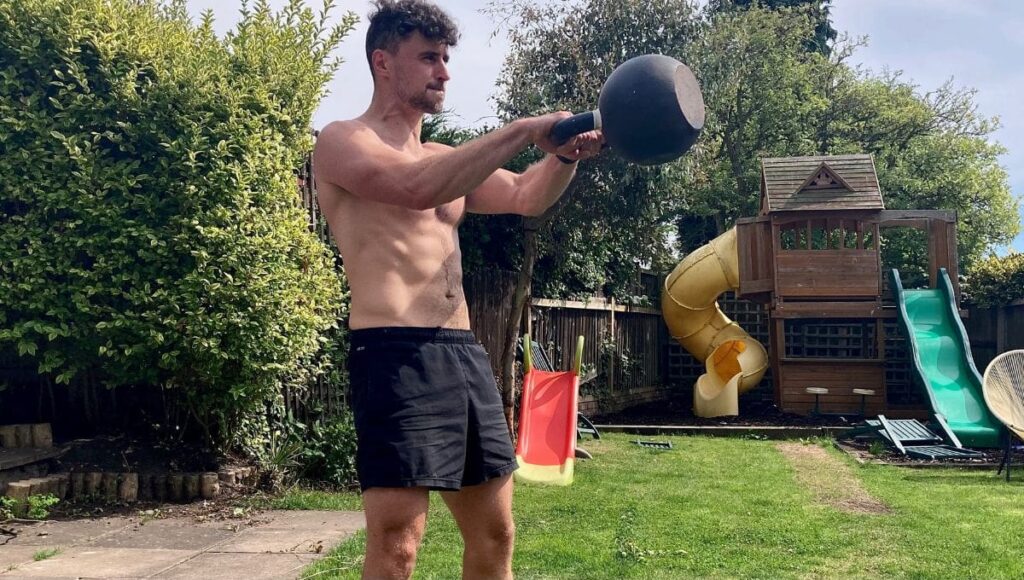
- Kettlebell Swings: Hold a kettlebell with both hands, swing it between your legs while bending at the hips, then thrust your hips forward to swing the kettlebell up to chest height.
- Dumbbell Thrusters: Stand with feet shoulder-width apart, holding dumbbells at shoulder height. Squat down, then explosively stand and press the dumbbells overhead.
- Resistance Band Sprints: Secure a resistance band around a stable post and wear the other end around your waist. Sprint away from the post until the band is taut, then jog back.
Timing and Duration:
- Perform each exercise for 45 seconds, followed by 15 seconds of rest.
- Complete 3-4 rounds of the circuit.
- Target a total workout duration of 20-25 minutes.
3. Advanced Athletic Challenge
- Sprint Intervals: Find a track or open space. Sprint at full effort for 100 meters, then walk back to your starting point for recovery.
- Plyometric Jumps: Perform explosive jumps onto a box or platform, focusing on height and soft landings.
- Medicine Ball Slams: Lift a medicine ball overhead, then slam it down to the ground with full force, squatting to pick it up and repeating.

Timing and Duration:
- Sprint intervals: Sprint for 20 seconds, walk back for recovery, repeat for 10 rounds.
- Plyometric jumps and medicine ball slams: Perform each for 30 seconds, with 30 seconds of rest, for 3-4 rounds each.
- Aim for a workout lasting 25-30 minutes.
4. Core and More
- Warm-Up (3 minutes): Begin with a general warm-up consisting of light jogging or marching on the spot, followed by dynamic stretches focusing on the core and lower back.
- Russian Twists (45 seconds): Sit on the floor with your knees bent, feet lifted slightly off the ground, and lean back at a slight angle. Hold your hands together in front of you and twist your torso to the left, then to the right, engaging your core throughout the movement. Perform for 45 seconds, then rest for 15 seconds.
- Plank Shoulder Taps (45 seconds): Assume a high plank position with your hands directly under your shoulders and your body forming a straight line from head to heels. Tap your left shoulder with your right hand, then place it back on the ground. Repeat with the opposite hand. Keep your core tight and hips as still as possible. Rest for 15 seconds after completing the set.
- Bicycle Crunches (45 seconds): Lie on your back with your hands behind your head, elbows wide. Lift your shoulders off the ground and bring your right elbow towards your left knee, straightening your right leg. Switch sides, mimicking a pedalling motion. Continue alternating sides for 45 seconds, then rest for 15 seconds.
- Side Plank Dips (45 seconds per side): Start in a side plank position on your right side, with your feet stacked and your right forearm directly under your shoulder. Lower your hips towards the floor and then lift them back up, engaging your obliques. Perform for 45 seconds on the right side, rest for 15 seconds, then switch to the left side for another 45 seconds.
Repeat the cycle for a total of 2 rounds, or until the 20-minute session is complete.
Read Also: Best Home HIIT Workout to Lose Belly Fat and Change Your Body
More Info Regarding HIIT: High-Intensity Interval Training
High-Intensity Interval Training (HIIT) offers a multitude of benefits, making it a popular and effective workout choice for many individuals. Here are some key advantages of incorporating HIIT into your fitness routine:
- Efficient Calorie Burn:
- HIIT involves short bursts of intense exercise followed by brief rest periods. This cycle of high intensity and rest increases the overall calorie burn during and after the workout, known as the afterburn or excess post-exercise oxygen consumption (EPOC).
- Time Efficiency:
- HIIT sessions are typically shorter than traditional steady-state cardio workouts while providing comparable or even greater benefits. This time efficiency makes it easier for people with busy schedules to maintain a consistent exercise routine.
- Improved Cardiovascular Health:
- HIIT has been shown to improve cardiovascular health by enhancing heart function, lowering blood pressure, and improving blood vessel elasticity. The intense bursts of activity challenge the cardiovascular system, leading to improved overall heart health.
- Fat Loss and Weight Management:
- The combination of high-intensity efforts and EPOC contributes to increased fat oxidation, making HIIT an effective tool for fat loss and weight management. It helps preserve muscle mass while promoting fat loss, making it particularly valuable for those aiming to improve body composition.
- Metabolic Benefits:
- HIIT can improve insulin sensitivity and glucose regulation, making it beneficial for individuals with or at risk of type 2 diabetes. The intense intervals challenge the body’s energy systems, leading to improved metabolic adaptations over time.
- Preservation of Lean Muscle Mass:
- Unlike some traditional forms of cardio that may lead to muscle loss over time, HIIT has been shown to preserve lean muscle mass. This is crucial for maintaining a healthy metabolism and achieving a toned physique.
- Adaptability:
- HIIT workouts can be adapted to various fitness levels and preferences. Whether you prefer running, cycling, bodyweight exercises, or a combination, HIIT can be customized to suit your individual needs and goals.
- Increased Endurance and Stamina:
- Regular participation in HIIT can lead to improvements in overall endurance and stamina. The alternating intensity levels challenge the body to adapt and become more efficient in oxygen utilization, enhancing overall fitness.
- Variety and Reduced Boredom:
- The versatility of HIIT allows for a wide range of exercises and formats, preventing workout boredom. Mixing up exercises and intervals keeps the routine fresh and engaging, promoting long-term adherence to a fitness program.
- Mental Health Benefits:
- HIIT can provide a mental boost by releasing endorphins, reducing stress levels, and improving mood. The short, intense nature of HIIT can also enhance focus and mental resilience.
It’s important to note that while HIIT offers numerous benefits, it may not be suitable for everyone. Individuals with certain health conditions or those new to exercise should consult with a healthcare professional or fitness expert before incorporating high-intensity interval training into their routine
Related: Best Cardio for Fat Loss
FAQs About HIIT
u003cstrongu003eWhat is HIIT and how does it work?u003c/strongu003e
HIIT, or High-Intensity Interval Training, involves short bursts of intense exercise alternated with low-intensity recovery periods. The idea is to push your body to its limit for a brief time, followed by a short rest, repeated over a session.
u003cstrongu003eWhat are the benefits of HIIT?u003c/strongu003e
HIIT is known for its efficiency, significantly improving cardiovascular fitness, increasing metabolism, aiding in fat loss, and enhancing muscle tone within shorter durations compared to moderate-intensity workouts.
u003cstrongu003eHow long does a typical HIIT workout last?u003c/strongu003e
A session can vary in length but typically lasts between 15 to 30 minutes. Despite its short duration, it’s highly effective due to the intensity of the exercises.
u003cstrongu003eDo I need equipment to do HIIT?u003c/strongu003e
No, you don’t necessarily need equipment to perform HIIT. Many workouts are based on bodyweight exercises like burpees, squats, and push-ups, making them accessible anywhere.
u003cstrongu003eCan beginners do HIIT?u003c/strongu003e
Yes, beginners can do high-intensity interval training, but it’s crucial to start at an appropriate intensity level and gradually increase as fitness improves. Listening to your body and modifying exercises as needed is essential.
u003cstrongu003eHow often should I do HIIT workouts?u003c/strongu003e
It’s recommended to do HIIT workouts 2-3 times a week, allowing adequate recovery between sessions to avoid overtraining and reduce the risk of injury.
u003cstrongu003eIs HIIT effective for weight loss?u003c/strongu003e
Yes, HIIT can be very effective for weight loss. It not only burns a high number of calories during the workout but also increases your metabolic rate for hours after the exercise, known as the afterburn effect.
u003cstrongu003eCan I do HIIT with a medical condition?u003c/strongu003e
If you have a medical condition, it’s important to consult with a healthcare professional before starting any new workout regimen, including high-intensity interval training, to ensure it’s safe for your specific health circumstances.
u003cstrongu003eWhat should I eat before a HIIT workout?u003c/strongu003e
Eating a balanced meal or snack that includes carbohydrates and protein about 1-2 hours before a HIIT workout can provide the energy and muscle support needed for the session.
u003cstrongu003eHow can I prevent injuries during HIIT?u003c/strongu003e
To prevent injuries during high-intensity interval training, ensure proper warm-up and cool-down, focus on maintaining correct form during exercises, choose appropriate workout intensity, and listen to your body to avoid pushing beyond your limits.