Find out why you should be doing the horse stance exercise for as little as 5 minutes weekly to see incredible benefits.
Horse Stance Exercise
The horse stance exercise, also known as Ma Bu, is a fundamental exercise in Chinese martial arts and is widely practised in disciplines such as Kung Fu and Tai Chi. It is a static standing position that helps develop lower body strength, stability, balance, and endurance.
Here’s how to perform the traditional horse stance exercise:
- Start by standing with your feet shoulder-width apart, toes pointing forward.
- Slowly bend your knees, keeping your back straight and upright.
- Lower your body until your thighs are parallel to the ground. Your knees should be directly above your ankles.
- Maintain a stable and balanced position, distributing your weight equally between both legs.
- Keep your torso upright and aligned, with your spine straight and your core engaged.
- Your arms can be positioned in various ways depending on the martial arts style or personal preference. Common arm positions include holding them in front of your chest, placing them on your hips, or extending them outward.
- Hold the horse stance for a specified duration, typically starting with shorter intervals and gradually increasing the time as you build strength and endurance.
- When you’re ready to finish, straighten your legs and stand up slowly.

The horse stance is a physically demanding exercise, particularly for beginners. It is crucial to be attentive to your body, begin with shorter durations, and progressively increase the intensity and duration of the exercise as you build strength and endurance. Maintaining proper form and alignment is essential to prevent strain or injury, so it is highly recommended to learn and practice under the supervision of a qualified instructor.
But why would you want to do the horse stance? For that answer, we turn to Adam Sinicki. Sinicki is known online as “The Bioneer.” He is a health and fitness writer, and a personal trainer and has gathered more than 700k subscribers on his YouTube Channel.
The Incredible Benefits of the Horse Stance Exercise
According to Sinicki, the horse stance can improve anyone’s fitness and how they feel and move, from gymgoers to athletes. The benefits will vary depending on how you perform it, what your goals are and which technique you use.
Performing this exercise regularly will first impact your squat mobility and strength. “I have more flexibility for kicks and for things like Cossack squats and I have less pain and more stability in my lower back, better engagement of the core and the glutes,” Sinicki explains.
Other benefits listed by the Bioneer are opening up the hips, strengthening the abductors, stretching the adductors, and developing strength endurance in the glutes, hamstrings, tendons, quads and core.
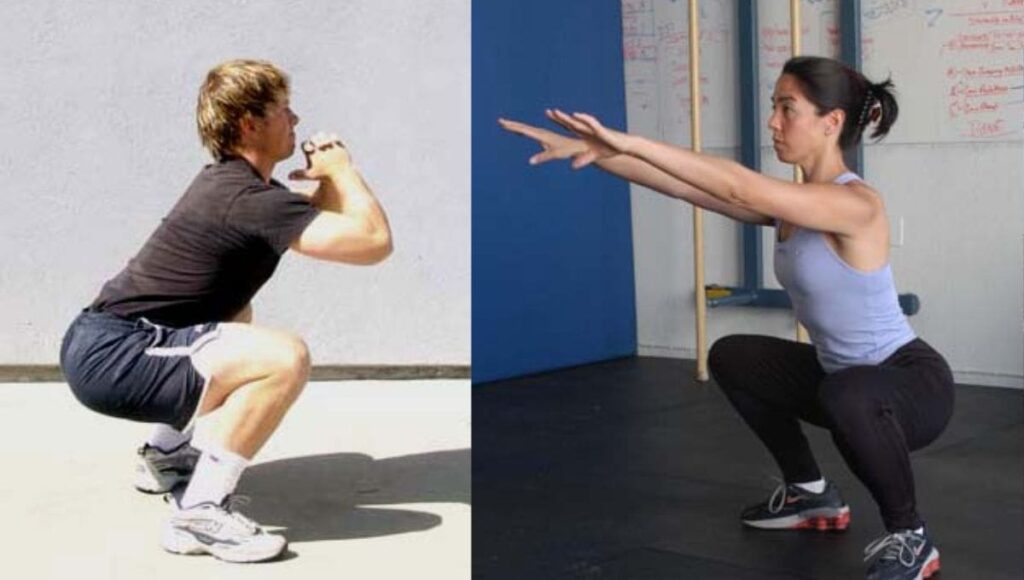
Sinicki explains different ways of doing the horse stance and which one is best for you. If you are just starting out, try to get 30 seconds in the correct position about 3 times a week and over time you will find it gets easier. Aim to add 10 seconds every other week.
He also talked about different goals for anyone who wants to add the horse stance exercise to their training routine and how to apply their mind to it. See it all in the video below.
Video of Horse Stance Exercise
How to Build Strength and Mobility at the Same Time
How to Build Explosive Power for Weightlifting and Functional Fitness
The horse stance is an isometric hold exercise. Isometric holds, also known as isometric exercises, are exercises where you hold a static position without any movement. These exercises offer several benefits for overall strength, stability, and muscular development. Here are some of the key benefits of isometric holds:
- Increased Strength: Isometric holds can help build strength by activating and engaging multiple muscle groups simultaneously. By maintaining a static position against resistance, you are effectively challenging your muscles, leading to strength gains.
- Improved Muscular Endurance: Isometric holds require you to sustain muscle contraction over an extended period. This helps improve muscular endurance, allowing you to hold positions or perform activities for longer durations without fatigue.
- Enhanced Stability and Balance: Isometric exercises engage your core muscles and promote stability and balance. By holding static positions, you develop a strong foundation and improve control over your body’s alignment.
- Joint Strength and Stability: Isometric holds help strengthen the muscles surrounding your joints, contributing to improved joint stability. This can be particularly beneficial for injury prevention and rehabilitation.
- Time Efficiency: Isometric holds can be an efficient way to incorporate strength training into your routine, as they can be done quickly and do not require extensive equipment or space.
- Plateau Breaking: Isometric exercises can be used to break through strength plateaus. By introducing a new type of training stimulus, isometric holds can challenge your muscles in a different way, helping you overcome performance plateaus.
- Accessibility: Isometric holds can be modified to suit various fitness levels and abilities. You can adjust the intensity of the exercise by altering the duration of the hold or the angle of the position, making them accessible to individuals with different levels of fitness or physical limitations.
Remember to perform isometric exercises with proper form and alignment to maximize their benefits and reduce the risk of injury. As with any exercise program, it is advisable to consult with a healthcare professional or a qualified fitness instructor before starting a new regimen.
The Mindset Trick That Will Get You Fit Forever
Top Fat-Burning Conditioning Workouts
7 Ways to Boost Metabolism and Burn Calories According to Science
FAQ: Horse Stance Exercise
What is the horse stance exercise?
The horse stance, also known as Ma Bu, is a fundamental exercise in various martial arts disciplines, including Kung Fu and Tai Chi. It involves standing with your feet wider than shoulder-width apart and knees bent, mimicking the posture of sitting on a horse.
What muscles does the horse stance target?
The horse stance primarily targets the muscles of the lower body, including the quadriceps, hamstrings, glutes, and adductors. It also engages the core muscles for stability and balance.
What are the benefits of the horse stance exercise?
The benefits of the horse stance include improved lower body strength, increased endurance, enhanced balance and stability, better posture, and greater mental focus and discipline.
How long should I hold the horse stance?
Beginners should start by holding the stance for 30 seconds to 1 minute, gradually increasing the duration as their strength and endurance improve. Advanced practitioners may hold the stance for several minutes.
Are there any variations of the horse stance?
Yes, there are variations such as the high horse stance, low horse stance, and moving horse stance, each offering different levels of intensity and focus on various muscle groups.
Can the horse stance help with flexibility?
While the horse stance primarily focuses on strength and endurance, it can also improve flexibility in the hips and legs due to the wide stance and deep knee bend.
How do I ensure proper form while performing the horse stance?
To ensure proper form, keep your back straight, feet wider than shoulder-width apart, knees bent at a 90-degree angle (or as low as comfortable), and thighs parallel to the ground. Engage your core and avoid leaning forward or arching your back.
Can the horse stance be integrated into a workout routine?
Yes, the horse stance can be incorporated into various workout routines as a warm-up, strength-building exercise, or static hold to improve endurance. It is often used in martial arts training and can complement other lower body exercises.
Is the horse stance suitable for everyone?
While generally safe, individuals with knee, hip, or lower back issues should consult with a healthcare professional or fitness instructor before incorporating the horse stance into their routine. Proper form and gradual progression are crucial to avoid injury.
What are some common mistakes to avoid when performing the horse stance?
Common mistakes include allowing the knees to collapse inward, leaning forward, arching the back, not engaging the core, and not maintaining a parallel position of the thighs to the ground. Focus on maintaining proper alignment and form to maximize benefits and prevent injury.