Ever asked yourself how many squats per day you need to build muscle? You’re not alone! Many fitness enthusiasts dive into this question, whether they’re just starting out or already deep into their fitness journey. Let’s break it down step by step, from beginner strategies to advanced techniques, so you can max out your muscle gains.
Why Squats Matter: The Basics
- Targets multiple muscle groups
- Improves core strength and stability
- Boosts functional strength for everyday activities
Squats are often considered the king of lower body exercises—and for good reason. They work your glutes, quads, hamstrings, and even your core. But to get results, the number of squats you do, your form, and your progression strategy are crucial.
The information below is based on a video shared by YouTube channel Fitnessdy.
For Beginners: Start Simple
If you’re just starting your fitness journey, less is often more. Jumping headfirst into intense routines can lead to burnout or injury, which is why it’s crucial to ease into squats gradually. Aiming for 20 to 30 squats per day is the ideal approach to begin building a solid foundation. Why this range? It’s enough to stimulate your muscles without overwhelming them, promoting strength and muscle memory.
Why Start with Just Bodyweight?
At the beginning, mastering the correct form is more important than anything else. Using bodyweight alone allows you to focus on technique without the distraction of managing weights. A common beginner’s mistake is to rush through the reps, which can compromise form and lead to knee pain or back issues. Here’s what you should keep in mind:
- Back alignment: Use a wall or a yoga stick for support to keep your spine neutral.
- Knee tracking: Your knees should stay in line with your toes—no inward collapsing!
- Depth: Go as low as your mobility allows, ideally aiming for your thighs to be parallel with the floor.
These 20 to 30 daily reps will help build a strong mind-to-muscle connection, which is crucial for long-term progress. This phase is all about teaching your body the movement pattern so that it becomes second nature. Plus, with just bodyweight squats, you’re less likely to experience muscle soreness, which can be demoralising when you’re just getting started. Instead, you’ll build basic posterior chain strength and be ready to take things up a notch within a few weeks.ld posterior chain strength safely. And don’t worry, it’ll feel “easy” before long.

Progression: Adding Resistance
After a few weeks, when your heart’s not racing and your legs feel like they could handle more, it’s time to level up. To maximise muscle gains, you’ll want to enter the hypertrophy range: 6 to 12 reps per set across three to five sets.
Add resistance:
- Hold a dumbbell or kettlebell.
- Use resistance bands.
- Gradually increase the weight over time (hello, progressive overload!).
Remember, squats won’t be an everyday affair anymore. Heavy squats require at least one rest day in between sessions, so aim for three to four days of leg work per week.
300 Squats Every Day for 30 Days – What Happens to your Body?
Building Strength: Heavier, Fewer Reps
Once you’ve got the basics down and bodyweight squats feel like a walk in the park, it’s time to step things up with strength training. This phase is where the magic of muscle building starts to happen. While hypertrophy focuses on moderate weights with higher reps, strength training shifts towards heavier weights with lower reps—typically three to six reps per set.
Why Train for Strength?
When you lift heavier weights for fewer reps, you’re pushing your muscles to their absolute limit. This stress forces your muscle fibres to adapt, resulting in increased strength over time. It’s about teaching your muscles to work harder, not just longer. Think of it this way: if hypertrophy is about building size, strength training is about building power.
Form Over Everything
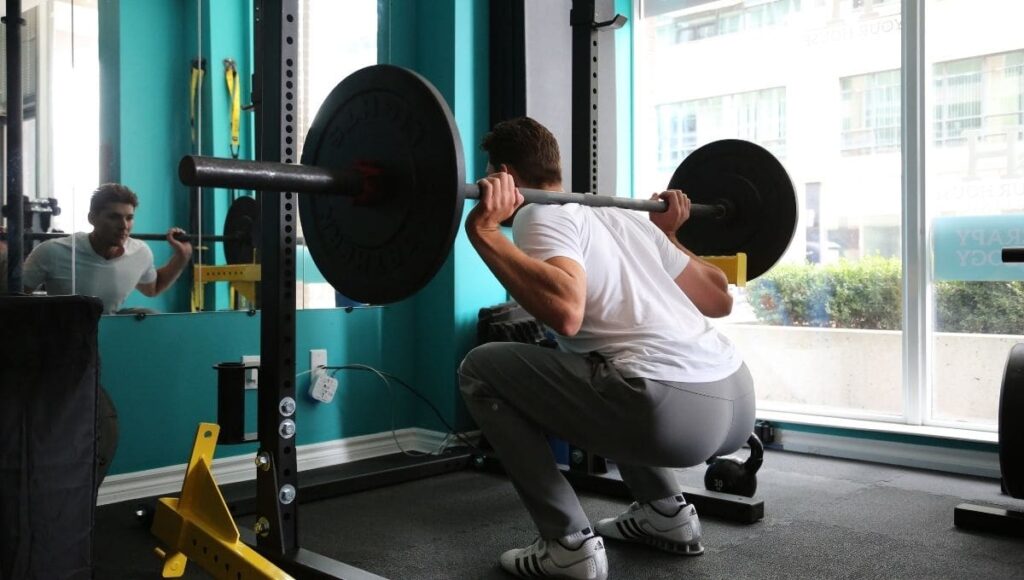
With heavier weights, maintaining perfect form is non-negotiable. Sloppy technique can lead to injuries that sideline your progress for weeks or even months. Here are some tips to maintain good form:

- Core engagement: Your core should be as tight as a drum. This stability protects your lower back.
- Controlled descent: Lower yourself slowly to stay in control. No dropping down and “bouncing” up; that’s asking for knee trouble.
- Spot checks: Use a mirror, record your form, or even better, get feedback from a training partner.
Incorporating Strength Phases
If your goal is to build both size and strength, alternate between hypertrophy (6-12 reps) and strength phases (3-6 reps). This could mean focusing on strength training for a month, then switching to a higher rep range the next. Alternatively, you can combine both in one workout, starting with heavy lifts and ending with a burnout set. This variety keeps your muscles guessing and optimises your training for size and strength.
Some advanced lifters prefer combining sets, like starting with a warm-up set of 10 reps and ending with a 20-rep burnout set to really torch the muscles.
How to Grow Juicy Thighs for Stronger Squats
Are Daily Squat Challenges Effective?
You’ve likely seen it: the “100 squats a day for 30 days” challenge. These high-repetition challenges look intense and promise quick results, which makes them appealing, especially to beginners or those short on time. But the big question is, are they effective for building muscle?
Pros and Cons of Daily Challenges
Daily squat challenges do have their perks. For beginners, they can be a great way to build a routine and develop basic muscle endurance. Repeatedly performing high reps can enhance your muscle tone and even give your cardiovascular system a decent workout.
Advantages:
- Builds consistency: Committing to daily activity creates a strong fitness habit.
- Boosts endurance: High reps can improve muscle stamina.
- Minimal equipment needed: Bodyweight squats make these challenges accessible for anyone, anywhere.
However, there’s a major drawback when it comes to real muscle growth. To stimulate muscle hypertrophy effectively, you need progressive overload, which these challenges often lack. Doing the same number of squats with the same resistance (bodyweight) every day can plateau your progress. Your muscles need to be consistently challenged to grow, which typically means adding more weight or varying your rep range.
Limitations:
- No progressive overload: Your muscles adapt quickly, and without added resistance, growth slows down.
- Risk of overuse injuries: Repetitive movement without rest can strain joints and tendons.
- Limited to muscle endurance: High reps are more beneficial for endurance than actual muscle size and strength.
5 Types of Squats for Incredible Lower Body Strength and Attractive Legs and Glutes
Who Should Try Them?
Daily squat challenges can be effective as a short-term boost, especially for beginners or those with limited time and equipment. They can complement your main training programme but shouldn’t replace it. If your aim is serious muscle growth, rely on a structured plan that incorporates varied rep ranges, resistance, and proper rest days.n to try, but don’t let them replace your main training programme.
Use daily challenges as a stepping stone to build consistency, but don’t make them your main game plan. True progress comes from a balanced routine that includes progressive overload, rest, and a focus on both hypertrophy and strength phases.
Rest and Nutrition: The Unsung Heroes

Here’s the reality: muscles grow when you rest. The tiny tears created during a workout repair themselves, leading to bigger, stronger muscles. Skipping recovery can slow your progress or, worse, lead to injury.
Takeaways:
- Schedule 1-2 rest days per week.
- Protein is crucial—it’s the building block for muscle repair.
- Don’t forget those carbs! They fuel your workouts and help replenish energy stores.
Now it’s your turn! How many squats are you aiming for each day? Remember, smart training and recovery trump sheer volume every time.
The Ultimate Guide to Mastering the Deep Squat: Benefits, Techniques, and Common Mistakes