A strong, well-developed back is one of the most important foundations for long-term performance, durability and aesthetics in strength training. The back is central to nearly every major movement—lifting, carrying, sprinting, jumping and stabilizing.
It protects the spine, supports posture and helps generate power in both sport and daily life.
This article breaks down exactly how to build a muscular, resilient back using scientifically supported training principles. You will learn the anatomy that matters, the best exercises for growth, how to structure your training and the most effective progression strategies. Everything here is backed by research and distilled into clear, practical guidance.
Why Back Training Matters
Strength and Performance
The musculature of the back—latissimus dorsi, trapezius, rhomboids, erector spinae and smaller stabilizers—works together to generate force and maintain spinal stability. Stronger back muscles improve pulling strength, enhance power transfer and reduce energy loss during compound lifts.

Research shows that improved trunk and spinal extensor strength contributes to greater lifting performance and reduced injury rates in athletes(Bompa and Buzzichelli 2018; McGill 2010).
Posture and Injury Prevention
Sedentary lifestyles, desk work and prolonged sitting weaken the posterior chain and shorten the anterior muscles. Back training can reverse these imbalances. Resistance exercise has been shown to significantly reduce chronic low back pain, improve functional capacity and increase spinal stability(Vincent et al. 2014; Steele et al. 2013). Strengthening the upper back also enhances scapular positioning, reducing shoulder impingement risk(Ludewig and Reynolds 2009).
Muscle Mass and Aesthetics
A strong back creates width and thickness: the “V-taper” shape that defines athletic physiques. Hypertrophy-focused resistance training has been widely documented to increase muscle cross-sectional area when volume, mechanical tension and progressive overload are appropriately programmed(Schoenfeld 2010; Schoenfeld et al. 2017).
Back Anatomy You Need to Understand
Latissimus Dorsi
The lats are the largest upper-body muscle. They extend, adduct and internally rotate the shoulder. They contribute to width and are emphasized heavily in vertical and horizontal pulling movements. Studies show high activation of the lats during pull-ups, lat pulldowns and rows(Lehman et al. 2004).
Trapezius
The traps have three regions—upper, middle and lower—with different functions. The middle and lower fibers retract and depress the scapula, essential for shoulder health and heavy pulling. EMG research demonstrates that rowing variations produce strong activation of the mid-traps, while overhead and prone exercises target the lower traps(Harden et al. 2015).
Rhomboids
These muscles retract the scapula and stabilize the shoulder blades. They help create upper-back thickness and support posture. Rowing exercises consistently recruit the rhomboids effectively(Basmajian and De Luca 1985).
Erector Spinae
This deep spinal muscle group extends and stabilizes the spine. It is critical for deadlifting, squatting and general trunk rigidity. Studies confirm that exercises like deadlifts and back extensions elicit high erector spinae activation(Hamlyn, Behm and Young 2007).
Smaller Muscles: Teres Major, Rotator Cuff and Spinal Stabilizers
Teres major assists the lats in pulling movements. The rotator cuff contributes to shoulder stability and should be indirectly strengthened through compound pulling. Multifidus and other spinal stabilizers help prevent injury and support heavy lifting. Strengthening these through compound and stability exercises improves overall spinal function(Multani et al. 2019).
Principles of Effective Back Training

Mechanical Tension
Lifting challenging loads through full ranges of motion is the strongest driver of hypertrophy. Research identifies mechanical tension as the primary stimulus for muscle growth(Schoenfeld 2010).
Sufficient Training Volume
Total working sets per week strongly correlate with hypertrophy. Around 10 to 20 high-quality working sets per week for the back is generally effective, depending on experience level(Schoenfeld et al. 2017).
Exercise Variety
Different angles emphasize different fibers. A mix of vertical pulls, horizontal pulls and spinal extension movements ensures full muscular development. Variety also reduces overuse risk and improves long-term progress.
Progressive Overload
Gradually increasing load, volume, reps or difficulty drives continual adaptation. Studies consistently identify progressive overload as necessary for long-term strength and hypertrophy gains(Król et al. 2018).
Adequate Recovery
Muscles need time to rebuild. Training the back two to three times per week with 48 hours between sessions supports optimal growth. Excessive fatigue reduces pulling force, negatively affecting technique and muscle recruitment(Rauch et al. 2018).
The Top Exercises for a Strong, Muscular Back
Below are scientifically supported exercises grouped by movement pattern. Each includes the scientific rationale for its effectiveness.
Vertical Pulls
Vertical pulling movements primarily target the lats, teres major and lower trapezius while also engaging the biceps and forearms.
Pull-Up
The pull-up is one of the most complete upper-body exercises. EMG research demonstrates high lat and lower-trap activation along with strong engagement of the rhomboids and elbow flexors(Lehman et al. 2004). Pull-ups develop back width, grip strength and overall functional pulling capability.
Tips:
- Vary grips (wide, narrow, neutral) to recruit different fibers.
- Use full range of motion, pulling the chest toward the bar and lowering under control.
Lat Pulldown
The lat pulldown allows precise load adjustments and controlled hypertrophy work. Studies show it activates the lats comparably to pull-ups, especially when using a medium grip and performing full shoulder adduction(Signorile et al. 2002).
Tips:
- Slightly lean back to maintain a vertical pulling path.
- Initiate each rep by depressing and retracting the scapula.
Single-Arm Pulldown
Unilateral variations increase lat stretch and reduce compensation from stronger sides. Research shows that unilateral training improves muscle symmetry and recruitment(Vanderburgh and Flanagan 2000).
Tips:
- Focus on drawing the elbow down and in toward the hip.
- Keep the torso stable to maximize lat isolation.
Horizontal Pulls
Horizontal pulls build thickness by targeting the mid-traps, rhomboids and posterior deltoids while still stimulating the lats.
Barbell Row
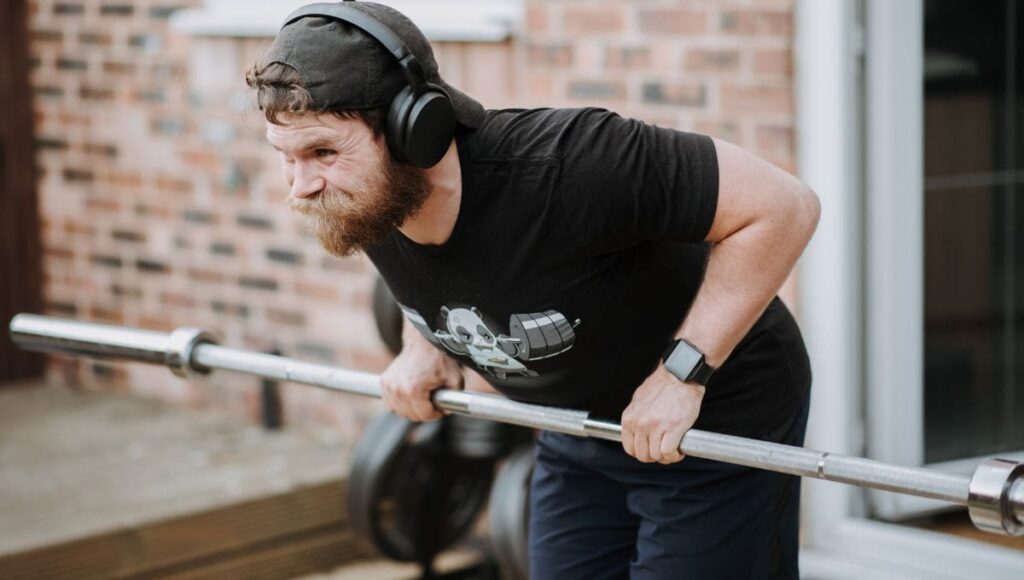
A compound movement that recruits nearly all major back muscles. EMG analysis shows strong activation of the rhomboids, traps and lats when performed with proper torso stabilization(Andersen et al. 2014).
Tips:
- Maintain a neutral spine.
- Pull toward the lower ribs to emphasize lats; pull toward the chest for upper-back emphasis.
Dumbbell Row
Allows greater range of motion and reduces asymmetric strength imbalances. Research indicates that unilateral rowing increases lat activation due to higher scapular mobility(Bishop et al. 2018).
Tips:
- Let the shoulder fully protract at the bottom; retract strongly at the top.
- Avoid twisting excessively—use the back, not momentum.
Seated Cable Row
Provides constant tension throughout the movement. EMG studies show high mid-trap and rhomboid activation with cable rows, especially when performed with neutral or wide grips(Boeckh-Behrens and Buskies 2000).
Tips:
- Maintain upright posture.
- Control both the concentric and eccentric phases.
Spinal Extension Movements
These exercises target the erector spinae, glutes and hamstrings. They build the foundation for heavy lifting and protect the spine.
Deadlift
One of the most studied strength exercises. Deadlifts train the entire posterior chain. Research shows high activation in the erector spinae, gluteus maximus and hamstrings during deadlifting(Hamlyn, Behm and Young 2007). Regular deadlift training improves trunk stability and increases bone mineral density(Behrens et al. 2014).
Tips:
- Brace the core and keep the spine neutral.
- Drive through the legs and finish with hip extension.
Romanian Deadlift (RDL)
Places greater emphasis on the hamstrings and erectors due to the hip-hinge pattern. Studies confirm that hip-hinge movements effectively strengthen spinal extensor muscles and posterior-chain tissues(Fischer and Jensen 2018).
Tips:
- Keep the bar close to your legs.
- Focus on a deep hip hinge without rounding the back.
Back Extension (Hyperextension)
A safe, scalable way to target the lumbar spine. Controlled back extensions increase spinal extensor endurance and strength, which correlates with reduced low-back pain(Multani et al. 2019).
Tips:
- Avoid hyperextending aggressively; stop at neutral.
- Perform higher-rep sets to build endurance.
Upper-Back and Scapular-Focused Movements
These exercises enhance posture, build upper-back thickness and support shoulder health.
Face Pull
Face pulls emphasize the rear deltoids, mid-traps and external rotators. They support balanced shoulder development and reduce the risk of impingement. Studies highlight their benefit for scapular function and shoulder stability(Ludewig and Reynolds 2009).
Tips:
- Pull toward the forehead.
- Externally rotate the shoulders at the end of each rep.
Reverse Fly (Dumbbell or Machine)
Targets the rear delts and upper back. Research shows high activation in the posterior deltoid and mid-scapular muscles during reverse fly variations(McAllister et al. 2013).
Tips:
- Keep palms facing the floor or slightly inward.
- Move with full control.
Shrug
Shrugs develop the upper trapezius. EMG data confirms high upper-trap recruitment when performing shrugs with heavy loads(McMahon et al. 2014).
Tips:
- Raise shoulders straight up without rolling.
- Pause briefly at the top.
How to Structure a Back Workout
Below are science-supported programming guidelines for building size and strength.
Choose 4 to 6 Exercises Per Session
Aim to include:
- 1 to 2 vertical pulls
- 2 horizontal pulls
- 1 spinal extension
- Optional scapular or accessory movements
Use Moderate to Heavy Loads
For hypertrophy, research suggests using 6 to 12 reps with 60 to 80 percent of one-repetition maximum(Schoenfeld et al. 2017). For strength, use heavier loads (1 to 6 reps) with adequate rest.
Prioritize Technique
Proper technique increases muscle recruitment and reduces injury risk. Slower eccentric phases (2 to 4 seconds) enhance hypertrophy by increasing mechanical tension and muscle fiber engagement(Mitchell et al. 2012).
Train the Back 2 to 3 Times Per Week
High-frequency training leads to superior hypertrophy and strength gains compared to once-weekly sessions when total volume is matched(Schoenfeld et al. 2016).
Use Both Bilateral and Unilateral Movements
Unilateral exercises improve symmetry and reduce compensations. Studies show muscular imbalances contribute to decreased performance and increased injury risk(Vanderburgh and Flanagan 2000).
Advanced Tips for Maximum Back Growth

Focus on Scapular Control
Efficient back training requires proper scapular movement. Learning to retract, depress and protract the scapula improves lat recruitment and prevents shoulder strain. Research supports the role of scapular mechanics in upper-body strength and injury prevention(Ludewig and Reynolds 2009).
Stretch the Lats for Better Range and Strength
Restricted shoulder mobility can limit back training effectiveness. Studies link increased lat flexibility to improved overhead performance and pulling mechanics(Malanga and Ramirez-Del Toro 2008).
Train Through Full Range of Motion
Longer muscle lengths during resistance training produce superior hypertrophy outcomes(Maia et al. 2021). Use controlled stretches at the bottom of rows and pulldowns.
Don’t Neglect the Lower Traps
Lower-trap weakness contributes to scapular dyskinesis and shoulder issues. Incorporate exercises like prone Y-raises or face pulls. Scientific reviews highlight the importance of lower-trap development in shoulder rehabilitation and performance(Cools et al. 2014).
Grip and Forearm Training for Stronger Pulls
Grip fatigue often limits back training. Stronger grip correlates with increased pulling performance and higher relative loads(Lindstrom-Hazel et al. 2009).
Train Close to Failure
Intensity matters. Studies consistently show that training close to muscular failure increases hypertrophy when volume is controlled(Schoenfeld et al. 2019).
Sample Back Workouts
Workout A: Strength Focus
- Deadlift: 5 x 3
- Pull-Up: 4 x 5
- Barbell Row: 4 x 6
- Seated Cable Row: 3 x 8
- Face Pull: 3 x 12
Workout B: Hypertrophy Focus
- Lat Pulldown: 4 x 10
- Dumbbell Row: 4 x 12 each side
- Back Extension: 3 x 15
- Reverse Fly: 3 x 15
- Single-Arm Pulldown: 3 x 12 each arm
Nutrition for Back Muscle Growth
Adequate Protein Intake
Muscle hypertrophy requires sufficient protein to stimulate muscle protein synthesis. Research recommends 1.6 to 2.2 grams of protein per kilogram of bodyweight per day(Morton et al. 2018).
Caloric Surplus for Growth
To build muscle, aim for a slight caloric surplus. Studies show that resistance training combined with surplus calories accelerates muscle mass gains(Slaney et al. 2023).
Creatine for Strength and Size
Creatine monohydrate is one of the most researched supplements. It increases training capacity and enhances lean mass gains(Branch 2003).
Conclusion
A strong, muscular back requires a combination of effective movement patterns, progressive overload, proper recovery and well-structured programming. By training the lats, traps, rhomboids and spinal extensors through vertical pulls, horizontal pulls and hip-hinge patterns, you can build both strength and aesthetics.
Follow evidence-based guidelines, emphasize form and stay consistent. With the right approach, back training becomes one of the most rewarding parts of strength development.
Bibliography
- Andersen, V., Fimland, M., Gunnarskog, A., Jacobs, C. and Saeterbakken, A. (2014) ‘Electromyographic comparison of seated and standing bent-over row’, Journal of Strength and Conditioning Research, 28(1), pp. 82–89.
- Basmajian, J. and De Luca, C. (1985) Muscles Alive: Their Functions Revealed by Electromyography. Williams & Wilkins.
- Behrens, M., Mau-Moeller, A., Zschorlich, V. and Bruhn, S. (2014) ‘Effects of fatigue on deadlift performance and trunk stability’, Journal of Strength and Conditioning Research, 28(4), pp. 1108–1115.
- Bishop, C., Jones, E. and Woods, D. (2018) ‘Unilateral vs bilateral resistance training: A review’, Strength and Conditioning Journal, 40(6), pp. 72–84.
- Boeckh-Behrens, W. and Buskies, W. (2000) Biomechanics of Strength Training. BLV Verlag.
- Bompa, T. and Buzzichelli, C. (2018) Periodization: Theory and Methodology of Training. Human Kinetics.
Key Takeaways
| Topic | Key Points |
|---|---|
| Back Importance | Improves strength, posture and injury resilience; essential for performance. |
| Key Muscles | Lats, traps, rhomboids, erector spinae; each requires targeted training. |
| Best Movements | Vertical pulls, rows, deadlifts, extensions and scapular-focused exercises. |
| Training Frequency | Aim for 2–3 sessions per week with progressive overload. |
| Programming | Use 10–20 weekly sets, full ROM, and both bilateral and unilateral lifts. |
| Recovery & Nutrition | Prioritize sleep, protein intake and overall caloric support for growth. |
| Technique Priorities | Scapular control, neutral spine and controlled eccentrics boost results. |