This workout routine will help you to build muscle by training 3 times a week using an upper lower split program.
What is Hypertrophy?
Hypertrophy is simply the increase in size of an organ or tissue through the enlargement of the cells that comprise it.
A hypertrophy program — such as this upper lower split program — is designed not to increase strength or improve athletic performance (although there is an overlap, of course), but to primarily cause muscular growth by increasing the size of your muscle fibers.
Remember, this plan is not designed to improve strength or power. This program is strictly for the purpose of gaining serious muscle size.
Use this plan for 6 – 8 weeks, than change in order to stop the muscles getting too used to a certain workload.
This one is a killer. You do not use heavy weights, but you won’t need them.
Upper Lower Split – Week 1
- Monday: Upper Body A Workout
- Tuesday: off
- Wednesday: Lower Body A Workout
- Thursday: off
- Friday: Upper Body B Workout
- Saturday: off
- Sunday: off
Upper Lower Split – Week 2
- Monday: Lower Body B Workout
- Tuesday: off
- Wednesday: Upper Body A Workout
- Thursday: off
- Friday: Lower Body A Workout
- Saturday: off
- Sunday: off
UPPER LOWER SPLIT TO BUILD MUSCLE: WORKOUTS
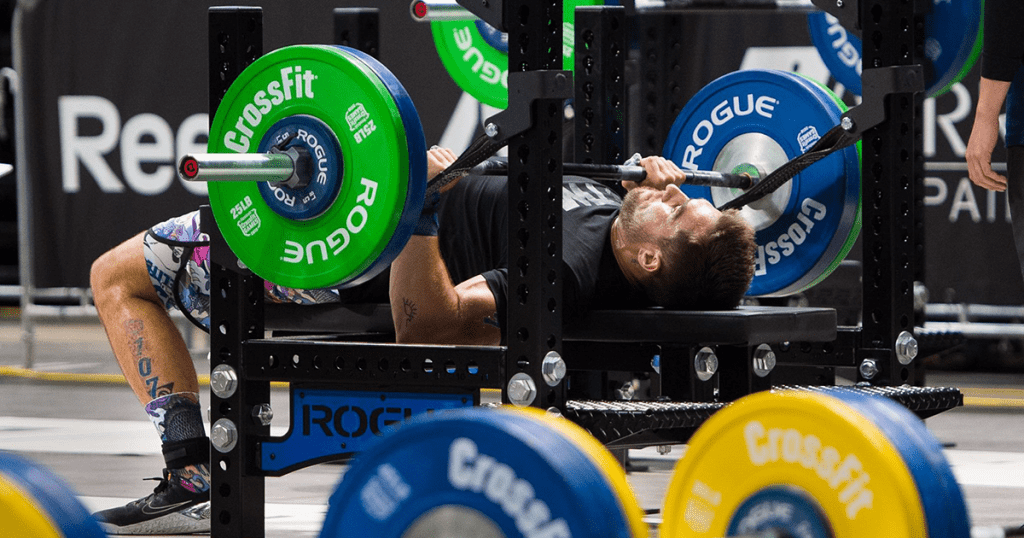
Upper Body A
- Bench Press
3 sets of 6-8 reps.
2-3 minutes rest between sets. - Rows
3 sets of 6-8 reps.
2-3 minutes rest between sets. - Incline Dumbbell Press
3 sets of 8-10 reps.
1-2 minutes rest between sets. - Lat Pull-Downs
3 sets of 8-10 reps.
1-2 minutes rest between sets. - Lateral Raises
2 sets of 10-15 reps.
1 minute rest between sets. - Triceps Pushdowns
3 sets of 10-12 reps.
1 minute rest between sets. - Dumbbell Curls
2 sets of 12-15 reps.
1 minute rest between sets.
Build Muscle: Lower Body A
- Romanian Deadlifts
3 sets of 6-8 reps.
2-3 minutes rest between sets. - Leg Press
3 sets of 10-12 reps.
1-2 minutes rest between sets. - Seated Leg Curls
3 sets of 8-10 reps.
1-2 minutes rest between sets. - Standing Calf Raises
4 sets of 6-8 reps.
1-2 minutes rest between sets. - Abs
x sets of 8-15 reps.
1 minute rest between sets.
Build Muscle: Upper Body B
- Pull-Ups
3 sets of 6-8 reps.
2-3 minutes rest between sets. - Barbell Shoulder Press
3 sets of 6-8 reps.
2-3 minutes rest between sets. - Seated Cable Row
3 sets of 8-10 reps.
1-2 minutes rest between sets. - Dumbbell Bench Press
3 sets of 8-10 reps.
1-2 minutes rest between sets. - Dumbbell Flyes
2 sets of 10-15 reps.
1 minute rest between sets. - Barbell Curls
3 sets of 10-12 reps.
1 minute rest between sets. - Skull Crushers
2 sets of 12-15 reps.
1 minute rest between sets.
The Muscle Building Workout Routine: Lower Body B
- Squats
3 sets of 6-8 reps.
2-3 minutes rest between sets. - Split Squats
3 sets of 8-10 reps.
1-2 minutes rest between sets. - Lying Leg Curls
3 sets of 10-12 reps.
1-2 minutes rest between sets. - Seated Calf Raises
4 sets of 10-15 reps.
1-2 minutes rest between sets. - Abs
x sets of 8-15 reps.
1 minute rest between sets.
For each exercise, you should use the same weight each set. Meaning, if it says to do 3 sets of an exercise, you’d use the same weight on all 3 sets. For example…
- Right Way: 100lbs, 100lbs, 100lbs.
- Wrong Way: 95lbs, 100lbs, 105lbs.
When you are able to lift a given weight for the amount of sets and reps that are prescribed for that exercise, you’d then increase the weight by the smallest possible increment the next time you do that exercise.
Strength and muscle building can help and support the other. You can hardly build strength without muscle, just as you can’t build muscle without strength. But still there are differences.
When we talk about hypertrophy, it is important to remember that everybody is different. Two people can be on the exact same program and experience different results. However the underlying principles of hypertrophy, like strength training, are universal.
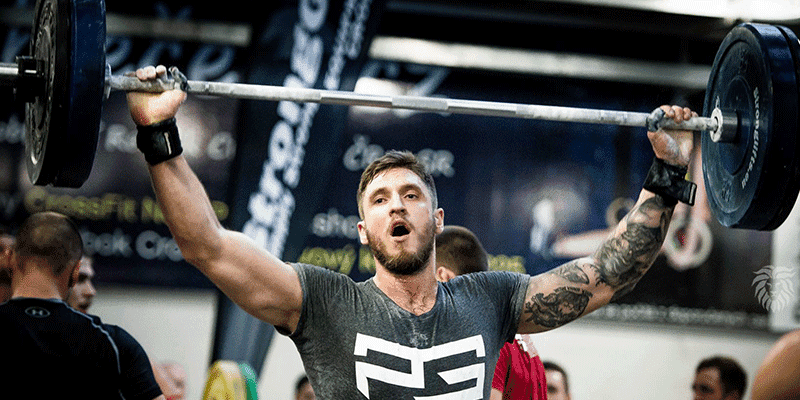
Some athletes get jacked using bodyweight movements, or just by looking at the weights, whilst others have to work twice as hard to put on the same amount of muscle.
You can choose to follow the practices of the biggest guy or fittest female in the gym, but the methods that work for them might not work at all for you. Once you understand the principles then you can adapt and apply the right methods in order to find the best way for you.
An upper/lower body split is a popular strength training routine where training sessions are divided into upper body (chest, back, shoulders, arms) and lower body (quads, hamstrings, glutes, calves). One advantage is balanced muscle development, since you can dedicate more volume and intensity to each muscle group, ensuring no area is neglected.
It also allows flexible training frequency, typically done four days per week but adaptable for three to six depending on recovery and goals, which lets you train each muscle group multiple times weekly for optimal strength and hypertrophy.
Recovery is more efficient because while the upper body recovers you can train the lower body, and vice versa, reducing overtraining risk and maximizing growth. It supports strength progression as compound lifts like bench press, squats, deadlifts, overhead press, and pull-ups fit naturally into the structure, making it easier to apply progressive overload without rushing.
The split is also time efficient since workouts usually last around an hour, letting you push intensity without making sessions too long. Finally, it works well for both beginners and intermediates, giving beginners frequent practice with key lifts and allowing intermediates to increase training volume while maintaining enough frequency.
In summary, an upper/lower split balances strength and hypertrophy goals, allows for good recovery, and is flexible for various schedules, often considered the sweet spot between full-body training and body part splits.