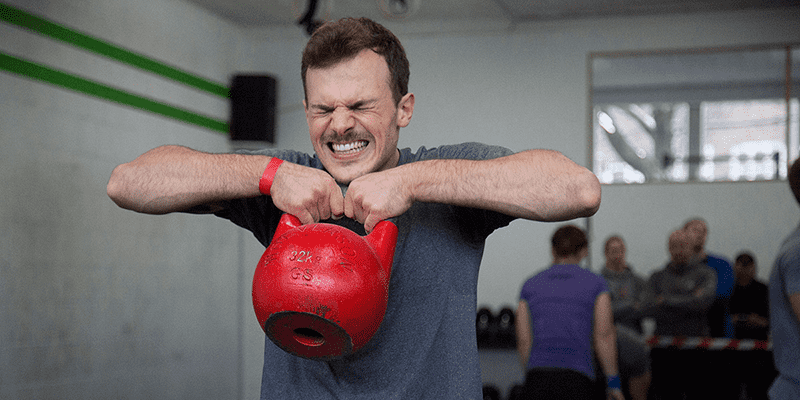
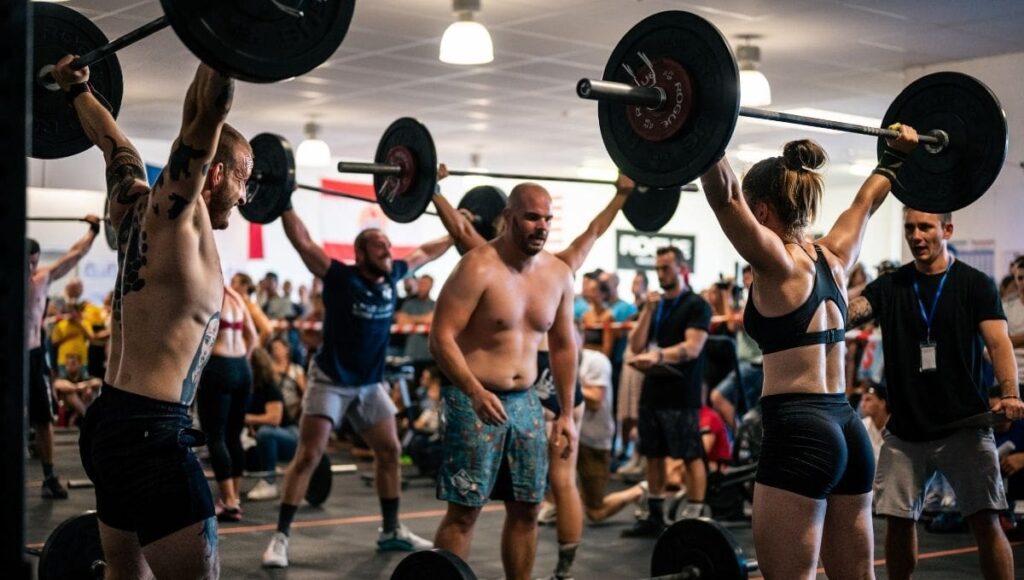
Proximity to failure significantly impacts both strength and hypertrophy gains. If you consistently misjudge your repetitions in reserve (RIR), you might hinder your progress. Over the past decade, autoregulation and RIR have gained prominence over traditional fixed one-repetition maximum (1RM) recommendations. This shift emphasises the ability to accurately predict RIR, which is essential for effective training.
This article delves into the scientific literature on correctly predicting your repetitions in reserve to situate your performance and strength outcomes. The information is largely based on a research review explained by Dr Pak Androulakis-Korakakis on the website Stronger By Science.
Dr. Pak Androulakis-Korakakis, a bodybuilder, is recognized for his impressive physique and contributions to the fitness community. He has gained prominence through social media, sharing his bodybuilding journey, workout routines, and dietary advice. Dr. Pak combines his medical knowledge with his fitness expertise, providing unique insights into health and muscle development.
Traditionally, strength and hypertrophy programming focused on fixed percentages of 1RM, often leading to extreme effort regardless of readiness or fatigue levels. Programs like Stronglifts 5×5 did not consider proximity to failure, simply instructing weight increases each week. Hypertrophy routines were even vaguer, assuming all sets should be challenging without explicit guidance on failure.

The lack of consensus on the relationship between proximity to failure and gains added to the confusion. Different training philosophies either advocated for frequent failure or recommended avoiding it. Consequently, lifters followed rigid programs without quantifying effort or adapting to daily readiness.
Outside the gym, tools like the Borg Rating of Perceived Exertion (RPE) scale emerged in endurance training to quantify exertion. However, the endurance-based RPE scale was not ideal for resistance training, where discomfort during high-repetition sets might lead to inaccurate exertion ratings.
Borg’s Rating of Perceived Exertion (RPE) Scale
Borg’s scale, introduced in 1962, ranged from 6 to 20, correlating with heart rate (e.g., 6 for 60 bpm and 20 for 200 bpm). In 1982, the Borg CR10 Scale ranged from 0 (“nothing at all”) to 10 (“extremely strong”), including verbal anchors to guide users. Despite its usefulness in endurance training, the Borg scale’s applicability in resistance training was limited, especially during high-repetition sets where exertion ratings might persist without indicating true proximity to failure.
Emergence of Autoregulation and the RIR-based RPE Scale
In 2016, Zourdos et al. introduced an RIR-based RPE scale for resistance training. Their study demonstrated a strong inverse relationship between RPE values (indicating perceived exertion and estimated RIR) and lift velocity across various intensities. Experienced lifters generally reported higher RPEs at maximal lifts, indicating more accurate RIR assessments due to familiarity with high-intensity efforts.

This study marked a shift towards autoregulation, a method allowing adjustments in training variables based on daily readiness. Autoregulation helps manage fatigue by adjusting intensity, volume, and other variables, acknowledging individual variations in recovery and performance readiness.
5 Methods of Progressive Overload to Force Muscle Growth
Current Evidence on RIR Prediction Accuracy
A scoping review by Halperin et al. examined RIR prediction accuracy, revealing that participants typically underpredicted RIR by approximately one repetition. Prediction accuracy improved when predictions were made closer to set failure and with lower repetitions (≤12). Factors such as training experience, exercise type, and set number had minimal influence on accuracy. The review indicated a systematic underprediction tendency, showing that individuals are relatively accurate at predicting RIR in a controlled environment.
Remmert et al. further investigated RIR prediction accuracy, finding that predictions were more accurate closer to failure and improved from one set to the next. The study also noted that factors like sex, training experience, and prior RIR rating experience did not significantly influence accuracy.
Another study by the same group on trained men found that RIR prediction accuracy remained stable over a six-week training program. Predictions were more accurate as participants got closer to the end of the set, showing a significant effect of repetition number on RIR prediction accuracy.
A study by Refalo et al. on resistance-trained individuals in the bench press exercise found that participants were generally accurate in RIR predictions, with minimal differences based on gender or training experience.
Overall, both untrained and trained individuals are relatively accurate at predicting RIR, with minor conditions for improving accuracy. However, real-world contexts might see slightly lower accuracy compared to controlled studies.
10 Exercises to Get a Top 1% Physique
Practical Applications
To enhance RIR prediction accuracy, consider the following:
- Assume Underprediction: Recognise that you might underpredict RIR by one repetition. Performing an extra repetition and reassessing perceived RIR can provide valuable feedback.
- Training to Failure: Occasionally taking sets to failure while predicting RIR can help calibrate your ability for each exercise, ensuring appropriate load selection for subsequent sets.
- Lower Repetition Sets: Predicting RIR is easier with sets below 12 repetitions. Experiment with lower repetition ranges if you struggle with higher repetition sets.
- Active Prediction: Consciously predicting RIR during sets, especially towards the end, can improve accuracy, mimicking controlled study conditions.

Accurately predicting repetitions in reserve (RIR) is crucial for effective training, impacting strength and hypertrophy gains. Traditional fixed 1RM-based programming has given way to autoregulation, emphasising the importance of accurate RIR prediction. While studies show individuals are generally accurate at predicting RIR, systematic underprediction is common. Practical strategies to improve accuracy include recognising underprediction tendencies, training to failure, favouring lower repetition sets, and actively predicting RIR during sets.
Key Takeaways Table
| Key Point | Details |
| Importance of RIR | Crucial for strength and hypertrophy gains |
| Traditional vs. Autoregulation | Shift from fixed 1RM to autoregulation and RIR |
| Borg RPE Scale | Limited applicability in resistance training |
| RIR-based RPE Scale | Strong inverse relationship with lift velocity |
| Current Evidence on RIR Prediction Accuracy | General accuracy, tendency to underpredict by one rep |
| Practical Applications | Strategies to improve RIR prediction accuracy |
By understanding and improving your ability to predict RIR, you can optimise your training, manage fatigue, and enhance your overall performance.
Read Also: Differences Between Training for Size and for Strength