Learn how to do dips for bigger chest and shoulders. There are a few common mistakes that are probably dragging you from getting all the benefits of this awesome upper body exercise.
The dip, an integral exercise in the realm of strength training, not only challenges your body but also offers a multitude of benefits, particularly for the upper body muscles. Before diving into the technical nuances of executing the perfect dip, it’s crucial to understand the muscle groups this exercise predominantly targets.
The dip primarily engages the upper and lower pectorals through shoulder adduction—drawing the arm across the body akin to a bench press. It also works the anterior deltoids and the clavicular or upper head of the pectorals, which are involved in shoulder flexion, similar to the motion in a front raise. Moreover, the triceps are significantly activated through elbow extension, where the arm straightens out.
A solo EMG study conducted by Dr. Brett Contreras in 2010 highlighted that weighted dips immensely activate the lower pecs, albeit not exclusively, as the upper chest and even the incline bench press showed substantial EMG activation. This underscores the efficacy of dips in engaging the entire pectoral muscle, thereby making it a stellar exercise for overall mass and strength enhancement.

And how do you do dips for bigger chest and shoulders? That is what Jeff Nippard talked about extensively in a video he shared. Jeff Nippard, a respected figure in fitness, is renowned for his deep understanding of strength training and bodybuilding. With a background in biochemistry, he blends scientific insight with practical advice, particularly as a natural bodybuilder and powerlifter. On social media and YouTube, he shares detailed yet accessible content on exercise science and nutrition, attracting a large audience. Nippard excels in demystifying complex topics for his followers, offering them solid, evidence-based strategies to enhance their fitness and bodybuilding pursuits. His contributions are instrumental in educating and guiding fitness enthusiasts and athletes across the globe.
So let’s dig deep into the ins and outs of doing dips for chest and shoulder development.
How Does Your Body Change if You Do 100 Dips Every Day?
How to Do Dips for Bigger Chest and Shoulders
The dip is a versatile exercise that caters to various fitness levels and goals, offering a range of variations and scaling options. Its adaptability allows it to be incorporated into different training routines, whether you’re aiming to build muscle, increase strength, or enhance endurance.
Scaling and Progressions
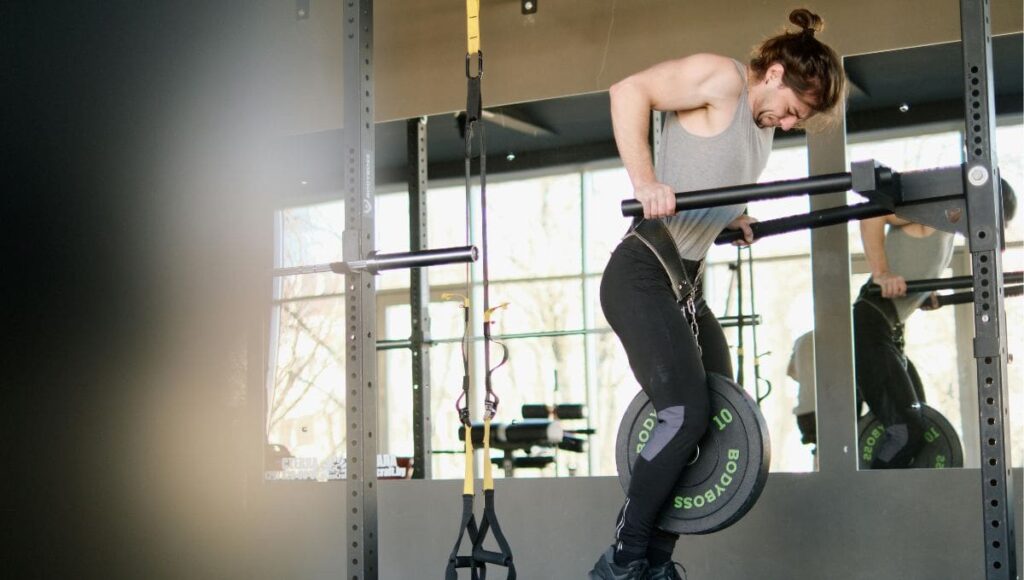
For beginners or those unable to perform a standard dip, starting with assisted dips using a machine or resistance bands can provide the necessary support while maintaining proper form. As strength and confidence grow, gradually reducing the assistance or transitioning to bodyweight dips becomes the next step. For advanced practitioners, adding weight through a dip belt or a dumbbell between the legs can intensify the exercise, promoting further strength and muscle development.
Variations for Specific Goals
Depending on your training objectives, you can tweak the dip to focus on different muscle groups. For instance, a more forward torso lean emphasizes the pectoral muscles, while a more upright posture targets the triceps. It’s crucial, however, to maintain the core principles of proper form to maximize effectiveness and reduce the risk of injury.
Best Types of Dips for Chest Development

Incorporating Dips into Your Routine
Dips can be integrated into your workout regimen as a primary compound movement for the upper body or as a supplementary exercise to enhance muscle endurance and stamina. Their flexibility in rep ranges and intensity makes them suitable for various training phases, from hypertrophy to strength-focused cycles.
Insights from Jeff Nippard on Dips
Jeff Nippard, a respected figure in the fitness industry, has shared valuable insights on the effectiveness and technicalities of dips. Here are three quotes from Nippard that highlight the significance of this exercise:
- On Muscle Activation: “Dips provide a unique challenge to the upper body, engaging multiple muscle groups in a cohesive manner, which is fundamental for functional strength and muscular development.”
- On Technique: “Maintaining a slight forward lean and controlled descent during dips can significantly enhance pectoral engagement, turning a simple movement into a powerful chest builder.”
- On Progressions: “The beauty of dips lies in their scalability. Beginners can start with assisted versions, while advanced athletes can introduce additional weights, ensuring continuous progression and adaptation.”
By embracing the versatility of dips and paying heed to expert advice like that from Jeff Nippard, you can effectively incorporate this exercise into your fitness journey, tailoring it to your specific goals and skill level, and witness substantial improvements in upper body strength and muscularity.
10 Mind-Blowing Tricep Dips to Give You Bigger Arms
Common Mistakes in Dips and Strategies for Avoidance
Perfecting the dip requires attention to detail to avoid common pitfalls that can lead to suboptimal results or injury. Here’s an expanded look at typical errors and how to rectify them, ensuring you get the most out of this potent exercise.
Excessive Forward Leaning
While a slight forward lean is essential for engaging the chest, overdoing it can strain the shoulders and reduce the exercise’s effectiveness. This exaggerated posture can shift the focus away from the pecs and delts, placing undue stress on the shoulders.
Strategy: Maintain a natural, slight forward lean. Imagine keeping a straight line from your head to your knees, ensuring your lean is consistent and controlled throughout the movement.
Insufficient Depth
Achieving the right depth in a dip is crucial for full muscle engagement. Stopping too short can limit the range of motion, leading to reduced activation of the target muscles.
Strategy: Lower your body until your elbows are at a 90-degree angle or your upper arms are parallel to the floor. Listen to your body and only go as deep as you can without compromising form or experiencing discomfort.
Locking Out Too Forcefully
While it’s important to fully extend your arms at the top of the dip, a forceful lockout can place unnecessary strain on the elbow joints, potentially leading to injury over time.
Strategy: Focus on a controlled, smooth extension of the arms at the top, ensuring you maintain tension in the muscles without snapping or jerking your elbows into a lockout.
Neglecting Scapular Position
The position of the shoulder blades is vital for stabilizing the shoulders and engaging the correct muscles. Allowing the shoulders to round forward or the scapulae to wing can compromise the exercise’s effectiveness and lead to potential shoulder issues.
Strategy: Actively retract and depress your scapulae throughout the exercise. Think about pinching your shoulder blades together and downward, creating a strong, stable base for your movement.
Ignoring Core Engagement
The core plays a critical role in stabilizing the body during dips. Neglecting to engage your core can lead to a sagging lower back, which not only reduces the exercise’s effectiveness but also increases the risk of injury.
Strategy: Actively engage your core throughout the exercise, maintaining a slight posterior pelvic tilt. This engagement will help stabilize your body, allowing for a more effective and safe execution of the movement.
The Perfect Push Workout According to Science

By addressing these common mistakes and implementing the corresponding strategies, you’ll enhance the quality of your dips, leading to better muscle engagement, improved strength gains, and reduced risk of injury.
Dips are more than just a finisher exercise; they’re a potent compound movement that can significantly contribute to upper body strength and muscle development when executed with proper form. By understanding the targeted muscles, adhering to the correct technique, and avoiding common pitfalls, you can safely incorporate dips into your workout regimen and reap their comprehensive benefits. Whether you’re a beginner or a seasoned athlete, mastering the dip can be a game-changer in your fitness journey.
Watch the video below from Jeff Nippard for more information about how to do dips for bigger chest and shoulders.
Read More: 20 Great Dip Variations for a Stronger and Better Looking Chest (and Arms)