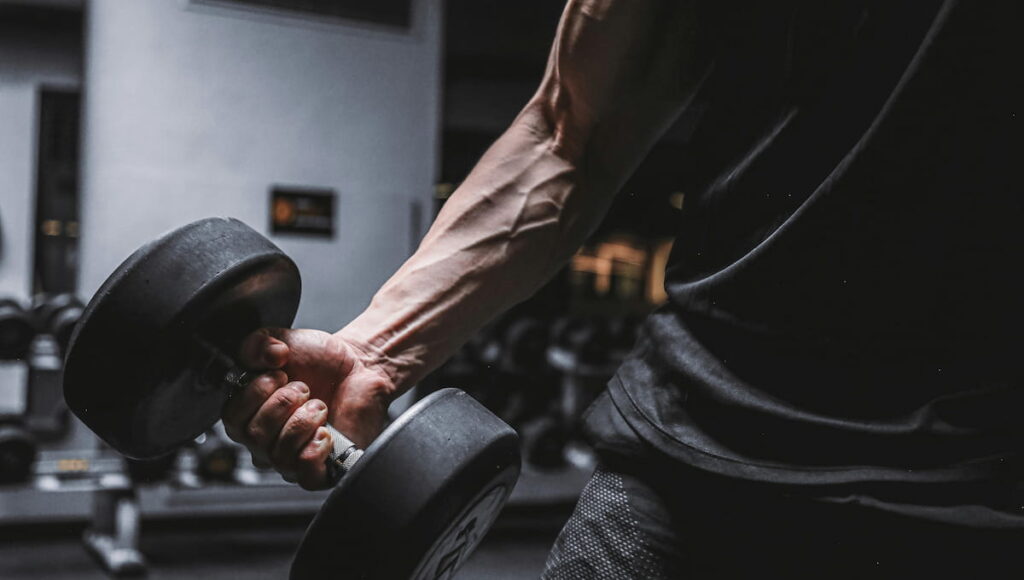
Improving the mind-muscle connection (MMC) for chest training is not just a matter of mental focus—it’s a physiological and neurological process that can significantly enhance muscle activation, hypertrophy, and performance.
While traditional bodybuilding wisdom has long emphasized “feeling” the muscle during exercise, contemporary scientific literature provides insight into why and how this internal focus leads to superior muscle development.
This article outlines evidence-based strategies to enhance MMC during chest workouts, with clear, actionable steps that can be implemented by both novice and advanced lifters.
What is Mind-Muscle Connection?
The mind-muscle connection refers to the deliberate, conscious focus on contracting a target muscle during an exercise. Unlike automatic lifting or relying on momentum, MMC encourages neural drive toward specific motor units within the desired muscle group. Studies show that increased internal focus can heighten motor unit recruitment, leading to improved hypertrophy and muscle control.
In a study by Schoenfeld and Contreras (2016), it was found that adopting an internal attentional focus during resistance training significantly increased activation in the targeted muscle, compared to an external focus. Specifically, when subjects focused on squeezing the pecs during bench press, electromyographic (EMG) activity in the pectoralis major was significantly elevated.
Why MMC is Crucial for Chest Development
The chest, particularly the pectoralis major, is a broad and multi-headed muscle. Its anatomical orientation makes it susceptible to being overshadowed by synergists such as the triceps and anterior deltoid during pressing movements. Therefore, improving MMC is especially important in chest training to ensure the pecs are doing the majority of the work.

A study by Snyder and Fry (2012) showed that novice lifters often default to dominant muscle groups during multi-joint exercises. This means that even during a chest press, lifters may inadvertently recruit the shoulders or triceps more than the pectorals, leading to suboptimal chest development.
Neuromuscular Activation: Understanding the Science
Muscle contraction is governed by motor unit recruitment, which is in turn influenced by neural drive. The more you can direct this drive to the target muscle, the more muscle fibers will be activated. This is where attentional focus and intention-based training come into play.
In a study by Calatayud et al. (2015), researchers found that verbal cues to “squeeze the chest” during the bench press increased EMG activity of the pectoralis major without changing external load or form. This demonstrates that cognitive focus alone can enhance muscle activation, validating the use of MMC as a training tool.
Common Barriers to Chest MMC
Dominant Synergists
The triceps brachii and anterior deltoid can easily dominate pressing movements, especially in flat and incline bench presses. This can mute chest activation even if the chest is the intended prime mover.
Poor Postural Alignment
Scapular retraction and thoracic extension are key to setting up a strong mechanical advantage for the pecs. Without proper positioning, the shoulder joint compensates, shifting the stress away from the chest.
Load Selection
Using loads that are too heavy compromises form and neurological focus. When you push maximal weights, your body defaults to compensatory patterns, undermining MMC. Studies have confirmed that lighter to moderate loads (60–80% of 1RM) are more effective for MMC-focused training.
Techniques to Improve Chest MMC
1. Pre-Activation Isolation Work
Performing isolation exercises such as cable crossovers or pec deck flyes before compound presses can enhance neural drive to the chest. This technique, known as pre-exhaustion, has been shown to increase mind-muscle awareness and fiber recruitment.
Research by Augustsson et al. (2003) found that performing an isolation exercise prior to a compound movement resulted in greater activation of the target muscle in subsequent exercises, confirming the efficacy of this sequencing.
2. Mechanical Tension and Controlled Tempo
Slowing down the eccentric (lowering) portion of lifts increases time under tension and facilitates deliberate control. A 3–4 second eccentric with a brief isometric pause at peak stretch helps heighten proprioceptive feedback and improves MMC.
In a study by Tesch et al. (2004), it was observed that controlled tempo training induced greater metabolic stress and motor unit activation compared to faster tempos.
3. Internal Cueing
Instead of thinking “press the weight,” think “squeeze the chest.” Internal cueing directs attention to the muscle, not the movement or external object. EMG studies by Vance et al. (2004) demonstrated that internal attentional focus significantly increased muscle activity in targeted muscles without changing the mechanical aspects of the lift.
4. Isometric Holds and Peak Contractions
Incorporating 1–2 second isometric contractions at the top of chest flyes or pressing movements increases intramuscular awareness. The goal is to consciously feel the pecs contract and control the tension throughout the movement.
This method also capitalizes on the neurological principle of post-activation potentiation, enhancing subsequent muscle engagement (Tillin and Bishop, 2009).
5. Range of Motion Optimization
Overextending in pressing movements often leads to triceps dominance. Instead, stop just short of full lockout to maintain tension on the pecs. On flyes, avoid going too deep to protect the shoulder and avoid shifting the emphasis away from the chest.
6. Unilateral and Cable-Based Work

Cable crossovers, single-arm presses, and unilateral flyes provide constant tension and allow for better sensory feedback. The resistance curve of cables makes them ideal for maintaining tension in both concentric and eccentric phases.
Exercise Selection to Maximize MMC
Pec Deck Flye
High MMC potential due to isolation, fixed path, and peak contraction. Use moderate loads and focus on squeezing at the top.
Cable Crossover
Allows variable angles to hit upper, mid, and lower pecs. Encourages continuous tension and is excellent for practicing internal cueing.
Dumbbell Flye
Great stretch and concentric contraction range. Limit range to avoid shoulder strain. Focus on arc-like motion and chest squeeze.
Machine Chest Press
Machines stabilize the path of movement, allowing the user to focus purely on contraction. Best used after pre-activation or lighter loads.
Push-Up Variations
Feet-elevated or deficit push-ups with a pause at the bottom increase time under tension. Push hands inward at the top to simulate chest squeeze.
Programming Strategies for MMC Enhancement
Phase 1: Neural Priming Phase (Weeks 1–2)
- Goal: Build awareness of chest engagement
- Intensity: 60–70% of 1RM
- Exercises: Pec deck flye, cable crossovers, machine chest press
- Tempo: 4-1-2-1 (eccentric, pause, concentric, pause)
- Focus: Internal cueing, light weights, high reps (12–15)
Phase 2: Load Integration Phase (Weeks 3–4)
- Goal: Translate MMC into heavier lifts
- Intensity: 70–80% of 1RM
- Exercises: Dumbbell bench press, incline machine press, cable flyes
- Tempo: 3-0-2-0
- Focus: Incorporate isometric holds, supersets with isolation work
Phase 3: Hybrid Strength-Hypertrophy (Weeks 5–6)
- Goal: Blend MMC with progressive overload
- Intensity: 75–85% of 1RM
- Exercises: Barbell bench press (MMC cues), unilateral cable flyes
- Tempo: 2-1-1-1
- Focus: Mindful reps, controlled eccentrics, partial reps to keep tension
Practical Tips for Immediate Implementation
- Use warm-up sets to practice internal focus before working sets
- Train chest early in the workout when mental clarity is highest
- Film yourself to check scapular positioning and elbow path
- Use tactile feedback (e.g., hand on pec during light sets) to increase neural awareness
- Drop your working weights by 10–20% when first applying MMC techniques to ensure quality
Mistakes to Avoid
- Lifting too heavy without control
- Allowing elbows to flare excessively
- Neglecting proper scapular retraction and chest elevation
- Relying solely on pressing movements without isolation work
- Chasing pump at the expense of mechanical tension
Conclusion
Improving mind-muscle connection in chest training is not about intuition or guesswork—it’s a skill that can be trained and refined using science-backed methods. Through internal cueing, pre-activation, tempo control, and strategic programming, lifters can significantly enhance pectoral activation, leading to improved hypertrophy, symmetry, and performance. Whether you’re a beginner struggling to feel your chest during presses or an advanced athlete seeking to break through a plateau, integrating these principles will provide long-term returns.
References
Augustsson, J., Thomeé, R., & Karlsson, J. (2003). Ability of a new hop test to determine functional deficits after anterior cruciate ligament reconstruction. Knee Surgery, Sports Traumatology, Arthroscopy, 11(6), 384–388.
Calatayud, J., Borreani, S., Colado, J. C., Martín, F., Rogers, M. E., & Behm, D. G. (2015). Muscle activation during push-ups with different suspension training systems. Journal of Sports Science & Medicine, 14(3), 494–501.
Schoenfeld, B. J., & Contreras, B. (2016). Attentional focus for maximizing muscle development: The mind-muscle connection. Strength & Conditioning Journal, 38(1), 1–9.
Snyder, B. J., & Fry, W. R. (2012). Effect of verbal instruction on muscle activity during the bench press exercise. The Journal of Strength & Conditioning Research, 26(9), 2394–2400.
Tesch, P. A., Thorsson, A., & Essen-Gustavsson, B. (2004). Muscle metabolism during intense, heavy-resistance exercise. European Journal of Applied Physiology and Occupational Physiology, 55(4), 362–366.
Tillin, N. A., & Bishop, D. (2009). Factors modulating post-activation potentiation and its effect on performance of subsequent explosive activities. Sports Medicine, 39(2), 147–166.
Vance, J., Wulf, G., Töllner, T., McNevin, N., & Mercer, J. (2004). EMG activity as a function of the performer’s focus of attention. Journal of Motor Behavior, 36(4), 450–459.