This guide will teach you how to wear a weight belt properly so that you maximise your performance and lifting skills.
A weight belt is a tremendously useful tool when it is used correctly.
No matter whether you want a bit of extra support for heavy lifts or to practice your form, the tool is useful for beginner, intermediate and advanced lifters.
What Is a Weightlifting Belt?
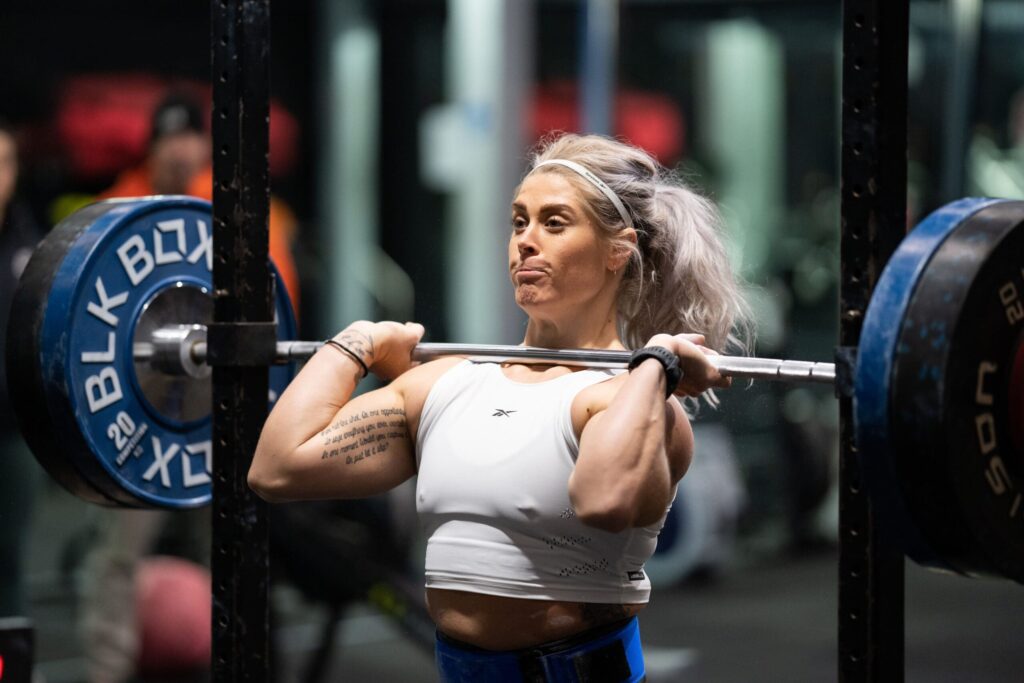
A weight belt is an accessory that provides extensive lower back support and assists bracing and breathing during lifting.
They are often made from nylon or leather with a Velcro or buckle strap to hold them in place.
They are most commonly used for heavy strength-based lifting and exercises such as Deadlifts, Squats, Overhead Presses and Yoke Carries.
Benefits of Wearing a Weight Belt
There are numerous benefits of using a Weight Belt.
Increases Intra-Abdominal Pressure
When you brace for lifting by breathing correctly, you expand your abdominal wall.
When you are wearing a belt, you can brace against the belt itself. This offers more stability for your core and spine. It also helps to strengthen the core in general over time.
Dr Aaron explains in more depth “Essentially the volume of the body’s intra-abdominal cavity will increase when we take a big breath. If we couple this expansion in our core by bracing our muscles, the pressure inside the abdominal cavity grows because the volume can no longer expand. This is how intra-abdominal pressure (IAP) is created. The belt is just another “layer” that halts the expansion of our abdominal cavity thereby increasing IAP even more.”
Demands and Teaches Proper Form
The belt will help to teach you how to brace your back muscles correctly when lifting.
Reduces Lower Back Pain
Many lifters suffer from lower back pain after or during lifting due to a myriad of reasons such as poor form and ego lifting.
The belt helps to establish a straight, neutral spine, which reduces the risk of injury.
Important Training Tip
Never become reliant on a weightlifting belt. It should always be a helpful tool and never become a crutch that you cannot lift without.
How to Wear a Weightlifting Belt
The easiest way of thinking about it is to imagine someone is about to punch you. As Olympic weightlifting coach Wil Fleming puts it in his article How to Brace and Breathe Properly for Weightlifting:
“This cue brings about the image, or it should at least, of bracing your abdomen for a punch to the gut from Chuck Liddell. (There are probably more current references, but the Iceman packed a punch back in the day.)”
This is a useful cue, but not much by way of explanation. I love the way Wil goes on to explain it:
“Bracing is simply the best way to engage the entirety of the core and to create stiffness in an area that normally does not have stiffness. Mike Robertson, coach at Indianapolis Fitness and Sports Training, defined the function of the core in the simplest way that I have heard, when he talked about “the two Rs” of the core.”
“The core has two functions: The first is redistribution, as in redistribution of tension. Think of this R like a suspension bridge. The cables themselves are not tight to begin with, but they can support the weight of the bridge below through a redistribution of tension, like in a plank. The second R is redirection, as in the redirection of force. Power that is created in the lower body can only be moved along the kinetic chain through a core that is tight.”
- Place the belt around your midsection
- Inhale and hold the breath
- Faster the belt around your core, higher than your hips
- Exhale then re-brace your core by pressing your core out against the belt as you fill your lungs with air.
- You should feel your core pushing hard against the belt
A good rule of thumb is that you’ll know the belt is tight enough during the first fastening if you cannot fit more than an index finger can be placed between the lower back and the belt.
How to Choose the Correct Weightlifting Belt
The best way to do this is to test a few different materials and brands and see what feels best for you.
Velcro and Nylon is Best for Beginners
This will allow you to easily experiment with different degrees of tightness as you lift. It is easy to put on or take off as well if it becomes uncomfortable for any reason.
However lower quality versions can come undone when lifting heavier loads, which is definitely not ideal at all.
Leather
Leather belts are exceptionally heavy duty and can last a lifetime when treated properly.
If you are a serious lifter then we would definitely recommend making the investment. The buckle offers complete security and you can rely on the belt to do its job.
When to Wear a Weight Belt
This advice from Squat University offers a good understanding of when, and when not
“While it is clear that wearing a weightlifting belt can contribute to more stability in your low back during barbell squatting, its benefits need to be taken with some caution. While wearing a belt can be very helpful on heavy lifts, the long-term use of a belt on ALL lifts can have some harmful effects.”
“By using a belt ALL the time, the body naturally starts to rely on the passive support the belt supplies. You’re essentially weakening your core by relying on the belt as a crutch. Therefore, learning how to brace and create stability on your own with lighter weight should be the first priority of all lifters.”
Learn More
Why are athletes more likely to drink more?