Do you know if training to failure is worth the fatigue for muscle growth? How can someone predict that? If only there was scientific research looking at that… and there is.
Training to failure is a popular method among those aiming to maximize muscle growth and strength gains. And when you push yourself to the limit, or sometimes beyond that, you can get crazy results, after all, you are training hard.
However, if you train hard, you also will need to rest your body properly. The more you push yourself, the more you need to rest (at least in theory). And it is when resting that your muscle fibres repair and grow stronger and bigger.
You should know that training to failure works for muscle growth – there is no denying that. However, recent research suggests that this approach might not be the most effective for everyone, especially for those with specific fitness goals like improving leg muscle mass. And that is what a recent study published and that Dr. Layne Norton decided to talk about in a video he shared.
Dr Layne Norton is a scientist, pro-natural bodybuilder, raw elite powerlifter, and physique coach, among other things. He received his BS in Biochemistry, and his PhD in Nutritional Sciences. Besides being a coach, he also commands his YouTube channel in which he talks about science and fitness intertwined, sometimes breaking down scientific studies that come out so people can make better-informed decisions in their fitness journey.
So let’s dive deep into training to failure and if it is worth the fatigue for muscle growth.
Read Also: How Little Can You Do and Still Grow Muscle?
What is Training to Failure?
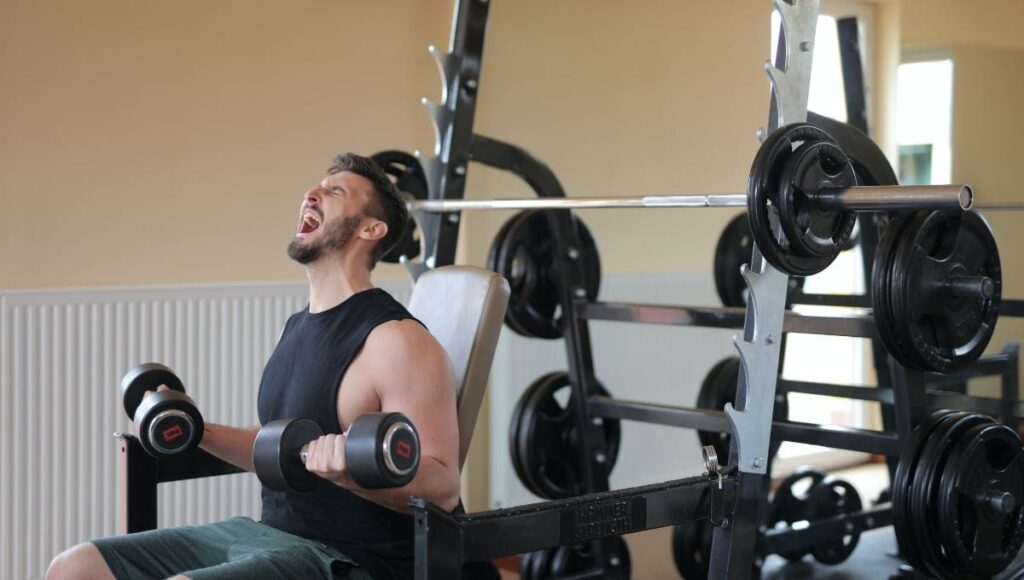
Training to failure is a weightlifting technique where an individual continues to perform a set of an exercise until they are no longer able to execute an additional repetition with proper form. This point of muscular fatigue is often referred to as the moment of “muscle failure,” where the muscles are so exhausted that they temporarily lose the ability to generate the force necessary to overcome a specific weight. The philosophy behind this approach is to push the muscles to their limits to stimulate maximum muscle growth and strength gains by fully exhausting the muscle fibers involved in the exercise. It is a popular method among bodybuilders and those looking to maximize hypertrophic (muscle growth) responses from their workouts.
However, training to failure is both physically demanding and mentally challenging, requiring a high level of effort and determination. While this method can be effective in increasing muscle size and strength, it is also associated with higher risks of injury and longer recovery times due to the intense stress it places on the muscles and the central nervous system. Overuse of this technique can lead to overtraining syndrome, where the body experiences a decline in performance and recovery capabilities due to insufficient recovery between intense workouts. Therefore, while training to failure can be a powerful tool in a fitness regimen, it should be used judiciously, ideally under the guidance of a fitness professional, and incorporated strategically within a well-rounded training program to manage risks while reaping the potential benefits.
How Was the Study Made

The study conducted by Zach Robinson and his team on the efficacy of training to failure versus stopping short was meticulously designed to provide clear insights into muscle growth and fatigue. Here’s a detailed breakdown of how the study was structured:
- Subjects: The study involved individuals with at least three years of resistance training experience, training at least three times per week. This experienced group was composed partly of individuals who had competed in weightlifting-related sports like powerlifting or bodybuilding.
- Duration: The duration of the study was set at eight weeks, a period considered sufficient to observe significant differences in muscle development and strength adaptations between different training protocols.
- Intralimb Design: A standout feature of the study was its intralimb design, where each participant used one leg to perform exercises to failure and the other leg to perform exercises stopping short of failure. This method effectively eliminated genetic variability as a confounding factor, as each participant served as their own control.
- Exercises and Equipment: The exercises included in the study were single-leg leg presses and single-leg leg extensions, chosen for their ability to isolate the leg muscles effectively. This setup allowed precise measurement of the muscle performance and growth of each leg independently.
- Training Frequency: Participants trained twice a week, which strikes a balance between allowing enough stimulus for growth and recovery time.
- Volume Equalization: The researchers equalized the training volume across participants based on their previous training records. This innovative approach ensured that the volume of training each participant was accustomed to was maintained, thus focusing the study’s variables on the impact of training to failure versus performance with reserved effort.
- Measurements and Metrics: The study was thorough in its evaluation metrics, which included muscle thickness (measured by ultrasound), body weight, and neuromuscular fatigue (assessed through velocity loss of repetitions). Additionally, they measured RIR (Reps in Reserve) accuracy, ensuring that when participants were supposed to stop one to two reps short of failure, they did so accurately.
- Dietary Controls: To support optimal muscle growth and recovery, participants were instructed to maintain a caloric surplus and consume at least two grams of protein per kilogram of body weight throughout the study period.
This structured and controlled approach allowed the researchers to closely monitor the effects of training to failure versus stopping short, providing valuable insights into the implications of both methods on muscle growth, fatigue, and overall training efficiency.
You can check out the entire study done here.
Is Training to Failure Worth the Fatigue for Muscle Growth?
The study published in February, 2024, provides valuable insights into training legs to failure versus stopping just short. Here’s what they found:
- No Significant Difference in Muscle Thickness: The key takeaway from the study is that there was no significant difference in muscle growth between those who trained to failure and those who stopped one to two reps short. This suggests that pushing to absolute failure is not necessary for maximizing muscle hypertrophy.
- Neuromuscular Fatigue: The research highlighted that training to failure led to increased neuromuscular fatigue. Participants who trained to failure experienced a faster decline in their ability to perform repetitions over multiple sets compared to those who stopped short of failure.
- Volume Equivalence: Interestingly, despite one group training to failure and the other not, the total volume of work (reps x sets x weight) was roughly the same. This was because while the failure group could perform more reps in the initial sets, their performance declined more rapidly in subsequent sets.
- Sustainability and Injury Risk: Constantly training to failure can increase the risk of overtraining and injury. The stress and fatigue accumulated by pushing muscles to their breaking point every session can lead to longer recovery periods and might increase the likelihood of muscle strains or other injuries.
Related: 5 Methods of Progressive Overload to Force Muscle Growth
Practical Applications for Leg Workouts
Based on the study’s findings, here are a few practical tips for those looking to enhance their leg training:
- Avoid Constant Failure: It’s not necessary to train to failure every set to see gains. Limiting failure training to the last set of an exercise can reduce fatigue without sacrificing benefits.
- Use a Variety of Rep Ranges: To maximize muscle growth and strength, incorporate a mix of rep ranges and intensities. This variety can help stimulate different muscle fibers and promote overall muscle development.
- Focus on Recovery: Allowing adequate recovery between sessions, especially when training intense or to near failure, helps prevent overtraining and injuries, ensuring consistent progress.
- Listen to Your Body: Tailoring your training intensity based on how you feel on a given day can prevent burnout and optimize long-term gains.
This approach, backed by scientific research, provides a balanced perspective on how to effectively train the legs without the necessity of reaching failure every session. It underscores the importance of listening to your body and adjusting your training methods to suit your personal fitness levels and goals.
The study provides compelling evidence that training to muscle failure is not necessarily superior to stopping one to two reps shy of failure, especially for those engaged in regular, intensive leg workouts. The research highlights that there were no significant differences in muscle thickness between the two groups, suggesting that the extra effort required to reach failure does not confer additional hypertrophic benefits. This finding is particularly relevant for those looking to optimize their training efficiency without overtaxing the body, as it suggests that similar gains can be achieved with slightly less strain, potentially reducing the risk of injury and overtraining.
Given these results, it appears prudent for most lifters, especially those with significant training experience, to consider integrating training sessions that avoid complete failure. By stopping just short, athletes can maintain a high training volume while mitigating the neuromuscular fatigue associated with training to failure. This approach not only preserves muscle strength and endurance over successive sets but also promotes longevity in training by minimizing recovery periods and the likelihood of burnout. Therefore, while training to failure can still be utilized effectively as a periodic tool to maximize intensity, it should not be the cornerstone of a training regimen if the goal is sustainable progress and muscle growth.
Watch the video below for more information.
Read Also: How Heavy Is Too Heavy to Build Muscle? Do This Quick Test