Achieving a toned midsection is a common fitness goal, and for many, it symbolizes both athleticism and aesthetic appeal. While the traditional plank exercise is often hailed as one of the best exercises for core strength, it may not be the most efficient or exciting option for everyone. Some people find planks monotonous or challenging due to wrist discomfort, shoulder pain, or simply the static nature of the exercise.
Fortunately, there are several dynamic and effective exercises that target the abdominal muscles, promoting strength and definition. These alternatives not only engage your core but also improve your overall body function, balance, and coordination.
In this article, we’ll explore five plank alternatives that can help you sculpt a defined six-pack while offering a variety of movements to keep your workouts engaging. We will also delve into the science behind these exercises and how they effectively target different muscle groups.
Table of Contents
Understanding Core Anatomy and Function
Before diving into the exercises, it’s important to understand the anatomy and function of the core. The core is not just the abdominal muscles; it encompasses a group of muscles in the torso, including the rectus abdominis, transverse abdominis, internal and external obliques, and the muscles of the back and pelvis. Here’s a quick breakdown:
- Rectus Abdominis: Often referred to as the “six-pack” muscles, these run vertically along the front of the abdomen. They help with flexing the spine and stabilizing the pelvis.
- Transverse Abdominis: This is the deepest layer of abdominal muscles, wrapping around the torso like a corset. It stabilizes the spine and pelvis, aiding in breathing and protecting the internal organs.
- Obliques: These muscles are located on the sides of the abdomen. The external obliques are on top, and the internal obliques lie underneath. They assist with rotational movements and lateral flexion of the spine.
- Erector Spinae: A group of muscles running along the spine, they assist in extending and rotating the spine.
- Pelvic Floor Muscles: These support the organs in the pelvis and play a crucial role in maintaining core stability.
Functionally, a strong core supports posture, enhances athletic performance, and reduces the risk of injury. It stabilizes the spine, helps transfer forces during dynamic movements, and facilitates everyday activities like bending, lifting, and twisting.
1. Bicycle Crunches
How to Perform Bicycle Crunches
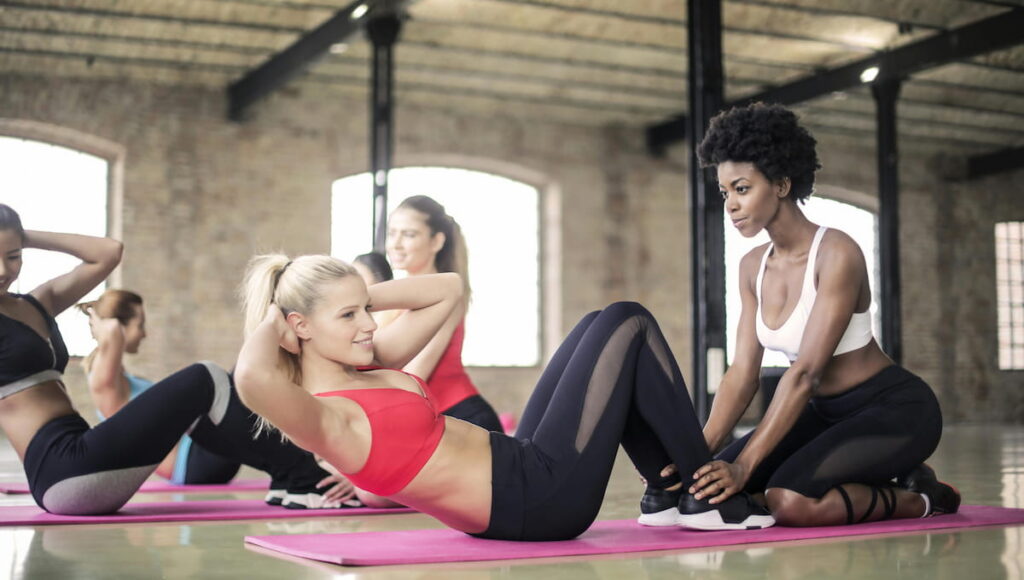
Bicycle crunches are a dynamic exercise that effectively targets the rectus abdominis and obliques. They mimic the pedaling motion of riding a bicycle, requiring coordination and control.
- Starting Position: Lie flat on your back with your hands behind your head, elbows out to the sides. Lift your legs off the ground, bending them at a 90-degree angle, and raise your shoulders slightly off the mat.
- Execution: Simultaneously bring your right elbow towards your left knee while extending your right leg. Twist your torso to engage the obliques. Return to the starting position, then switch sides, bringing your left elbow towards your right knee.
- Repetitions: Perform 2-3 sets of 15-20 repetitions per side.
Benefits of Bicycle Crunches
Bicycle crunches engage the entire core, particularly the obliques, and promote coordination between the upper and lower body. They also help improve cardiovascular endurance due to the continuous motion, adding an aerobic element to the exercise.
A study published in the Journal of Orthopaedic & Sports Physical Therapy found that bicycle crunches were among the most effective abdominal exercises for activating the rectus abdominis and obliques compared to traditional crunches and other ab exercises (Escamilla et al., 2010).
Variations of Bicycle Crunches
- Slow Bicycle Crunches: Slow down the motion to increase time under tension and further engage the muscles.
- Weighted Bicycle Crunches: Hold a weight plate or medicine ball for added resistance and challenge.
2. Russian Twists
How to Perform Russian Twists
Russian twists are an excellent exercise for engaging the obliques and improving rotational strength. They can be performed with or without additional weight.
- Starting Position: Sit on the floor with your knees bent and feet flat. Lean back slightly to engage your core. Hold your hands together in front of you or grab a medicine ball or weight.
- Execution: Twist your torso to the right, bringing your hands or the weight towards the floor beside you. Return to the center and twist to the left side. Keep your core engaged throughout the movement.
- Repetitions: Perform 2-3 sets of 20-30 twists (10-15 per side).
Benefits of Russian Twists
Russian twists are effective for targeting the oblique muscles, which are essential for rotational movements and stability. This exercise also improves balance and coordination. It can be easily modified by adjusting the weight or the speed of the twists.
Research published in the Journal of Strength and Conditioning Research indicates that rotational exercises like Russian twists significantly activate the oblique muscles, contributing to improved core strength and stability (McGill et al., 2014).
100 Russian Twists Every Day for a Month: Benefits, Risks, and Real Results
Variations of Russian Twists
- Feet Elevated Russian Twists: Lift your feet off the ground to increase core engagement and balance challenge.
- Weighted Russian Twists: Use a heavier weight or medicine ball to increase resistance.
3. Hanging Leg Raises
How to Perform Hanging Leg Raises
Hanging leg raises are a challenging exercise that targets the lower abs and hip flexors while also engaging the upper body for stabilization.
- Starting Position: Hang from a pull-up bar with an overhand grip, arms fully extended, and legs hanging straight down.
- Execution: Keeping your legs straight, lift them towards your chest by engaging your lower abs. Avoid swinging your body and focus on controlled movement. Lower your legs back to the starting position without touching the ground.
- Repetitions: Perform 2-3 sets of 8-12 repetitions.
Benefits of Hanging Leg Raises
Hanging leg raises are highly effective for targeting the lower abdominal muscles and improving grip strength. This exercise also promotes hip flexor strength and increases core stability.
A study in the Journal of Sports Science & Medicine found that hanging leg raises elicited high levels of muscle activation in the rectus abdominis and external obliques, making them a superior choice for lower abdominal training (Calatayud et al., 2015).
Variations of Hanging Leg Raises
- Bent-Knee Hanging Leg Raises: Bend your knees as you lift your legs to reduce the difficulty level.
- Weighted Hanging Leg Raises: Hold a dumbbell between your feet for added resistance.
4. Ab Rollouts
How to Perform Ab Rollouts
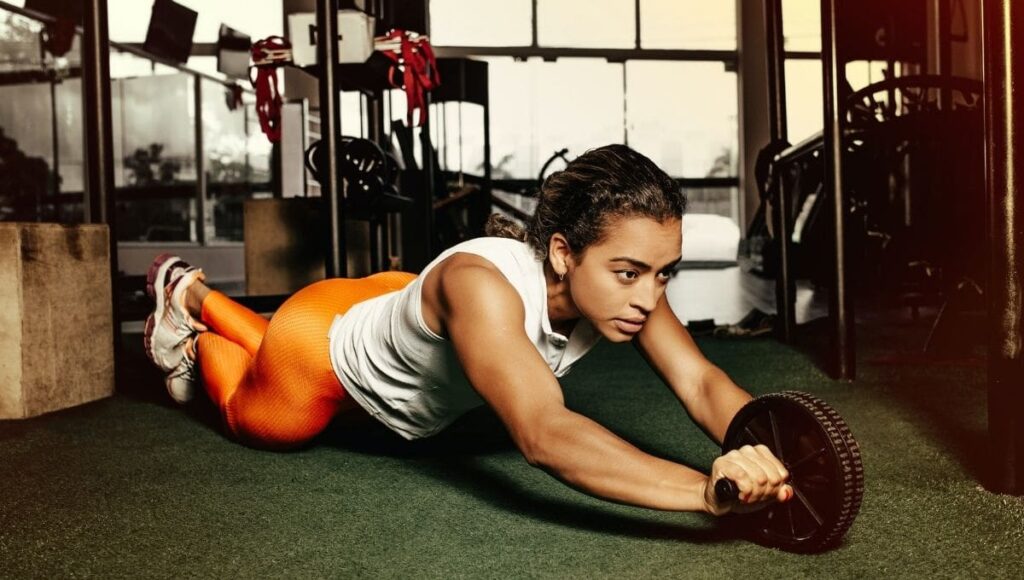
Ab rollouts are a dynamic exercise that requires an ab wheel or barbell to perform. They target the entire core, emphasizing the rectus abdominis and stabilizing muscles.
- Starting Position: Kneel on a mat with the ab wheel or barbell in front of you, hands shoulder-width apart on the handles.
- Execution: Engage your core and slowly roll the wheel or barbell forward, extending your body into a plank-like position. Keep your arms straight and avoid arching your back. Roll back to the starting position by contracting your core muscles.
- Repetitions: Perform 2-3 sets of 10-15 repetitions.
Benefits of Ab Rollouts
Ab rollouts are highly effective for building core strength and stability. They engage multiple muscle groups, including the rectus abdominis, transverse abdominis, and hip flexors. This exercise also challenges the lower back and shoulder stabilizers.
Research in the Journal of Strength and Conditioning Research found that ab rollouts effectively activate the rectus abdominis and external obliques, making them an excellent choice for comprehensive core training (Youdas et al., 2008).
Variations of Ab Rollouts
- Standing Ab Rollouts: Perform the exercise from a standing position for increased difficulty and range of motion.
- Single-Arm Ab Rollouts: Use one arm to perform the rollout, increasing the challenge on the core and shoulder stabilizers.
5. Mountain Climbers
How to Perform Mountain Climbers
Mountain climbers are a dynamic exercise that combines cardiovascular conditioning with core strengthening. They engage the entire body, particularly the core, shoulders, and legs.
- Starting Position: Begin in a high plank position with your hands shoulder-width apart and your body in a straight line from head to heels.
- Execution: Drive your right knee towards your chest, then quickly switch legs, bringing your left knee towards your chest. Continue alternating legs in a running motion while maintaining a strong plank position.
- Repetitions: Perform 2-3 sets of 30-60 seconds.
Benefits of Mountain Climbers
Mountain climbers are a high-intensity exercise that boosts cardiovascular fitness and burns calories while strengthening the core. They engage the rectus abdominis, obliques, and hip flexors, improving coordination and agility.
A study published in the Journal of Sports Sciences highlights the effectiveness of high-intensity exercises like mountain climbers in enhancing aerobic capacity and core strength (Paoli et al., 2012).
Variations of Mountain Climbers
- Cross-Body Mountain Climbers: Drive your knee towards the opposite elbow to increase oblique engagement.
- Slow Mountain Climbers: Perform the exercise slowly to increase time under tension and focus on core stability.
Creating a Balanced Core Workout
When incorporating these exercises into your routine, aim for a balanced approach that targets all aspects of the core.
Here’s a sample workout plan:
Sample Core Workout Routine
- Bicycle Crunches: 3 sets of 15-20 repetitions per side
- Russian Twists: 3 sets of 20-30 twists (10-15 per side)
- Hanging Leg Raises: 3 sets of 8-12 repetitions
- Ab Rollouts: 3 sets of 10-15 repetitions
- Mountain Climbers: 3 sets of 30-60 seconds
Tips for Effective Core Training
- Focus on Form: Proper form is essential to maximize effectiveness and reduce the risk of injury. Maintain a neutral spine and avoid arching your back during exercises.
- Engage the Core: Focus on contracting the abdominal muscles throughout each movement to enhance muscle activation and engagement.
- Incorporate Variety: Mix up your routine with different exercises and variations to target different muscle groups and prevent plateaus.
- Progress Gradually: Increase resistance or repetitions gradually to continue challenging your muscles and promote strength gains.
Conclusion
While planks are a popular exercise for core training, there are numerous alternatives that offer variety and targeted benefits. Bicycle crunches, Russian twists, hanging leg raises, ab rollouts, and mountain climbers are dynamic exercises that effectively engage the core and promote the development of a well-defined six-pack. By incorporating these exercises into your fitness routine and maintaining a balanced approach to core training, you can achieve a strong and sculpted midsection.
Key Takeaways
| Exercise | Target Muscles | Benefits | Variations |
|---|---|---|---|
| Bicycle Crunches | Rectus Abdominis, Obliques | Improves coordination, engages entire core | Slow Bicycle Crunches, Weighted Bicycle Crunches |
| Russian Twists | Obliques | Enhances rotational strength, improves balance | Feet Elevated Russian Twists, Weighted Russian Twists |
| Hanging Leg Raises | Lower Abs, Hip Flexors | Targets lower abs, increases grip strength | Bent-Knee Hanging Leg Raises, Weighted Hanging Leg Raises |
| Ab Rollouts | Rectus Abdominis, Stabilizers | Builds core strength, engages multiple muscle groups | Standing Ab Rollouts, Single-Arm Ab Rollouts |
| Mountain Climbers | Rectus Abdominis, Obliques, Hip Flexors | Boosts cardiovascular fitness, strengthens core | Cross-Body Mountain Climbers, Slow Mountain Climbers |
Bibliography
- Calatayud, J., Borreani, S., Colado, J.C., Martin, F., Tella, V., and Andersen, L.L. (2015) ‘Muscle activation during push-ups with different suspension training systems.’ Journal of Sports Science & Medicine, 14(3), pp. 502-510.
- Escamilla, R.F., McTaggart, M.S., Fricklas, E.J., DeWitt, R., Kelleher, P., Taylor, M.K., and Andrews, J.R. (2010) ‘An electromyographic analysis of commercial and common abdominal exercises: Implications for rehabilitation and training.’ Journal of Orthopaedic & Sports Physical Therapy, 40(5), pp. 265-276.
- McGill, S.M., Marshall, L.W., and Andersen, J.T. (2014) ‘Low back loads while walking and carrying: comparing the load carried in one hand or in two hands.’ Journal of Strength and Conditioning Research, 28(5), pp. 1340-1347.
- Paoli, A., Bianco, A., Notarnicola, A., Lanza, M., and Grimaldi, C. (2012) ‘Effects of three distinct protocols of fitness training on body composition and muscle strength in older men: A randomized controlled trial.’ Journal of Sports Sciences, 30(13), pp. 1227-1234.
- Youdas, J.W., Budach, B.D., Ellerbusch, J.V., Stucky, C.M., Wait, K.R., and Hollman, J.H. (2008) ‘Comparison of muscle-activation patterns during the conventional push-up and perfect push-up exercises.’ Journal of Strength and Conditioning Research, 22(6), pp. 1960-1965.