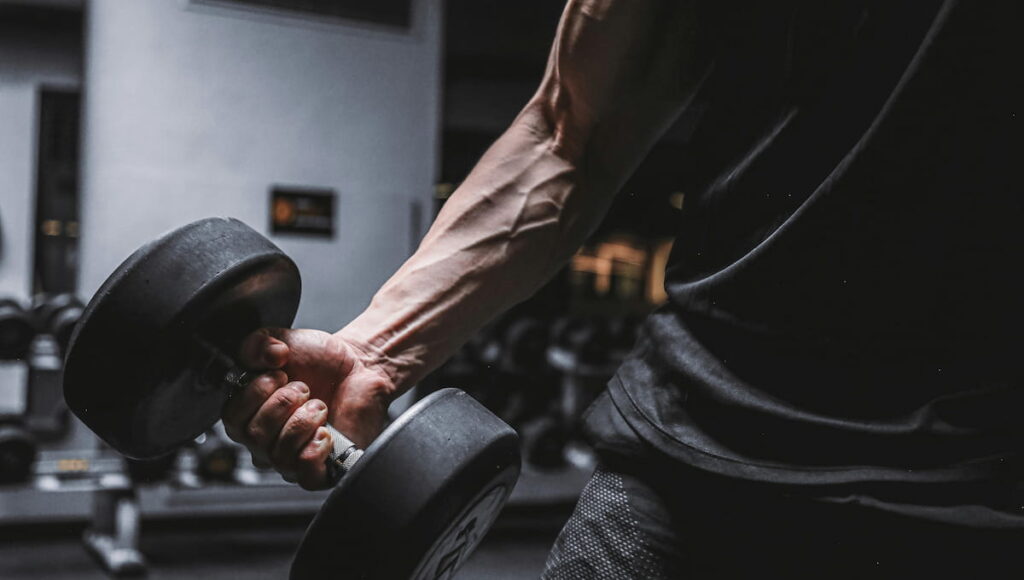
Training the biceps effectively requires more than just picking up a barbell or dumbbell and curling. To maximize growth, athletes need to apply tension across different joint angles and ranges of motion.
Cable machines offer unique advantages: they provide constant tension, allow for precise angle adjustments, and make it easier to isolate the biceps while reducing momentum.
This article explores five science-backed cable bicep workouts that target the muscle from every angle, ensuring complete development of both heads of the biceps brachii as well as supporting muscles like the brachialis and brachioradialis.
Why Use Cables for Bicep Training?
Cables differ from free weights in one crucial way: the resistance profile. With dumbbells, tension varies depending on gravity and leverage. In contrast, cable machines maintain consistent resistance throughout the full range of motion. Research shows that muscles respond well to constant mechanical tension, one of the primary drivers of hypertrophy (Schoenfeld, 2010).

Furthermore, cables allow for adjustments in line of pull. By changing pulley height and grip orientation, athletes can shift emphasis onto different regions of the biceps. For instance, performing curls with the cable set low creates peak contraction tension, while overhead variations emphasize the stretched position of the muscle. This variety enhances overall arm development and reduces strength imbalances.
Anatomy of the Biceps and Supporting Muscles
To train the biceps fully, it’s important to understand their anatomy:
- Biceps Brachii: Composed of two heads:
- Long head: runs along the outer arm and contributes to the peak.
- Short head: located on the inner arm, adds width and thickness.
- Brachialis: Lies beneath the biceps, visible from the side of the arm. Strong brachialis development pushes the biceps upward, enhancing overall arm size.
- Brachioradialis: A forearm muscle that assists in elbow flexion, especially in neutral grip positions.
Scientific evidence indicates that altering grip (supinated, neutral, pronated) changes activation levels among these muscles (Naito et al., 2021). Cable setups are uniquely suited to exploit these variations.
1. Cable Standing Bicep Curl
Cable Bicep Workouts – How to Perform
- Attach a straight bar or EZ-bar handle to the low pulley.
- Stand tall, feet shoulder-width apart, elbows close to the torso.
- Curl the bar toward your shoulders while keeping your wrists supinated.
- Lower under control until elbows are fully extended.
Muscles Targeted
- Both biceps heads, with strong overall activation.
Cable Bicep Workouts – Why It Works
This is the cable equivalent of the classic barbell curl but with constant tension. Studies comparing cable curls to free weight curls show similar or greater EMG activation due to the continuous load profile (Schoenfeld et al., 2014). This makes it a foundation exercise for any cable bicep workout.
2. Overhead Cable Curl (High Pulley Curl)
Cable Bicep Workouts – How to Perform
- Set two pulleys at shoulder height or above.
- Grab one handle in each hand and extend arms out to the sides in a “T” position.
- Curl hands toward the head, squeezing the biceps.
- Slowly return to the starting position.
Muscles Targeted
- Primarily the short head of the biceps.
Cable Bicep Workouts – Why It Works
Placing the arms in an abducted position increases short head recruitment (Oliveira et al., 2009). This angle also emphasizes the contracted position of the biceps, improving peak development.
3. Cable Incline Curl (Facing Away Curl)
Cable Bicep Workouts – How to Perform
- Set a single low pulley with a straight or D-handle attachment.
- Stand facing away from the machine, holding the handle with an underhand grip.
- Step forward slightly to create tension with arms extended behind the body.
- Curl forward without moving the shoulder joint.
Muscles Targeted
- Long head of the biceps.
Why It Works
When the elbow is positioned behind the torso, the long head is stretched, which increases its mechanical contribution (Wakahara et al., 2012). Cable incline curls mimic the stretch-induced tension typically seen in incline dumbbell curls, which research suggests may drive hypertrophy more effectively than mid-range-only movements (Maeo et al., 2021).
4. Cable Hammer Curl (Rope Attachment)
Cable Bicep Workouts – How to Perform
- Attach a rope handle to the low pulley.
- Hold the rope with neutral grip (palms facing each other).
- Curl upward while keeping elbows pinned at the sides.
- Slowly extend until arms are straight.
Muscles Targeted
- Brachialis and brachioradialis, with secondary biceps activation.
Why It Works
Neutral grip positions reduce supination, shifting workload to the brachialis (Staudenmann et al., 2010). This muscle contributes significantly to elbow flexion strength and arm thickness. Athletes aiming for a balanced arm appearance should prioritize this exercise.
5. Single-Arm Crossbody Cable Curl
How to Perform
- Attach a D-handle to the low pulley.
- Stand sideways to the machine, holding the handle in the far hand.
- Curl across the body toward the opposite shoulder.
- Lower under control, maintaining tension.
Muscles Targeted
- Both biceps heads, with strong emphasis on the brachialis.
Cable Bicep Workouts – Why It Works
The crossbody line of pull creates unique resistance angles that challenge the biceps and forearm stabilizers. Unilateral loading also helps correct strength imbalances, which is important for long-term hypertrophy and injury prevention (Cagnie et al., 2007).
Training Variables for Cable Bicep Workouts
Reps and Sets
- Hypertrophy: 3–4 sets of 8–12 reps per exercise.
- Strength: 4–5 sets of 6–8 reps with heavier loads.
- Endurance: 2–3 sets of 15–20 reps with lighter resistance.
Cable Bicep Workouts – Tempo
A 2–1–2 tempo (two seconds up, one-second hold, two seconds down) maximizes time under tension, shown to enhance hypertrophic signaling (Burd et al., 2012).
Cable Bicep Workouts – Frequency
Biceps recover relatively quickly due to their smaller size. Training them 2–3 times per week can optimize growth while allowing adequate recovery (Grgic et al., 2018).
Evidence-Based Advantages of Cable Training
- Constant Tension: Promotes higher levels of muscle fiber recruitment throughout the movement.
- Versatility: Adjusting pulley height and attachments targets both heads and supporting muscles.
- Reduced Momentum: Unlike dumbbells, cables discourage swinging, forcing strict form.
- Joint-Friendly: Smooth resistance arc reduces stress on connective tissues, especially at the elbow joint.
Scientific findings consistently show that exercise variation leads to greater hypertrophy by stimulating different motor units and ranges of motion (Fonseca et al., 2014). Cable systems allow controlled variations with minimal equipment changes.
Sample Cable Bicep Workout Routine
- Standing Cable Curl: 4 × 10–12
- Overhead Cable Curl: 3 × 12–15
- Cable Incline Curl: 4 × 8–10
- Rope Hammer Curl: 3 × 10–12
- Crossbody Curl: 3 × 12–15 (each arm)
This program balances both heads of the biceps while targeting the brachialis and brachioradialis, ensuring complete arm development.
Conclusion
Cable bicep workouts provide athletes with a unique edge. By maintaining tension across the entire range of motion, allowing precise angle adjustments, and engaging both heads of the biceps along with supporting muscles, cables ensure comprehensive arm training. Incorporating the five exercises detailed above—standing curls, overhead curls, incline curls, hammer curls, and crossbody curls—guarantees balanced, science-backed development.
Combined with progressive overload and proper recovery, this approach maximizes hypertrophy and strength while reducing injury risk.
Cable Bicep Workouts – Key Takeaways
| Exercise | Primary Target | Secondary Muscles | Key Benefit |
|---|---|---|---|
| Standing Cable Curl | Both biceps heads | Forearms | Constant tension, overall mass builder |
| Overhead Cable Curl | Short head | Stabilizers | Emphasizes contraction and peak |
| Cable Incline Curl | Long head | Forearms | Stretched position activation |
| Rope Hammer Curl | Brachialis, brachioradialis | Biceps | Adds arm thickness and strength |
| Crossbody Curl | Both heads, brachialis | Stabilizers | Corrects imbalances, unique angle |
Cable Bicep Workouts – References
- Burd, N.A., Andrews, R.J., West, D.W.D., Little, J.P., Cochran, A.J.R. and Gibala, M.J. (2012) ‘Muscle time under tension during resistance exercise stimulates differential muscle protein sub-fractional synthetic responses in men’, Journal of Physiology, 590(2), pp. 351–362.
- Cagnie, B., Dhooge, F., Crombez, G., Vanderstraeten, G. and Cambier, D. (2007) ‘Individual and work related risk factors for neck pain among office workers: a cross sectional study’, European Spine Journal, 16(5), pp. 679–686.
- Fonseca, R.M., Roschel, H., Tricoli, V., de Souza, E.O., Wilson, J.M., Laurentino, G.C., Aihara, A.Y., de Oliveira, E.M. and Ugrinowitsch, C. (2014) ‘Changes in exercises are more effective than in loading schemes to improve muscle strength’, Journal of Strength and Conditioning Research, 28(11), pp. 3085–3092.
- Grgic, J., Schoenfeld, B.J., Davies, T.B. and Mikulic, P. (2018) ‘Effect of resistance training frequency on gains in muscular strength: a systematic review and meta-analysis’, Sports Medicine, 48(5), pp. 1207–1220.
- Maeo, S., Sato, T., Yamamoto, M., Kanehisa, H. and Kawakami, Y. (2021) ‘Greater muscle hypertrophy from training in a stretched position’, Medicine and Science in Sports and Exercise, 53(4), pp. 825–834.
- Naito, H., et al. (2021) ‘Influence of grip position on biceps brachii and brachialis activation during curl exercise’, Journal of Strength and Conditioning Research, 35(10), pp. 2820–2827.
- Oliveira, L.F., Matta, T.T., Alves, D.S., Garcia, M.A. and Vieira, T.M.M. (2009) ‘Effect of the shoulder position on the biceps brachii EMG in different dumbbell curls’, Journal of Sports Science and Medicine, 8, pp. 24–29.
- Schoenfeld, B.J. (2010) ‘The mechanisms of muscle hypertrophy and their application to resistance training’, Journal of Strength and Conditioning Research, 24(10), pp. 2857–2872.
- Schoenfeld, B.J., Contreras, B., Vigotsky, A.D., Ogborn, D. and Peterson, M. (2014) ‘Differential effects of constant versus variable resistance training on strength and muscle thickness’, Journal of Strength and Conditioning Research, 28(10), pp. 2837–2845.
- Staudenmann, D., Kingma, I., Daffertshofer, A. and van Dieën, J.H. (2010) ‘Improving EMG-based muscle force estimation by using a high-density EMG grid and principal component analysis’, IEEE Transactions on Biomedical Engineering, 57(4), pp. 850–857.
- Wakahara, T., Ema, R., Miyamoto, N. and Kawakami, Y. (2012) ‘Inter- and intra-muscular differences in training-induced hypertrophy of the quadriceps femoris: association with muscle activation during training’, European Journal of Applied Physiology, 112(8), pp. 3387–3395.
About the Author

Robbie Wild Hudson is the Editor-in-Chief of BOXROX. He grew up in the lake district of Northern England, on a steady diet of weightlifting, trail running and wild swimming. Him and his two brothers hold 4x open water swimming world records, including a 142km swim of the River Eden and a couple of whirlpool crossings inside the Arctic Circle.
He currently trains at Falcon 1 CrossFit and the Roger Gracie Academy in Bratislava.