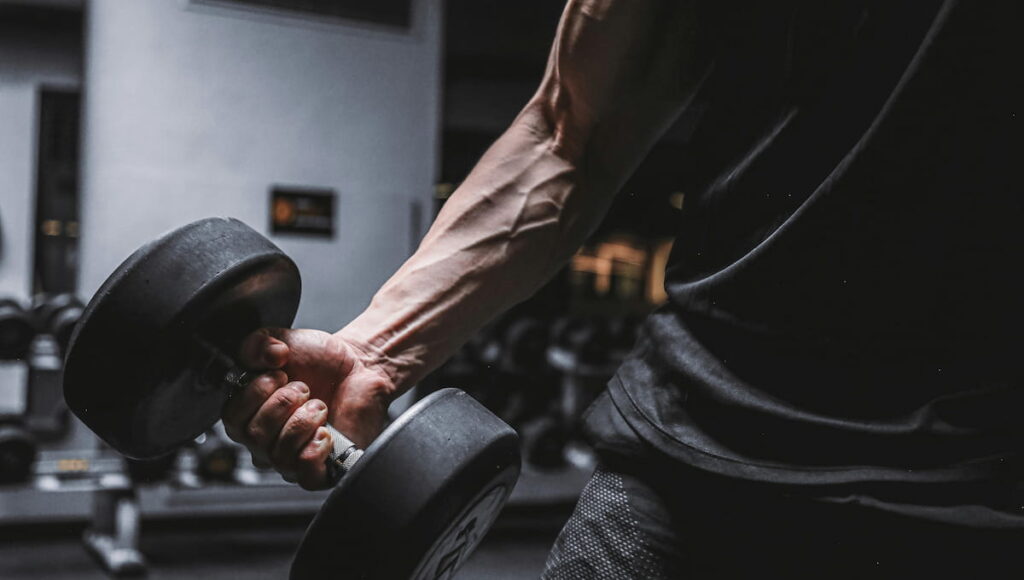
When it comes to shoulder training, the dumbbell press is a staple exercise for building strength and muscle in the deltoids. However, one of the most frequent questions is whether to perform the press while seated or standing.
Each variation comes with its unique benefits and challenges, which can influence your decision depending on your goals. This article will break down the differences between the seated and standing dumbbell press, examine the pros and cons of each, and back up these claims with scientific evidence to help you make the most informed choice for your training.
Understanding the Dumbbell Press Variations
Seated Dumbbell Press
The seated dumbbell press is performed while sitting on a bench with back support. This setup minimizes the involvement of the lower body and core muscles, allowing the lifter to focus more on isolating the shoulder muscles. The seated variation is often favoured by bodybuilders because of its stability and potential for a more focused, controlled movement pattern.
How to Perform the Seated Dumbbell Press:
- Sit on a bench with back support.
- Hold a dumbbell in each hand, resting them on your shoulders.
- Press the dumbbells overhead until your arms are fully extended, then lower them back to your starting position.
- Repeat for the desired number of repetitions.
Standing Dumbbell Press
The standing dumbbell press requires the lifter to stabilise their entire body while pressing the weight overhead. This variation engages not only the shoulders but also the core, legs, and other stabilising muscles, making it a more functional exercise. It’s commonly used in CrossFit, strength training, and general functional fitness programmes due to its focus on full-body coordination and balance.
How to Perform the Standing Dumbbell Press:
- Stand with your feet shoulder-width apart.
- Hold a dumbbell in each hand at shoulder height.
- Press the dumbbells overhead until your arms are fully extended, keeping your core tight to prevent your lower back from arching.
- Lower the dumbbells back to your shoulders and repeat for the desired number of repetitions.
Muscle Activation: Seated vs Standing
One of the key differences between the seated and standing dumbbell press is the degree of muscle activation in the shoulders and other muscles. Research has shown that performing an overhead press while standing recruits a larger number of muscles compared to the seated version.
In a study published in the Journal of Strength and Conditioning Research (Saeterbakken et al., 2013), researchers compared muscle activation between seated and standing barbell presses. While this study focused on barbell presses, the findings are applicable to dumbbell presses as well. The standing press was found to activate the anterior deltoid to a similar extent as the seated press, but it also increased activation in the stabilising muscles of the core and legs. The seated press, on the other hand, allowed for greater isolation of the shoulder muscles, particularly the deltoids, due to the reduced involvement of stabilising muscles.
In short, the seated dumbbell press provides more targeted shoulder activation, while the standing press activates a greater range of muscles throughout the body.
Stability and Safety Considerations
Seated Dumbbell Press: Increased Stability
The seated dumbbell press offers greater stability, as the lifter is supported by the bench. This stability allows you to lift heavier weights without the need to balance the body. For those aiming to strictly build shoulder size and strength, the seated press is an excellent choice.
From a safety perspective, the seated press reduces the risk of lower back strain because the back is supported. However, it’s essential to avoid arching the lower back excessively, even with the added support of the bench. Overarching could still lead to discomfort or injury.
Standing Dumbbell Press: Core and Balance Challenges
The standing dumbbell press, due to its lack of external support, places greater demand on the core and stabilising muscles to maintain balance throughout the movement. This increased demand can help improve overall functional strength, balance, and coordination. However, this also means that you may not be able to lift as much weight compared to the seated variation.
In terms of safety, the standing press poses a greater risk of lower back strain, particularly if proper form isn’t maintained. Engaging the core muscles and avoiding excessive leaning or arching is crucial to prevent injury. Lifters with pre-existing back issues might want to approach the standing press cautiously or stick to the seated version.
Strength and Hypertrophy Gains
Hypertrophy: Which is More Effective?
When it comes to hypertrophy (muscle growth), the seated dumbbell press may have a slight advantage due to the increased ability to focus on the deltoids without worrying about balance or stability. With more focus on the shoulders, the lifter can potentially achieve better muscle isolation, which is beneficial for muscle growth.
A study in The Journal of Sports Science & Medicine (Wirth et al., 2016) suggests that exercises with greater muscle isolation, such as the seated press, are more effective for hypertrophy, as they allow for greater time under tension in the target muscles. Since you can generally lift heavier weights in the seated position, this can lead to increased mechanical tension, one of the primary drivers of muscle hypertrophy.
Strength Development: Which Builds More Power?
For strength development, the choice between seated and standing dumbbell press depends on your overall goals. If you are focused on developing maximal shoulder strength in isolation, the seated press is likely the better option due to the ability to handle heavier weights.
However, if your goal is to develop functional strength that translates to real-world activities, the standing dumbbell press is superior. It requires coordination and stabilisation, which more closely mirrors the demands of athletic performance or daily tasks. The standing press can improve not only shoulder strength but also core stability, balance, and coordination, making it a more comprehensive strength-building exercise.
Core Activation: The Key Difference
One of the most significant differences between the seated and standing dumbbell press is core activation. A study published in The Journal of Electromyography and Kinesiology (Lehman et al., 2003) found that standing overhead pressing exercises result in significantly higher activation of the rectus abdominis and obliques compared to seated versions. This is because standing presses require the lifter to stabilise the entire body, which engages the core muscles to prevent the torso from tilting or arching.
Therefore, if you’re looking to improve core strength alongside shoulder strength, the standing dumbbell press offers superior benefits. On the other hand, if your sole focus is shoulder development, the seated press may be more effective.
Practical Applications and When to Use Each
When to Use the Seated Dumbbell Press
The seated dumbbell press is ideal for lifters who:
- Want to isolate their shoulder muscles more effectively.
- Prefer to lift heavier weights with less demand on the core and lower body.
- Are recovering from a lower-body or core injury and need to minimise involvement of those areas.
- Are focusing on muscle hypertrophy (growth) in the deltoids.
Incorporating the seated press into your routine is a great way to target the shoulders without the need for additional stabilising muscles, which is beneficial when you’re trying to focus purely on building shoulder size and strength.
When to Use the Standing Dumbbell Press
The standing dumbbell press is better suited for those who:
- Are looking to improve overall functional strength and coordination.
- Want to engage their core, legs, and stabilisers in addition to their shoulders.
- Prefer more dynamic, full-body exercises that translate to athletic performance or real-world strength.
- Are aiming for a balanced approach to strength, hypertrophy, and core stability.
The standing press has a place in functional fitness training because of its ability to engage multiple muscle groups and enhance balance and coordination, which are essential for sports and everyday activities.
Conclusion: Which One is Better for You?
The seated and standing dumbbell presses both offer unique benefits depending on your fitness goals. If you’re looking to maximise shoulder hypertrophy and lift heavier weights, the seated dumbbell press is likely the better option. Its ability to isolate the shoulder muscles makes it a key movement for bodybuilders or anyone focusing on shoulder development.
On the other hand, if you aim to build overall functional strength, engage your core, and improve balance and coordination, the standing dumbbell press is the superior choice. This variation provides a more holistic approach to strength training, making it ideal for functional fitness enthusiasts and athletes.
Ultimately, the best approach may be to incorporate both variations into your training routine. By doing so, you can benefit from the muscle isolation of the seated press while also developing core stability and full-body coordination through the standing press.
Key Takeaways (WordPress Embeddable Table)
| Key Takeaways |
|---|
| The seated dumbbell press isolates the shoulder muscles more effectively. |
| The standing dumbbell press activates the core, legs, and stabilising muscles. |
| For hypertrophy, the seated press may be slightly superior. |
| For functional strength, the standing press is the better option. |
| Both variations can be used to complement each other in a balanced training programme. |
References
Lehman, G.J., MacMillan, B., MacIntyre, I., Chivers, M., Fluter, M. (2003) Shoulder muscle EMG activity during push up variations on and off a Swiss ball. Journal of Electromyography and Kinesiology, 13(6), pp. 563-568.
Saeterbakken, A.H., Andersen, V., van den Tillaar, R. (2013) Comparison of core muscle activation in different shoulder exercises. Journal of Strength and Conditioning Research, 27(7), pp. 1824-1830.