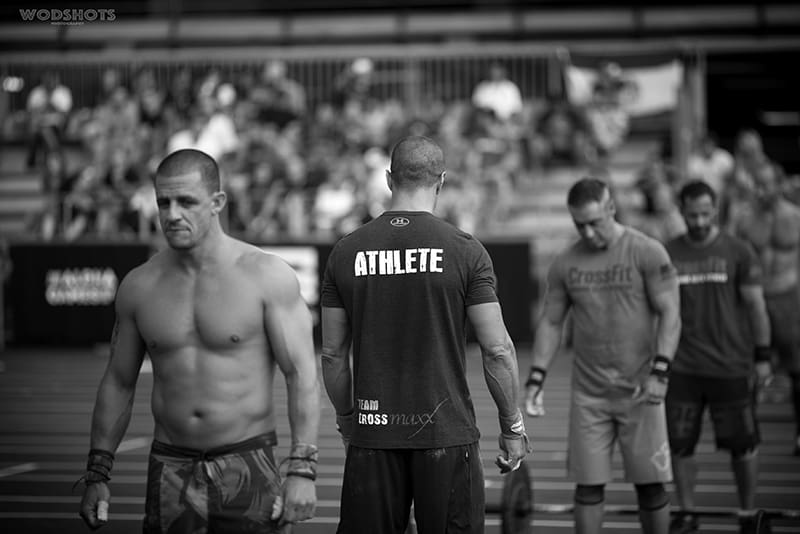
Pushing through discomfort is almost a badge of honor in hybrid training. Whether you are grinding through wall balls in HYROX, chasing a personal best in a marathon, or powering through a heavy CrossFit conditioning workout, the mindset is often simple: do not quit. Pain is often seen as proof that you are working hard enough.
But here is the truth I see in my clinic every week. The same mindset that drives athletes to greatness can also drive them straight into injury. I have treated countless competitors who thought their pain was “just soreness” — only to discover it was a stress fracture, tendon injury, or joint damage that needed weeks or months of recovery.

So, should you train through pain? The answer is not as simple as yes or no. Some pain is a normal part of athletic progress. Other pain is your body’s way of waving a bright red warning flag. Knowing the difference could save your season, protect your long-term health, and ultimately help you perform better.
In this guide, I will explain how I help athletes separate good pain from bad pain, when I tell them to stop training immediately, and how to keep moving without making things worse.
Good Pain vs Bad Pain: How to Tell the Difference
Pain is not a single category. It has qualities, patterns, and triggers. The key is learning to recognise which sensations are safe and which should never be ignored.
What Good Pain Looks Like
Good pain is usually the dull, achy soreness known as DOMS (delayed onset muscle soreness). It is the feeling you get the day after a heavy squat session or a high-volume running block. This type of discomfort is:
- Symmetrical and affects the muscles you actually trained
- Improves noticeably within 24 to 72 hours
- Does not prevent normal movement or day-to-day function
- Responds well to light activity, stretching, or recovery methods
Think of it as your body adapting to a new challenge. For example, sore quads after sled pushes in HYROX or tired shoulders after high-rep thrusters in CrossFit are part of the growth process.

What Bad Pain Looks Like
Bad pain is different. It is sharp, stabbing, persistent, or getting worse instead of better. It often affects a specific joint or tendon rather than the whole muscle group. Warning signs include:
- Pain during the workout that does not fade once you stop
- Discomfort that limits range of motion or changes technique
- Pain that wakes you up at night or feels worse in the morning
- Swelling, redness, or bruising around the area
A classic example is the burning in your calves after running sprints (good pain) versus a stabbing pain in the Achilles tendon that flares up every time you push off the ground (bad pain).

When Pain Means Stop Training
As a physiotherapist, there are times when I immediately tell an athlete to stop. These are not situations for “wait and see.” They are red flags that demand a pause and a proper assessment.
Signs You Should Not Ignore
- Pain after a specific incident — a twist, awkward landing, fall, or sudden “pop.”
- Visible changes — swelling, redness, bruising, or a change in joint alignment.
- Joint instability or locking — particularly in knees, shoulders, or ankles.
- Radiating symptoms — pain shooting down the arm or leg, numbness, tingling, or weakness.
- Serious systemic signs — chest pain, abdominal pain during exercise, or sudden loss of balance, bladder, or bowel control.
Real Examples from Athletes
- A CrossFit athlete who felt a “pop” in their shoulder during a snatch and could no longer lift overhead. That is not soreness. That is likely structural injury.
- A runner who thought shin pain was normal training stress but turned out to have a stress fracture. Continuing would have made it worse.
- A HYROX competitor who ignored knee swelling after sled pushes, only to later discover meniscus damage.
If you recognise any of these, the safest move is to stop training and see a physiotherapist or sports doctor within 48 hours. Quick action often means a shorter recovery time. Ignoring the warning signs often leads to long layoffs.
Can You Keep Training Around Pain?
Not every pain requires stopping completely. In many cases, athletes can continue training with intelligent modifications. This is where individual assessment makes all the difference.
Questions I Ask About the Pain
- What is the quality — is it sharp, dull, throbbing, or burning?
- When does it appear — all the time, or only during certain movements?
- How intense is it — mild discomfort or severe pain?
- How did it start — after a single incident or gradually over time?
Smart Adjustments That Work
If the pain does not indicate serious injury, I often help athletes train around it by:
- Reducing load and volume — fewer reps, lighter weights, shorter runs.
- Changing exercise selection — replacing box jumps with step-ups, or running with cycling.
- Training unaffected areas — shifting the focus to upper body when the lower body is sore.
- Adding mobility and activation — targeted work that reduces stress on the painful area.
- Building in recovery — foam rolling, swimming, sleep, and improved nutrition.
This allows athletes to keep moving forward without making the problem worse. In fact, smart adaptations often help athletes return stronger because they work on weaknesses and recovery while healing.
Why Prevention Is Your Best Training Partner
The athletes who stay injury-free longest are not the ones who push hardest at all costs. They are the ones who treat prevention as part of their training plan.
Top Prevention Habits I Teach
- Strengthen stabilising muscles — core, hips, and shoulders protect joints from overload.
- Maintain mobility — work through full ranges of motion in warm ups and cool downs.
- Progress gradually — follow the ten percent rule when increasing mileage, volume, or weight.
- Deload strategically — schedule recovery weeks to allow tissues to adapt.
- Prioritise rest and recovery — quality sleep, balanced nutrition, and hydration all matter.
Why It Matters in Competition
In sports like HYROX or CrossFit, training volume is high and varied. Without prevention habits, injuries almost always show up during peak season, just when athletes want to be at their best. By treating recovery, mobility, and stability as essential, not optional, you give yourself the best chance of performing consistently over years, not just one season.
The Bottom Line
Not all pain is dangerous, but ignoring the wrong kind can cost you far more than a missed workout. Training through good pain is part of the process. Training through bad pain is a recipe for setbacks.
If you are unsure, do not gamble with your body. Get assessed, adapt your training, and listen to the signals your body is sending you. Your next personal best will feel even better when you know you have earned it without sacrificing long-term performance.
In hybrid sports, toughness is measured not just by how hard you can push, but by how smart you can train.
About the Author
Nahor Garcia is the Founder of Seventeen Physiotherapy and a Consultant Physiotherapist based in London. Originally from Barcelona, he holds a Degree in Physiotherapy from the International University of Catalunya and a Master’s in Sports Physiotherapy from Universidad Europea de Madrid.
With over a decade of experience across private practice, the NHS, and elite fitness settings including Nuffield Health, Harley Street clinics, and Equinox, Nahor specialises in TECAR therapy, shockwave treatment, and sports rehabilitation. He has helped athletes in HYROX, CrossFit, and endurance sports recover from injury, prevent setbacks, and achieve long-term performance goals.