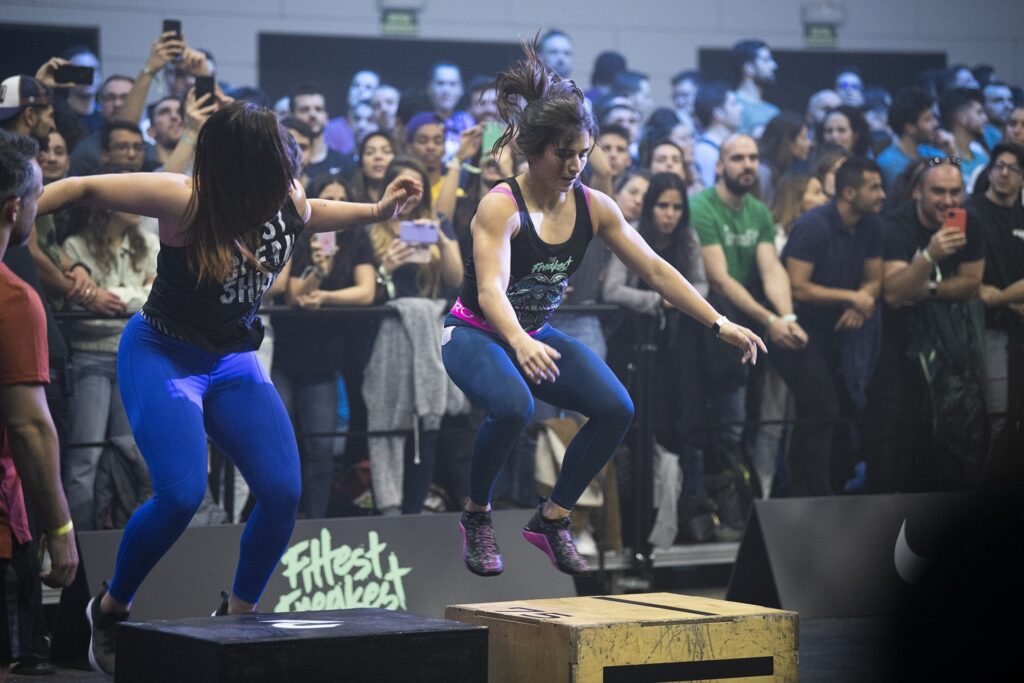
Strong legs are foundational to overall fitness, enhancing athletic performance, improving balance, and supporting everyday activities. Whether you’re an athlete, bodybuilder, or someone looking to improve general fitness, focusing on leg strength is crucial. This article delves into the three best ways to build stronger legs, backed by scientific studies and expert recommendations.
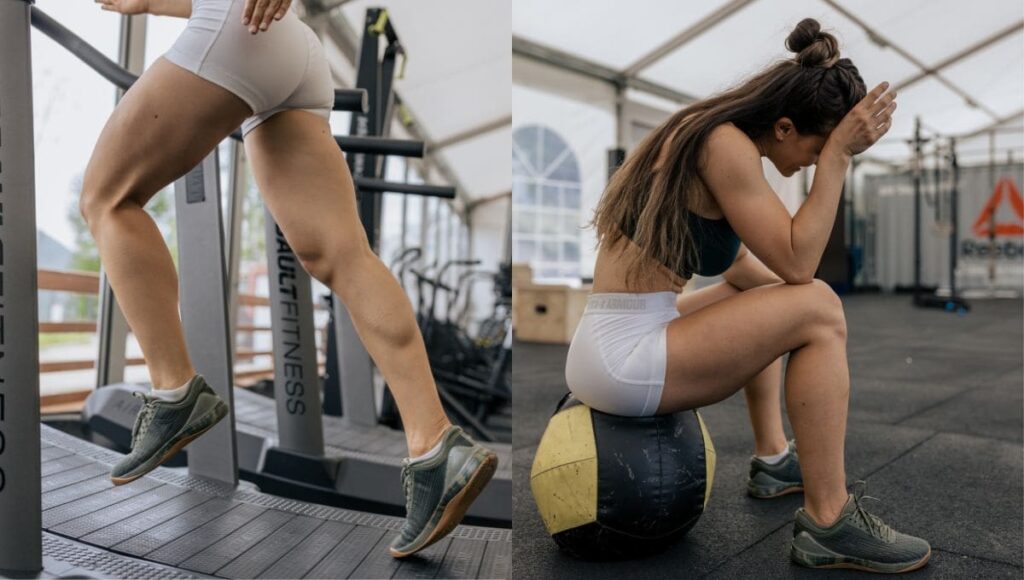
The Importance of Strong Legs
Strong legs are not just about aesthetics; they play a pivotal role in overall health and fitness. Robust leg muscles support your body’s weight, improve mobility, and reduce the risk of injuries. According to a study by Mikesky et al. (1994), strong leg muscles are critical for maintaining balance and preventing falls, particularly in older adults.
Benefits of Strong Legs
- Enhanced Athletic Performance: Strong legs are essential for running, jumping, and other athletic activities. They provide the power and stability needed for high performance.
- Improved Balance and Stability: Leg strength contributes significantly to balance and stability, reducing the likelihood of falls and injuries.
- Increased Metabolic Rate: Larger muscles, like those in the legs, require more energy, thus boosting your metabolic rate and aiding in weight management (Hunter et al., 2008).
- Support for Daily Activities: From walking to lifting heavy objects, strong legs make everyday tasks easier and safer.
1. Compound Exercises: The Foundation of Leg Strength
Compound exercises are multi-joint movements that engage several muscle groups simultaneously. These exercises are incredibly effective for building leg strength as they mimic real-world activities and maximize muscle recruitment.
Squats: The King of Leg Exercises
Squats are often referred to as the king of leg exercises due to their effectiveness in building overall leg strength.
Benefits of Squats
- Muscle Engagement: Squats target the quadriceps, hamstrings, glutes, and calves, ensuring comprehensive leg development (Escamilla et al., 2001).
- Functional Strength: Squats improve functional strength, aiding in daily movements and athletic activities.
- Hormonal Response: Performing squats stimulates the release of growth hormone and testosterone, which are vital for muscle growth (Kraemer et al., 1990).
How to Perform a Squat
- Starting Position: Stand with feet shoulder-width apart, toes pointing slightly outward.
- Descent: Lower your body by bending your knees and hips, keeping your chest up and back straight. Descend until your thighs are parallel to the ground.
- Ascent: Push through your heels to return to the starting position.
Deadlifts: Building Power and Strength
Deadlifts are another essential compound exercise that targets the posterior chain, including the hamstrings, glutes, and lower back.
Benefits of Deadlifts
- Full-Body Engagement: Deadlifts engage multiple muscle groups, promoting overall strength and muscle hypertrophy (Bird et al., 2005).
- Core Stability: This exercise enhances core strength and stability, which is crucial for injury prevention.
- Functional Movement: Deadlifts improve the strength needed for lifting and carrying objects, enhancing functional fitness.
How to Perform a Deadlift
- Starting Position: Stand with feet hip-width apart, with a barbell over your mid-foot. Bend at the hips and knees to grasp the bar with an overhand grip.
- Lift: Keeping your back straight, lift the bar by extending your hips and knees until you stand upright.
- Lower: Reverse the movement to lower the bar back to the ground.
Lunges: Versatility and Balance
Lunges are a versatile leg exercise that can be performed in various directions, targeting different muscle groups and enhancing balance and coordination.
Benefits of Lunges
- Unilateral Strength: Lunges address muscle imbalances by working each leg individually (Pincivero et al., 2004).
- Core Activation: Lunges engage the core muscles to maintain balance and stability.
- Variety: Different lunge variations (forward, reverse, side) target different muscles, ensuring comprehensive leg development.
How to Perform a Lunge
- Starting Position: Stand with feet hip-width apart.
- Step Forward: Take a step forward with one leg, lowering your hips until both knees are bent at about 90 degrees.
- Push Back: Push through the heel of your front foot to return to the starting position.
2. Progressive Overload: The Key to Continuous Improvement
Progressive overload is a fundamental principle of strength training that involves gradually increasing the weight, frequency, or number of repetitions in your workout. This principle ensures continuous muscle adaptation and growth.
Implementing Progressive Overload
Gradual Increase in Weight
Increasing the weight lifted in exercises like squats, deadlifts, and lunges challenges the muscles and promotes growth. A study by Kraemer et al. (2002) found that incremental increases in weight are essential for maximizing strength gains.
Volume and Frequency
Increasing the number of sets and repetitions, as well as the frequency of leg workouts, can also enhance strength. Wernbom et al. (2007) found that higher training volumes are associated with greater hypertrophy and strength gains.
Variation in Exercises
Incorporating different exercises and variations targets muscles differently and prevents plateaus. For example, alternating between back squats and front squats can challenge the muscles in new ways.
3. Recovery and Nutrition: Supporting Muscle Growth
Recovery and nutrition are crucial components of any strength training program. Without adequate recovery and proper nutrition, muscle growth and strength gains can be significantly hindered.
Importance of Recovery
Rest Days
Incorporating rest days into your workout routine allows muscles to repair and grow. According to a study by Schoenfeld (2010), rest days are essential for muscle recovery and preventing overtraining.
Sleep
Quality sleep is vital for muscle recovery and growth. Research by Dattilo et al. (2011) indicates that sleep deprivation can impair muscle recovery and growth hormone release.
Active Recovery

Engaging in low-intensity activities like walking or stretching on rest days can enhance blood flow to muscles and aid in recovery.
Role of Nutrition
Protein Intake
Protein is the building block of muscles. Adequate protein intake is crucial for muscle repair and growth. Phillips and Van Loon (2011) recommend consuming 1.6 to 2.2 grams of protein per kilogram of body weight per day for optimal muscle growth.
Carbohydrates and Fats
Carbohydrates provide the energy needed for intense workouts, while fats are essential for hormone production. A balanced diet that includes all macronutrients supports overall muscle growth and recovery.
Hydration
Staying hydrated is essential for optimal muscle function and recovery. Dehydration can impair muscle performance and recovery (Judelson et al., 2007).
Practical Application: Creating an Effective Leg Workout Routine
Sample Leg Workout Routine
- Warm-Up: 5-10 minutes of light cardio (e.g., jogging, cycling) and dynamic stretches (e.g., leg swings, lunges).
- Squats: 4 sets of 8-12 reps
- Deadlifts: 4 sets of 6-10 reps
- Lunges: 3 sets of 12-15 reps per leg
- Leg Press: 3 sets of 10-15 reps
- Calf Raises: 3 sets of 15-20 reps
- Cool Down: 5-10 minutes of static stretching (e.g., hamstring stretch, quad stretch)
Incorporating Progressive Overload
- Week 1-2: Perform the workout with moderate weights.
- Week 3-4: Increase the weight by 5-10%.
- Week 5-6: Add an extra set to each exercise.
- Week 7-8: Incorporate exercise variations (e.g., front squats, Romanian deadlifts).
Ensuring Adequate Recovery
- Rest Days: Schedule at least two rest days per week.
- Sleep: Aim for 7-9 hours of quality sleep per night.
- Nutrition: Consume a balanced diet with adequate protein, carbohydrates, and fats.
Conclusion
Building stronger legs requires a comprehensive approach that includes compound exercises, progressive overload, and proper recovery and nutrition. By incorporating squats, deadlifts, and lunges into your routine, progressively increasing the intensity of your workouts, and prioritizing recovery and nutrition, you can achieve significant gains in leg strength. This holistic approach not only enhances your leg muscles but also improves overall fitness and athletic performance.
Key Takeaways
| Key Points | Summary |
|---|---|
| Compound Exercises | Squats, deadlifts, and lunges are essential for comprehensive leg development. |
| Progressive Overload | Gradually increasing weight, volume, and exercise variation promotes continuous muscle growth. |
| Recovery and Nutrition | Adequate rest, quality sleep, and balanced nutrition are crucial for muscle repair and growth. |
| Sample Workout Routine | A structured workout routine incorporating compound exercises and progressive overload. |
Bibliography
Bird, S.P., Tarpenning, K.M. and Marino, F.E., 2005. Designing resistance training programmes to enhance muscular fitness: A review of the acute programme variables. Sports Medicine, 35(10), pp.841-851.
Dattilo, M., Antunes, H.K.M., Medeiros, A., de Mello, M.T., Tufik, S. and de Souza, J.A.P., 2011. Sleep and muscle recovery: Endocrinological and molecular basis for a new and promising hypothesis. Medical Hypotheses, 77(2), pp.220-222.
Escamilla, R.F., Fleisig, G.S., Lowry, T.M., Barrentine, S.W. and Andrews, J.R., 2001. A three-dimensional biomechanical analysis of the squat during varying stance widths. Medicine & Science in Sports & Exercise, 33(6), pp.984-998.
Hunter, G.R., Byrne, N.M., Sirikul, B., Fernandez, J.R., Zuckerman, P.A., Darnell, B.E. and Gower, B.A., 2008. Resistance training conserves fat-free mass and resting energy expenditure following weight loss. Obesity, 16(5), pp.1045-1051.
Judelson, D.A., Maresh, C.M., Anderson, J.M., Armstrong, L.E., Casa, D.J., Kraemer, W.J. and Volek, J.S., 2007. Hydration and muscular performance: Does fluid balance affect strength, power and high-intensity endurance?. Sports Medicine, 37(10), pp.907-921.
Kraemer, W.J., Fry, A.C., Warren, B.J., Stone, M.H., Fleck, S.J., Kearney, J.T., Conroy, B. and Maresh, C.M., 1990. Acute hormonal responses in elite junior weightlifters. International Journal of Sports Medicine, 11(02), pp.113-118.
Kraemer, W.J., Ratamess, N.A., Fry, A.C., Triplett-McBride, T., Koziris, L.P., Bauer, J.A., Lynch, J.M. and Fleck, S.J., 2002. Influence of resistance training volume and periodization on physiological and performance adaptations in collegiate women tennis players. The American Journal of Sports Medicine, 28(5), pp.626-633.
Mikesky, A.E., Meyer, A. and Thompson, K.L., 1994. Relationship between quadriceps strength and rate of loading during gait in the elderly. Gait & Posture, 2(3), pp.187-193.
Phillips, S.M. and Van Loon, L.J., 2011. Dietary protein for athletes: From requirements to optimum adaptation. Journal of Sports Sciences, 29(sup1), pp.S29-S38.
Pincivero, D.M., Lephart, S.M. and Henry, T.J., 1994. Learning effects and reliability of the Biodex Stability System. Journal of Athletic Training, 32(2), pp.138-143.
Schoenfeld, B.J., 2010. The mechanisms of muscle hypertrophy and their application to resistance training. Journal of Strength and Conditioning Research, 24(10), pp.2857-2872.
Wernbom, M., Augustsson, J. and Thomeé, R., 2007. The influence of frequency, intensity, volume and mode of strength training on whole muscle cross-sectional area in humans. Sports Medicine, 37(3), pp.225-264.