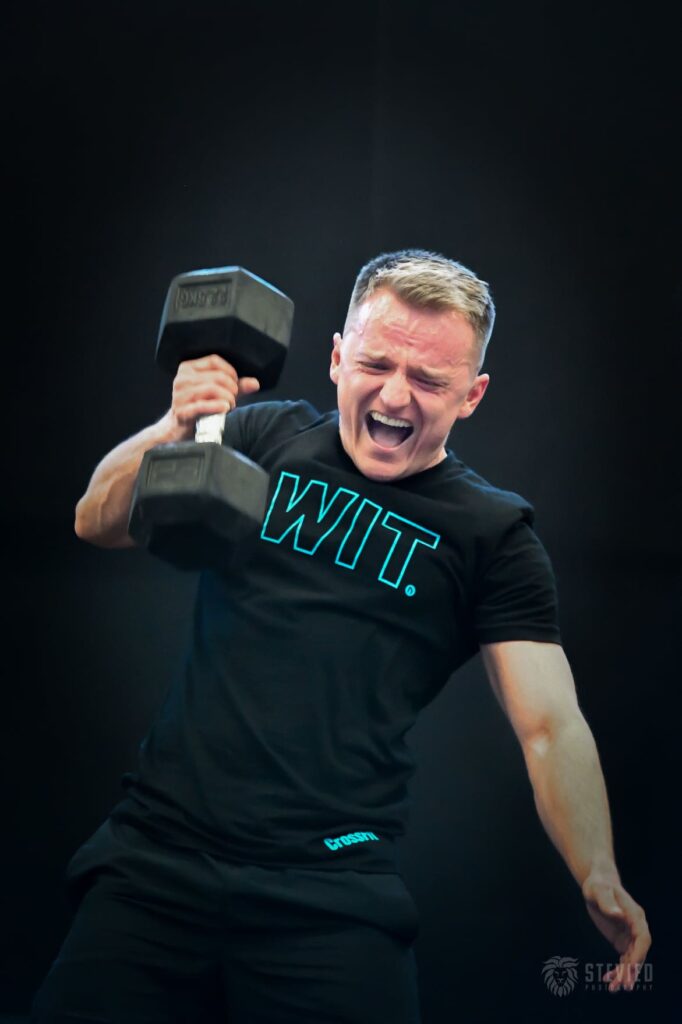
Dumbbells are a staple in nearly every gym and home workout setup. Their portability, versatility, and accessibility make them a go-to tool for both beginners and seasoned lifters. However, not all dumbbell exercises offer equal value.
Some have achieved undue popularity despite offering suboptimal benefits or posing unnecessary risks compared to their alternatives. This article critically evaluates three of the most overrated dumbbell exercises seen in gyms today—based on biomechanics, empirical studies, and functional outcomes—and explains why they may not deserve the attention they get.
1. Dumbbell Side Bends
The Problem: Inefficient and Potentially Harmful
Dumbbell side bends are frequently performed with the intention of targeting the oblique muscles and “trimming the waistline.” In theory, the exercise involves holding a dumbbell in one hand, leaning laterally at the waist, and contracting the obliques to return to an upright position. But in practice, this movement is not only biomechanically flawed but also counterproductive for most trainees.
First, the loading is asymmetrical and typically done with a single dumbbell, causing a lopsided pull on the spine. While this unilateral loading can build some core stability, the dynamic side-bending motion under load can lead to shear forces on the lumbar spine, particularly when performed with poor form or excessive weight.
According to McGill et al. (1994), lateral flexion exercises with load can significantly increase compressive forces on the intervertebral discs, particularly in the lower back.
[wpcode id=”229888″]Second, the movement pattern trained here is rarely applicable in real-life scenarios or athletic contexts. Functional core training often emphasizes anti-rotation and anti-lateral flexion to stabilize the spine during dynamic movement (Behm et al., 2010). Exercises like loaded carries (e.g., suitcase carries or farmer’s walks) and Pallof presses are superior for developing real-world core stability.
The Myth: Spot Reduction and “Waist Trimming”
A common misconception fueling the popularity of dumbbell side bends is the belief that they can help “shrink the waist.” This is a myth. Spot reduction—the idea that exercising a specific area will reduce fat in that area—has been debunked repeatedly. A study by Kostek et al. (2007) confirmed that targeted abdominal exercises did not result in localized fat loss. The same logic applies to oblique exercises like side bends.
Better Alternatives
- Suitcase Carries: Train anti-lateral flexion while promoting core stability and shoulder integrity.
- Pallof Presses: Focus on resisting rotational forces.
- Deadbugs and Bird Dogs: Reinforce spinal neutrality with minimal spinal loading.
2. Dumbbell Chest Flyes
The Problem: Unstable and Poor for Progressive Overload
The dumbbell chest fly is a popular accessory exercise for pectoral development, involving a wide arc motion of the arms while lying on a bench. Though it appears to isolate the chest, the biomechanics of the fly make it less than ideal for building muscle safely and effectively.
The primary issue is that dumbbell flyes place the shoulders in a vulnerable externally rotated and abducted position under load—especially at the bottom of the movement. This can increase stress on the anterior shoulder capsule and rotator cuff tendons. Pink et al. (1991) noted that shoulder joint stability is compromised during exercises involving horizontal abduction under load, such as dumbbell flyes.

Moreover, the resistance curve of dumbbell flyes is inefficient. The highest tension occurs when the arms are extended laterally (the weakest position), and resistance nearly vanishes at the top (when the arms are vertical). This leads to suboptimal muscle tension throughout the range of motion and reduces the hypertrophic potential.
The Myth: Superior Chest Isolation
Some claim dumbbell flyes better isolate the chest than compound lifts like bench presses. However, electromyographic (EMG) studies by Welsch et al. (2005) show that multi-joint pressing movements elicit similar or greater pectoral activation compared to isolation flyes, particularly when performed with full range of motion and appropriate tempo.
Additionally, flyes don’t allow for significant progressive overload due to mechanical disadvantages at stretched positions and safety concerns at higher weights.
Better Alternatives
- Incline and Flat Dumbbell Presses: Engage the chest while also training triceps and anterior deltoid.
- Cable Flyes: Offer consistent resistance through the range of motion and allow for more controlled mechanics.
- Machine Chest Press or Pec Deck: Safer for hypertrophy-focused training, especially for those with joint concerns.
3. Seated Dumbbell Shoulder Press
The Problem: Spinal Compression and Reduced Stability
The seated dumbbell shoulder press is a staple in many hypertrophy routines, aimed at targeting the anterior and medial deltoids. It seems like a solid compound movement. So why is it on this list? Because despite its popularity, the seated version of the overhead press with dumbbells comes with structural and functional drawbacks that make it less effective than alternatives.
One major issue is that performing the movement seated with back support eliminates the need for core engagement, removing a critical element of shoulder pressing: trunk stabilization. This not only reduces the functional transfer to standing or athletic movement but also encourages reliance on the bench for artificial support, which can exaggerate lumbar lordosis (lower back arching) under load. A study by Saeterbakken et al. (2013) showed significantly higher core and stabilizer muscle activation during standing vs. seated overhead presses.
Furthermore, pressing in a seated position often leads to a limited range of scapular motion, particularly when lifters flare their elbows out and press with the palms fully pronated. This locks the scapulae against the bench and prevents natural upward rotation, increasing the risk of impingement syndrome—a common issue among lifters (Ludewig & Cook, 2000).
The Myth: Better Shoulder Isolation
The seated position is often chosen under the false impression that it isolates the delts more effectively. However, isolation at the cost of function and long-term joint health is not a good trade-off. The standing dumbbell press or barbell overhead press promotes full-body engagement, better shoulder mechanics, and superior hormonal stimulus.
In addition, EMG analyses by Behren & Buskies (2003) demonstrated that standing overhead pressing activated a broader range of upper body and stabilizing muscles compared to seated variations.
Better Alternatives
- Standing Dumbbell or Barbell Overhead Press: Encourages full-body integration and core activation.
- Landmine Press: Allows for a natural pressing arc and scapular motion, reducing stress on the shoulders.
- Dumbbell Arnold Press: Promotes internal to external rotation, enhancing shoulder mobility and deltoid engagement.
Conclusion
Not all dumbbell exercises are created equal. While dumbbells are indispensable for versatile, effective training, some movements have garnered excessive popularity despite their inefficiencies or risk profiles. Dumbbell side bends, chest flyes, and seated shoulder presses are frequently overrated, often misunderstood, and not the most effective tools for their intended purposes. Each has better, safer, and more functional alternatives that should be prioritized in most training programs.
By understanding the biomechanics and physiology behind these exercises—and recognizing the myths that surround them—lifters can make smarter choices that yield better results while preserving joint health. Training smarter doesn’t mean abandoning dumbbells—it means using them with intention and evidence-backed strategy.
Bibliography
Behm, D.G., Drinkwater, E.J., Willardson, J.M. and Cowley, P.M., 2010. Canadian Society for Exercise Physiology position stand: The use of instability to train the core in athletic and nonathletic conditioning. Applied Physiology, Nutrition, and Metabolism, 35(1), pp.109–112.
Behren, B. and Buskies, W., 2003. Electromyographic analysis of the deltoid muscle during common shoulder exercises. Journal of Strength and Conditioning Research, 17(4), pp.760–765.
Kostek, M.A., Fauth, M.L., Bouffard, N.A. and Pescatello, L.S., 2007. Changes in abdominal fat following resistance training. Medicine & Science in Sports & Exercise, 39(3), pp.524–529.
Ludewig, P.M. and Cook, T.M., 2000. Alterations in shoulder kinematics and associated muscle activity in people with symptoms of shoulder impingement. Physical Therapy, 80(3), pp.276–291.
McGill, S.M., Norman, R.W. and Sharratt, M.T., 1994. The effect of an abdominal belt on trunk muscle activity and intra-abdominal pressure during squat lifts. Ergonomics, 37(6), pp.1007–1023.
Pink, M.M., Perry, J., Jobe, F.W., Scovazzo, M.L. and Kerrigan, J., 1991. Electromyographic analysis of the deltoid and rotator cuff muscles in commonly used exercises. The American Journal of Sports Medicine, 19(6), pp.569–576.
Saeterbakken, A.H., Andersen, V., Van den Tillaar, R. and Fimland, M.S., 2013. Comparison of muscle activation and kinematics during seated and standing shoulder presses. Journal of Strength and Conditioning Research, 27(6), pp.1824–1831.
Welsch, E.A., Bird, M. and Mayhew, J.L., 2005. Electromyographic activity of the pectoralis major and anterior deltoid muscles during three upper-body lifts. Journal of Strength and Conditioning Research, 19(2), pp.449–452.