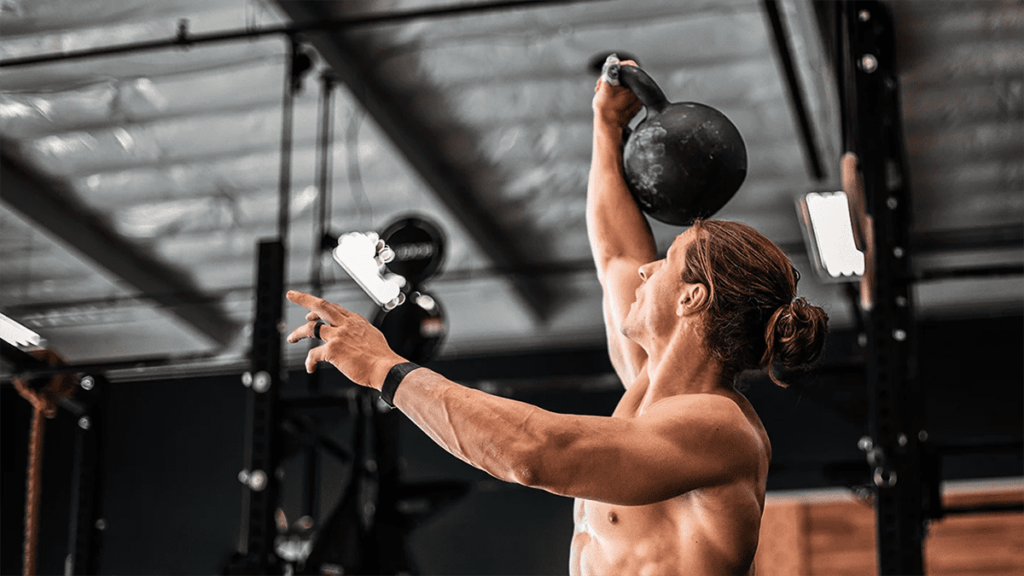
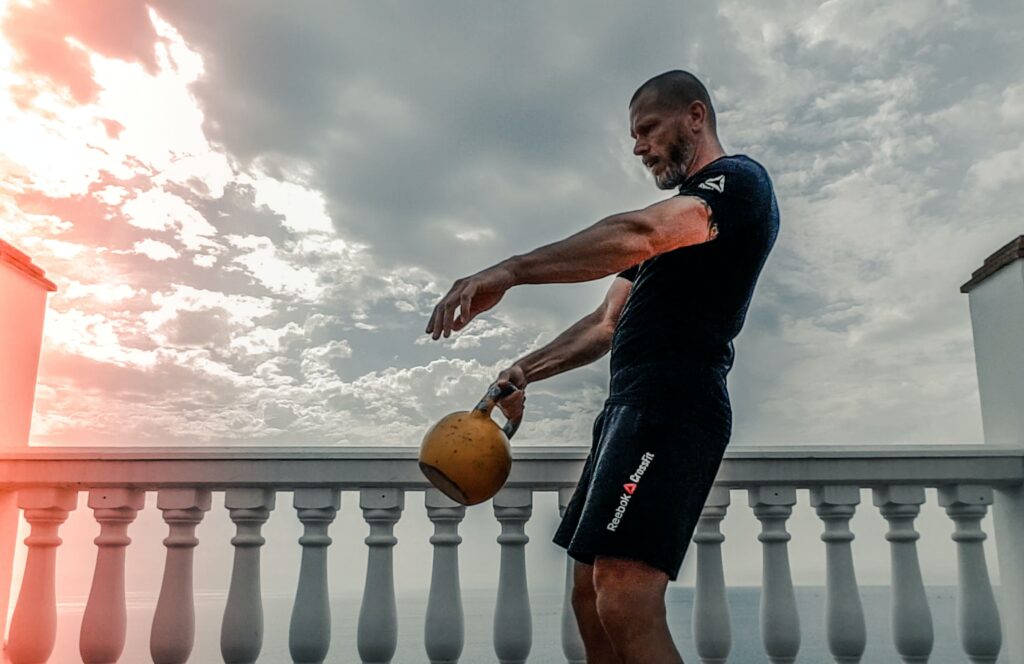
Kettlebell pressing is an art that demands precision, strength, and coordination. While direct pressing practice is critical, well-selected assistance exercises can significantly enhance your performance. In this article, we will examine the three best assistance exercises to boost your kettlebell press, supported by scientific research.
Each movement has been chosen for its direct transfer to the strength, stability, and motor control required for a powerful kettlebell press.
Why Assistance Exercises Matter for the Kettlebell Press
The kettlebell press is not purely a function of upper-body strength. It requires stability through the trunk, mobility in the shoulders, and a seamless transfer of force from the ground up. Assistance exercises target the specific weak links that may be limiting your press performance. By addressing these limiting factors, you can unlock faster and more sustainable gains.
Research by Schoenfeld (2010) underscores that hypertrophy and strength improvements are not solely dependent on the main movement. Accessory exercises can provide novel stimuli to muscles, strengthen synergistic groups, and correct imbalances that would otherwise go unaddressed.
1. Bottom-Up Kettlebell Press
Why It Works
The bottom-up kettlebell press is a remarkable tool for improving shoulder stability, grip strength, and neuromuscular control. Holding the kettlebell upside down forces the shoulder stabilizers to engage more intensely than during a traditional press.
A study by Lehman et al. (2005) demonstrated that exercises requiring enhanced stabilization, such as bottom-up pressing, increase the activation of the rotator cuff muscles and other stabilizers.
Execution Tips
Hold the kettlebell upside down with the bell pointing upward. Keep your wrist straight and your elbow slightly tucked. Slowly press the kettlebell overhead, maintaining control throughout the movement. If you lose balance or the kettlebell starts to wobble, lower the weight and focus on control before progressing.
Programming
Incorporate the bottom-up press for 3–4 sets of 6–8 reps per arm after your main kettlebell pressing work. Focus on lighter weights and impeccable form rather than chasing maximal loads.
2. Half-Kneeling Single-Arm Overhead Press
Why It Works
The half-kneeling single-arm overhead press is a potent assistance exercise because it targets core stability, thoracic mobility, and unilateral shoulder strength—all critical elements for a strong kettlebell press.
Research by Behm and Sale (1993) indicated that exercises performed in less stable positions, like the half-kneeling stance, promote greater activation of core musculature and enhance joint stabilization. Furthermore, studies show that unilateral loading improves side-to-side balance and exposes asymmetries (McCurdy and Langford, 2005).
Execution Tips
Assume a half-kneeling position with your front knee at 90 degrees and your back knee resting on the ground. Hold the kettlebell in the rack position on the side opposite the forward leg. Engage your core and glutes to maintain an upright torso. Press the kettlebell overhead smoothly, without leaning or shifting.
Programming
Use 3 sets of 8–10 reps per side. Prioritize control, core engagement, and maintaining a tall posture throughout the press.
3. Turkish Get-Up
Why It Works
The Turkish Get-Up (TGU) is a comprehensive movement that reinforces shoulder stability, thoracic mobility, and total-body coordination. Each phase of the get-up demands strength and precision, closely mimicking the tension and body control necessary for heavy kettlebell pressing.
A study by Marshall and Murphy (2010) revealed that complex, multi-phase exercises like the TGU significantly enhance proprioception and functional stability—both of which are crucial for maximizing pressing strength.
Additionally, the TGU teaches the lifter how to create maximal tension through the body, a fundamental skill for heavy overhead lifting (McGill, 2007).
Execution Tips
Start lying on your back with the kettlebell locked out in one hand. Bend the knee on the same side. Push through the foot, roll to your elbow, then your hand. Bridge your hips high, sweep the opposite leg through to a kneeling position, and finally stand up, keeping the kettlebell overhead throughout. Reverse the steps to return to the ground.
Maintain eye contact with the kettlebell throughout the ascent and descent to ensure alignment and stability.
Programming
Perform 2–3 sets of 2–3 full repetitions per side. Treat each rep as a skill practice rather than a conditioning drill.
Conclusion
Assistance exercises are not mere “add-ons”; they are essential components of a well-rounded strength program. The bottom-up kettlebell press, half-kneeling single-arm overhead press, and Turkish get-up specifically address the demands of the kettlebell press by enhancing stability, control, and strength. Incorporating these exercises into your training routine will directly translate to a stronger, more efficient kettlebell press.
Consistency and attention to technical detail are paramount. Stick to moderate volumes, focus on high-quality repetitions, and be patient. Strength built with this approach is not only greater but also more resilient over time.
Bibliography
Behm, D.G. and Sale, D.G., 1993. Intended rather than actual movement velocity determines velocity-specific training response. Journal of Applied Physiology, 74(1), pp.359-368.
Lehman, G.J., 2005. Resistance training for performance and injury prevention in sport: current findings and implications for practice. Journal of Athletic Training, 40(1), pp.90-93.
Marshall, P.W.M. and Murphy, B.A., 2010. Core stability exercises on and off a Swiss ball. Archives of Physical Medicine and Rehabilitation, 86(2), pp.242-249.
McCurdy, K.W. and Langford, G.A., 2005. Comparison of unilateral squat strength between the dominant and non-dominant leg in men and women. Journal of Sports Science and Medicine, 4(2), pp.153-159.
McGill, S.M., 2007. Low back disorders: evidence-based prevention and rehabilitation. 2nd ed. Champaign, IL: Human Kinetics.
Schoenfeld, B.J., 2010. The mechanisms of muscle hypertrophy and their application to resistance training. Journal of Strength and Conditioning Research, 24(10), pp.2857-2872.
Key Takeaways Table
| Key Point | Summary |
|---|---|
| Bottom-Up Kettlebell Press | Enhances shoulder stability, grip strength, and neuromuscular control. Focus on light loads and strict technique. |
| Half-Kneeling Single-Arm Overhead Press | Develops core stability, shoulder strength, and balance. Emphasizes correct posture and alignment. |
| Turkish Get-Up | Builds total-body coordination, shoulder stability, and mobility. Requires high tension and focus through complex movement phases. |
| Assistance Exercises | Essential for fixing weak links and improving performance beyond the main movement. |
| Programming | Use moderate volumes with focus on quality, not quantity, for sustainable strength gains. |