The core is more than just visible abs. It is a complex system of muscles that stabilizes the spine, transfers force between the upper and lower body, protects against injury, and allows efficient movement in sport and daily life. Research consistently shows that a strong, well-coordinated core improves performance, reduces injury risk, and enhances overall functional strength.
This article breaks down the best science-backed core exercises for building functional muscle. You will learn what “functional” really means, how the core works anatomically, why certain exercises outperform others, and how to train the core effectively without wasting time on outdated methods.
What Is Functional Core Strength?
Functional core strength refers to the ability of the trunk muscles to stabilize the spine and pelvis while producing or resisting force during real-world movements. Unlike aesthetic-focused training, functional core training emphasizes control, coordination, endurance, and force transfer rather than isolated flexion of the spine.
Studies show that the primary role of the core during athletic and daily tasks is stabilization, not movement. The trunk muscles often work isometrically or eccentrically to resist motion rather than create it, especially during lifting, running, jumping, and changing direction.

Research using electromyography has demonstrated that functional tasks activate deep and superficial core muscles together, rather than in isolation. This is why exercises that challenge stability under load are more effective than high-repetition crunches for real-world strength.
Core Anatomy: The Muscles That Matter
The Deep Stabilizers
The deep core muscles include the transversus abdominis, multifidus, diaphragm, and pelvic floor. Together, they create intra-abdominal pressure, which stiffens the spine and improves load tolerance.
The transversus abdominis wraps around the abdomen like a corset and is activated prior to limb movement in healthy individuals. Delayed or weak activation has been linked to low back pain. The multifidus muscles stabilize individual vertebrae and play a critical role in spinal control.
Research shows that improving coordination and endurance of these muscles enhances spinal stability and reduces injury risk, especially in athletes and physically active adults.
The Superficial Core Muscles
The superficial core muscles include the rectus abdominis, internal and external obliques, and erector spinae. These muscles generate torque, resist rotation, and transfer force between the hips and shoulders.
While often associated with visible abs, these muscles are heavily involved in functional tasks such as lifting, throwing, sprinting, and carrying loads. Studies indicate that strong obliques and erector spinae are essential for rotational power and spinal stiffness under load.
The Core as a Force Transfer System
The core does not work in isolation. It connects the upper and lower body through fascial lines and muscular chains. Efficient movement depends on the core’s ability to transmit force without energy leaks.
Biomechanical research shows that force generated by the hips is reduced when trunk stability is compromised. This means weak or poorly trained core muscles can limit strength output in the legs and arms, even if those muscles are strong.
Why Traditional Ab Exercises Fall Short
Traditional ab exercises like sit-ups and crunches focus on repeated spinal flexion. While they activate the rectus abdominis, they do little to improve spinal stability during functional tasks.
Multiple studies have shown that excessive spinal flexion under load increases compressive and shear forces on the lumbar spine. Repeated flexion may increase injury risk, particularly for individuals with a history of back pain.
Additionally, crunch-based training does not reflect how the core functions during sport or daily activities. The spine is rarely flexed repeatedly under load in real life. Instead, it must remain stable while the limbs move.
For these reasons, modern strength and conditioning emphasizes anti-movement exercises, loaded carries, and compound lifts that challenge the core in a functional manner.
Principles of Effective Core Training
Train the Core to Resist Motion
Functional core strength is largely about resisting unwanted movement. This includes resisting extension, rotation, lateral flexion, and excessive flexion.
Research comparing different core exercises shows that anti-movement exercises produce high levels of muscle activation while minimizing spinal motion. This leads to strength gains with lower injury risk.
Use Progressive Overload
Like any muscle group, the core adapts to progressive overload. This can be achieved by increasing load, lever length, time under tension, or instability.
Studies show that adding external load to core exercises significantly increases activation of both deep and superficial muscles compared to bodyweight-only variations.
Integrate Breathing and Bracing
Proper breathing enhances core stability. The diaphragm works with the abdominal muscles to regulate intra-abdominal pressure.
Research indicates that diaphragmatic breathing combined with abdominal bracing improves spinal stiffness and reduces injury risk during heavy lifting. Core training should reinforce this coordination rather than isolate muscles unnaturally.
The Best Core Exercises for Functional Muscle
Loaded Carries
Loaded carries are among the most effective core exercises ever studied. They require the trunk muscles to stabilize the spine while the body moves under load.
Farmer’s carries, suitcase carries, and front rack carries have all been shown to produce high levels of core activation. Research demonstrates that unilateral carries, such as suitcase carries, significantly increase activation of the obliques due to the anti-lateral flexion demand.
Loaded carries also improve grip strength, posture, and gait mechanics, making them highly transferable to real-world tasks.
Plank Variations
Planks train the core to resist spinal extension. Electromyography studies show that planks activate the rectus abdominis, transversus abdominis, and obliques simultaneously.
Progressions such as weighted planks, long-lever planks, and stability-based variations increase muscle activation without adding spinal motion. Side planks, in particular, have been shown to strongly activate the obliques and quadratus lumborum, which are critical for lateral stability.
Planks also promote endurance of the core muscles, which is essential for maintaining posture and technique during prolonged activity.
Dead Bug
The dead bug is a low-risk, high-reward exercise that trains coordination between the limbs and trunk.
Research shows that dead bug variations effectively activate the deep core muscles while keeping spinal load low. This makes the exercise ideal for beginners, rehabilitation, and advanced athletes alike when progressed properly.
The key is maintaining a neutral spine and controlling limb movement, reinforcing the anticipatory core activation seen in healthy movement patterns.
Pallof Press
The Pallof press trains anti-rotation strength, which is essential for athletic performance and spinal health.
Studies using cable and band resistance show high activation of the obliques during Pallof press variations. The exercise teaches the core to resist rotational forces generated by the limbs or external loads.

Progressions include kneeling, split-stance, and overhead variations, all of which increase functional demand without compromising spinal integrity.
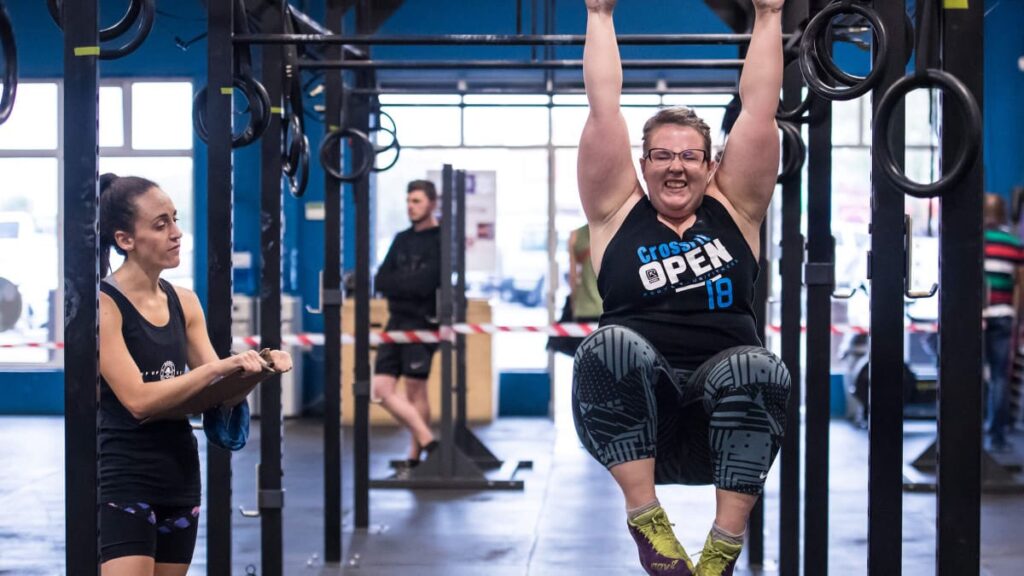
Hanging Leg Raise and Knee Raise
Unlike floor-based flexion exercises, hanging leg and knee raises challenge the core to stabilize the pelvis while the legs move freely.
Research indicates that hanging variations produce significantly greater activation of the lower rectus abdominis and hip flexors compared to supine leg raises. When performed with controlled posterior pelvic tilt, they effectively train anti-extension strength.
Grip strength and shoulder stability demands further increase the functional value of the exercise.
Ab Wheel Rollout
The ab wheel rollout is one of the most demanding anti-extension exercises available.
Electromyography studies show that rollouts produce extremely high activation of the rectus abdominis, obliques, and latissimus dorsi. The lats play a key role in linking the upper body to the pelvis, highlighting the integrated nature of the movement.
Research comparing rollouts to traditional crunches found significantly higher core activation with lower spinal compression when proper technique is used.
Front Squat
Compound lifts are often overlooked as core exercises, but research consistently shows that heavy squats and deadlifts heavily tax the trunk muscles.
The front squat, in particular, increases core demand due to the anterior load placement. Studies demonstrate greater activation of the rectus abdominis and obliques during front squats compared to back squats at similar loads.

The need to maintain an upright torso and resist spinal flexion makes the front squat a powerful functional core builder.
Deadlift Variations
Deadlifts train the core to stabilize the spine under heavy load while force is produced through the hips.
Electromyography research shows high activation of the erector spinae, obliques, and rectus abdominis during deadlifts. Unilateral variations, such as the single-leg Romanian deadlift, further increase anti-rotation demands.
Proper bracing during deadlifts has been shown to increase spinal stiffness and reduce injury risk, reinforcing the importance of core strength in compound lifts.
Rotational Medicine Ball Throws
Explosive rotational exercises develop power through the transverse plane, which is essential for many sports.
Research indicates that medicine ball rotational throws produce high levels of oblique activation and improve rotational power transfer from the hips to the upper body.
Unlike slow rotation exercises, ballistic throws allow high force output without excessive spinal loading when performed correctly.
Bird Dog
The bird dog is a deceptively effective exercise for training spinal stability.
Studies have shown that bird dog variations activate the multifidus and transversus abdominis while maintaining low spinal compression. Adding resistance or increasing lever length enhances the challenge without compromising safety.
The exercise reinforces contralateral coordination, a fundamental pattern in walking, running, and lifting.
Programming Core Training for Functional Results
Frequency and Volume
Research suggests that core muscles respond well to frequent, moderate-volume training. Training the core three to five times per week has been shown to improve strength and endurance without overuse.
Rather than long, isolated core sessions, integrating core exercises into warm-ups, strength sessions, and conditioning workouts produces better results.
Load Selection
Functional core training benefits from both low-load endurance work and high-load stability work. Studies indicate that combining isometric holds with loaded compound movements leads to greater improvements in trunk strength and performance.
Progression Strategies
Progression should prioritize increased stability demands before adding excessive volume. Increasing load, lever length, asymmetry, or movement complexity is more effective than simply adding repetitions.
Research supports that progressive instability, when applied intelligently, enhances neuromuscular control without increasing injury risk.
Core Training and Injury Prevention
Low back pain is strongly associated with poor trunk muscle endurance and coordination. Multiple systematic reviews have found that targeted core training reduces the incidence and severity of low back pain in both athletic and general populations.
Improved core stability has also been linked to reduced risk of lower limb injuries, particularly in sports involving running and cutting. This is likely due to better control of pelvic and trunk position during dynamic movements.
Importantly, exercises that emphasize neutral spine control and anti-movement patterns show the greatest protective effects.
Common Core Training Mistakes
One of the most common mistakes is excessive focus on flexion-based exercises. As discussed, this does not reflect functional demands and may increase spinal stress.
Another mistake is treating core training as an afterthought. Research shows that fatigued core muscles reduce force output and movement quality, increasing injury risk. Core training should support, not undermine, overall performance.
Finally, neglecting breathing and bracing reduces the effectiveness of even the best exercises. Studies consistently highlight the role of coordinated breathing in spinal stability.
Final Thoughts
Functional core training is not about chasing soreness or aesthetics. It is about building a resilient, coordinated system that supports movement, strength, and longevity.
The exercises outlined in this article are supported by extensive scientific research and reflect how the core actually functions in real life. When programmed intelligently, they build muscle, enhance performance, and reduce injury risk more effectively than traditional ab workouts.
A strong core is not just visible. It is felt in every lift, every stride, and every movement you perform.
References
- Akuthota, V., Nadler, S.F., 2004. Core strengthening. Archives of Physical Medicine and Rehabilitation, 85(3), pp.86–92.
- Behm, D.G., Drinkwater, E.J., Willardson, J.M., Cowley, P.M., 2010. The use of instability to train the core musculature. Applied Physiology, Nutrition, and Metabolism, 35(1), pp.91–108.
- Bergmark, A., 1989. Stability of the lumbar spine. Acta Orthopaedica Scandinavica, 60(S230), pp.1–54.
- Cholewicki, J., McGill, S.M., 1996. Mechanical stability of the in vivo lumbar spine. Journal of Biomechanics, 29(1), pp.1–7.
- Escamilla, R.F., Lewis, C., Bell, D., Bramblet, G., Daffron, J., Lambert, S., Pecson, A., Imamura, R., Paulos, L., Andrews, J.R., 2010. Core muscle activation during Swiss ball and traditional abdominal exercises. Journal of Orthopaedic and Sports Physical Therapy, 40(5), pp.265–276.
- Hibbs, A.E., Thompson, K.G., French, D., Wrigley, A., Spears, I., 2008. Optimizing performance by improving core stability and core strength. Sports Medicine, 38(12), pp.995–1008.
About the Author

Robbie Wild Hudson is the Editor-in-Chief of BOXROX. He grew up in the lake district of Northern England, on a steady diet of weightlifting, trail running and wild swimming. Him and his two brothers hold 4x open water swimming world records, including a 142km swim of the River Eden and a couple of whirlpool crossings inside the Arctic Circle.
He currently trains at Falcon 1 CrossFit and the Roger Gracie Academy in Bratislava.