Creating an effective upper body workout doesn’t require an elaborate array of equipment.
With just a set of dumbbells, you can target all the major muscle groups in your upper body. Here’s an outline for an article that focuses on the only three dumbbell exercises men need to develop a jacked and aesthetically pleasing upper body.
Strength training is an essential component of a balanced fitness regimen, especially for men looking to improve their physical appearance, enhance their strength, and boost their overall health.
Incorporating regular strength training sessions can lead to significant improvements in muscle mass, bone density, and metabolic rate. Moreover, it plays a critical role in the management of weight, reduction of injury risk, and improvement of cardiovascular health.
Dumbbells, in particular, are a highly effective tool for strength training. They offer a level of versatility and practicality that is unmatched by many other forms of equipment.
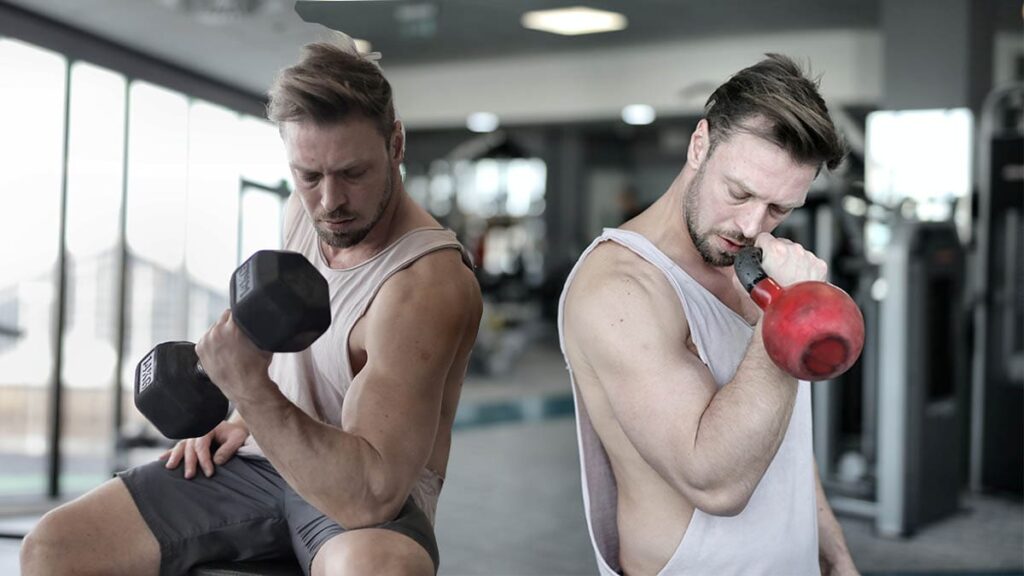
With just a pair of dumbbells, you can perform a comprehensive range of exercises that can target every major muscle group in the upper body. The simplicity of dumbbells allows for quick transitions between exercises, making them ideal for both steady-paced strength workouts and high-intensity training sessions.
For those specifically focused on building a robust and aesthetically pleasing upper body, there are three dumbbell exercises that stand out for their effectiveness. These exercises are designed to cover the three major upper body regions: the chest, the back, and the shoulders.
Related: 5 Signs that Somebody is On Steroids
By focusing on these three exercises, you can achieve a comprehensive upper body workout that maximizes muscle growth, enhances symmetry, and improves overall strength. Each of these exercises can be modified to suit various skill levels and can be incorporated into both simple and advanced workout routines. This article will guide you through each exercise, explaining how to perform them correctly and safely to maximize your results.
Benefits of Dumbbell Exercises
Dumbbells are a staple in both home and gym workouts due to their remarkable versatility and convenience. They provide a wide range of benefits for anyone looking to enhance their fitness, particularly in building a strong and aesthetically pleasing upper body. Here are some key advantages of incorporating dumbbell exercises into your fitness regimen:
Versatility and Convenience
Dumbbells are incredibly versatile, allowing for a multitude of exercises that can be modified to suit different fitness levels and goals.
They require minimal space, making them ideal for home workouts, and are easily adjustable, which means you can increase or decrease the weight as needed to match your strength. This adaptability helps keep your workouts challenging and engaging.
Enhancing Muscular Balance and Coordination
One of the significant benefits of dumbbell exercises is their ability to improve muscular balance and coordination. Unlike barbells, which stabilize the weight for you, dumbbells require each side of your body to work independently.
This not only helps in correcting muscular imbalances but also enhances overall body coordination and core stability. For instance, when performing a dumbbell bench press, each arm works independently, which ensures that both sides of the body are equally strengthened and developed.
Ability to Target Muscles from Various Angles
Dumbbells allow you to alter your grip, orientation, and range of motion more freely than machines or barbells, offering a unique advantage in how you target and engage muscles.
5 Tips to Lose Love Handles for Good
This ability to approach muscle groups from various angles helps stimulate muscle growth, improves muscle symmetry, and prevents plateaus. For example, you can perform lateral, frontal, or rear deltoid raises with dumbbells to comprehensively work the shoulder complex, enhancing both its function and form.
Similarly, adjusting the angle of incline during a dumbbell press can shift the focus between different parts of the chest, from the upper pectorals to the lower, helping achieve a well-rounded chest development.
By incorporating dumbbells into your workout routine, you leverage these benefits to not only gain strength but also ensure a balanced and visually appealing muscular development. Whether you’re at home or in the gym, dumbbells provide a dynamic and effective means to achieve your fitness goals, making them an indispensable tool in your strength training arsenal.
Exercise 1: Dumbbell Bench Press
The dumbbell bench press is a fundamental exercise in strength training, targeting the chest, shoulders, and triceps. It’s a versatile move that can be adjusted to focus on different parts of the chest, enhancing overall upper body strength and aesthetics.
Objective
- Primary Focus: To build the pectoral muscles (chest).
- Secondary Targets: Shoulders (deltoids) and triceps.
Step-by-Step Guide
Starting Position: Lie flat on a bench with a dumbbell in each hand. Your feet should be flat on the floor, and the dumbbells should be held up over your chest with your arms fully extended.
Execution
Begin by lowering the dumbbells slowly to the sides of your chest. Keep your wrists straight and elbows slightly tucked to avoid stress on the shoulder joints.
Lower the dumbbells until they are close to the sides of your chest.
Push the dumbbells back up to the starting position by extending your arms fully. Focus on contracting the chest muscles as you lift.
Breathing: Inhale as you lower the dumbbells, and exhale as you press them up.
Variations
Incline Dumbbell Bench Press: Performed on an incline bench set to 15-30 degrees. This variation places more emphasis on the upper pectorals and shoulders.
Decline Dumbbell Bench Press: Performed on a decline bench. This targets the lower pectorals, providing a comprehensive chest development.
Benefits
Comparison with Barbell Bench Press:
Increased Range of Motion: Dumbbells allow for a greater range of motion than barbells, which can lead to better chest development and increased muscle activation.
Independent Movement: Each arm works independently, helping to correct imbalances between the sides of the body.
Contribution to Well-Rounded Chest Development:
- The ability to adjust the angle of the bench (flat, incline, or decline) enables the targeting of different areas of the chest, leading to a more balanced and symmetrical muscle growth.
- The use of dumbbells engages stabilizing muscles to a greater extent than barbells, enhancing overall muscular coordination and strength.
Incorporating the dumbbell bench press into your workout regimen not only builds mass and strength in the chest but also significantly enhances the aesthetic appeal of your upper body by sculpting a more defined and proportional chest.
Exercise 2: Dumbbell Row
The dumbbell row is a powerhouse exercise aimed at strengthening the back muscles, with a beneficial secondary impact on the biceps. It is crucial for developing back thickness and enhancing the overall definition and strength of the upper body.
Objective
- Primary Focus: To develop the major muscles of the back, including the latissimus dorsi, rhomboids, and trapezius.
- Secondary Targets: Biceps and forearms.
Step-by-Step Guide
Starting Position: Place a dumbbell on one side of a flat bench. Stand on the opposite side of the bench, placing your knee and the same-side hand on the bench for support. Keep your other foot on the floor, and grasp the dumbbell with your free hand.
Execution
- Begin with your arm extended, allowing the dumbbell to hang down towards the floor.
- Brace your core and lift the dumbbell towards your hip, keeping your elbow close to your body and squeezing your back muscles at the top of the movement.
- Slowly lower the dumbbell back to the starting position, maintaining control throughout the movement.
- Breathing: Inhale as you lower the dumbbell, and exhale as you row the dumbbell upward.
Tips on Maintaining Form
Keep a Neutral Spine: Avoid rounding or excessively arching your back. Maintain a natural, straight spine alignment throughout the exercise.
Avoid Using Momentum: Lift the dumbbell using your back muscles rather than swinging it up with momentum. This ensures that the targeted muscles are effectively engaged.
Stabilize Your Shoulders: Keep your shoulders squared and stabilized to prevent them from rolling forward or lifting towards your ears.
Benefits
The one-arm dumbbell row particularly targets the latissimus dorsi, which contributes to the width and thickness of the back, enhancing the V-shape of the upper body.
This exercise not only builds muscle in the back but also enhances functional strength which is beneficial for lifting, pulling, and other daily activities.
The engagement of stabilizer muscles, including those in the core and lower back, contributes to improved posture and reduced risk of back injuries.
The dumbbell row is an essential exercise for anyone looking to develop a strong, muscular back. Its benefits extend beyond simple aesthetics, providing functional strength that supports a variety of physical activities and sports. Incorporating the dumbbell row into your routine will help achieve a balanced, powerful upper body.
Exercise 3: Dumbbell Shoulder Press
The dumbbell shoulder press is a fundamental exercise that targets the shoulders, effectively engaging the entire deltoid area as well as the upper chest and triceps. This exercise is crucial for creating a balanced, powerful upper body silhouette and enhancing functional strength.
Objective
- Primary Focus: To sculpt and strengthen the shoulder muscles (deltoids).
- Secondary Targets: Upper chest (pectoralis major) and triceps.
Step-by-Step Guide
Seated Dumbbell Shoulder Press:
- Sit on a bench with back support with a dumbbell in each hand.
- Start with the dumbbells at shoulder height, palms facing forward.
- Press the dumbbells upward until your arms are fully extended overhead.
- Lower them back down to the starting position.
Benefits: Provides back support, focusing the effort on the shoulders and reducing the risk of lower back strain.
Standing Dumbbell Shoulder Press:
- Stand with your feet shoulder-width apart, dumbbells at shoulder height.
- Press the dumbbells upward until your arms are fully extended.
- Lower them back to the starting position.
Benefits: Engages the core for stability, increasing overall body coordination and strength.
The dumbbell shoulder press is a versatile exercise that can be adapted to fit the needs of anyone from beginners to advanced athletes. Including this exercise in your routine will not only help build impressive shoulder muscles but also significantly improve your functional strength and daily performance.
Sample Workout Routine
Integrating the three key dumbbell exercises—bench press, row, and shoulder press—into a weekly workout plan can provide balanced upper body strength and aesthetics.
Here’s a structured approach to help both beginners and advanced lifters incorporate these exercises into their routines effectively.
Weekly Workout Plan Structure
Day 1: Focus on Chest and Triceps
- Dumbbell Bench Press: 3-4 sets of 8-12 repetitions
- Accessory Exercises: Dumbbell Flyes, Tricep Dips or Overhead Tricep Extensions
Day 2: Focus on Back and Biceps
- Dumbbell Row: 3-4 sets of 8-12 repetitions
- Accessory Exercises: Dumbbell Curls, Hammer Curls, Pull-Ups
Day 3: Focus on Shoulders
- Dumbbell Shoulder Press: 3-4 sets of 8-12 repetitions
- Accessory Exercises: Lateral Raises, Front Raises
Recommended Sets, Repetitions, and Rest Periods
Beginners:
- Sets: 3 sets of each exercise
- Repetitions: 10-12 reps per set
- Rest Periods: 1-2 minutes between sets
Intermediate Lifters:
- Sets: 3-4 sets of each exercise
- Repetitions: 8-10 reps per set
- Rest Periods: 45-90 seconds between sets
Advanced Lifters:
- Sets: 4-5 sets of each exercise
- Repetitions: 6-8 reps per set
- Rest Periods: 30-60 seconds between sets or incorporate supersets for increased intensity.
Tips on Progression and Adjusting Weights
Start Light: Begin with a weight that allows you to complete all sets and repetitions with proper form. Once you can perform the upper range of repetitions easily, it’s time to increase the weight.
Progressive Overload: Aim to increase the weight or the number of repetitions every week or every other week, depending on your progress and recovery. This gradual increase will continue to challenge your muscles and promote growth and strength.
Listen to Your Body: Pay close attention to how your body responds to the workouts. If you experience excessive fatigue or discomfort, consider adjusting the intensity by reducing the weights or the number of repetitions.
Regular Evaluation: Every 4-6 weeks, re-evaluate your progress and make necessary adjustments to the weights, repetitions, or even the structure of the workout to keep challenging your body and to avoid plateaus.
By following this structured workout plan, you’ll be able to systematically enhance your upper body strength and aesthetics through focused training and smart progression. This approach ensures that you not only build muscle effectively but also minimize the risk of injury and burnout.
Additional Tips for Maximizing Results
To achieve the best results from your workout regimen, it’s crucial to complement your efforts in the gym with proper diet, recovery practices, and, if necessary, supplementation. These components are essential for muscle growth, recovery, and overall fitness.
Importance of Diet and Nutrition in Building Muscle
Caloric Surplus: To build muscle, you need to consume more calories than you burn. This provides your body with the necessary energy and building blocks to form new muscle tissue.
Protein Intake: Protein is critical for muscle repair and growth. Aim for about 1.6 to 2.2 grams of protein per kilogram of body weight daily. High-quality sources include lean meats, fish, eggs, dairy, and legumes.
Balanced Macronutrients: While protein is crucial, don’t overlook the importance of carbohydrates and fats. Carbohydrates provide the energy needed for your workouts, while fats are vital for hormone production, including those involved in muscle growth.
Meal Timing: Consume protein-rich meals or snacks every 3-4 hours to maximize muscle protein synthesis throughout the day. Post-workout nutrition should include protein and carbohydrates to aid recovery.
Recovery: Strategies for Effective Muscle Recovery and Growth
Adequate Sleep: Aim for 7-9 hours of quality sleep per night to allow for optimal muscle recovery and hormonal balance.
Active Recovery: Engage in low-intensity activities on rest days, such as walking or light cycling, to improve blood circulation and nutrient delivery to muscles.
Stretching and Mobility Work: Incorporate stretching or yoga to improve flexibility, reduce muscle tightness, and decrease the risk of injuries.
Rest Days: Schedule rest days to allow muscles time to repair and grow. Overtraining can lead to muscle fatigue and injuries, hindering your progress.
Supplementation: Brief Overview of Supplements That Can Support Muscle Growth and Workout Recovery
Protein Powders (Whey, Casein, Plant-based): Convenient sources of high-quality protein that can help meet your daily protein needs, particularly useful post-workout.
Creatine: One of the most researched supplements, creatine can increase power output, muscle endurance, and muscle mass.
Branched-Chain Amino Acids (BCAAs): May help reduce muscle soreness and promote muscle protein synthesis, especially when taken before or during workouts.
Fish Oil (Omega-3 Fatty Acids): Helps reduce inflammation and can support muscle recovery and joint health.
Vitamin D and Magnesium: Both are important for muscle function and recovery, especially if you have a deficiency in these nutrients.
By integrating these dietary, recovery, and supplemental strategies into your fitness routine, you can maximize your muscle gains, enhance recovery, and improve overall health, allowing you to achieve the best results from your efforts in the gym.
Conclusion
Building a strong, well-defined upper body requires more than just hard work in the gym; it necessitates a holistic approach that includes targeted exercises, proper nutrition, adequate recovery, and thoughtful supplementation.
By focusing on the three essential dumbbell exercises outlined—dumbbell bench press, dumbbell row, and dumbbell shoulder press—you can effectively enhance your chest, back, and shoulder development. These exercises are not only fundamental for muscle growth but also for ensuring balance and symmetry in your upper body.
Remember, consistency is key. Regularly performing these exercises with correct form, gradually increasing the intensity, and integrating variations will help prevent plateaus and continue muscle growth.
Complement your workout routine with a balanced diet rich in proteins, carbohydrates, and fats to fuel and rebuild your muscles. Prioritize recovery through sufficient sleep, active rest days, and mobility work to allow your muscles to repair and grow stronger.
Additionally, consider incorporating supplements like protein powders, creatine, and BCAAs to support your muscle growth and recovery efforts if your diet does not meet your nutritional needs. Each element of your regimen contributes to your overall success, helping you achieve not only an aesthetically pleasing upper body but also enhanced physical strength and health.
By adhering to these guidelines, you will not only see significant improvements in your physical appearance but also in your overall fitness and well-being. Stay motivated, track your progress, and adjust your plan as needed to keep moving towards your fitness goals.