Looking for the ultimate guide to build a strong chest? You have found it! How do we know? Well, let’s say that more than a few dozen scientific studies (72 to be precise) were taken into consideration to come to these conclusions and deliver you the best way to train your chest.
A well-sculpted chest is not just a symbol of strength but a cornerstone of an aesthetically pleasing physique that some people chase. The quest for chest development, however, is often shrouded in confusion, with a plethora of exercises available and much debate over their effectiveness.
This is the ultimate guide to build a strong chest, so we will inundate you with information about how to train your chest, why this way is better than a different way, and throw you some exercises for you to choose from. But don’t worry, if you don’t want to overthink too much, we have set up a chest workout at the end of the page. The information used for this article was based on a video shared by House of Hypertrophy. See it all below.
In this comprehensive guide, we dive deep into the latest scientific insights to unravel the best strategies for chest hypertrophy, ensuring you can navigate through the noise with confidence.
The Ultimate Guide to Build a Strong Chest Science-Backed
The chest, or pectoral area, comprises several muscles, with the pectoralis major taking the spotlight for its significance in aesthetics and function. Anatomically, the pectoralis major is often discussed in terms of its clavicular (upper) and sternal-costal (middle and lower) heads, with the latter sometimes further segmented in detailed analyses. The clavicular head accounts for about 19% of the total pectoralis volume, highlighting the sternal-costal head’s dominance in chest development. Understanding these distinctions is crucial, as it enables targeted training strategies to achieve balanced and comprehensive chest growth.
Below you will see the findings of dozens of scientific studies that were taken into consideration to find out the best way to train your chest and build muscle. As you’ve just read, the chest can be divided into 3 areas – upper, middle, and lower chest. Let’s focus on each one of them, how you can train, which exercises you can choose and the benefits.
Middle Chest
Focusing on the middle chest, or the sternal portion of the pectoralis major, is crucial for overall chest development. This region plays a significant role in creating a visually appealing and functionally strong chest. The middle chest is primarily engaged through exercises that involve shoulder horizontal flexion, where the arms move across the body in a horizontal plane. Understanding how to effectively target this area can significantly impact the aesthetics and strength of your chest.
The Importance of Shoulder Horizontal Flexion
The middle chest has a strong leverage for shoulder horizontal flexion, making exercises that utilize this movement pattern particularly effective for targeting this area. The leverage, or moment arm, is the distance between the line of force and the joint around which the force is applied, which in this case, is the shoulder joint during chest exercises. This biomechanical advantage suggests that exercises emphasizing shoulder horizontal flexion are key for engaging the middle chest.
Effective Exercises for the Middle Chest
1. Flat Bench Press (Barbell, Dumbbell, Smith Machine)
- The quintessential exercise for chest development, the flat bench press, engages the middle chest effectively. Variations using barbells, dumbbells, or the Smith machine allow for different ranges of motion and muscle engagement patterns, providing comprehensive stimulation of the middle chest.
Read Here: Advanced Tips to Increase Your Bench Press Number
2. Push-ups
- A versatile bodyweight exercise, push-ups also target the middle chest by mimicking the bench press movement pattern. Modifications in hand position and body angle can slightly alter the focus, but the standard push-up remains an effective exercise for the middle chest.
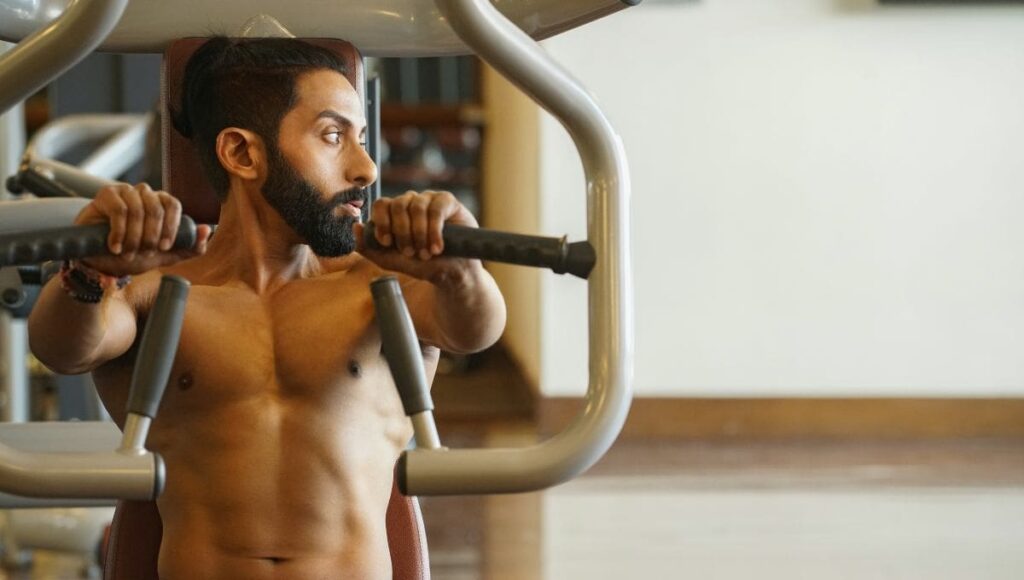
3. Seated Machine Chest Press
- Similar to the bench press but using a machine, the seated machine chest press allows for consistent tension across the movement, effectively targeting the middle chest with a focus on horizontal pressing motion.
4. Dips (with emphasis on chest)
- While primarily known for targeting the lower chest and triceps, dips can also engage the middle chest when performed with a slight forward lean and without descending too deeply.
Key Considerations for Middle Chest Training
- Leveraging Compound Movements:
Compound movements like the bench press and push-ups are highly efficient for middle chest development, as they allow for the use of significant weight and engage multiple muscle groups, making them foundational exercises in chest training.
- Exercise Variation:
Incorporating various equipment (barbells, dumbbells, machines) and techniques (grip width, bench angle) can provide comprehensive stimulation to the middle chest, addressing different muscle fibres and promoting balanced growth.
- Progressive Overload:
For continued muscle growth, progressively increasing the intensity of workouts through heavier weights, increased repetitions, or enhanced techniques is crucial. This principle applies strongly to middle chest training, where adaptation can be combated through careful adjustment of training variables.
- Balance and Symmetry:
While focusing on the middle chest, it’s essential to maintain a balanced approach to chest training, ensuring that the upper and lower regions are also adequately targeted to achieve a symmetrical and proportionate chest development.
Upper Chest
The upper chest, anatomically referred to as the clavicular head of the pectoralis major, plays a key role in achieving a fuller, more sculpted chest appearance. Given its distinct anatomical orientation and function, the upper chest responds best to exercises that specifically engage this region. And the best way to do that is to perform pressing movements in an inclined position.
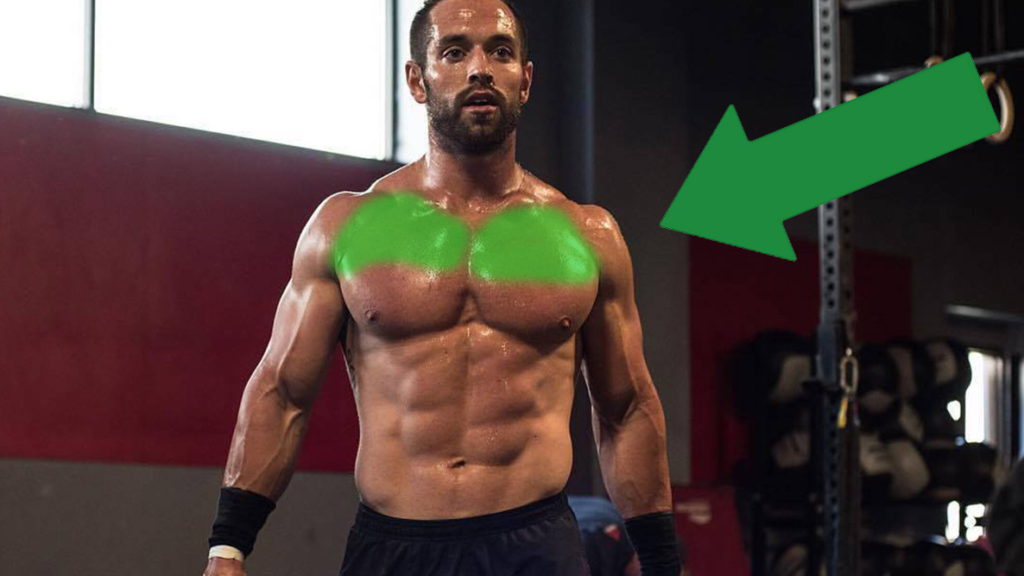
By adjusting the bench to an incline, you shift the focus of the exercise from the sternal-costal head (middle and lower chest) to the clavicular head (upper chest). This adjustment changes the angle at which the pectoral muscles are engaged, better targeting the upper chest fibres. Research suggests incline angles between 30° to 45° are most effective, although this can vary based on individual anatomy and biomechanics. Experimentation with different angles is encouraged to find the most effective positioning for your body.
While incline bench presses (using barbells, dumbbells, or machines) are compound movements that effectively target the upper chest, they also engage secondary muscles like the triceps and deltoids. For those specifically looking to isolate and emphasize the upper chest without additional muscle group involvement, exercises like low cable flies or incline machine flies can be particularly beneficial (more on that later on).
Read Also: 7 Rare Upper Chest Exercises for Incredible Muscle Gains (Look Good Get Strong)
These exercises leverage different angles, equipment, and techniques to maximally engage and develop the upper chest area. Here are the recommended exercises:
1. Incline Bench Press
- Equipment Variations: Barbell, dumbbells, Smith machine
- Key Insight: The incline angle adjusts the focus towards the upper chest. An incline angle between 30° to 45° is generally recommended, though individuals should experiment within this range to find their optimal angle.
2. Incline Dumbbell Press
- Benefit: Dumbbells allow for a greater range of motion and individual arm movement, which can help in addressing imbalances and potentially enhancing the stretch and contraction of the upper chest.
3. Incline Machine Press
- Advantage: Machines offer controlled movement that can help maintain constant tension on the upper chest throughout the exercise.
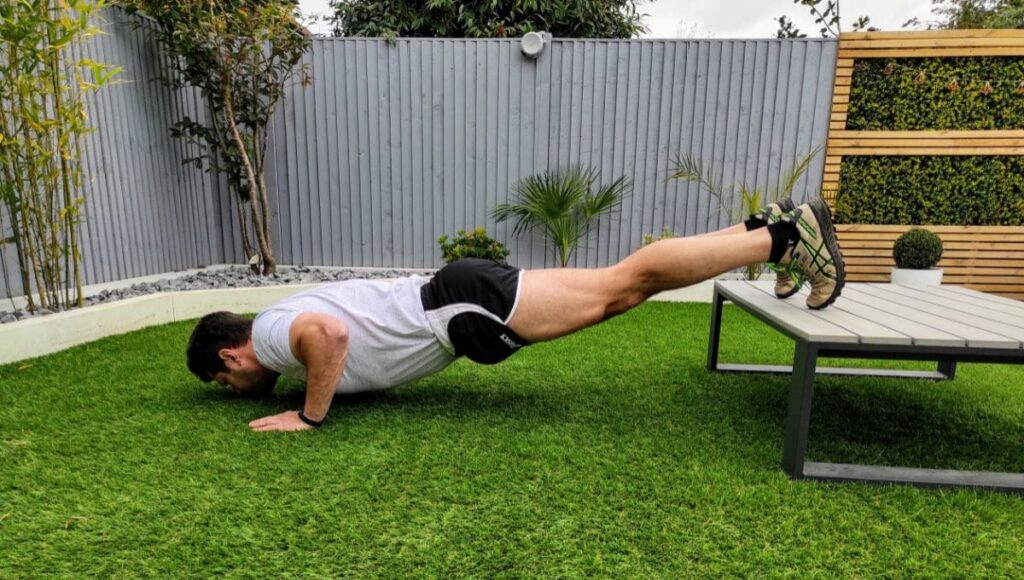
4. Push-ups with Feet Elevated
- Variation Tip: Using boxes or handles can increase the depth of the push-up, intensifying the stretch on the upper chest.
5. Low Cable Flies
- Technique Focus: Adjusting the cables to a lower position and performing the fly motion upwards can preferentially target and activate the upper chest fibres.
6. Smith Machine Incline Press
- Precision: The Smith machine allows for precise control of the bar path, which can be particularly beneficial for focusing tension on the upper chest while reducing the risk of injury.
7. Close-Grip and Reverse-Grip Bench Press (on an Incline)
- Unique Benefit: These grip variations change the recruitment pattern of the chest muscles, potentially increasing the activation of the upper chest. These can be performed on a flat bench but may be particularly effective on an incline.
Personal Experimentation and Adjustments
The guide emphasizes the importance of personal experimentation with these exercises. Adjusting grip width, incline angles, and equipment type allows individuals to finely tune their workouts to maximize upper chest engagement. It’s also suggested that lifters pay attention to how their muscles respond to different exercises, including sensations of muscle engagement, the pump during and after workouts, and soreness, as these can be indicative of effective upper chest targeting.
Integrating Exercises into Your Routine
For optimal upper chest development, it’s recommended to incorporate a mix of these exercises into your chest routine. This not only ensures comprehensive engagement of the upper chest fibres from various angles and through different ranges of motion but also prevents training plateaus by continuously challenging the muscles in new ways.
Lower Chest
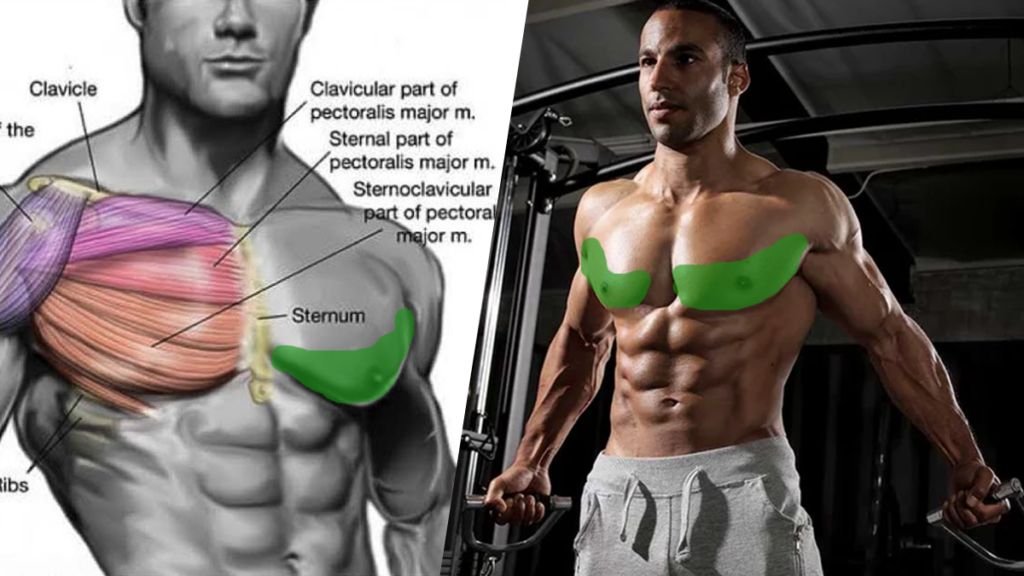
The lower chest fibres run in a unique direction, allowing them to contribute significantly to movements that involve pressing downwards or across the body. Understanding the directional flow of these muscle fibres is key to selecting exercises that optimally engage the lower chest.
Evidence suggests that standard horizontal pressing exercises, such as flat bench presses (with barbells, dumbbells, or machines), already significantly engage the lower chest along with the middle and upper regions.
This means that for most people, additional focused lower chest work may not be strictly necessary for balanced development.
However, for those seeking to accentuate the lower chest further or address specific aesthetic goals, incorporating targeted exercises can be beneficial.
Targeted Lower Chest Exercises
1. Decline Bench Press
- Insight: While research indicates that the decline bench press may not significantly increase lower chest activation compared to flat bench presses, the shift in angle can potentially alter the muscle recruitment pattern, emphasizing the lower chest fibres.
2. Dips
- Technique Note: When performed with a slight forward lean, dips effectively target the lower chest. The depth of the dip is crucial for maximizing chest engagement while being mindful of shoulder health.
3. Hands-Elevated Push-ups
- Variation Benefit: Elevating the hands, as opposed to the feet, alters the body angle relative to the ground, simulating a decline press motion that can engage the lower chest.
Read Also: 9 Perfect Exercises for a More Attractive Lower Chest
Considerations for Lower Chest Training
- Exercise Selection:
Choosing between decline presses, dips, and hands-elevated push-ups depends on individual preferences, goals, and the availability of equipment. Each exercise offers unique benefits, and incorporating a variety can prevent adaptation and ensure comprehensive lower chest development.
- Necessity and Balance:
While dedicated lower chest exercises can enhance definition and development in this area, it’s essential to maintain a balanced approach to chest training. Overemphasizing the lower chest at the expense of the upper and middle regions can lead to aesthetic imbalances.
- Listening to Your Body:
As with all exercises, paying attention to how your body responds to different movements is crucial. Some individuals may find certain exercises more effective or comfortable than others. Adjustments to technique, such as altering the depth of dips or the angle of decline presses, can help tailor the exercise to individual needs while minimizing the risk of injury.
Isolation Exercises – Is It Necessary?
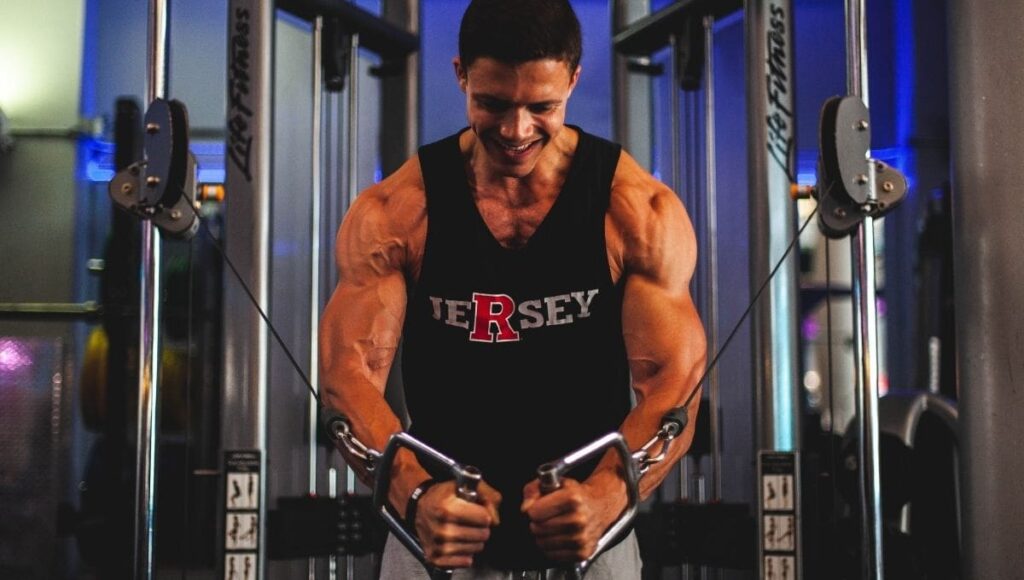
Isolation exercises play a significant role in chest development, specifically targeting the pectoralis major muscles with a focus on refining and accentuating muscle definition. Unlike compound movements that engage multiple muscle groups, isolation exercises aim to concentrate the effort on the chest, reducing the involvement of secondary muscles like the triceps and deltoids. This section explores the types of isolation exercises recommended for chest hypertrophy, based on the provided information.
The Role of Isolation Exercises in Chest Development
Isolation exercises are crucial for targeting specific areas of the chest, allowing for focused tension and potentially addressing areas that may need more development due to genetic predispositions or imbalances. They complement compound exercises by ensuring that all regions of the chest are evenly developed and can provide a varied stimulus to the muscle fibres, which is beneficial for continued growth.
Effective Chest Isolation Exercises
1. Cable Flies
- Variations: Adjusting the cable height allows targeting different parts of the chest. For instance, setting the cables lower and performing the fly motion upwards can preferentially target the upper chest, whereas positioning the cables at shoulder height focuses on the middle chest.
- Benefit: Cable flies maintain constant tension on the chest muscles throughout the range of motion, enhancing muscle activation and growth potential.
2. Dumbbell Flies
- Technique: Performed on a flat, incline, or decline bench, dumbbell flies stretch the chest muscles at the bottom of the movement and bring them together at the top, isolating the pectoral stretch and contraction.
- Advantage: The freedom of movement with dumbbells allows for a natural arc in the movement, potentially enhancing the stretch and contraction of the chest muscles, which is beneficial for muscle hypertrophy.
3. Machine Flies (Pec Deck)
- Specificity: Machine flies provide a controlled motion that isolates the chest muscles by limiting the involvement of other muscle groups, ensuring the chest is the primary focus of the exercise.
- Variation: Some machines allow adjustments that can target the chest from different angles, further refining the focus on specific areas of the chest.

Considerations for Incorporating Isolation Exercises
- Balanced Approach:
While isolation exercises are effective for targeting specific areas of the chest, they should complement, not replace, compound exercises within a chest training program to ensure overall chest development and functional strength.
- Progressive Overload:
Similar to compound movements, applying the principle of progressive overload to isolation exercises is crucial for continued muscle growth. This can be achieved by increasing the weight, adjusting the tempo, or increasing the volume of sets and repetitions over time.
- Technique and Safety:
Given the focused nature of isolation exercises, paying close attention to form and technique is vital to maximize muscle engagement and minimize the risk of injury. Ensuring a full range of motion and controlling the weight throughout the exercise can enhance its effectiveness and safety.
Conclusion
Building a formidable chest requires a blend of understanding anatomy, leveraging scientific insights, and personalising your workout strategy. This guide underscores the principle that no single exercise reigns supreme; rather, a thoughtfully curated regimen that considers individual goals, preferences, and limitations is key to achieving optimal chest hypertrophy. Whether incorporating a variety of presses or experimenting with isolation exercises, the path to a well-developed chest is full of factors that come into play and are deeply personal. Armed with the ultimate guide to build a strong chest, you are now equipped to navigate your chest training journey with confidence, backed by the latest in exercise science.
Remember, the journey to hypertrophy is as much about consistency and adaptation as it is about selection and technique. Tailor your training, listen to your body, and adjust based on progress and preferences. Happy training, everyone!
How to Increase Chest Size and Strength
Chest Workout Sample
This workout will aim to target all areas of the chest (upper, middle, and lower) effectively, incorporating both compound and isolation exercises for balanced development. The workout will be structured to begin with compound movements to maximize strength and overall muscle engagement, followed by isolation exercises to refine and target specific areas of the chest. Here’s an example of such a chest workout:
Warm-Up
- 5-10 minutes of light cardio (jogging, cycling) to increase heart rate
- Dynamic chest stretches and light push-ups to prepare the muscles
Compound Exercises for Overall Chest Development
- Flat Bench Press (Barbell or Dumbbell)
- 4 sets of 8-12 reps
- Focuses on the middle chest but engages the entire pectoralis major.
- Incline Bench Press (Barbell or Dumbbell)
- 3 sets of 8-12 reps
- Targets the upper chest. Adjust the bench to a 30°-45° incline for optimal engagement.
- Dips (Chest Version)
- 3 sets to failure
- Leaning slightly forward engages the lower chest. Adjust depth to comfort to protect the shoulders.
Isolation Exercises for Targeted Chest Development
- Cable Flies (Mid-Chest Focus)
- 3 sets of 12-15 reps
- Set cables at chest height. Emphasizes the stretch and contraction of the middle chest.
- Low Cable Flies (Upper Chest Focus)
- 3 sets of 12-15 reps
- Cables set low and fly motion performed upwards to target the upper chest.
- Dumbbell Pullover
- 3 sets of 12-15 reps
- Targets the lower chest and serratus anterior, also engages lats.
Cool Down
- Stretching exercises focusing on the chest and shoulders to promote flexibility and reduce muscle tension.
Additional Tips for Maximizing Your Chest Workout
- Progressive Overload: Aim to gradually increase the weight or the number of repetitions over time to continue challenging your muscles.
- Rest and Recovery: Allow adequate rest between sets (1-2 minutes for compound exercises, 30-60 seconds for isolation exercises) and ensure you’re not training the same muscle group on consecutive days to promote muscle recovery and growth.
- Mind-Muscle Connection: Especially during isolation exercises, focus on the muscle you’re targeting to enhance engagement and effectiveness.
- Variability: Every few weeks, consider varying the exercises, order, or rep ranges to prevent plateaus and keep the workouts challenging.
- Nutrition and Hydration: Support your workout with proper nutrition, focusing on a balanced intake of proteins, carbohydrates, fats, and sufficient hydration to fuel recovery and growth.
And that, my friends, is the ultimate guide to build a strong chest using science to back the information up.