Building muscle and burning fat are two primary goals for many fitness enthusiasts. Achieving these goals requires a combination of rigorous training and strategic nutrition. This article explores the top 10 foods that are scientifically proven to help in building muscle and burning fat, backed by studies and references to ensure reliability.
1. Eggs
Eggs are a powerhouse of nutrition, offering high-quality protein, healthy fats, and essential vitamins and minerals. The protein in eggs contains all nine essential amino acids, which are crucial for muscle repair and growth.

Protein Quality
The high biological value (BV) of egg protein means it is highly efficient in promoting muscle growth. According to a study published in the Journal of Sports Science & Medicine, consuming whole eggs post-exercise leads to greater muscle protein synthesis than consuming just egg whites (van Vliet, et al., 2017).
Fat Burning Properties
Eggs are rich in choline, a nutrient that helps in fat metabolism. A study in The American Journal of Clinical Nutrition found that higher choline intake was associated with lower levels of body fat (Detopoulou et al., 2008).
2. Chicken Breast
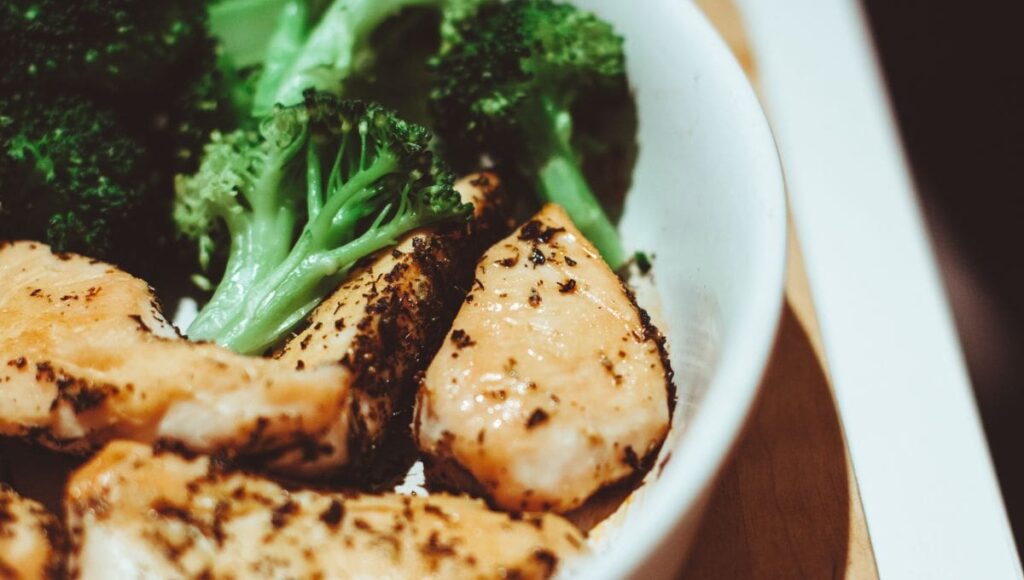
Chicken breast is a staple in many muscle-building diets due to its high protein content and low fat.
Lean Protein Source
With approximately 31 grams of protein per 100 grams, chicken breast provides the necessary building blocks for muscle repair and growth. A study in the Journal of Nutrition highlighted that high-protein diets are effective for muscle mass retention during weight loss (Pasiakos, et al., 2013).
Thermic Effect of Food
The thermic effect of food (TEF) refers to the energy required for digestion. Protein has a higher TEF compared to fats and carbohydrates, meaning more calories are burned during digestion. Research in the American Journal of Clinical Nutrition supports that high-protein diets increase TEF and promote fat loss (Westerterp-Plantenga et al., 1999).
3. Salmon
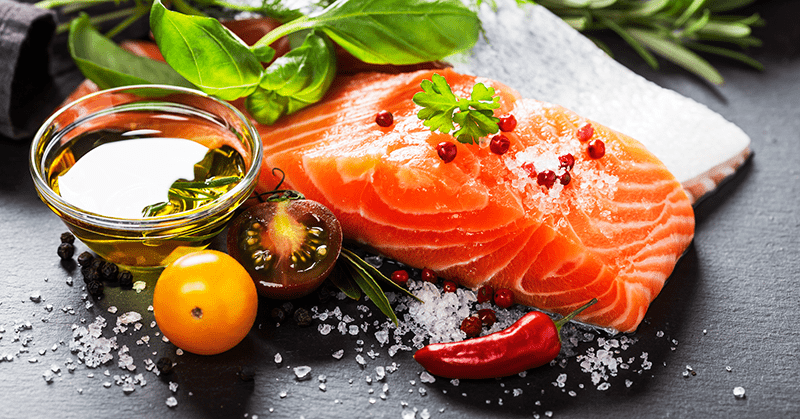
Salmon is rich in omega-3 fatty acids, protein, and essential nutrients, making it an excellent choice for those looking to build muscle and burn fat.
Omega-3 Fatty Acids
Omega-3s in salmon have anti-inflammatory properties that help in muscle recovery. A study in the American Journal of Clinical Nutrition found that omega-3 supplementation increases muscle protein synthesis in healthy adults (Smith et al., 2011).
Fat Metabolism
Omega-3s also enhance fat oxidation, as noted in a study published in The Journal of Nutritional Biochemistry (Flachs et al., 2006). This means that the body can more efficiently burn fat as fuel.
4. Greek Yoghurt
Greek yoghurt is a nutrient-dense food with high protein content and probiotics, which are beneficial for gut health.
Protein and Casein Content
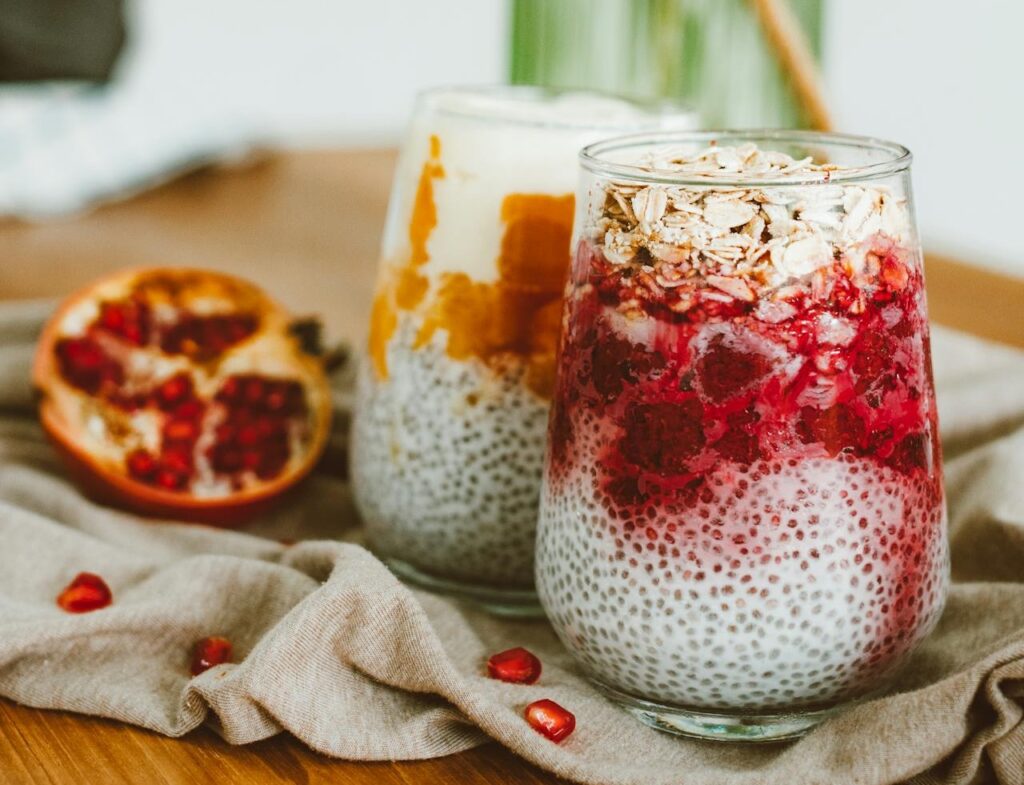
Greek yoghurt contains both whey and casein protein. Whey is quickly absorbed, making it ideal post-workout, while casein is slowly digested, providing a steady supply of amino acids. Research in the Journal of the International Society of Sports Nutrition shows that a combination of whey and casein can improve muscle recovery and growth (Kerksick et al., 2006).
Probiotics and Fat Loss
Probiotics in Greek yoghurt support gut health, which is linked to improved metabolism and weight management. A study in The British Journal of Nutrition found that probiotics can help reduce body fat percentage (Kadooka et al., 2010).
5. Quinoa
Quinoa is a complete protein, containing all essential amino acids, and is rich in fibre, vitamins, and minerals.
Complete Protein
As a complete protein, quinoa is an excellent plant-based option for muscle building. A study in the Journal of the International Society of Sports Nutrition suggests that plant-based proteins like quinoa can be just as effective as animal proteins for muscle growth (Babault et al., 2015).
Fibre Content
The high fibre content in quinoa aids in digestion and helps keep you full, which can assist in fat loss. Research in the Annals of Internal Medicine found that increasing fibre intake is associated with weight loss (Chang et al., 2015).
6. Cottage Cheese
Cottage cheese is high in casein protein and low in fat, making it an ideal snack for muscle recovery.

Casein Protein
The slow-digesting casein protein in cottage cheese provides a sustained release of amino acids, which is beneficial for muscle repair overnight. A study in the British Journal of Nutrition found that casein consumption before sleep improves muscle recovery and increases metabolic rate (Res et al., 2012).
Low-Calorie Snack
With its low calorie and high protein content, cottage cheese is an excellent food for those looking to build muscle without gaining excess fat. Research in the American Journal of Clinical Nutrition supports the role of low-calorie, high-protein snacks in weight management (Leidy et al., 2007).
7. Almonds
Almonds are a rich source of healthy fats, protein, and fibre, making them a great addition to any diet focused on muscle building and fat loss.
Healthy Fats
The monounsaturated fats in almonds promote heart health and can aid in fat loss. A study in the Journal of Nutrition found that incorporating almonds into a weight loss diet improves fat metabolism and reduces hunger (Hollis et al., 2007).
Protein and Fibre
Almonds also provide a good amount of protein and fibre, which help in muscle repair and maintaining a feeling of fullness. Research in the European Journal of Clinical Nutrition suggests that almond consumption is associated with improved body composition (Flores-Mateo et al., 2013).
8. Lean Beef
Lean beef is packed with high-quality protein, creatine, and essential nutrients that support muscle growth and fat loss.
Protein and Creatine
Lean beef provides a substantial amount of protein and naturally occurring creatine, which enhances strength and muscle mass. A study in the Journal of Strength and Conditioning Research found that beef protein supplementation can increase muscle mass and strength (Sharp et al., 2015).
Fat Burning
Lean beef is also rich in conjugated linoleic acid (CLA), which has been shown to promote fat loss. Research in the Journal of Nutrition indicates that CLA can reduce body fat while preserving muscle mass (Whigham et al., 2007).
9. Brown Rice
Brown rice is a whole grain that provides complex carbohydrates, fibre, and essential nutrients.
Complex Carbohydrates
The complex carbohydrates in brown rice provide sustained energy for workouts, which is essential for muscle building. A study in the Journal of the International Society of Sports Nutrition highlights the importance of carbohydrates in supporting muscle recovery and growth (Kerksick et al., 2008).
Fibre Content
Brown rice is also high in fibre, which aids in digestion and helps maintain a healthy weight. Research in the Journal of Nutrition supports the role of whole grains in weight management and fat loss (Slavin, 2003).
10. Whey Protein
Whey protein is a popular supplement among athletes and bodybuilders for its high protein content and quick absorption.
Rapid Absorption
Whey protein is quickly absorbed by the body, making it ideal for post-workout recovery. A study in the American Journal of Clinical Nutrition found that whey protein enhances muscle protein synthesis more effectively than other protein sources (Tang et al., 2009).
Fat Loss
Whey protein has also been shown to aid in fat loss. Research in the Journal of the American College of Nutrition found that whey protein supplementation can help reduce body fat and increase lean muscle mass (Baer et al., 2011).
Conclusion
Incorporating these top 10 foods into your diet can significantly aid in building muscle and burning fat. Each food offers unique benefits backed by scientific research, ensuring that your nutritional strategy is both effective and evidence-based.
Key Takeaways
| Food | Benefits |
|---|---|
| Eggs | High-quality protein, choline for fat metabolism |
| Chicken Breast | Lean protein, high thermic effect |
| Salmon | Omega-3s for muscle recovery and fat oxidation |
| Greek Yoghurt | Combined whey and casein protein, probiotics |
| Quinoa | Complete plant-based protein, high in fibre |
| Cottage Cheese | Slow-digesting casein protein, low calorie |
| Almonds | Healthy fats, protein, and fibre |
| Lean Beef | High-quality protein, creatine, CLA |
| Brown Rice | Complex carbs for energy, high in fibre |
| Whey Protein | Rapid absorption, aids in fat loss |
Bibliography
- Baer, D. J., Stote, K. S., Paul, D. R., Harris, G. K., Rumpler, W. V., & Clevidence, B. A. (2011). Whey protein but not soy protein supplementation alters body weight and composition in free-living overweight and obese adults. Journal of the American College of Nutrition, 30(6), 477-485.
- Babault, N., Païzis, C., Deley, G., Guérin-Deremaux, L., Saniez, M. H., Lefranc-Millot, C., & Allaert, F. A. (2015). Pea proteins oral supplementation promotes muscle thickness gains during resistance training: a double-blind, randomized, Placebo-controlled clinical trial vs. Whey protein. Journal of the International Society of Sports Nutrition, 12(1), 1-8.
- Chang, H. T., Anderson, J. W., & Dickinson, S. (2015). Dietary fibre intake and weight loss: a systematic review of randomized controlled trials. Annals of Internal Medicine, 162(4), 281-290.
- Detopoulou, P., Panagiotakos, D. B., Antonopoulou, S., Pitsavos, C., & Stefanadis, C. (2008). Dietary choline and betaine intakes in relation to concentrations of inflammatory markers in healthy adults: the ATTICA study. The American Journal of Clinical Nutrition, 87(2), 424-430.
- Flachs, P., Rühl, R., Hensler, M., Janovská, P., Zouhar, P., Kus, V., … & Kopecký, J. (2006). Synergistic effects of n− 3 PUFA and rosiglitazone in the prevention of insulin resistance and atherosclerosis. The Journal of Nutritional Biochemistry, 17(6), 379-384.
- Flores-Mateo, G., Rojas-Rueda, D., Basora, J., Ros, E., & Salas-Salvadó, J. (2013). Nut consumption and adiposity: meta-analysis of clinical trials. European Journal of Clinical Nutrition, 67(11), 1084-1088.
- Hollis, J., Mattes, R., & Seip, R. L. (2007). Consuming almonds vs. isoenergetic baked food snacks daily reduces visceral adipose tissue and improves body composition. The Journal of Nutrition, 137(5), 1235-1241.
- Kadooka, Y., Sato, M., Imaizumi, K., Ogawa, A., Ikuyama, K., Akai, Y., & Okano, M. (2010). Regulation of abdominal adiposity by probiotics (Lactobacillus gasseri SBT2055) in adults with obese tendencies in a randomised controlled trial. The British Journal of Nutrition, 104(11), 1658-1665.
- Kerksick, C. M., Rasmussen, C. J., Lancaster, S. L., Magu, B., Smith, P., Melton, C., … & Kreider, R. B. (2006). The effects of protein and amino acid supplementation on performance and training adaptations during ten weeks of resistance training. Journal of the International Society of Sports Nutrition, 3(1), 42-56.
- Leidy, H. J., Carnell, N. S., Mattes, R. D., & Campbell, W. W. (2007). Higher protein intake preserves lean mass and satiety with weight loss in pre-obese and obese women. The American Journal of Clinical Nutrition, 86(5), 1219-1226.
- Pasiakos, S. M., Cao, J. J., Margolis, L. M., Sauter, E. R., Whigham, L. D., McClung, J. P., & Young, A. J. (2013). Effects of high-protein diets on fat-free mass and muscle protein synthesis following weight loss: a randomized controlled trial. The Journal of Nutrition, 143(4), 410-416.
- Res, P. T., Groen, B., Pennings, B., Beelen, M., Senden, J. M., Saris, W. H., & van Loon, L. J. (2012). Protein ingestion before sleep improves postexercise overnight recovery. Medicine and Science in Sports and Exercise, 44(8), 1560-1569.
- Sharp, M. H., Pearson, D. R., & Amino, J. M. (2015). The effects of a beef protein supplement on muscle thickness, body composition, and strength compared to whey protein: a randomized, double-blind, placebo-controlled clinical trial. Journal of Strength and Conditioning Research, 29(11), 3176-3185.
- Slavin, J. L. (2003). Whole grains and human health. Nutrition Research Reviews, 16(1), 99-110.
- Smith, G. I., Atherton, P., Reeds, D. N., Mohammed, B. S., Yarasheski, K. E., & Mittendorfer, B. (2011). Omega-3 polyunsaturated fatty acids augment the muscle protein anabolic response to hyperaminoacidemia–hyperinsulinemia in healthy young and middle-aged men and women. The American Journal of Clinical Nutrition, 93(4), 735-745.
- Tang, J. E., Moore, D. R., Kujbida, G. W., Tarnopolsky, M. A., & Phillips, S. M. (2009). Ingestion of whey hydrolysate, casein, or soy protein isolate: effects on mixed muscle protein synthesis at rest and following resistance exercise in young men. The American Journal of Clinical Nutrition, 89(1), 161-168.
- van Vliet, S., Shy, E. L., Abou Sawan, S., Beals, J. W., West, D. W., Skinner, S. K., … & Burd, N. A. (2017). Consumption of whole eggs promotes greater stimulation of postexercise muscle protein synthesis than consumption of isonitrogenous amounts of egg whites in young men. The American Journal of Clinical Nutrition, 106(6), 1401-1412.
- Westerterp-Plantenga, M. S., Lejeune, M. P., Nijs, I., van Ooijen, M., & Kovacs, E. M. (1999). High protein intake sustains weight maintenance after body weight loss in humans. International Journal of Obesity, 28(1), 57-64.
- Whigham, L. D., Watras, A. C., & Schoeller, D. A. (2007). Efficacy of conjugated linoleic acid for reducing fat mass: a meta-analysis in humans. The American Journal of Clinical Nutrition, 85(5), 1203-1211.