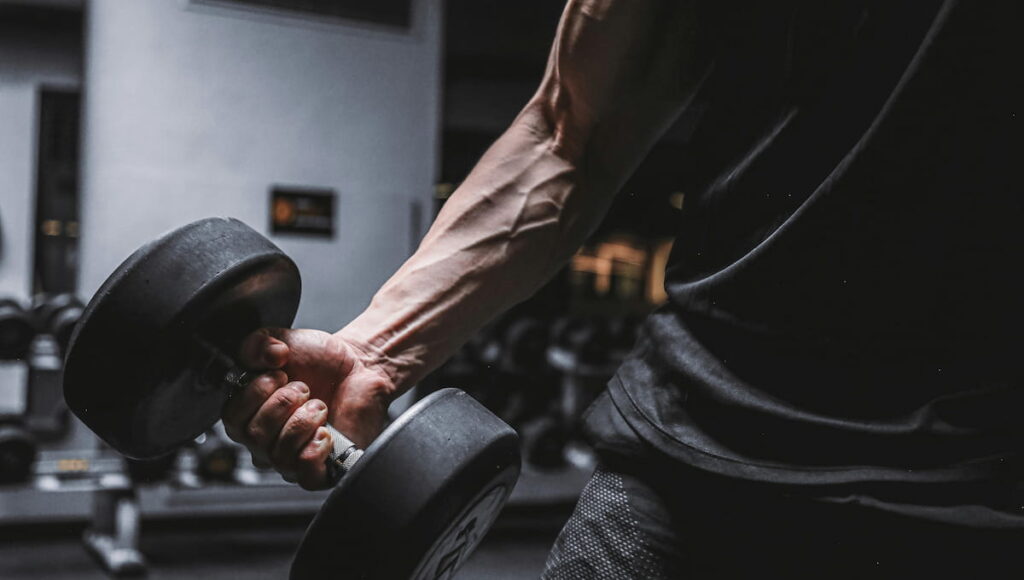
For those seeking a defined and muscular chest, dumbbells are one of the most versatile and effective tools available.
They allow a greater range of motion compared to barbells and can activate more muscle fibres, helping to develop a more pronounced and symmetrical chest. Here are the top three dumbbell exercises scientifically proven to build and define the pectoral muscles.
This guide explains how each exercise works, the muscles targeted, and how to perform each movement with optimal form to maximise muscle definition and growth.
Why Dumbbell Exercises Are Effective for Chest Development
Dumbbell chest exercises can stimulate the pectoral muscles in a way that promotes muscle hypertrophy and strength. Unlike barbells, which fix the hands in place, dumbbells allow each arm to move independently, which promotes balanced strength and corrects muscular imbalances (Schick et al., 2010).
Additionally, dumbbells encourage a greater range of motion, activating the pectoralis major more effectively during both the concentric (lifting) and eccentric (lowering) phases of the exercise (Schoenfeld, 2010). Research supports the efficacy of free weights like dumbbells in increasing pectoral activation compared to machine-based chest exercises (Gentil et al., 2015).
Exercise 1: Dumbbell Bench Press
The dumbbell bench press is widely regarded as one of the most effective chest exercises, targeting the pectoralis major, anterior deltoids, and triceps.
It’s particularly beneficial for enhancing chest definition as it recruits stabilising muscles, increases muscle fibre activation, and permits a greater range of motion compared to the barbell bench press.
How to Perform the Dumbbell Bench Press
- Setup: Lie on a flat bench with a dumbbell in each hand, your feet flat on the ground, and your back pressed firmly into the bench.
- Starting Position: Hold the dumbbells over your chest with your arms fully extended, keeping your palms facing forward.
- Lowering Phase: Slowly lower the dumbbells to the sides of your chest by bending your elbows and keeping your shoulders down. Aim to lower the weights until your elbows are slightly below your torso.
- Lifting Phase: Press the dumbbells back to the starting position by extending your arms fully while squeezing your chest muscles at the top.
Scientific Backing
A study by Schick et al. (2010) demonstrated that the dumbbell bench press increases muscle activation in the pectoral muscles due to the independent movement of each arm. Another study by Schoenfeld (2010) found that exercises allowing a greater range of motion, such as the dumbbell bench press, activate more muscle fibres and lead to increased muscle hypertrophy.
Exercise 2: Dumbbell Fly
The dumbbell fly primarily targets the pectoralis major and is effective for stretching the muscle fibres across the chest, leading to better muscle definition. This exercise is also beneficial for isolating the chest muscles, as it limits the involvement of the triceps compared to pressing movements.
How to Perform the Dumbbell Fly
- Setup: Lie on a flat bench with a dumbbell in each hand and your feet firmly planted on the ground.
- Starting Position: Extend your arms over your chest, keeping a slight bend in your elbows to protect your joints.
- Lowering Phase: Slowly lower the dumbbells in an arc until your arms are parallel to the ground. Focus on stretching your chest muscles during this phase.
- Lifting Phase: Squeeze your chest muscles and bring the dumbbells back together over your chest, following the same arc pattern.
Scientific Backing
The dumbbell fly’s emphasis on muscle stretch and contraction has been shown to increase muscle hypertrophy. According to a study by Gentil et al. (2015), exercises that involve both stretching and contracting movements can lead to better muscle development. The dumbbell fly’s range of motion allows the pectoralis major to be fully engaged, contributing to muscle definition and growth.
Exercise 3: Incline Dumbbell Press
The incline dumbbell press is an essential exercise for developing the upper part of the chest, which contributes to a fuller and more defined pectoral appearance. By performing this exercise on an incline bench, the pectoralis major’s clavicular head is activated more intensely than in flat or decline presses (Barnett et al., 1995).
How to Perform the Incline Dumbbell Press
- Setup: Set a bench to a 30-45 degree incline. Sit down with a dumbbell in each hand, and lean back, positioning the dumbbells at shoulder height with your palms facing forward.
- Starting Position: Hold the dumbbells above your chest with your arms fully extended and wrists in a neutral position.
- Lowering Phase: Slowly lower the dumbbells down towards the top of your chest by bending your elbows, keeping control of the weights throughout.
- Lifting Phase: Push the dumbbells back to the starting position by extending your arms, focusing on engaging your chest muscles as you lift.
Scientific Backing
Research by Barnett et al. (1995) shows that adjusting the bench angle to an incline increases activation of the upper chest muscles, which is crucial for building a balanced and aesthetically pleasing chest. The incline dumbbell press effectively targets the clavicular head of the pectoralis major, leading to more comprehensive chest development.
Optimising Your Chest Workouts with Dumbbells
To maximise muscle definition and growth in your chest, incorporate the three exercises above into your workout routine. Aim for a volume of 3–4 sets of 8–12 repetitions for each exercise, which is effective for hypertrophy (Schoenfeld, 2010). Keep rest periods between sets around 60–90 seconds to maintain muscle activation and intensity.
Additionally, it’s beneficial to prioritise the incline press if you want to emphasise upper chest development or the dumbbell fly if you want to enhance overall chest width and stretch.
Summary Table of Key Takeaways
| Exercise | Targeted Muscles | Main Benefit |
|---|---|---|
| Dumbbell Bench Press | Pectoralis Major, Triceps | Full chest activation, greater range of motion |
| Dumbbell Fly | Pectoralis Major | Increased muscle stretch, isolation of chest |
| Incline Dumbbell Press | Upper Pectoralis Major | Enhanced upper chest development |
Bibliography
Barnett, C., Kippers, V., and Turner, P. (1995). Effects of variations of the bench press exercise on the EMG activity of five shoulder muscles. Journal of Strength and Conditioning Research, 9(4), 222-227.
Gentil, P., Oliveira, E., and Bottaro, M. (2015). Time under tension and blood lactate response during four different resistance training methods. Journal of Physiology and Biochemistry, 71(1), 165-170.
Schick, E. E., Coburn, J. W., Brown, L. E., Judelson, D. A., Khamoui, A. V., Tran, T. T., and Uribe, B. P. (2010). A comparison of muscle activation between a Smith machine and free weight bench press. Journal of Strength and Conditioning Research, 24(3), 779-784.
Schoenfeld, B. J. (2010). The mechanisms of muscle hypertrophy and their application to resistance training. Journal of Strength and Conditioning Research, 24(10), 2857-2872.