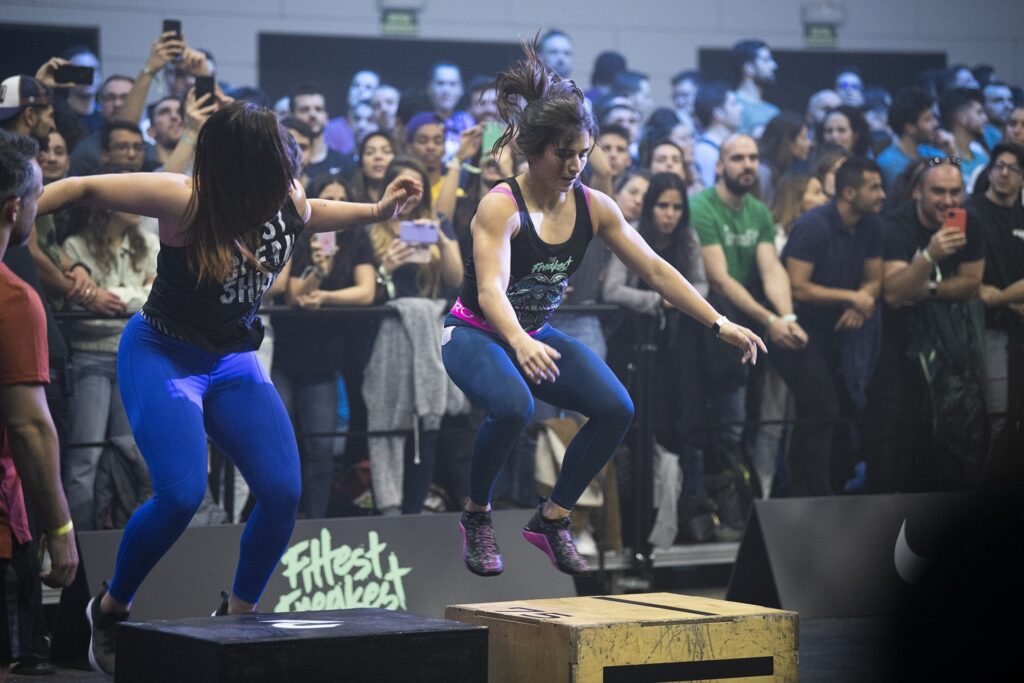
Plyometric exercises are high-intensity movements that enhance the neuromuscular system’s ability to generate power rapidly. These exercises are critical for athletes and fitness enthusiasts aiming to build explosive lower body strength, improve agility, and boost performance in sports or functional fitness activities.
Plyometrics work by leveraging the stretch-shortening cycle (SSC), a physiological mechanism where muscles store and release elastic energy during rapid stretching and contraction.
Scientific studies have consistently demonstrated the benefits of plyometric training for developing muscular power and improving athletic performance (Markovic, 2007). This article explores the top five plyometric exercises, their mechanics, and the evidence supporting their effectiveness in enhancing explosive lower body strength.
The Mechanics of Explosive Power
Explosive power in the lower body relies on a combination of muscular strength, coordination, and neuromuscular efficiency. Plyometric exercises target fast-twitch muscle fibres, which are essential for producing rapid and forceful movements.
By engaging the SSC, plyometrics train muscles to exert maximal force in the shortest amount of time. Research has shown that incorporating plyometric exercises into a strength training regimen leads to significant improvements in vertical jump height, sprint performance, and reactive strength (Ramirez-Campillo et al., 2018).
Below are the top five plyometric exercises for developing explosive lower body power.
1. Box Jumps
Execution
Box jumps involve jumping onto a sturdy elevated platform, such as a plyometric box, and then stepping down carefully. The key is to maximise the height of the jump while maintaining control and proper form.
- Start with feet shoulder-width apart.
- Lower into a quarter squat to generate power.
- Swing your arms forward and jump explosively onto the box.
- Land softly with knees slightly bent.
- Step down and repeat for the desired number of repetitions.
Benefits
Box jumps primarily target the quadriceps, glutes, and calves. They improve vertical jumping ability, coordination, and reactive strength. A study by Holcomb et al. (1996) found that box jump training significantly increased jump performance and power output in trained athletes.
Variations
- Single-Leg Box Jumps: Enhance unilateral strength and balance.
- Weighted Box Jumps: Add resistance with a weighted vest to increase difficulty.
2. Depth Jumps
Execution
Depth jumps are performed by stepping off a raised platform, landing softly, and immediately jumping vertically or horizontally as high or far as possible.
- Stand on a platform about 30–60 cm high.
- Step off the platform and land on both feet.
- Explode upwards or forwards immediately upon landing.
- Land softly and reset for the next repetition.
Benefits
Depth jumps are one of the most effective exercises for developing reactive strength and improving the SSC. Research indicates that depth jumps increase explosive power, particularly in activities requiring rapid changes of direction or vertical leaps (Bobbert, 1990).
Precautions
Depth jumps place significant stress on the joints and should only be performed by individuals with a solid foundation of strength training.
3. Broad Jumps
Execution
Broad jumps involve leaping horizontally as far as possible, making them ideal for improving lower body power and forward propulsion.
- Begin in an athletic stance with feet shoulder-width apart.
- Lower into a quarter squat and swing your arms back.
- Explode forward, extending your hips, knees, and ankles.
- Land softly on both feet and stabilise before resetting.
Benefits
Broad jumps target the posterior chain, including the glutes, hamstrings, and calves. A study by Kubo et al. (2007) demonstrated that broad jump training enhances sprint performance and explosive strength, making it a staple for athletes in track and field, rugby, and football.
Progressions
- Single-Leg Broad Jumps: Develop unilateral strength and coordination.
- Band-Resisted Broad Jumps: Use resistance bands to increase intensity.
4. Lateral Bounds
Execution
Lateral bounds involve jumping laterally from one leg to the other, mimicking the movement patterns in sports like basketball, tennis, and skiing.
- Start standing on one leg with a slight bend in the knee.
- Push off forcefully, jumping laterally to the opposite leg.
- Land softly on the other leg, maintaining balance.
- Repeat, alternating sides.
Benefits
Lateral bounds enhance lateral movement, balance, and agility. This exercise strengthens the glute medius and adductors, critical for stabilising the hips during side-to-side movements. Research shows that lateral bounds are effective for improving agility and reducing the risk of knee injuries (Mokhtarzadeh et al., 2013).
Variations
- Lateral Bounds with Pause: Emphasise balance by pausing briefly on each leg.
- Weighted Lateral Bounds: Hold light dumbbells to increase difficulty.
5. Split Squat Jumps
Execution
Split squat jumps are dynamic movements that focus on unilateral leg strength and explosive power.
- Start in a lunge position with one foot forward and the other behind.
- Lower into a deep lunge, ensuring the front knee stays behind the toes.
- Explode upwards, switching legs mid-air.
- Land softly in the opposite lunge position.
- Repeat for the desired number of reps.
Benefits
Split squat jumps are excellent for building unilateral power, improving balance, and targeting the quads, hamstrings, and glutes. Studies have shown that unilateral plyometric exercises like split squat jumps enhance muscular symmetry and reduce injury risk (Myer et al., 2006).
Modifications
- Assisted Split Squat Jumps: Use a resistance band for support if needed.
- Weighted Split Squat Jumps: Hold dumbbells to increase intensity.
Integrating Plyometrics into Your Routine
To maximise the benefits of plyometric exercises, they should be incorporated into a comprehensive strength and conditioning programme. Perform these exercises 2–3 times per week, ensuring adequate rest between sessions to allow for recovery.
Beginners should start with lower-intensity plyometrics, such as box jumps and broad jumps, before progressing to advanced movements like depth jumps and weighted variations. Always prioritise proper form and avoid overtraining to minimise the risk of injury.
Conclusion
Plyometric exercises are a proven method for developing explosive lower body strength, agility, and overall athletic performance. Incorporating movements like box jumps, depth jumps, broad jumps, lateral bounds, and split squat jumps into your training routine will enhance your ability to generate power rapidly, improving performance in both sports and everyday activities.
Backed by scientific evidence, these exercises target key muscle groups and leverage the stretch-shortening cycle for maximum effectiveness. By integrating these movements strategically and progressively, you can achieve significant gains in explosive strength while minimising the risk of injury.
Key Takeaways
| Plyometric Exercise | Target Benefits |
|---|---|
| Box Jumps | Improves vertical jump height and lower body power. |
| Depth Jumps | Enhances reactive strength and SSC efficiency. |
| Broad Jumps | Builds horizontal propulsion and posterior chain strength. |
| Lateral Bounds | Increases lateral agility and hip stability. |
| Split Squat Jumps | Develops unilateral power and reduces injury risk. |
References
Bobbert, M. F. (1990). “Drop jumping as a training method for jumping ability.” Sports Medicine, 9(1), pp. 7–22.
Holcomb, W. R., Lander, J. E., Rutland, R. M., & Wilson, G. D. (1996). “The effectiveness of a modified plyometric program on power and the vertical jump.” Journal of Strength and Conditioning Research, 10(2), pp. 89–92.
Kubo, K., Yata, H., Kanehisa, H., & Fukunaga, T. (2007). “Effects of plyometric and weight training on muscle-tendon complex and jump performance.” Medicine & Science in Sports & Exercise, 39(10), pp. 1801–1810.
Markovic, G. (2007). “Does plyometric training improve vertical jump height? A meta-analytical review.” British Journal of Sports Medicine, 41(6), pp. 349–355.
Mokhtarzadeh, H., et al. (2013). “Dynamic load and muscle activation comparisons between lateral and forward movements.” Journal of Biomechanics, 46(12), pp. 2137–2144.
Myer, G. D., Ford, K. R., Palumbo, J. P., & Hewett, T. E. (2006). “Neuromuscular training improves performance and lower-extremity biomechanics in female athletes.” Journal of Strength and Conditioning Research, 19(1), pp. 51–60.
Ramirez-Campillo, R., et al. (2018). “Effects of plyometric training volume and training surface on explosive strength.” Journal of Strength and Conditioning Research, 32(9), pp. 2616–2624.